Dashati 2
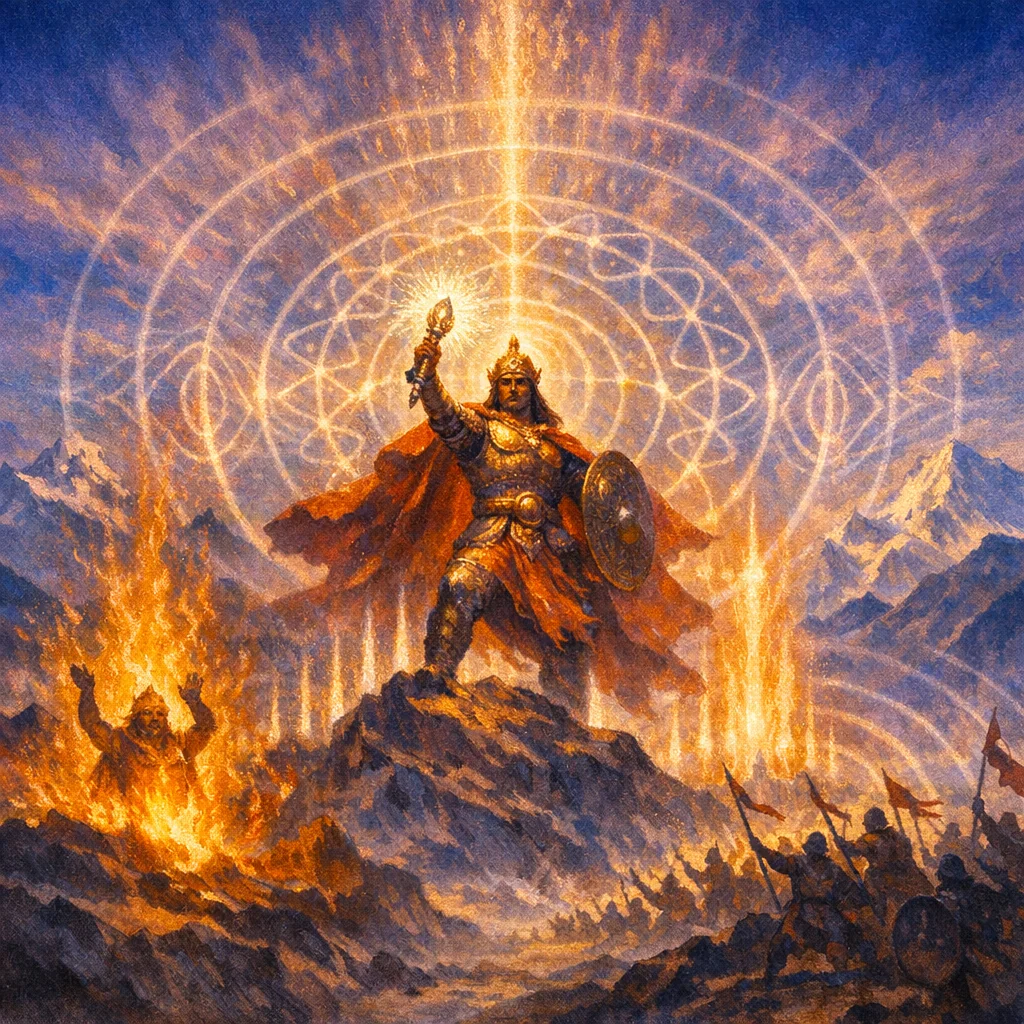
Aindra praise: Indra as the pre-eminent ritual power and victorious protector invoked for strength and success
Indra
Heroic and energizing (vīra-rasa) suited to invocation of power and rallying
R̥ṣi attribution is not supplied here; these verses likely derive from multiple RV sources typical of Sāmavedic selection so a single family attribution cannot be asserted without concordance.
مديحٌ أَيْندريّ: يُدعى إندرا بوصفه القوّة الطقسيّة الأسمى—براهمن/رِتڤيّا—والحامي الظافر، طلبًا للقوّة والنجاح والحماية. ويُستحضَر أغني بوصفه نارَ القربان المُوقَدة وفق نظام الفصول (ṛtu)، الحاملةَ للقرابين والمُمكِّنةَ لفاعليّة القوّة الإلهيّة. وتظهر أُوشَس علامةً كونيّةً للتجدّد واليُمن. وتبرز صورُ الظفر: غوترابهِد (إطلاق الأبقار/النور وفتح العوائق)، والغلبةُ وحشدُ الأعوان، مع نداءٍ جماعيّ إلى الرفاق والأقران (sajātāḥ, sakhāyaḥ) لتثبيت العزم المشترك. فبالقربان المنظَّم تُنال شدّةُ إندرا (ojas) وسيادتُه لضمان الرخاء والنصر.
Mantras
Mantra 1
बृहस्पते परि दीया रथेन रक्षोहामित्रां अपबाधमानः प्रभञ्जन्सेनाः प्रमृणो युधा जयन्नस्माकमेध्यविता रथानाम्
يا بْرِهَسْبَتي (Bṛhaspati)، أَحِطْنا بعربتك—يا قاتلَ الرَّاكْشَسَة (Rākṣasa)، يا دافعَ الأعداء—مُحَطِّمًا جموعَهم، مُهْلِكًا إيّاهم في القتال، ظافرًا في الحرب؛ كُنْ حاميَ مراكبِنا.
Mantra 2
बलविज्ञायः स्थविरः प्रवीरः सहस्वान्वाजी सहमान उग्रः अभिवीरो अभिसत्वा सहोजा जैत्रमिन्द्र रथमा तिष्ठ गोवित्
يا إندرا، يا عارفَ القوّة، يا ثابتًا، يا أسبقَ الأبطال؛ يا ذا البأس، يا واهبَ الجائزة، يا غالبًا، يا مهيبًا؛ يا متفوّقًا على الأبطال، يا مُغيرًا بالقدرة، يا مولودَ القوّة، يا ظافرًا—اصعدِ المركبة؛ وامنحْ نيلَ الأبقار.
Mantra 3
गोत्रभिदं गोविदं वज्रबाहुं जयन्तमज्म प्रमृणन्तमोजसा इमं सजाता अनु वीरयध्वमिन्द्रं सखायो अनु सं रभध्वम्
هو شاقُّ حظائرِ الأبقار، كاسبُ الأبقار، ذو الذراعِ الحاملةِ للفَجْرَة (vajra)، الظافر؛ الساحنُ بقوّته في ميدانِ الكرّ—اتبعوا هذا الإندرا، يا ذوي القُربى، وأظهروا بأسَكم؛ واتبعوا إندرا، يا أصدقاء، وتجمّعوا وتمسّكوا به تمسّكًا شديدًا.
Frequently Asked Questions
Here “brahmā” points to sacred power (and can also echo the brahman-priest’s supervisory role). “ṛtviya” links Indra to the properly timed rite (ṛtu), presenting him as the ritual’s effective lord whose power makes the sacrifice succeed.
It recalls Indra’s mythic act of breaking obstructions to release the ‘cows’—a symbol of wealth, nourishment, and even light. In ritual praise it becomes a prayer for removing constraints and securing prosperity and victory.
Sāmavedic decads often weave supporting deities into the main praise. Agni is the kindled force that carries offerings and establishes the rite’s order; Uṣas marks auspicious renewal. Together they frame Indra’s power as operating within a well-kindled, well-timed sacrifice.