Dashati 7
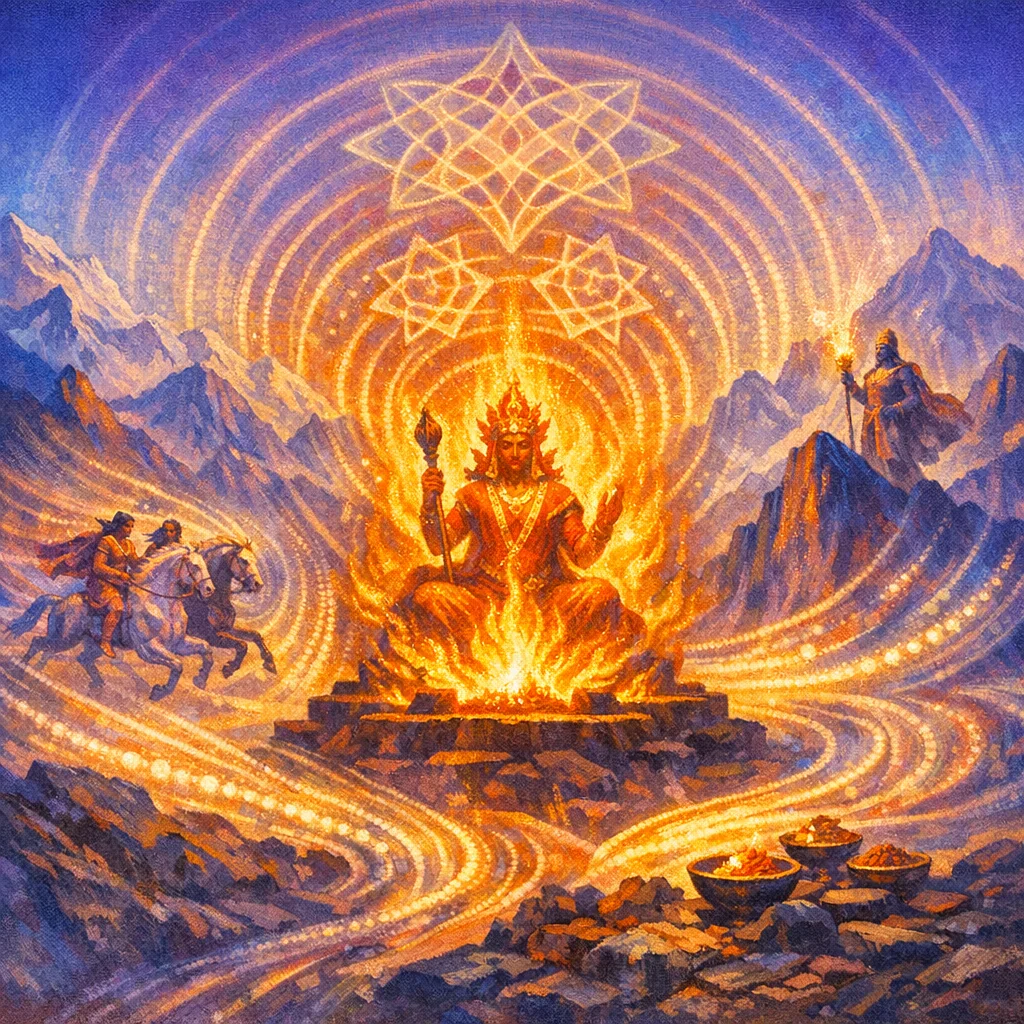
Agni as the sovereign of sacrifice (yajña-samrāṭ) and the energizing divine powers that make the rite fruitful
Agni
Bright forward-driving praise—processional and triumphant suited to ‘calling in’ deities and affirming ritual sovereignty
Ṛṣi and chandas are not provided; identification requires tracing each mantra to its Ṛgvedic source and consulting the Sāmavedic anukramaṇī for this arcikā/prapāṭhaka location.
يُمجَّد أغني بوصفه سيّد القربان وملك الذبيحة (yajña-samrāṭ)، يتولّى الشعيرة ويحمل القرابين. ويُستدعى الأشفينان ليحضرا سريعًا كمعينَين مُحسنَين وجالبَين للثروة. ويُبهَج إندرا ويُقوَّى بسوما فيُطلق كنوزًا عظيمة؛ وسوما مُضمَرٌ هنا بوصفه القربان المُقوّي الذي يضاعف بأس إندرا. وتُقرِّر هذه المجموعة لاهوتَ الطقس: نداءٌ → حضورٌ → تمكينٌ → عطاء، وثمرته الغنى والماشية والرخاء المتّسع.
Mantras
Mantra 1
अस्तावि मन्म पूर्व्यं ब्रह्मेन्द्राय वोचत पूर्वीरृतस्य बृहतीरनूषत स्तोतुर्मेधा असृक्षत
لقد أُنشدَ النشيدُ العتيقُ؛ فانطقوا بالصلاةِ المقدّسةِ لإندرا: لقد دوّتْ مديحٌ عظيمٌ كثيرٌ للـṛta؛ وانطلقتْ إلهاماتُ المُنشدِ العابد.
Mantra 2
समिन्द्रो रायो बृहतीरधूनुत सं क्षोणी समु सूर्यम् सं शुक्रासः शुचयः सं गवाशिरः सोमा इन्द्रममन्दिषुः
لقد هزَّ إندرا هزًّا تامًّا ثرواتٍ عظيمةً؛ (وأقامَ في نظامٍ) الأراضيَ وكذلك الشمسَ؛ والطاقاتِ اللامعةَ الطاهرةَ، وثروةَ الماشيةِ في الصدارة: وقد أبهجتْ عصاراتُ السُّوما إندرا.
Mantra 3
स नो दूराच्चासाच्च नि मर्त्यादघायोः पाहि सदमिद्विश्वायुः
احمِنا من البعيد ومن القريب، من الإنسان الفاني الذي يريد الأذى. وكن لنا دائمًا حقًّا «Viśvāyuḥ»—واهبَ الحياة الشاملة والامتلاء بالقوّة.
Frequently Asked Questions
The simile highlights Agni’s fitness and splendour in the rite—like a decorated steed ready for procession—while stressing his role as the sovereign presence guiding the sacrifice.
It describes the Aśvins as ‘born of/connected with the waters,’ emphasizing their swift, life-giving arrival and their power to aid the sacrificer and bring wealth.
The repeated “sam” conveys completeness and totality: Indra sets things fully in order and shakes forth abundant riches, especially after being exhilarated by Soma.