
Shloka 17
Vibhuti Yoga — Vibhuti Yoga
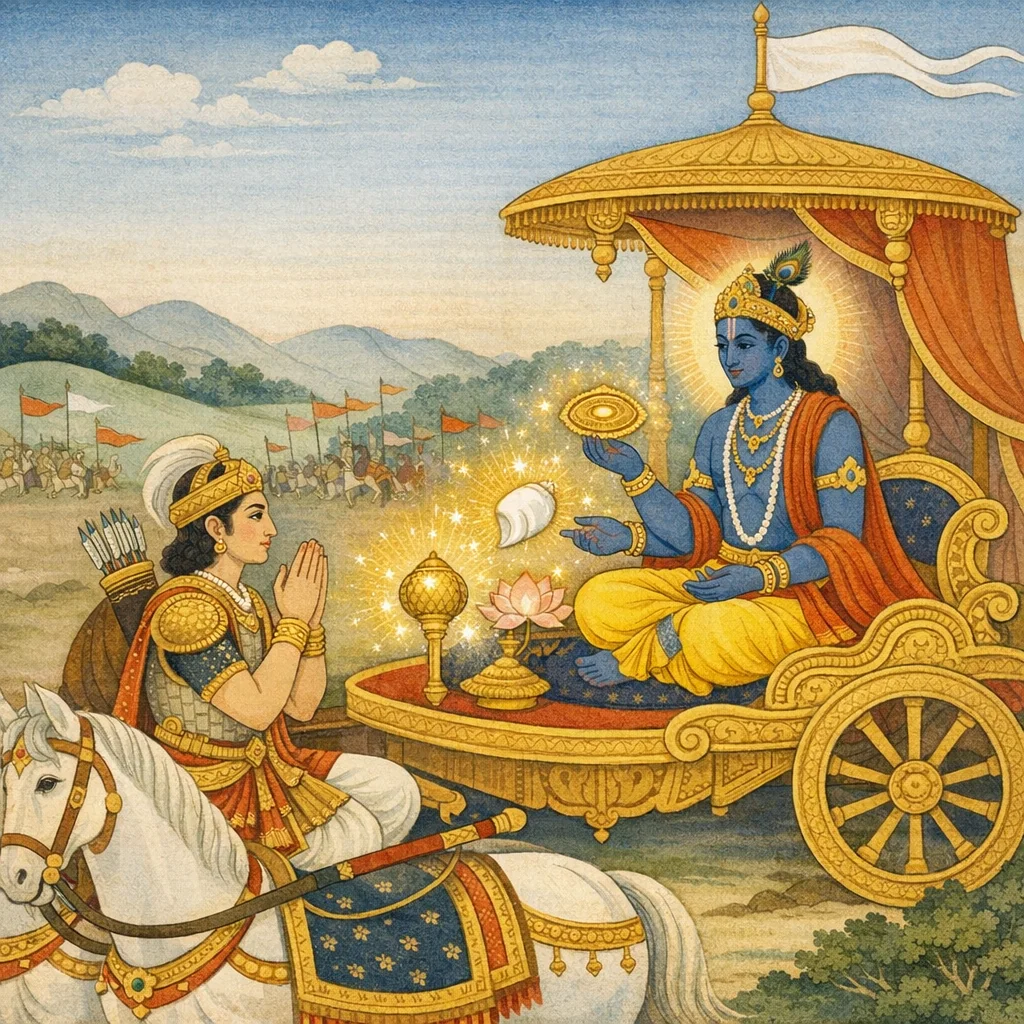
कथं विद्यामहं योगिंस्त्वां सदा परिचिन्तयन् । केषु केषु च भावेषु चिन्त्योऽसि भगवन्मया ॥ १०.१७ ॥
kathaṁ vidyām ahaṁ yogiṁs tvāṁ sadā paricintayan | keṣu keṣu ca bhāveṣu cintyo ’si bhagavan mayā || 10.17 ||

How shall I know You, O Yogin, by constantly meditating upon You? And in what ways and in what states are You to be contemplated by me, O Lord?
How shall I know You, O Yogin, by constantly meditating on You? And in what states/conditions should You be contemplated by me, O Lord?
How may I understand you, Yogin, while constantly reflecting on you? In which particular modes/contexts are you to be contemplated by me, Lord?
Bhāva can mean mental state, existential mode, or ‘domain/aspect.’ Some devotional readings take it as ‘forms’ of the deity; more literal readings treat it as ‘contexts’ or ‘aspects’ for contemplation.
FAQs
The verse frames meditation as an active inquiry: sustained attention is paired with questions about appropriate objects and contexts, supporting structured contemplative practice rather than vague rumination.
It suggests that the divine can be approached through contemplative cognition, but requires suitable ‘aspects’ (bhāvas) as supports—anticipating the vibhūti list as contemplative anchors.
Arjuna requests practical instructions for constant remembrance, setting up Krishna’s response in the form of identifiable manifestations within the world.
It can be used to design contemplative routines: choose specific focal points (values, exemplars, or sacred symbols), revisit them regularly, and refine understanding through reflection and study.