Adhyaya 206
Agastyārghyadāna-kathana (On the Giving of the Agastya Honor-Offering)
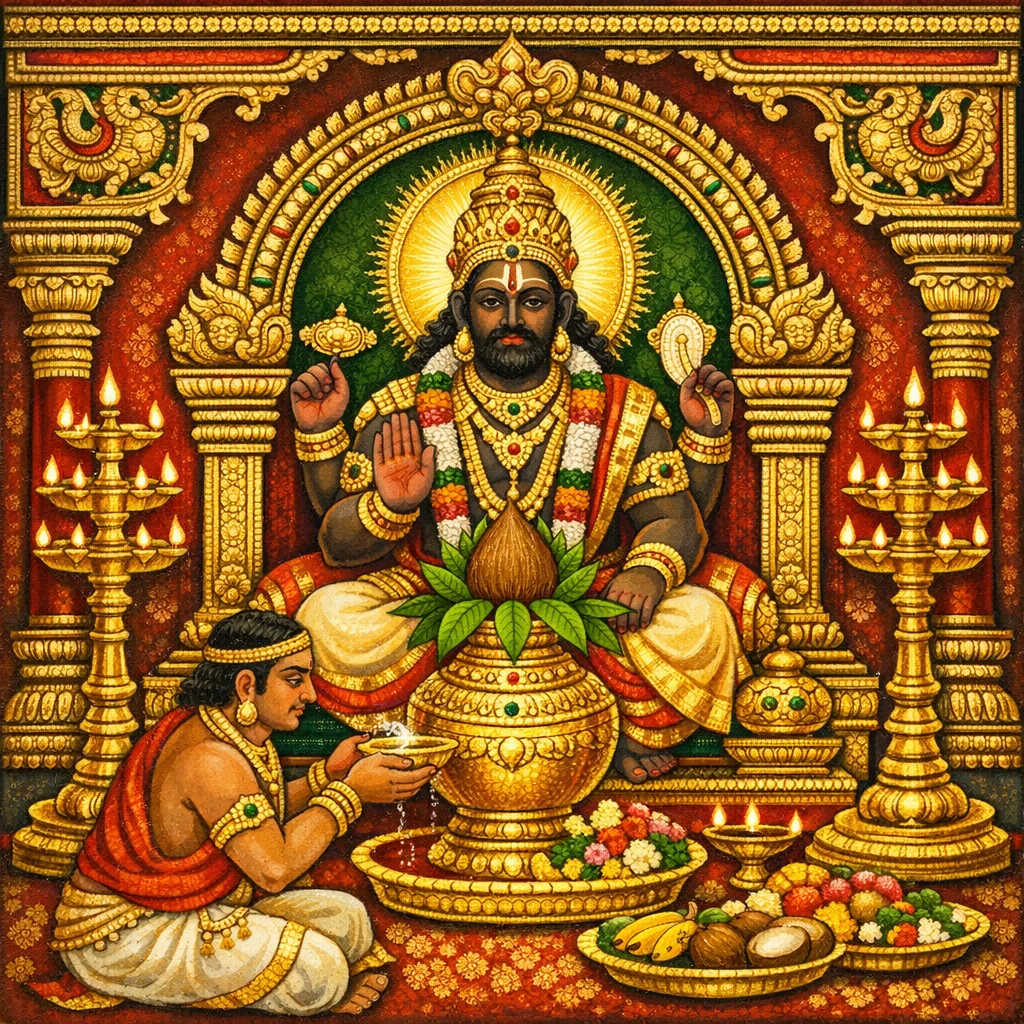
يصف الربّ أغني طقسًا على هيئة «فْرَتَه» يتمحور حول أغاستيا، ويُصرَّح فيه بأن أغاستيا هو بعينه فيشنو، وبذلك تُربَط عبادة الحكيم بالخلاص الفيشناوي (نيل هاري). والعبادة محددة الزمن ومنضبطة الخطوات: ثلاثة أيام، قبل شروق الشمس، يصوم القائم بالطقس ويعبد ويقدّم «أرغيا» لأغاستيا. وعند وقت «برادوشا» تُنصَّب صورة من أزهار الكاشا داخل إناء ماء (غَطَ/كومبها)، ثم تُقام سَهَرة ليلية (براجاغارا). وفي الصباح تُقدَّم الأرغيا قرب مورد ماء مع أناشيد تمجّد أعمال أغاستيا الأسطورية (تجفيف المحيط؛ القضاء على آتَابي–فاتَابي) مع التماس البركات وحسن المصير بعد الموت. ويذكر الفصل موادّ الطقس وبنية العطاء: صندل، أكاليل، بخور، أقمشة، أرز/حبوب، فواكه، ذهب، وهبة الإناء لبرهمن، مع إطعام و«دكشِنا» (بقرة، ثياب، ذهب). كما يورد اختلافات في صيغ المانترا، وقاعدة تيسير: للنساء وللشودرا يُؤدّى الطقس بلا مانترا فيدية. ويُقال إن المواظبة الطويلة (سبع سنوات من الأرغيا) تمنح رخاءً شاملًا—أبناءً لمن لا ولد له، وزوجًا ملكيًا للعذراء.
Shlokas
No shlokas available for this adhyaya yet.
Frequently Asked Questions
Fasting and worship precede the arghya; at pradoṣa a kāśa-flower image is placed in a ghaṭa/kumbha, followed by night vigil; in the morning the arghya is offered near water, then tyāga (grain, fruit, libation) and charitable gifts/feeding of brāhmaṇas conclude the rite.
Sandalwood, garlands, incense, cloth, rice/grains, fruits, gold (and in an expanded description: five gems, gold and silver, seven grains, curd, sandalwood), plus a pot-gift to a brāhmaṇa and dakṣiṇā including cow, garments, and gold.
The rite explicitly aims at attaining Hari through Agastya-worship (mukti-oriented devotion) while also promising dharma-anchored prosperity—health, fortune, desired boons, lineage, and marital success—thus integrating dharma, artha, kāma, and mokṣa.
It states that for women and Śūdras the rite is ‘non-Vedic,’ i.e., performed without Vedic mantras, indicating an inclusive procedural adaptation while preserving the devotional and charitable structure.
By giving the arghya for seven years, ‘all obtain everything’: a childless woman gains sons and good fortune, and a maiden gains a husband of royal birth; the arghya is also described in some readings as imperishable and mind-fulfilling.