Adhyaya 204
Chapter 204 — मासोपवासव्रतम् (The Vow of Month-long Fasting)
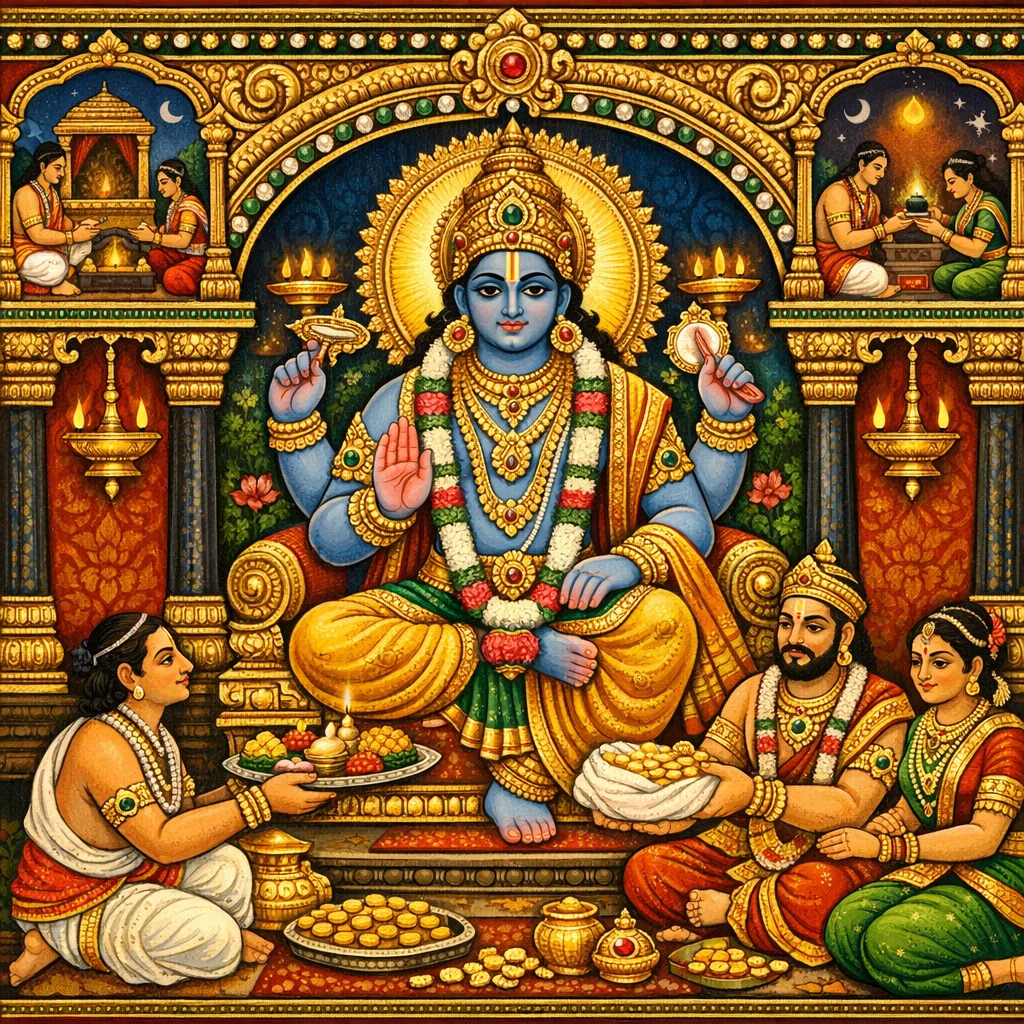
يُعلِّم الإله أغني الحكيمَ فاسيشثا «نذر صوم الشهر» (māsopavāsa-vrata) بوصفه أسمى النذور، ويُؤدَّى بعد قربانٍ فايشنفي وبإذن الغورو. يختبر الملتزم قدرته بتقشّفاتٍ تمهيدية (مثل kṛcchra)، وتُوسَّع الأهلية لتشمل الساكنين في الغابة (vānaprastha) والزهاد والنساء، مع التصريح بإدخال الأرامل. يبدأ النذر في النصف المضيء من شهر آشفينا، بعد صوم إكادشي، ويستمر ثلاثين يومًا بوصفه عبادةً لفيشنو حتى «أُتّهانَه» (استيقاظه). يقوم الناذر بثلاث عبادات يومية لفيشنو (Viṣṇu-pūjā) مع اغتسالٍ ثلاثي وتقديم القرابين والتلاوة والتأمل، مع ضبطٍ صارم للكلام وترك التعلّق وقيودٍ في المخالطة والسلوك. وفي يوم دفادشي يُختَم النذر بالعبادة وإطعام البراهمة وإعطاء الدكشِنا وأداء الفطر الطقسي (pāraṇa) على الوجه الصحيح. يذكر الفصل عطايا معيارية (لا سيما في مجموعات من ثلاث عشرة) ويعد بثمارها: التطهير ورفع السلالة ونيل فيشنولوكا؛ وتُمنَح رخصة رحيمة بالحليب والسمن (ghee) إن أغمي على الناذر، إذ يُعدّان هافيسًا مُجازًا لدى البراهمة.
Shlokas
No shlokas available for this adhyaya yet.
Frequently Asked Questions
It is undertaken in the bright fortnight of Āśvina, after fasting on Ekādaśī, and is maintained for up to thirty days, oriented toward worship of Viṣṇu until his Utthāna.
After assessing personal capacity via austerities like kṛcchra, the vow is prescribed for vānaprasthas, ascetics (yatis), and women—explicitly including widows.
Thrice-daily worship of Viṣṇu, triple bathing, offering fragrance and flowers, recitation of Viṣṇu hymns/praises, and meditation, accompanied by restraints on speech and desire for gain.
The vow is completed by worship, feeding brāhmaṇas on Dvādaśī, giving dakṣiṇā and prescribed gifts, and then performing pāraṇa—the regulated, proper breaking of the fast.
No. The chapter states that milk and ghee given to a fainting vow-holder do not violate the vow, as they are treated as havis (an oblation) approved by brāhmaṇas.