Adhyaya 202
Puṣpādhyāya-kathana (Account of Flowers in Worship)
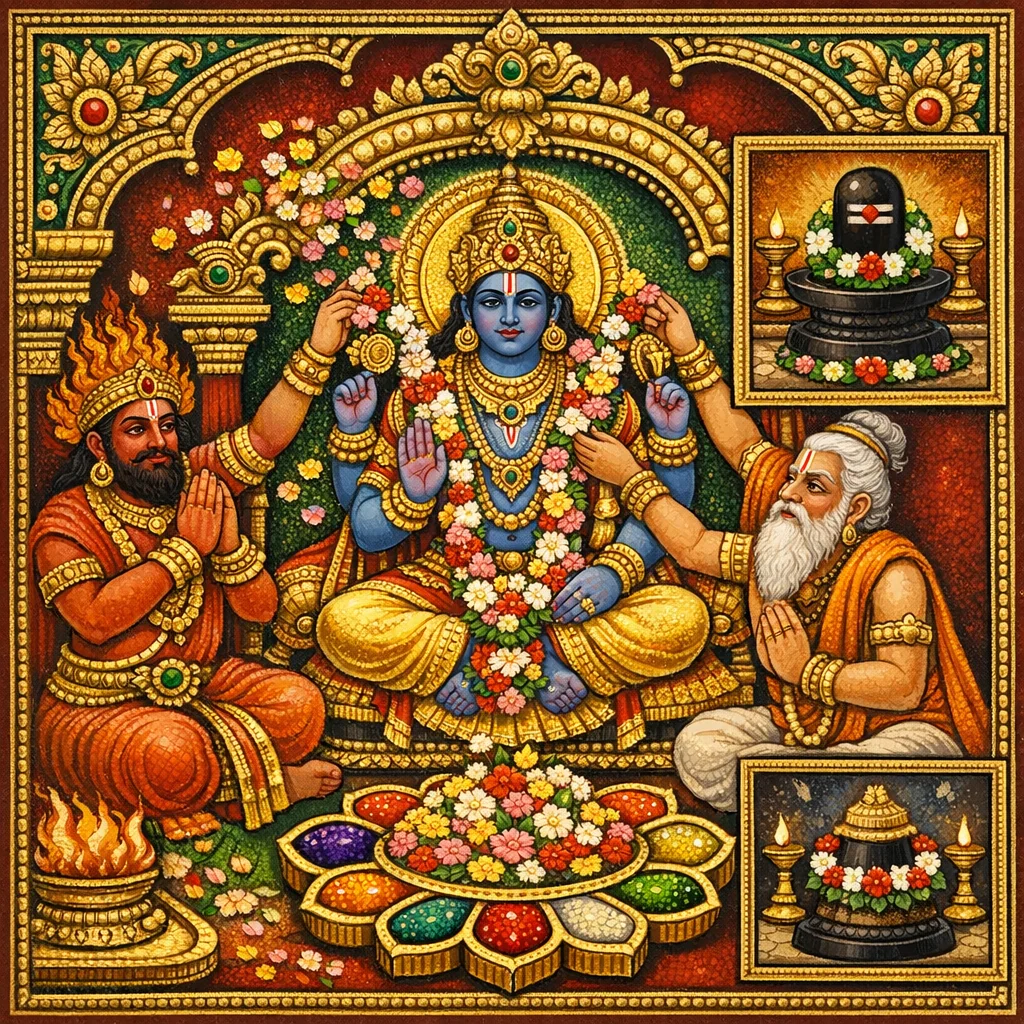
مواصلةً لتعليمات فْرَتَخَنْدَ العملية في العبادة، يشرح الربّ أغني للحكيم فاسيشثا أن القرابين—وخاصة الأزهار والمواد العطرة—هي وسائطُ بَكْتي منضبطة تُرضي هَري (فيشنو) وتمنح ثمارًا متدرجة: محو الإثم (pāpa-hāni)، والتمتّع الدنيوي (bhukti)، والتحرّر (mukti)، وبلوغ فيشنولُوكَا. يبدأ الفصل بإحصاء الأزهار والأوراق «اللائقة بالآلهة» (deva-yogya) وربط كثير من القرابين بنتائج روحية محددة، ثم يضع حدودًا: تُجتنب المواد الذابلة أو المكسورة أو المعيبة أو المشؤومة. كما يورد تمييزًا طائفيًا: أزهارٌ تصلح لفيشنو، وأخرى يُتعبَّد بها لشيفا، وبعض القرابين محرّمة على شيفا. وتبلغ التعاليم ذروتها في التوجّه إلى الباطن: فأسمى «الأزهار» هي الفضائل الأخلاقية والتأملية—اللاعنف (ahiṃsā)، قهر الحواس (indriya-jaya)، الحِلم/الصبر (kṣānti)، الرحمة (dayā)، السكينة (śama)، الزهد/التقشّف (tapaḥ)، التأمل (dhyāna)، الصدق (satya؛ وتذكر بعض المخطوطات أيضًا śraddhā)—مبيّنةً أن دقة الطقس الخارجي تكتمل بصفاء السيرة الداخلية. ويُختَم الفصل بوضع هذه القرابين ضمن أطر pūjā المنظَّمة (āsana، mūrti-pañcāṅga، aṣṭa-puṣpikā) وتسلسلات الأسماء الإلهية (Vāsudeva-ādi لفيشنو؛ Īśāna-ādi لشيفا).
Shlokas
No shlokas available for this adhyaya yet.
Frequently Asked Questions
Flowers and fragrant substances (gandha, dhūpa, dīpa, naivedya) are emphasized, with extensive lists of specific blossoms, lotuses, aromatic leaves, and also bilva and śamī leaves; the text also highlights that devotion (bhakti) makes all admissible offerings effective.
They are inner virtues presented as worship-offerings—commonly ahiṃsā, indriya-nigraha/jaya, kṣānti, dayā, śama/śānti, tapaḥ, dhyāna, and satya (with manuscript variation also referencing śraddhā). They are central because they complete external pūjā with ethical and contemplative transformation, aligning ritual with mukti.
One should avoid withered/fallen items, broken or damaged materials, and offerings marked by defects (described as “extra limbs/defects”); additionally, certain flowers are disallowed for Śiva, and inauspicious, non-fragrant items (e.g., associated with kuṣmāṇḍa or nimba in the text’s phrasing) are rejected.
It combines (1) catalog-style taxonomies of flowers and offering-types, (2) ritual-legal admissibility rules, (3) deity-specific liturgical distinctions, and (4) a moral psychology of worship via the inner ‘flowers’—integrating technical detail with the spiritual goals of bhukti and mukti.