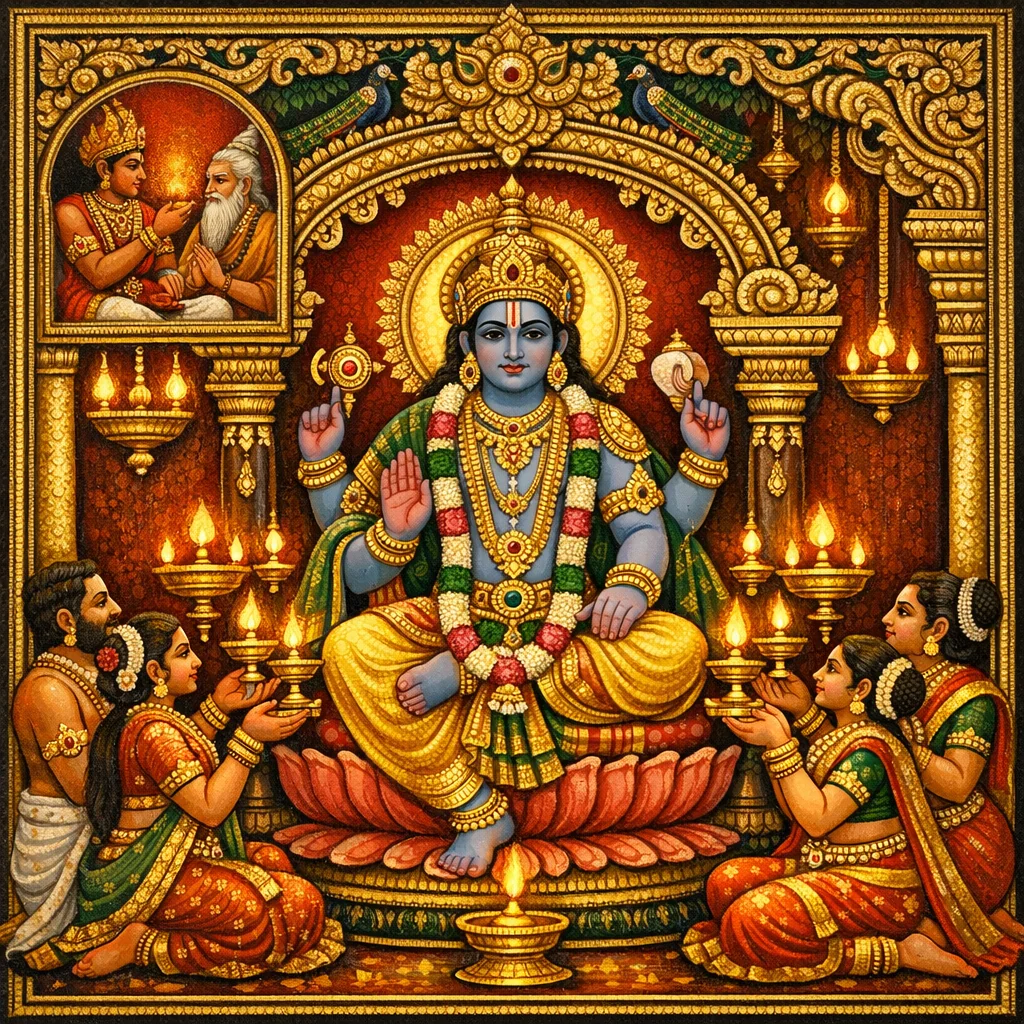
Adhyaya 200
Dīpadāna-vrata (The Vow of Offering Lamps)
يُعلِّم الإله أغني «ديبادانا-فراتا» (نذر إهداء المصابيح) بوصفه نذرًا يهب كلًّا من البهوكتي والمُكتي، مؤكِّدًا أن تقديم مصباح لمدة عام في مزار الإله أو في بيت براهمن يمنح رخاءً شاملًا. ويُرفَع إهداء المصباح إلى منزلةٍ لا يُضاهى فضلها، ولا سيما في فترة تشاتورماسيا وفي شهر كارتّيكا، مع وعدٍ بالوصول إلى عالم فيشنو ونيل لذّاتٍ سماوية. ثم يروي أغني مثال لاليتا: فعلٌ بدا عارضًا مرتبطًا بمصباح في معبد فيشنو—تمّ بلا قصدٍ متعمّد—أثمر ثمرةً عظيمة، فكان سببًا لولادتها من جديد في حظٍّ ملكي واتساع الازدهار الزوجي. وتمتد التعاليم من الوعد بالثواب إلى التحذير: سرقة المصابيح مُدانة، وعاقبتها الكارمية ولادةٌ بكماء/غليظة الفهم والسقوط في جحيم الظلمة. وتأتي موعظة أخلاقية تنتقد الانغماس في الشهوات والرغبات غير المشروعة (وخاصة الزنا)، وتوجّه السامع إلى ممارسةٍ يسيرة: ترديد اسم هاري وتقديم قرابين بسيطة مثل المصباح. ويختتم الفصل بتأكيد أن «ديبا-دانا» يضاعف ثمار جميع النذور، وأن سماع هذا التعليم واتباعه يرفع المصير إلى مراتب عليا.
Shlokas
No shlokas available for this adhyaya yet.
Frequently Asked Questions
Offer a lamp—ideally sustained as a yearly practice—in a deity’s shrine (especially Viṣṇu’s) or a brāhmaṇa’s home; the act is taught as a high-merit vrata granting prosperity, longevity, clarity of sight, and higher worlds, ultimately supporting liberation.
Kārttika is presented as a peak season of ritual potency: lamp-giving then is said to yield exceptional heavenly results, surpassing ordinary times and amplifying vrata-fruit.
It demonstrates that even an unpremeditated or indirect contribution to a lamp-offering in a Viṣṇu temple can generate powerful puṇya, underscoring the vow’s efficacy and the sacredness of temple-based offerings.
The chapter condemns dīpa-theft with severe karmic outcomes and uses hell imagery to caution against negligence, sense-addiction, and sexual misconduct (adultery), redirecting the practitioner toward dharmic restraint and Hari-nāma.