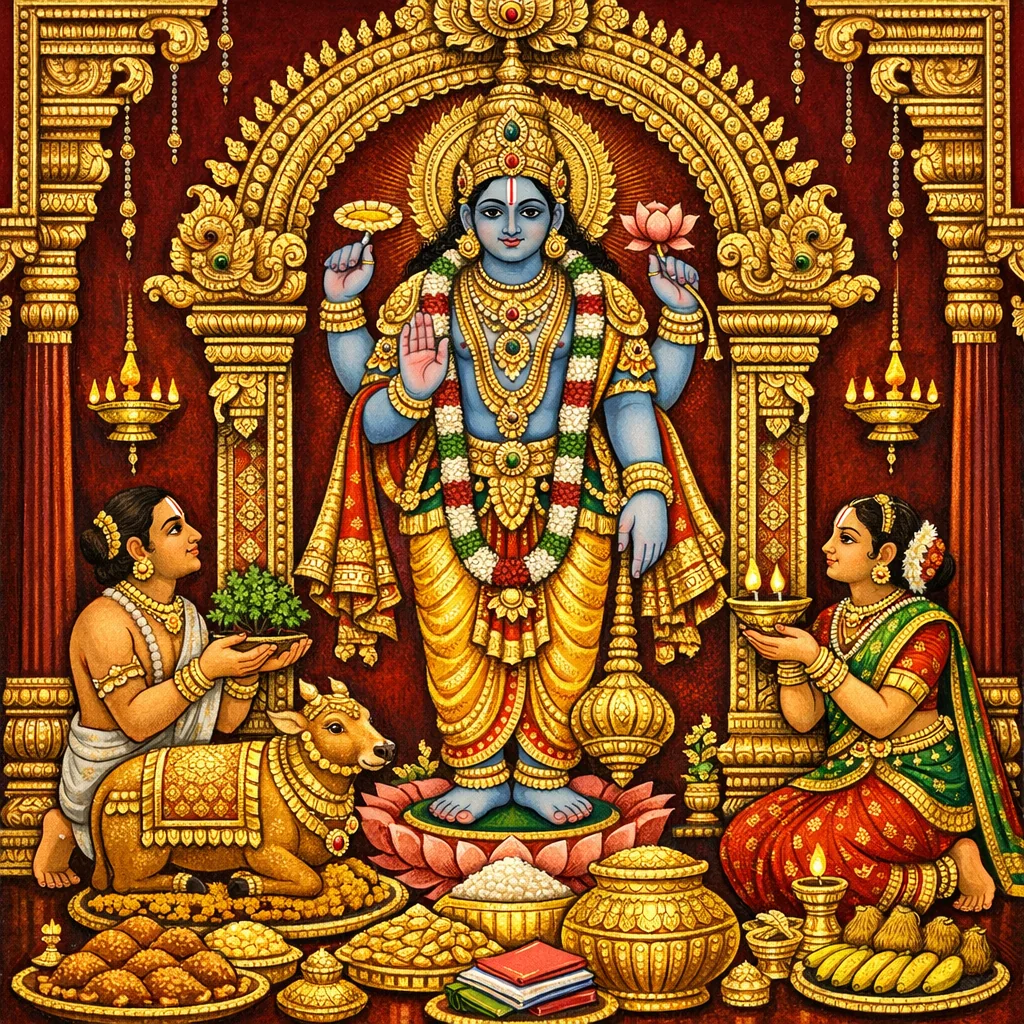
Adhyaya 198
Monthly Vows (Māsa-vratāni) and Cāturmāsya Disciplines; Introduction of Kaumudī-vrata
يبيّن الإله أغني أن māsa-vrata هو نظام نذورٍ شهريّ منضبط يثمر bhukti (النعيم الدنيوي) وmukti (التحرّر). يفتتح الفصل بقيودٍ على نمط Cāturmāsya، ولا سيّما ترك دهن الجسد بالزيت خلال الموسم المقدّس ذي الأشهر الأربعة، ثم يعدد التروكات والصدقات dāna بحسب الشهور: كالتصدّق ببقرة في شهر Vaiśākha، وتقديم «بقرة الجاغري» (jaggery-cow) في Māgha أو Caitra. ويربط الزهد الغذائي والسلوكي (nakta-bhojana، ekabhakta، نذر الفاكهة، صوم يومٍ بعد يوم، الصمت، cāndrāyaṇa، prājāpatya) بمقاماتٍ روحية متدرجة مثل السماء وViṣṇuloka، ثم بفضائل تتجه إلى التحرّر. ويكتمل إطار النذر طقسيًا عبر saṅkalpa (عقد النيّة) وتثبيته في التقويم: الاستعداد لـ Cāturmāsya، وعبادة Hari عند انتقال الشمس إلى Karkaṭa (السرطان)، والدعاء بأن يُحسب النذر مُنجزًا ولو حالت الوفاة دونه. ويختم الفصل بتقديم Kaumudī-vrata في Āśvina، مع عبادة Viṣṇu في يوم Dvādaśī بالزهور والمصابيح وتقديم السمن (ghee) وزيت السمسم، وتلاوة المانترا «Om namo Vāsudevāya»، واعدًا بنيل puruṣārtha الأربعة.
Shlokas
No shlokas available for this adhyaya yet.
Frequently Asked Questions
Renunciation of oil-anointing (abhyanga/taila-tyāga) during the four months beginning with Āṣāḍha, paired with dawn-bathing and devotion to Hari.
It repeatedly couples renunciation/fasting with formal gifts—especially go-dāna and guḍa-dhenu—presenting donation as the outward completion of inner restraint and a generator of merit and higher worlds.
The Kaumudī-vrata (Āśvina) is introduced: on Dvādaśī, worship Viṣṇu with lotus-type flowers, offer lamp and naivedya using ghee and sesame-oil, and recite ‘Om namo Vāsudevāya’.
By mapping regulated conduct (niyama), calendrical worship, and charitable giving to tangible outcomes (bhukti) while explicitly promising Viṣṇuloka/Vaikuṇṭha and liberation-oriented fruits (mukti), culminating in the fourfold puruṣārtha attainment through Kaumudī-vrata.