Adhyaya 190
Chapter 190: Akhaṇḍa-dvādaśī-vrata (The Unbroken Dvādaśī Vow)
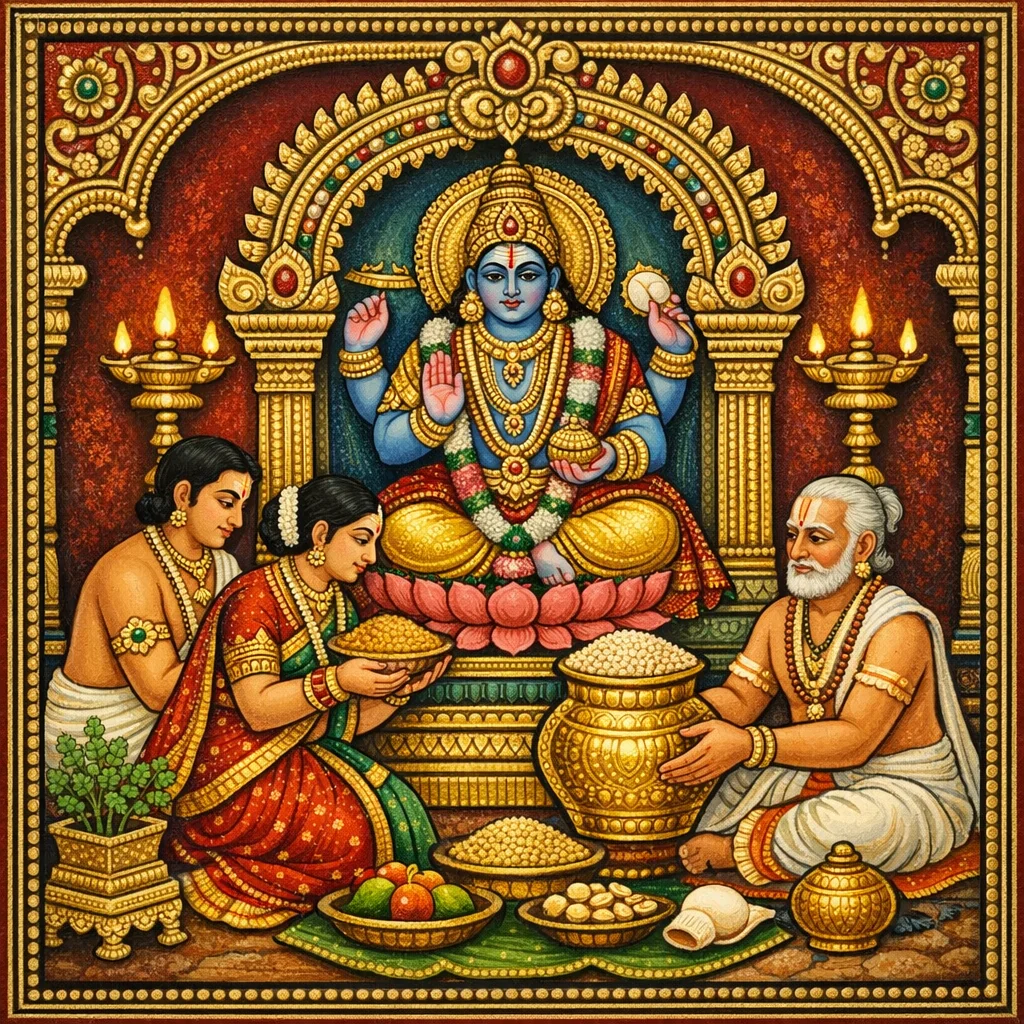
يُعلِّم الإله أغني الحكيم فاسيشثا نُسُك «أخَنْدَ-دْفادَشي» بوصفه شعيرةً لتحقيق كمال النذور (vrata-sampūrṇatā)، أي جعل العهود «تامّة» بلا انقطاع. يصوم الملتزم في دْفادَشي من النصف المضيء لشهر مارغَشِيرشا (Mārgaśīrṣa) تعبّدًا لفيشنو، بعد الاغتسال بماء البَنْتشَغَفْيَا (pañcagavya) وتناول مادة التطهير على الوجه الطقسي. ومن أركانه الأساسية الصدقة (dāna): ففي يوم دْفادَشي يُقدَّم لبرهمن إناءٌ يحتوي على الشعير والأرز. ثم يضع الفصل إطارًا لاهوتيًا للدعاء: يتضرّع الناذر إلى فيشنو أن يُصلح ما اعتراه من نقص في النذور المتراكمة عبر سبع ولادات، مستندًا إلى الصورة الميتافيزيقية بأن الكون «غير منقطع» في بُرُشُوتَّمَا (Puruṣottama). ويُوسِّع أغني هذا النظام إلى رياضات دورية—مراسم شهرية و«تشاتورماسيا» (Cāturmāsya)—مع قرابين مخصوصة لكل شهر مثل أوعية śaktu (دقيق الشعير المحمّص). وأخيرًا يؤكد النص ضرورة التوقيت الصحيح من شرافَنا (Śrāvaṇa) حتى إتمام الفطر الطقسي (pāraṇa) في نهاية كارتِّيكا (Kārttika)، محذرًا من أن التقصير قد يتردد أثره عبر سبع ولادات، بينما يهب الالتزام الناجح طول العمر والصحة والبركة والسلطان والتمتعات.
Shlokas
No shlokas available for this adhyaya yet.
Frequently Asked Questions
It is explicitly framed as a rite for vrata-sampūrṇatā—making vows complete and ‘unbroken,’ including repairing deficiencies believed to persist across seven births through Viṣṇu’s grace.
Fasting on bright Mārgaśīrṣa Dvādaśī for Viṣṇu, bathing in pañcagavya-water and partaking of it, and giving a brāhmaṇa a vessel containing barley and rice on Dvādaśī.
The votary’s prayer links personal vow-completion to the cosmic ‘unbroken wholeness’ of the universe identified with Puruṣottama (Viṣṇu), making ritual integrity a mirror of ontological unity.
The course is described as beginning in Śrāvaṇa and reaching pāraṇa at the end of Kārttika, aligning with the Cāturmāsya-related discipline and its closure.
Long life, freedom from disease, good fortune, sovereignty/kingship, and enjoyments (along with similar prosperities) are stated as outcomes.