Adhyaya 186
Daśamī-vrata (Observance for the Tenth Lunar Day)
مواصلةً لترتيب أعمال النذر بحسب «التيثي» في قسم الفراتا، وبعد الفراغ من نذور اليوم التاسع (نافمي)، يعرّف الرب أغني نذر اليوم العاشر «داشمي-فراتا». ويبيّن ثماره بلغة «البوروشارثا»—منح الدارما، والكاما، وما يتصل بهما—مُظهِراً الانضباط الطقسي أداةً للفضل الأخلاقي‑الروحي وللازدهار الدنيوي المنظّم. وجوهر الممارسة هو الكفّ والضبط: في يوم داشمي يُلتزم «إكابهكتا» (وجبة واحدة)، تأكيداً لتنظيم الطعام كوسيلة للتطهير. ويُختَتم النذر بـ«دانَا» (الصدقة)، مع تحديد عطية ذات شأن اجتماعي: التبرع بعشر بقرات، ليكتمل التقشّف الخاص بالإحسان العام. ويُذكر أيضاً تبرع ذو مكانة: تقديم الجهات الثماني (ديك) مصوغةً من ذهب، ويُقال إنه يرفع منزلة الواهب إلى مقام السيادة بين البراهمة. وهكذا يربط تعليم أغني بين الانضباط الداخلي (نيياما)، والزمن المقدّس بحسب التيثي، والكرم الخارجي (دانَا) في برنامج دارمي واحد.
Shlokas
No shlokas available for this adhyaya yet.
Frequently Asked Questions
The practitioner observes ekabhakta on Daśamī—taking a single meal—establishing dietary restraint as the vow’s primary discipline.
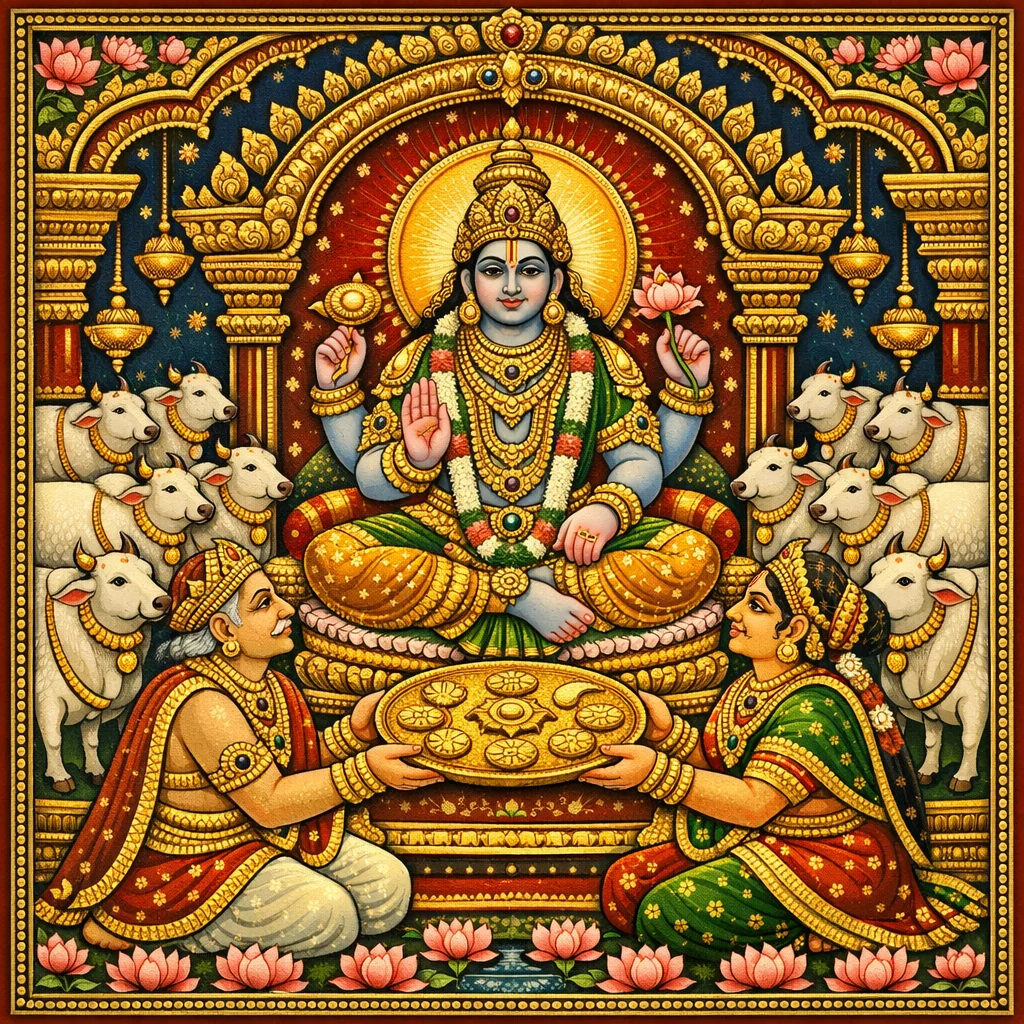
Upon completion of the vow, one should gift ten cows (daśa-dhenu-dāna), making dana the culminating act that externalizes the merit of the observance.
The text states that gifting the directions (dik) fashioned in gold results in becoming a lord among Brāhmaṇas, indicating social-spiritual elevation linked to high-value symbolic dana.
By combining tithi-discipline (Daśamī), bodily restraint (ekabhakta), and compassionate redistribution (dana), the vrata trains self-control and generosity—core dharmic virtues that support both worldly order and inner purification.