Adhyaya 179
Caturthī-vratāni (Vows of the Fourth Lunar Day)
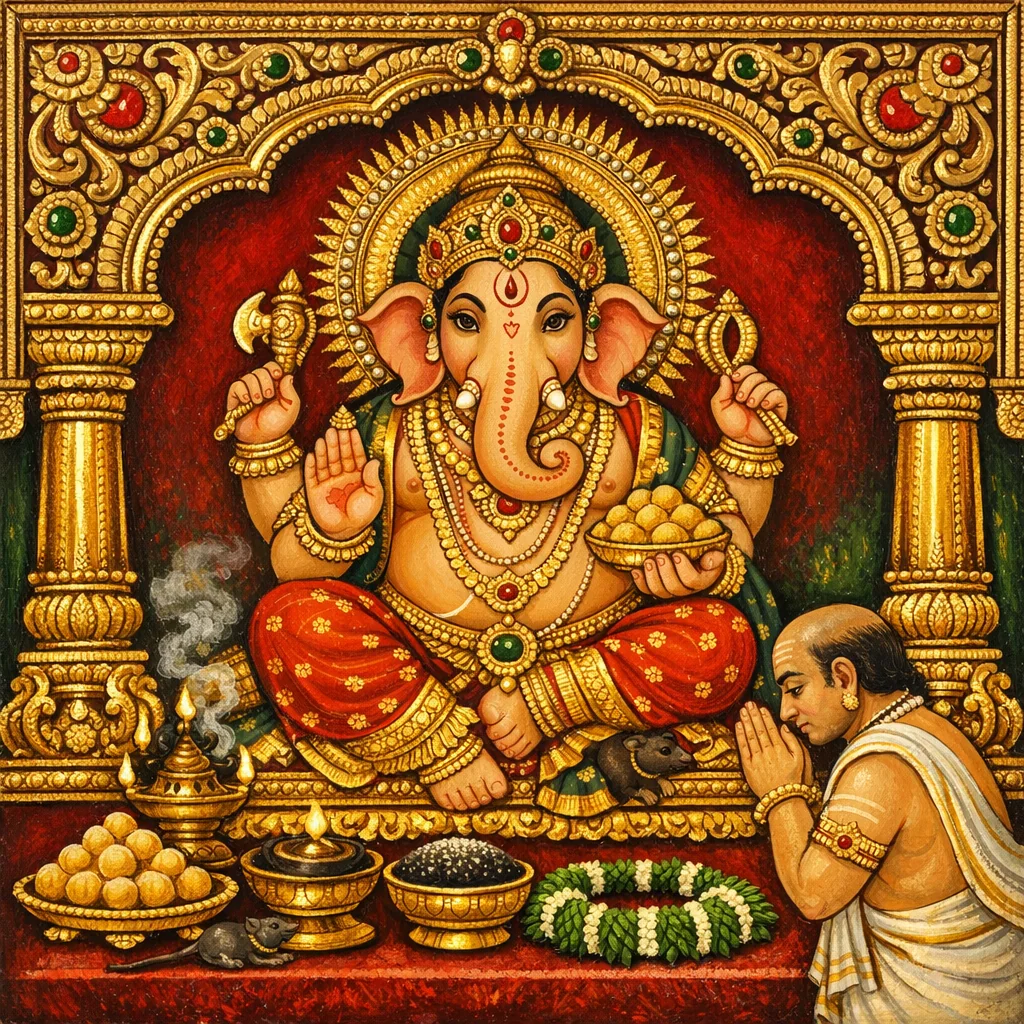
يبدأ الإله أغني عرضًا منهجيًا لعهود/نذور يوم «تشاتورثي» (Caturthī)، ويصرّح بأنها رياضات ذات ثمرتين تمنح Bhukti (النعيم والمنافع الدنيوية) وMukti (التحرّر والخلاص). يفتتح الفصل بإشارة موجزة إلى اختلافات الروايات/المخطوطات، ثم يورد أحكامًا بحسب الأشهر وبحسب الـtithi (اليوم القمري). في Māgha śukla-caturthī يُؤمر بالصوم والعبادة مع جعل «Guṇa» (الفضيلة/التميّز) محور التركيز الطقسي. وتمتد الممارسة إلى pañcamī بتقديم أرزّ ممزوج بالسمسم طلبًا لسلامة عامٍ كامل بلا عوائق، مع إدخال المانترا الجذرية (mūla-mantra) «gaṁ svāhā» وبيان استعمالها في aṅga-nyāsa (تثبيت المانترا على القلب والأعضاء بمانترات تبدأ بـ«gām»). ثم يحدّد النص ترتيبًا دقيقًا لطقسي āvāhana وvisarjana باستعمال «āgaccha ulkā» و«gaccha ulkā»، مع قرابين مثل عطر guggulu وحلوى modaka، وإضافة مانترا على نمط Gaṇeśa-gāyatrī. وأخيرًا يرسم عبادات مخصوصة: كفّارة/تقشّف Bhādrapada Caturthī Kṛcchra، وصوم الليل في Phālguna Caturthī المسمّى Avighnā، وعبادة Gaṇa في Caitra Caturthī بأوراق damana وعشب dūrvā، مُظهرًا الـvrata كتقنية للبركة والتطهير الروحي.
Shlokas
No shlokas available for this adhyaya yet.
Frequently Asked Questions
It specifies mantra-technology and ritual sequencing: the mūla-mantra “gaṁ svāhā,” its gāmādi application as hṛdaya and aṅga-mantras for nyāsa, and the precise āvāhana–visarjana formulas (“āgaccha ulkā” / “gaccha ulkā”) alongside prescribed offerings.
By presenting Caturthī vratas as disciplined, time-bound sādhana that removes obstacles (Avighnā), cultivates restraint (fasting/kṛcchra), and aligns ritual action with inner purification—thereby supporting both worldly stability (Bhukti) and liberation-oriented refinement (Mukti).