Adhyaya 176
Pratipadā-vratāni (Vows Observed on the Lunar First Day)
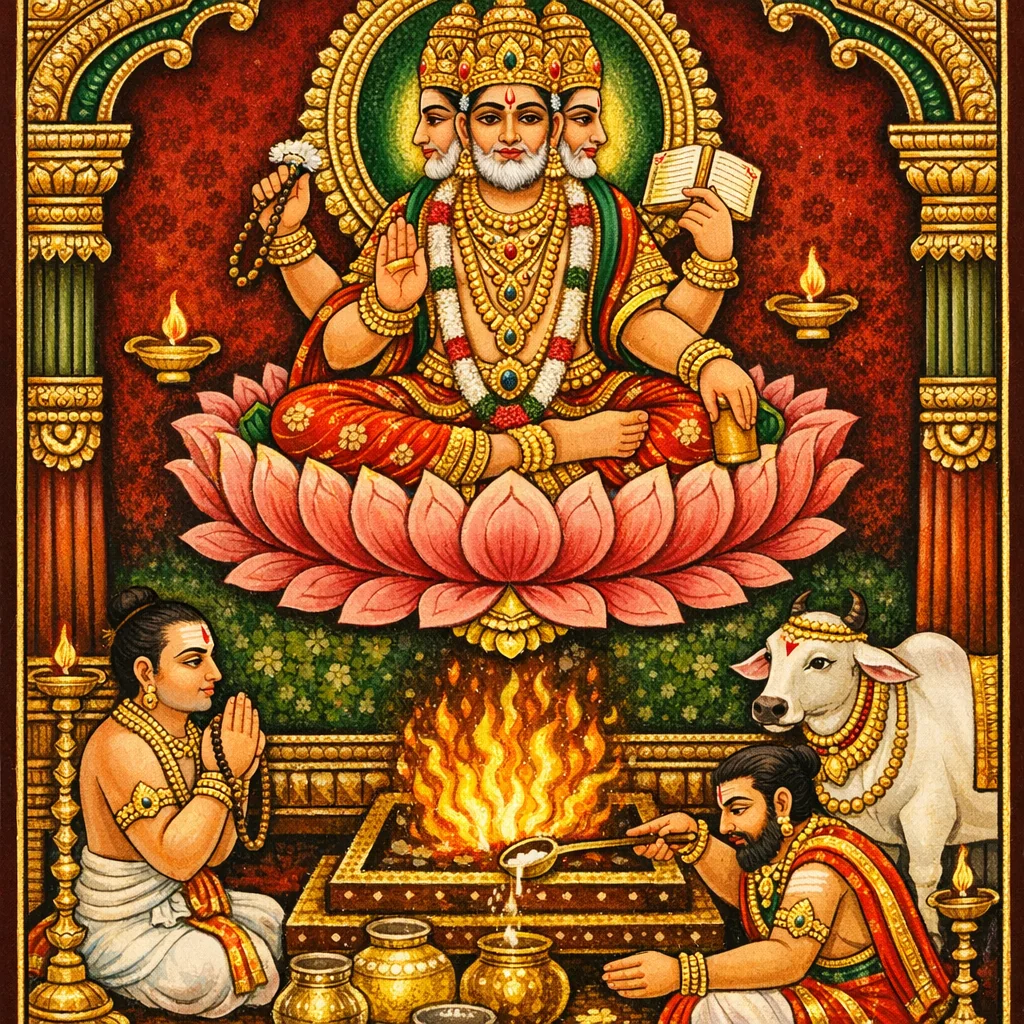
يبدأ الإله أغني عرضًا منظّمًا لِـ«فْرَتَات» (vrata) المعتمدة على يوم «براتيبادا» (Pratipadā)، مُبيّنًا أن اليوم القمري الأول هو مدخلٌ ذو قوّة طقسية إلى انضباطٍ يمتدّ عامًا كاملًا. ويُعرِّف براتيبادا في أشهر كارتِّيكا (Kārttika) وآشْفَيوجا (Āśvayuja) وتشيترا (Caitra) بأنها «تيثي» (tithi) لبراهما (Brahmā)، رابطًا زمن التقويم بتركيزٍ تعبّدي على إلهٍ بعينه. ثم يشرح «تقنية» الفرتا: أحكام الصيام (ومنها الامتناع الطويل عن الطعام وأنماط الأكل المنضبطة)، وترديد المانترا «Oṃ tat sat brahmaṇe namaḥ» مع غاياتري (Gāyatrī)، والتصوّر الأيقوني الواضح لبراهما (ذهبيّ اللون، ذو شعرٍ مُلبَّد/مجدول، يحمل مسبحة akṣamālā ومغارف القرابين ومعه إناء kamaṇḍalu). ويُدمَج العطاء (dāna) بوصفه ثمرةً أخلاقية قابلة للقياس—هبةُ اللبن «بحسب الاستطاعة»—مع ثمارٍ مذكورة: التطهير، والتمتّع السماوي، والرخاء الدنيوي لِلبراهمن. ويقدّم مسارًا ثانيًا «دهانيا-فرتا» (Dhanya-vrata) في شهر مارغاشيرشا (Mārgaśīrṣa) مع انضباط «نَكْتَا» (nakta: الأكل ليلًا) وطقس الهومة (homa)، ثم عبادة أغني لمدة سنة، وختامًا بهبة بقرةٍ شقراء مائلة للبني. ويُختَم الفصل بذكر «شيخي-فرتا» (Śikhī-vrata) وثمرته: نيل حالة/مقام فايشفانارا (Vaiśvānara)، جامعًا بين ثمرة البهوكتي (bhukti: الازدهار) والمقاصد الروحية العليا.
Shlokas
No shlokas available for this adhyaya yet.
Frequently Asked Questions
Kārttika, Āśvayuja, and Caitra are identified as months where Pratipadā is regarded as Brahmā’s tithi.
The chapter prescribes the mantra “Oṃ tat sat brahmaṇe namaḥ” together with Gāyatrī, maintained as a year-long observance.
Brahmā is described as golden and matted-haired, with akṣamālā and a ladle (śruva) in the right hand, and a sacrificial ladle (śruc) and kamaṇḍalu in the left, with a long tuft/brush-like emblem (lambakūrca).
Milk is to be donated according to capacity with the resolve “May Brahmā be pleased,” yielding purification, heavenly enjoyment, and wealth on earth (for a brāhmaṇa). The Dhanya/Agni-oriented year observance culminates in gifting a kapilā (tawny) cow.
By mapping time-discipline (tithi), mantra, and dāna into repeatable observances culminating in destinations like Vaiśvānara pada, it frames vrata as a sādhana that integrates ethical action and higher spiritual attainment (bhukti-mukti samanvaya).