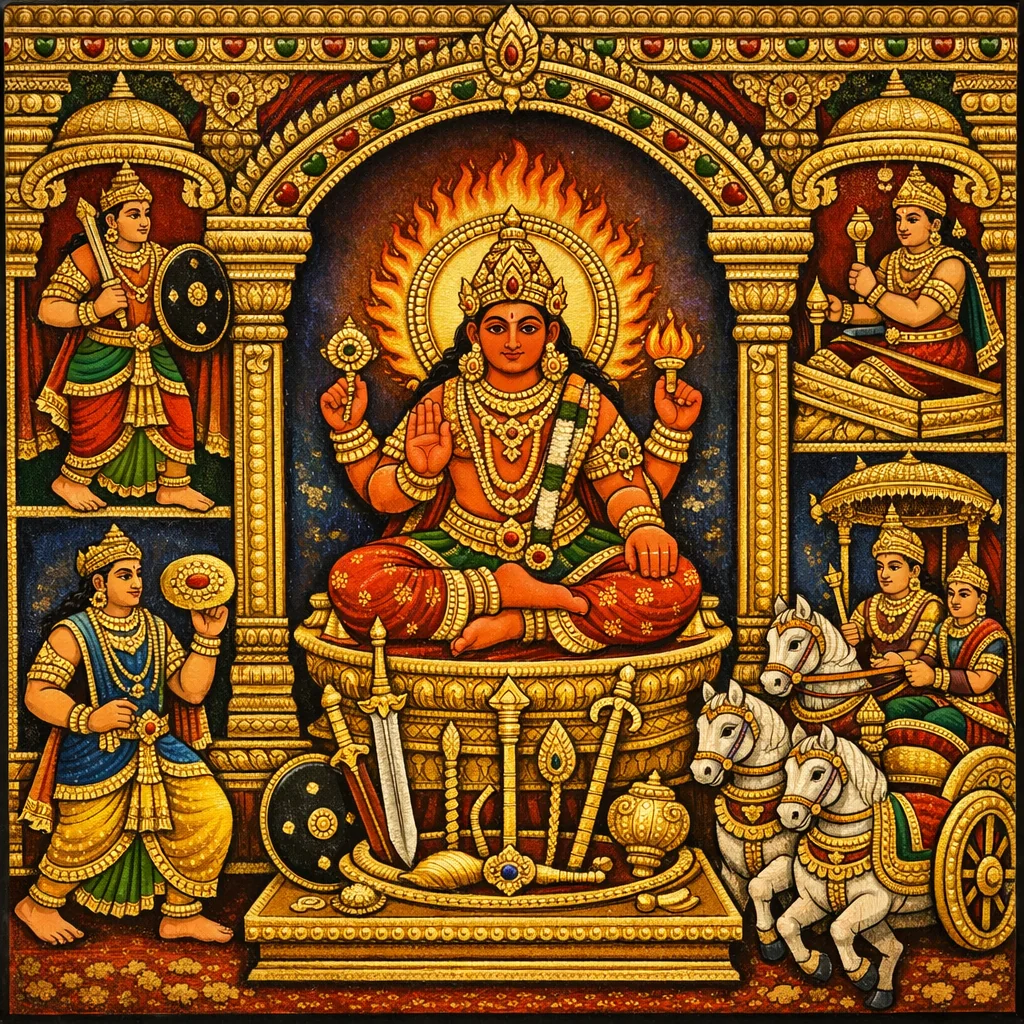
Adhyaya 251
Dhanurveda-kathana (Exposition of Martial Science): Movements, Weapon-Operations, Combat Postures, and Battle Readiness
يُعدِّد الإله أغني تصنيفًا تقنيًّا لحركات ساحة القتال وأنماط الهجوم (bhrānta، udbhrānta، śyenapāta، ākula)، ثم ينتقل إلى أزواجٍ مُسمّاة ووحداتٍ بنيوية تعمل كفئاتٍ مُقنَّنة للتدريب والتلاوة. وتمضي السورة في مناهج عملية: (1) طريقة السيف والترس مع اثنتين وثلاثين وقفة (pratyālīḍha، ālīḍha، varāha، lulita)، (2) مناورات المصارعة والإمساك—الدوران، القبض، الرمي إلى أعلى/أسفل، التثبيت والإفلات، (3) تصنيفات الرباط/الحبل العقابي وعملياته (vyasta-pāśa مع أفعالٍ مقررة)، و(4) أعمالٌ خاصة بكل سلاح: cakra، śūla، tomara، gadā، parāśu، mudgara، bhindipāla، laguḍa، vajra، paṭṭiśa والسيف—لتبلغ yantra-karman (تشغيل الآلات/المحركات). كما تُسجِّل إشارات اليد (hastas/mudrās)، وعلامات التأثير في الجسد، وأشياءَ للحماية أو للدواء/الطقس. وتتناول الأبيات الختامية لوجستيات الحرب: تسليح الفيلة والعربات، وتعيين حاملي المهماز، والرماة، وحملة السيوف والتروس، وتقديس السلاح بالمانترا—وتنتهي بأمرٍ ملكي: الغلبة ثم حماية المملكة وفق الدharma.
Shlokas
No shlokas available for this adhyaya yet.
Frequently Asked Questions
A codified taxonomy of martial practice: named movement/attack modes, enumerated stance-systems (including thirty-two sword-and-shield postures), and weapon-specific karmas (operations) extending from hand weapons to cakra and yantra (mechanical devices), plus prescribed roles and equipment for elephants, chariots, and protective units.
By presenting warfare as Agneya Vidya governed by dharma: weapons are consecrated with mantra, skill is disciplined through named and countable methods, and victory is ethically completed by the duty to protect and govern—aligning embodied mastery (bhukti) with righteous order and higher purpose (mukti-oriented restraint).