Adhyaya 216
Gāyatrī-nirvāṇa (The Liberative/Concluding Doctrine of Gāyatrī)
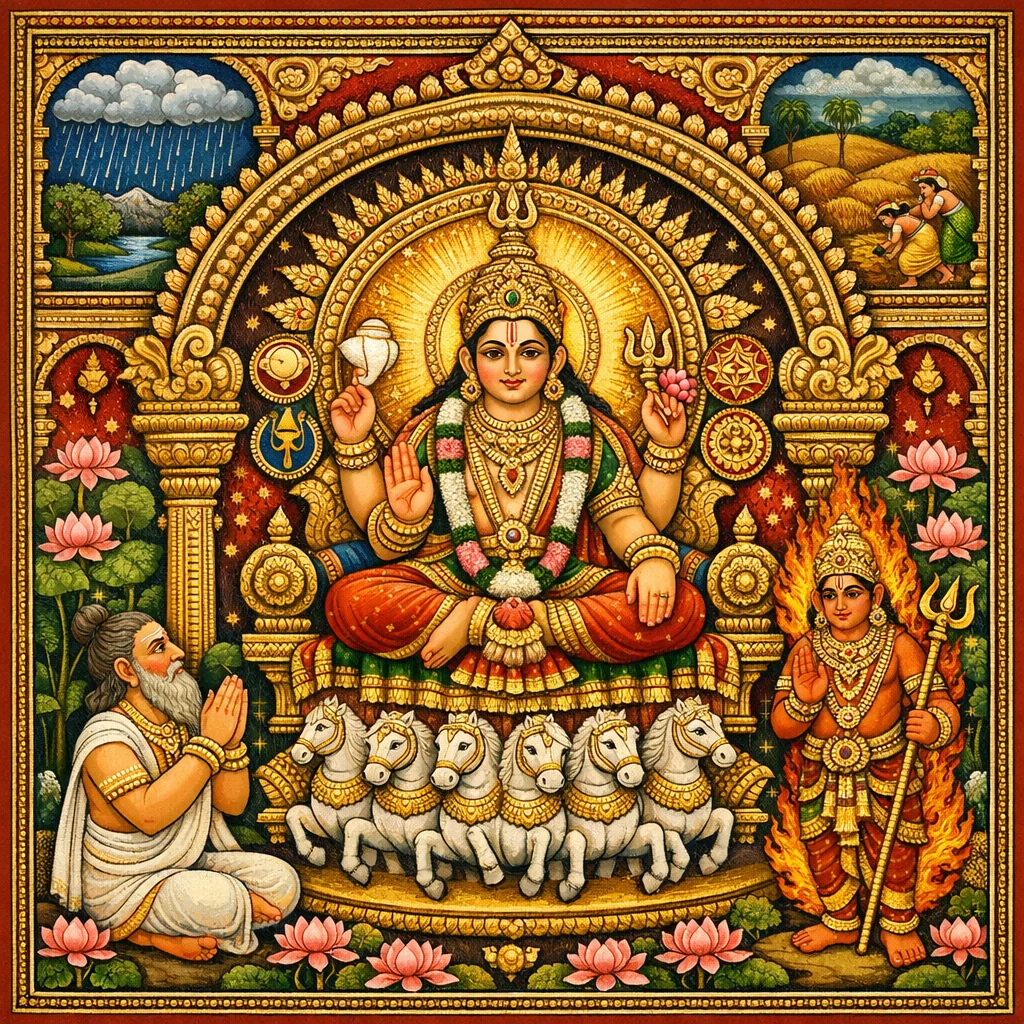
بعد إتمام طقس السندهيا (Sandhyā-vidhi) يعلّم الإله أغني أن يُختَم العمل بالـجَپَة لمانترا الغاياتري (Gāyatrī-japa) وبالاستذكار (smaraṇa)، مؤكِّداً أن المانترا هي حماية (rakṣā) وانضباط باطني. ثم يعرض الفصل تفسيراً لغوياً-لاهوتياً: تُسمّى غاياتري «سافيتري» (Sāvitrī) لأنها تُنير، وتُسمّى «ساراسفتي» (Sarasvatī) لأنها صورة كلام سافيتṛ (vāc). ويُشرح لفظ bharga من جذور تدل على اللمعان والتطهير كـ«الإحراق/الطبخ»، رابطاً الإشراق بالتنقية التحويلية. ويُثبت vareṇyam بوصفه الحالة الأسمى المختارة، التي يرغب فيها طلاب السماء والتحرر (mokṣa)، بينما يُفسَّر dhīmahi بأنه تثبيت ذهني متواصل وتأمل. ويحلّ النص القراءات المذهبية بإظهار نور المانترا حقيقة واحدة تُتلى بأسماء فيشنو أو شيفا أو شاكتي أو سوريا أو أغني، مع تقرير براهمان الواحد في مطلع الفيدا. ثم تأتي كوسمولوجيا طقسية: القربان لأغني يسند الشمس فينتج المطر والغذاء والكائنات، مبيناً أن المانترا والطقس يحفظان العالم. والذروة ذات طابع أدفايتا: النور الأعلى في قرص الشمس هو حقيقة التورية (turīya) وهو «المقام الأسمى لفيشنو» (Viṣṇu-parama-pada)؛ وبالتأمل تُدمَّر الولادة والموت والآلام الثلاثة، ويُختَم بإعلان الهوية: «أنا براهمان… أنا ذلك الشخص الشمسي (Puruṣa)، اللامتناهي (Oṃ)».
Shlokas
No shlokas available for this adhyaya yet.
Frequently Asked Questions
Completion through Gāyatrī-japa and mental recollection (smaraṇa), framed as both spiritual discipline and protective power for disciples, spouse, and vital breaths (prāṇa).
Bharga is interpreted as tejas (radiance) and purifying brilliance, supported by etymological links to roots meaning ‘to shine’ and ‘to burn/cook’ (purificatory transformation).
It acknowledges multiple recitations (Śiva, Śakti, Sūrya, Agni) while asserting their unity in the one supreme light/Brahman, explicitly identifying that light with Viṣṇu as the world-cause.
It presents a causal chain: oblation to Agni supports Āditya; from the Sun comes rain; from rain food; from food living beings—linking ritual action to world-order.
By meditating on the supreme light as turīya within the solar orb, one destroys birth-death and threefold suffering, culminating in the non-dual recognition ‘I am Brahman’ and identity with the Āditya-Puruṣa.