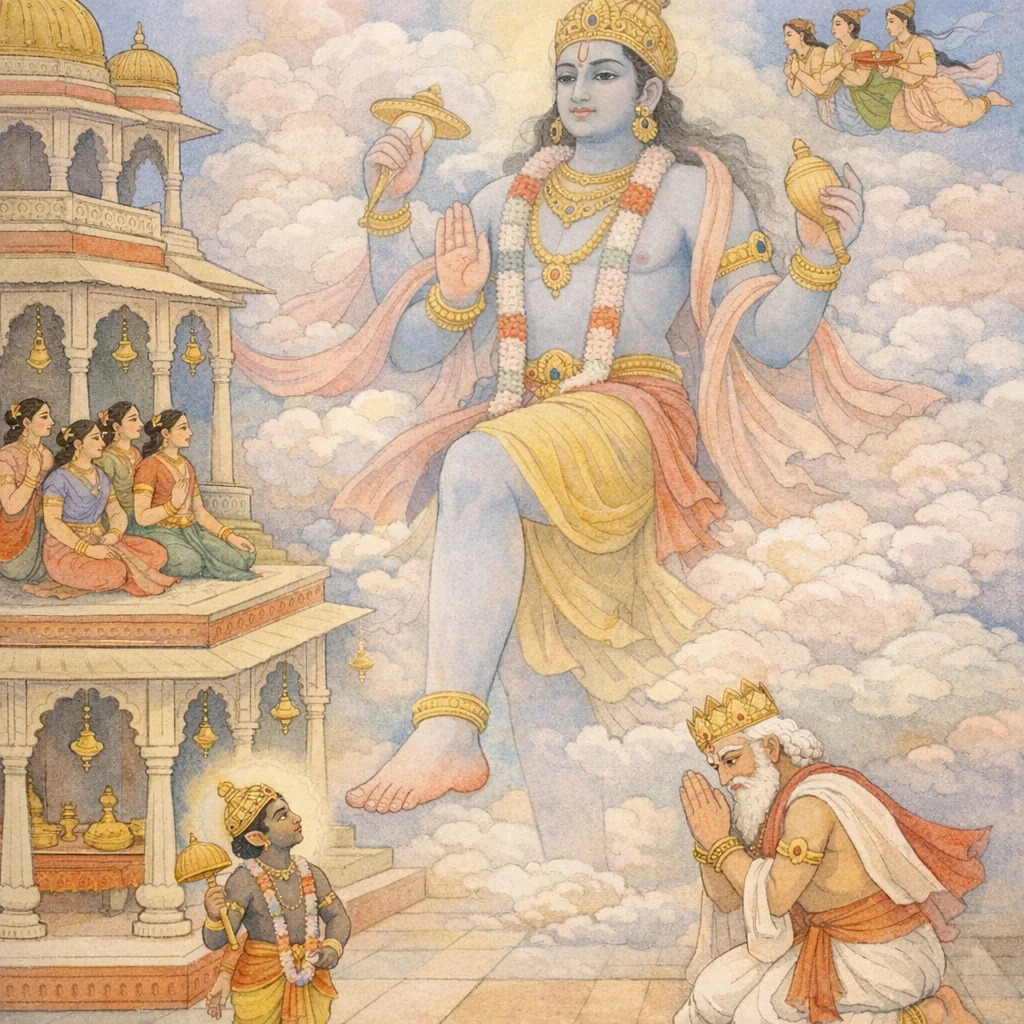
Adhyaya 66: Vishnu’s Return to Brahmā and the Vāmana–Trivikrama Theophany
ब्रह्मसदने वामन-त्रिविक्रम-दर्शनम् (Brahmasadane Vāmana-Trivikrama-Darśanam)
Vishnu's Return to Brahma
Adhyāya 66 continues the Pulastya–Nārada narrative frame by shifting the scene from Bali’s subjugation to the post-episode divine itinerary of Viṣṇu. Nārada asks where the all-pervading Lord disappears after restoring Svarga to Indra, and what Bali does while established in Sutala—questions that anchor the chapter’s theological and narrative transitions. Pulastya recounts Viṣṇu’s movement from the deva-abode to Brahmā’s court, where the creator-god receives Vāsudeva with ritual hospitality. At Brahmā’s request, Viṣṇu reveals an iconographic theophany: the compact Vāmana form simultaneously discloses the vast, cosmic Trivikrama body, prompting Brahmā’s prostration and an extended nāma-stotra that frames Viṣṇu as the source of the varṇas and the cosmos. The chapter emphasizes syncretic theology through shared liturgical idioms (Vedic vaṣaṭ/svadhā formulae and epithets such as “Mahādeva”), presenting Vaiṣṇava supremacy in a register intelligible to Śaiva and Vedic devotional cultures, before promising the next account of Bali’s asura-dharma in Rasātala.
Divine Beings
Sacred Geography
Mortal & Asura Figures
Key Content Points
- Pulastya–Nārada dialogue: Nārada inquires about Viṣṇu’s disappearance after granting Svarga to Indra and about Bali’s conduct in Sutala (asura-dharma and post-bondage state).
- Divine itinerary and courtly reception: Viṣṇu departs the deva-abode, reaches Brahmā’s Brahmasadana, and is welcomed with pūjā and embrace, establishing a formal theophanic setting.
- Iconographic theophany and liturgical climax: Viṣṇu reveals the Vāmana/Trivikrama form; Brahmā offers a long nāma-stotra with cosmogonic claims (varṇa-origins, cosmic limbs), Vedic sacrificial vocabulary, and syncretic epithets; Viṣṇu grants Brahmā’s boon and remains worshipped in Vāmana-form.
Shlokas in Adhyaya 66
Verse 10
तं दृष्ट्वा पुण्डरीकाक्षं योजनायुतविस्तृतम् तावानेवोर्ध्वामानेन ततो ऽजः प्रणतो ऽभवत्
Seeing Him—the lotus-eyed Lord—expanded to a breadth of ten thousand yojanas, and of equal measure in height, then the Unborn (Brahmā) bowed down in reverence.
Verse 11
ततः प्रणम्य सुचिरं साधु साध्वित्युदीर्य च भक्तितम्रो महादेवं पद्मजः स्तोत्रमीरयत्
Then, having bowed down for a long time and exclaiming 'Excellent! Excellent!', the Lotus-born (Brahma), flushed with devotion, recited a hymn to Mahadeva.
Verse 12
ॐ नमस्ते देवाधिदेव वासुदेव एकशृङ्ग बहुरूप वृषाकपे भूतभावतन सुरासुरवृष सुरासुरमथन पीतवासः श्रीनिवास असुरनिर्मितान्त अमितनिर्मित कपिल महाकपिल विष्वक्सेन नारायण (5) ध्रुवध्वज सत्यध्वज खङ्गध्वज तालध्वज वैकुण्ठं पुरुषोत्तम वरेण्य विष्णो अपराजित जय जयन्त विजय कृतावर्त महादेव अनादे अनन्त आद्यान्तमध्यनिधन पुरञ्जय धनञ्जय शुचिश्रव पृश्निगर्भ (10) कमलगर्भ कमलायताक्ष श्रीपते विष्णुमूल मूलाधिवास धर्माधिवास धर्मवास धर्माध्यक्ष प्रजाध्यक्ष गदाधर श्रीधर श्रुतिधर वनमालाधर लक्ष्मीधर धरणीधर पद्भनाम (15) विरिञ्जे आर्ष्टिषेण महासेन सेनाध्यक्ष पुरुष्टुत बहुकल्प महाकल्प कल्पनामुख अनिरुद्ध सर्वग सर्वात्मन् द्वादशात्मक सूर्यात्मक सोमात्मक कालात्मक व्योमात्मक भूतात्मक (20) रसात्मक परमात्मन् सनातन मुञ्जकेश हरिकेश गुडाकेश केशव नील सूक्ष्म स्थूल पीत रक्त श्वेत श्वेताधिवास रक्ताम्बरप्रिय प्रीतिकर प्रीतिवास हंस नीलवास सीरध्वज सर्वलोकाधिवास (25) कुशेशय अधोक्षज गोविन्द जनार्दन मधुसूदन वामन नमस्ते सहस्रशीर्षो ऽसि सहस्रदृगसि सहस्रपादो ऽसि त्वं कमलो ऽसि महापुरुषो ऽसि सहस्रबाहुरसि सहस्रमूर्तिरसि त्वं देवाः प्राहुः सहस्रवदनं (30) तेनमस्त ॐ नमस्ते विश्वदेवेश विश्वभूः विश्वात्मक विश्वरूप विश्वसंभव त्वत्तो विश्वामिदमभवद् ब्राह्मणास्त्वन्मुखेभ्यो ऽभवन् क्षत्रिया दोःसंभूताः ऊरुयुग्माद् विसो ऽभवन् शूद्राश्चरणकमलेभ्यः (35) नाभ्या भवतो ऽन्तरिक्षमजायत इन्द्राग्नीवक्त्रतो नेत्राद् भानुरभून्मनसः शशाङ्कः अहं प्रसादजस्तव क्रोधात् त्र्यम्बकः प्राणाज्जातो भवतो मातरिश्वा शिरसो द्यौरजायत श्रोत्राद् दिशो भूरियं चरणादभूत्श्रोत्रोद्भवादिशोभवतः स्वयंभोनक्षत्रास्तेजोद्भवाः (40) मूर्त्तयश्चामूर्तयश्च सर्वे त्वत्तः समुद्भूताः अतो विश्वात्मको ऽसि ॐ नास्ते पुष्पहासो ऽसि महाहासो ऽसि परमो ऽसि ॐ कारो ऽसि वषट्कारो ऽसि स्वराहाकारो ऽसि वौषट्कारो ऽसि स्वधाकारो ऽसि वेदमयो ऽसि तीर्थमयो ऽसि यजमानमयो ऽसि (45) यज्ञमयो ऽसि सर्वधातासि यज्ञभोक्तासि शुक्रधातासि भूर्द भुवर्द स्वर्द स्वर्णद गोद अमृतदो ऽसीति ॐ ब्रह्मादिरसि ब्रह्मयो ऽसि यज्ञो ऽसि वेदकामो ऽसि वेद्यो ऽसि यज्ञधारो ऽसि महामीनो ऽसि महासेनो ऽसि महाशिरा असि (50) नृकेसर्यसि होतासि होम्यो ऽसि हव्यो ऽसि हूयमानो ऽसि हयमेधो ऽसि पोतासि पावयितासि पूतो ऽसि पूज्यो ऽसि दातासि हन्यमानो ऽसि ह्रियमाणो ऽसि हर्त्तासीति ॐ नीतिरसि नेतासि अग्र्यो ऽसि विश्वधामासि शुभाण्डो ऽसि ध्रुवो ऽसि आरणेयो ऽसि (55) ध्यानो ऽसि ध्येयो ऽसि ज्ञेयो ऽसि ज्ञानो ऽसि ज्ञानो ऽसि यष्टासि दानो ऽसि भूमासि ईक्ष्यो ऽसि ब्रह्मासि होतासि उद्गातासि गतिमतां गतिरसि ज्ञानिनां ज्ञानमसि योगिनां योगो ऽसि मोक्षगामिनां मोक्षो ऽसि श्रीमतां श्रीरसि गृह्यो ऽसि पातासि परमसि (60) सोमो ऽसि सूर्यो ऽसि दीक्षासि दक्षिणासि नरो ऽसि त्रिनयनो ऽसि महानयनो ऽसि आदित्यप्रभवो ऽसि सुरोत्तमो ऽसि शुचिरसि शुक्रो ऽसि नभोसि नभस्यो ऽसि इषो ऽसि ऊर्जो ऽसि सहो ऽसि सहस्यो ऽसि तपो ऽसि तपस्यो ऽसि मधुरसि (65) माधवो ऽसि कालो ऽसि संक्रमो ऽसि विक्रमो ऽसि पराक्रमो ऽसि अश्वग्रीवो ऽसि महामेधो ऽसि शङ्करो ऽसि हरिश्वोरो ऽसि शंभुरसि ब्रह्मेशो ऽसि सूर्यो ऽसि मित्रावरुणो ऽसि प्राग्वंशकायो ऽसि भृतादिरसि महाभूतो ऽसि ऊर्ध्वकर्मासि कर्त्तासि (70) सर्वपापविमोचनो ऽसि त्रिविक्रमो ऽसि ॐ नमस् ते पुलस्त्य उवाच इत्थं स्तुतः पद्मवेन विष्णुस्तपस्विभिश्चाद्भुतकार्मकारी प्रोवाच देवं प्रपितामहं तु वरं वृणीष्वामलसत्त्ववृत्ते
Om, Salutations to You, O God of Gods, Vasudeva, the One-horned One (Varaha/Fish), the Multiform One, Vrishakapi. You are the essence of beings, the churner of Devas and Asuras, clad in yellow, the abode of Sri. You are Narayana, Vaikuntha, and Purushottama. You are the invincible victor, the beginningless and endless Mahadeva. You are the wielder of the mace, the discus, and the lotus. You are the Cosmic Soul (Vishvarupa)—the Brahmins were born from Your mouth, Kshatriyas from Your arms, Vaishyas from Your thighs, and Shudras from Your feet. The moon was born from Your mind, the sun from Your eyes, Indra and Agni from Your mouth, and the wind from Your breath. You are the embodiment of the Vedas, the Sacrifice (Yajna), and Time (Kala). You are the months (Madhu, Madhava, etc.) and the seasons. You are Shankara, Shambhu, and the Three-eyed One (Trinetra). You are Trivikrama and the deliverer from all sins. Om, Salutations to You. Pulastya said: Thus praised by the Lotus-born (Brahma) and the ascetics, Vishnu, the performer of miraculous deeds, spoke to the Great-Grandfather (Brahma): 'O one of pure nature, choose a boon.'
Verse 13
तमब्रवीत् प्रीतियुतः पितामहो वरं ममेहाद्य विभो प्रयच्छ रूपेण पुण्येन विबो ह्यनेन संस्थीयतां मद्भवने मुरारे
Filled with affection, the Grandfather (Brahma) spoke to Him: 'O All-pervading Lord, grant me a boon here today. O Murari, please reside in my abode with this very auspicious form.'
Verse 14
इत्थं वृते देववरेण प्रादात् प्रभुस्तथास्त्विति तमव्ययात्मा तस्थौ हि रूपेण हि वामनेन संपूज्यमानः सदने स्वयंभोः
Thus requested by the foremost of the gods, the Lord granted it, saying, “So be it.” The Imperishable Self then remained there in the very form of Vāmana, being duly worshipped in the abode of Svayaṃbhu (Brahmā).
Verse 15
नृत्यन्ति तत्राप्सरसां समूह्य गायन्ति गीतानि सुरेन्द्रगायनाः विद्याधरास्तूर्यरांश्च वादयन् स्तुवन्ति देवासुरसिद्धसङ्घाः
There, the companies of Apsarases dance together; the singers of the lord of the gods sing songs. The Vidyādharas play musical instruments, and the assembled hosts of Devas, Asuras, and Siddhas offer praise.
Verse 16
ततः समाराध्य विभुं सुराधिपः पितामहो धौतमलः स शुद्धः स्वर्गे विरिञ्चिः सदनात् सुपुष्पाण्यानीय पूजां प्रचकार विष्णोः
Then, having duly propitiated the all-pervading Lord, Pitāmaha—the lord of the gods—Viriñci in heaven, purified and with his impurities washed away, brought excellent flowers from his abode and performed worship of Viṣṇu.
Verse 17
स्वर्गे सहस्रं स तु योजनानां विष्णोः प्रमाणेन हि वामनो ऽभूत् तत्रास्य शक्रः प्रचकार पूजां स्वयंभुवस्तुल्यगुणां महर्षे
“In Svarga, by Viṣṇu’s own measure, that (stride/extent) became a thousand yojanas; and there Śakra (Indra) performed worship of him—worship endowed with qualities comparable to those of Svayambhū (Brahmā), O great sage.”
Verse 18
एतत् तवोक्तं भगवांस्त्रिविक्रमश्चकार यद् देवहितं महात्मा रसातलस्थो दितिजश्चकार यत्तच्छृणुष्वाद्य वदामि विप्र
“Thus, the Blessed Lord Trivikrama—the great-souled one—did what was beneficial to the gods, as you have said. Now hear what the Diti-born (demon), dwelling in Rasātala, did; today I shall tell you, O brāhmaṇa.”
Frequently Asked Questions
The chapter is overtly Vaiṣṇava in narrative focus (Viṣṇu as Vāmana/Trivikrama), yet it adopts a syncretic liturgical register: Brahmā’s stotra uses shared Vedic-sacrificial formulae (oṃkāra, vaṣaṭ, svadhā) and includes epithets such as “Mahādeva,” while also referencing Tryambaka (Śiva) as arising within the cosmic order. This frames sectarian deities within a single cosmogonic hierarchy, allowing Śaiva vocabulary to function inside a Vaiṣṇava theophany.
This Adhyāya is primarily trans-cosmic rather than tīrtha-topographical: it sanctifies divine spaces (Svarga/Triviṣṭapa, Brahmasadana, and the nether realms Sutala/Rasātala) through narrative movement and ritual worship, but it does not specify Kurukṣetra, Sarasvatī, forests, or named terrestrial tīrthas in the given passage.
Nārada’s questions explicitly bridge the Bali episode to its aftermath: after Viṣṇu grants Svarga to Indra and vanishes, attention turns to Bali’s status in Sutala. Pulastya postpones the detailed account—ending with a promise to narrate what the diti-ja (Bali) does in Rasātala—thereby positioning this chapter as a theological interlude (theophany and stotra) that prepares the next phase focused on Bali’s asura-dharma.