Sarga 69
त्रिशिरा-प्रबोधनम् तथा नरान्तक-वधः (Trisira’s Counsel and the Slaying of Naranthaka)
युद्धकाण्ड
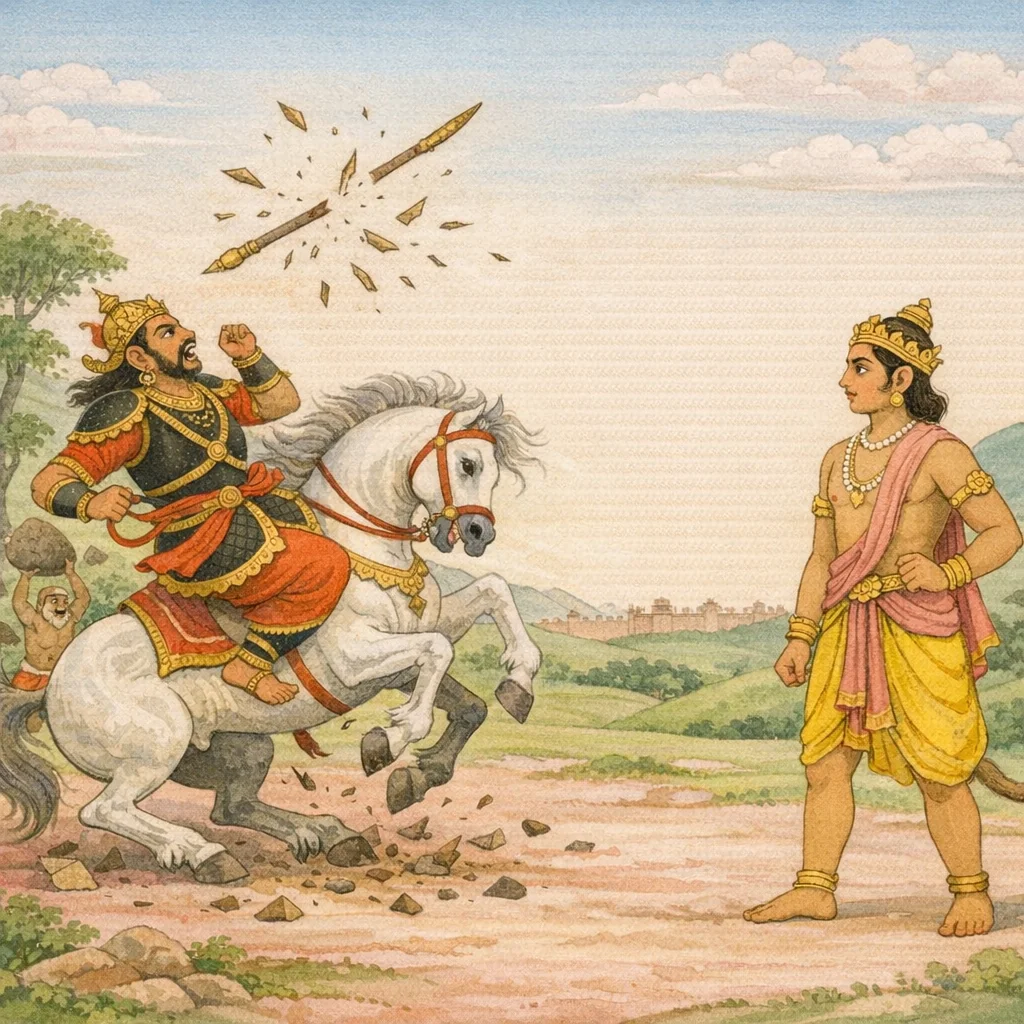
Sarga 69 pivots from courtly grief to kinetic battle. Trisira rebukes Rāvaṇa’s lamentation over Kumbhakarṇa, reframing kingship as disciplined composure and reminding him of his boons and armaments. Rāvaṇa, reanimated by this counsel, dispatches a cohort of six elite Rākṣasa leaders—Trisira, Atikāya, Devāntaka, Narāntaka, Mahodara, and Mahāpārśva—ritually anointed and magnificently equipped (elephant, chariots, horse, and heavy weapons). The narrative then shifts to battlefield spectacle: the Rākṣasa advance is likened to storm-clouds, while Vānara leaders respond with roars, uprooted trees, and lifted mountains. Amid chaotic mêlée, Narāntaka becomes the focal threat, carving through Vānara ranks with a blazing spear. Sugrīva, seeing panic, commands Aṅgada to neutralize the mounted assailant. Aṅgada confronts Narāntaka unarmed (nails and teeth as natural weapons), challenges him to throw the thunderbolt-like spear, and endures its shattering impact. Striking Narāntaka’s horse down with a palm-blow, Aṅgada then withstands a retaliatory fist-strike and counters with a death-vehement punch that splits Narāntaka’s chest, killing him. The sky resounds with celebratory acclaim from devas and vānaras, and Aṅgada’s feat is recognized as a difficult, morale-restoring victory within the larger war.
Shlokas
Verse 1
एवंविलपमानस्यरावणस्यदुरात्मनः ।श्रुत्वाशोकाभितप्तस्यत्रिशिरावाक्यमब्रवीत् ।।।।
Hearing the evil-minded Rāvaṇa lamenting, consumed by grief, Triśirā spoke to him.
Verse 2
एवमेवमहावीर्योहतोनस्तातमध्यमः ।न तुसत्पुरुषाराजन्विलपन्तियथाभवान् ।।।।
Indeed, our mighty one—your middle father and uncle—has been slain. Yet, O King, good men do not lament as you do.
Verse 3
नूनंत्रिभुवनस्यापिपर्याप्तस्त्वमसिप्रभो ।स कस्मात्प्राकृतइवशोचस्यात्मानमीदृशम् ।।।।
Surely, O King, you are equal to mastering even the three worlds—why then do you grieve for yourself like an ordinary man, in this manner?
Verse 4
ब्रह्मदत्ताऽस्तितेशक्तिःकवचस्सायकोधनुः ।सहस्रखरसंयुक्तोरथोमेघस्वनोमहान् ।।।।
You possess Brahmā’s gifts: a javelin, armour, arrows, and a bow—along with a great chariot yoked to a thousand donkeys, rumbling like a cloud.
Verse 5
त्वयाऽसकृद्विशस्त्रेणविशस्तादेवदानवाः ।स सर्वायुधसम्पन्नोराघवंशास्तुमर्हसि ।।।।
By you—again and again—even when weaponless, the Devas and Dānavas were overcome. Now, furnished with every kind of weapon, you are fit to subdue Rāghava (Rāma).
Verse 6
कामंतिष्ठमहाराजनिर्गमिष्याम्यहंरणम् ।उद्धरिष्यामितेशत्रूंन्गरुडःपन्नगानिव ।।।।
“Remain at ease, O great king. I shall go out to the battlefield and pluck up your enemies, as Garuḍa plucks up serpents.”
Verse 7
शम्बरोदेवराजेननरकोविष्णुवायथा ।तथाऽद्यशयितारामोमयायुधिनिपातितः ।।।।
“Just as Śambara was laid low by the lord of the gods, and Naraka by Viṣṇu, so today shall Rāma be felled by me in battle and made to lie prostrate.”
Verse 8
श्रुत्वात्रिशिरसोवाक्यंरावणोराक्षसाधिपः ।पुनर्जातमिवात्मानंमन्यतेकालचोदितः ।।।।
Hearing Triśiras’ words, Rāvaṇa—lord of the Rākṣasas—felt, as though driven by destiny, that he himself had been born anew.
Verse 9
श्रुत्वात्रिशिरसोवाक्यंदेवान्तकनरान्तकौ ।अतिकायश्चतेजस्वीबभूवुर्युद्धहर्षिताः ।।।।
Hearing Triśiras’ words, Devāntaka and Narāntaka—along with the radiant Atikāya—became eager for battle.
Verse 10
ततोऽहमहमित्येवगर्जन्तोनैरृतर्षभाः ।रावणस्यसुतावीराश्शक्रतुल्यपराक्रमाः ।।।।
Then Rāvaṇa’s heroic sons—bulls among the rākṣasas, equal to Indra in prowess—roared, each crying, “I! I!” (eager to lead).
Verse 11
अन्तरिक्षगतास्सर्वेसर्वेमायाविशारदाः ।सर्वेत्रिदशदर्पघ्नास्सर्वे च रणदुर्जयाः ।।।।
All of them could move through the sky; all were adept in magical arts; all could shatter the pride of the gods; and all were hard to defeat in battle.
Verse 12
सर्वेसुबलसम्पन्नास्सर्वेविस्तीर्णकीर्तयः ।सर्वेसमरमासाद्य न श्रूयन्तेस्मपराजिताः ।।।।देवैरपिसगन्धर्वैस्सकिन्नरमहोरगैः ।
All were endowed with immense strength; all were widely renowned; and when they entered battle, they were never heard of as defeated—even by the gods, the Gandharvas, the Kinnaras, or the great serpents.
Verse 13
सर्वेस्त्रविदुषोवीरास्सर्वेयुद्धविशारदाः ।।।।सर्वेप्रसवरविज्ञानास्सर्वेलब्धवरास्तथा ।
All were heroes skilled in weapons; all were expert in warfare; all were learned in ritual and sacred knowledge; and all had obtained boons as well.
Verse 14
सतैस्तथाभास्करतुल्यवर्चसैःपुस्त्रैर्वृतश्शत्रुबलप्रमार्दनैः ।रराजराजामघवान्यथामरै ।र्वृतोमहादानवदर्पनाशनैः ।।।।
Surrounded by hundreds of sons radiant like the sun and capable of crushing enemy forces, the king (Rāvaṇa) shone—like Indra encircled by the immortals, destroyers of the pride of great Dānavas.
Verse 15
स पुत्रान् सम्परिष्वज्यभूषयित्वा च भूषणैः ।आशीर्भिश्चप्रशस्ताभिःप्रेषयामाससम्युगे ।।।।
He embraced his sons, adorned them with ornaments, and sent them forth to battle with auspicious blessings.
Verse 16
युद्धोन्मत्तं च मत्तं च भ्रातरौचापिरावणः ।रक्षणार्थंकुमाराणांप्रेषयामाससंयुगे ।।।।
Rāvaṇa also sent his two brothers, Yuddhonmatta and Matta, into the battle to protect the young princes (his sons).
Verse 17
तेऽभिवाद्यमहात्मानंरावणंरिपुरावणम् ।कृत्वाप्रदक्षिणंचैवमहाकायाःप्रतस्थिरे ।।।।
Those mighty-bodied warriors saluted Rāvaṇa—terror to his enemies—and, having circumambulated him in reverence, set out.
Verse 18
सर्वौषधीभिर्गन्धैश्चसमालभ्यमहाबलाः ।निर्जग्मुर्नैरृतश्रेष्ठाषडेतेयुद्धकाङ्क्षिणः ।।।।
Those six foremost rākṣasa leaders, mighty in strength, anointed themselves with protective herbs and fragrances and marched out, eager for battle.
Verse 19
त्रिशिराश्चातिकायश्चदेवान्तकनरान्तकौ ।महोदरमहापार्श्वौनिर्जग्मुःकालचोदिताः ।।।।
Triśiras and Atikāya, along with Devāntaka and Narāntaka, and also Mahodara and Mahāpārśva, set forth—driven onward by Time (destiny).
Verse 20
ततस्सुदर्शनंनागंनीलजीमूतसन्निभम् ।ऐरावतकुलेजातमारुरोहमहोदरः ।।।।
Then Mahodara mounted the elephant named Sudarśana, dark as a blue rain-cloud, born in the lineage of Airāvata.
Verse 21
सर्वायुधसमायुक्तंतूणीभिश्चस्वलङ्कृतम् ।रराजगजमास्थायसवितेवास्तमूर्धनि ।।।।
Equipped with every weapon and adorned with quivers, he shone upon his elephant like the sun at the edge of its setting in the west.
Verse 22
हयोत्तमसमायुक्तंसर्वायुधसमाकुलम् ।आरुरोहरथश्रेष्ठंत्रिशिरारावणात्मजः ।।।।
Triśiras, Ravana’s son, mounted a superb chariot yoked to excellent horses and crowded with every kind of weapon.
Verse 23
त्रिशिरारथमास्थायविरराजधनुर्धरः ।सविद्युदुल्कश्शैलाग्रेस्सेन्द्रइवाम्बुदः ।।।।
Seated in his chariot, Triśiras the bowman blazed forth—like a cloud on a mountain-peak, charged with lightning and meteors, as though Indra were within it.
Verse 24
त्रिभिःकिरीटैश्शुशुभेत्रिशिरास्सरथोत्तमे ।हिमवानिशैलेन्द्रस्त्रिभिःकाञ्चनपर्वतैः ।।।।
Triśiras, upon his excellent chariot, shone with his three crowns—like Himavān, lord of mountains, gleaming with three golden peaks.
Verse 25
अतिकायोऽपितितेजस्वीराक्षसेन्द्रसुतस्तदा ।आरुरोहरथश्रेष्ठंश्रेष्ठस्सर्वधनुष्मताम् ।।।।
Then Atikāya too—radiant, son of the lord of rākṣasas, foremost among all archers—mounted a splendid chariot.
Verse 26
सुचक्राक्षंसुसंयुक्तंस्वनुकर्षंसुकूबरम् ।तूणीबाणासनैर्दीप्तंप्रासासिपरिघाकुलम् ।।।।
It had fine wheel-hubs, firm fittings, strong axles, and stout poles—blazing with quivers and bows, and crowded with spears, swords, and iron clubs.
Verse 27
सकाञ्चनविचित्रेणमकुटेनविराजता ।भूषणैश्चबभौमेरुःप्रभाभिरिवभासयन् ।।।।
With his wondrous golden crown shining, and with ornaments all around, he appeared like Mount Meru, as though illuminating everything with its radiance.
Verse 28
स रराजरथेतस्मिन् राजसूनुर्महाबलः ।वृतोनैरृतशार्दूलैर्वज्रपाणिरिवामरैः ।।।।
There, in that chariot, the mighty prince shone forth—surrounded by the tiger-like warriors of the rākṣasas—like Indra, the thunderbolt-bearer, amid the gods.
Verse 29
हयमुच्चैश्श्रवःप्रख्यंश्वेतंकनकभूषणम् ।मनोजवंमहाकायमारुरोहनरान्तकः ।।।।
Narāntaka mounted a huge, white horse famed as Uccaiḥśravas—adorned with gold and swift as thought.
Verse 30
गृहीत्वाप्रासमुल्काभंविरराजनरान्तकः ।शक्तिमादायतेजस्वीगुहशशिखिगतोयथा ।।।।
Seizing a spear like a blazing meteor, Narāntaka shone brilliantly—like Guha (Skanda), the peacock-crested one, bearing his śakti-javelin.
Verse 31
देवान्ककस्समादायपरिघंवज्रभूषणम् ।परिगृह्यगिरिंदोर्भ्यांवपुर्विष्णोर्विडम्बयन् ।।।।
Devāntaka took up a mace-like iron bar studded with diamond-hard ornaments; grasping it with both arms, he seemed to mimic the very form of Viṣṇu holding a mountain.
Verse 32
महापार्श्वोमहाकायोगदामादायवीर्यवान् ।विरराजगदापाणिःकुबेरइवसंयुगे ।।।।
Mahāpārśva, huge of body and mighty in valor, took up a mace and shone on the battlefield like Kubera with his club in hand.
Verse 33
तेप्रतस्थुर्महात्मानोऽमरावत्यास्सुराइव ।तान् गजैश्चतुरङ्गैश्चरथैश्चाम्बुन्दिस्स्वनैः ।।।।अनूत्पेतुर्महात्मानोराक्षसाःप्रवरायुधाः ।
Those great princes set forth like the gods of Amarāvatī; and behind them followed great rākṣasas, bearing excellent weapons, with elephants, horses, and chariots that rumbled like thunderclouds.
Verse 34
तेविरेजुर्महात्मानःकुमारास्सूर्यवर्चसः ।।।।किरीटिनश्रशियाजुष्टाग्रहादीप्ताइवाम्बरे ।
Those great princes shone with sun-like radiance—crowned, endowed with splendor—glowing in the sky like brilliant planets.
Verse 35
प्रगृहीताबभौतेषांशस्त्राणामावळिस्सिता ।।।।शारदाभ्रप्रतीकाशाहंसावळिरिवाम्बरे ।
The white line of their upraised weapons gleamed—like a row of swans in the sky, or like bright autumn clouds.
Verse 36
मरणंवापिनिश्चित्यशत्रूणांवापराजयम् ।।।।इतिकृत्वामतिंवीरानिर्जग्मुस्संयुगार्थिनः ।
Resolved either upon death itself or upon the defeat of their enemies, the heroes fixed their intent thus and marched out, seeking battle.
Verse 37
जगर्जुश्चप्रणेदुश्चचिक्षिपुश्चापिसायकान् ।।।।जगृहुश्चमहात्मानोनिर्वातायुद्धदुर्मदाः ।
The great rākṣasas—unyielding and intoxicated with battle—advanced, roaring and shouting, while also hurling volleys of arrows.
Verse 38
क्ष्वेळिडितास्फोटिनिनदैश्चचाल च वसुन्दरा ।।।।रक्षसांसिंहनादैश्चसंस्फोटेवतदाम्बरम् ।
With the din of their arm-clapping and cracking sounds, the earth trembled; and with the rākṣasas’ lion-like roars, the sky itself seemed as though it would split apart.
Verse 39
अभिनिष्क्रम्यमुदिताराक्षसेन्द्रामहाबलाः ।।।।ददृशुर्वानरानीकंसमुद्यतशिलानगम् ।
Marching out in high spirits, the mighty rākṣasa leaders saw the vānara host—poised for combat, with rocks and crags lifted and ready to be hurled.
Verse 40
हरयोपिमहात्मानोददृशुर्नेरृतम् ।।।।हस्त्यश्वरथसम्बाधंकिङ्किणीशतनादितम् ।नीलजीमूतसङ्काशंसमुद्यतमहायुधम् ।।।।दीप्तानलरविप्रख्यैस्सर्वतोनैरृतैर्वृतम् ।
The great vānara warriors, too, beheld the rākṣasa host—dense with elephants, horses, and chariots, resounding with hundreds of bells; like a mass of dark rain-clouds, brandishing immense weapons, and surrounded everywhere by rākṣasas blazing like fire and the sun.
Verse 41
हरयोपिमहात्मानोददृशुर्नेरृतम् ।।6.69.40।।हस्त्यश्वरथसम्बाधंकिङ्किणीशतनादितम् ।नीलजीमूतसङ्काशंसमुद्यतमहायुधम् ।।6.69.41।।दीप्तानलरविप्रख्यैस्सर्वतोनैरृतैर्वृतम् ।
Seeing the enemy host advancing, the monkeys—having fixed their aim—lifted huge rocks and mountains; mighty in strength, they raised a great cry, and, unable to endure the rākṣasas’ challenge, the vānara warriors roared back in reply.
Verse 42
तद्दृष्टवाबलमायान्तंलब्धलक्षाःप्लवङ्गमाः ।।।।समुद्यतमहाशैलास्सम्प्रणेदुर्महाबला ।अमृष्यमाणारक्षांसिप्रतिनर्दन्तवानराः ।।।।
Seeing the enemy host advancing, the monkeys—having fixed their aim—lifted huge rocks and mountains; mighty in strength, they raised a great cry, and, unable to endure the rākṣasas’ challenge, the vānara warriors roared back in reply.
Verse 43
तद्दृष्टवाबलमायान्तंलब्धलक्षाःप्लवङ्गमाः ।।6.69.42।।समुद्यतमहाशैलास्सम्प्रणेदुर्महाबला ।अमृष्यमाणारक्षांसिप्रतिनर्दन्तवानराः ।।6.69.43।।
Those leaders of the monkey-host plunged into the dreadful rākṣasa army, moving about with rocks raised aloft—like mountain-peaks roaming among peaks.
Verse 44
ततस्समुद्घुष्टरवंनिशम्य।रक्षोगणावानरयूथपानाम् ।अमृष्यमाणाःपरहर्षमुग्रं।महाबलाःभीमतरंविनेदुः ।।।।
Then, hearing the thunderous shouts of the vānara leaders, the mighty rākṣasa troops—unable to bear the enemy’s fierce exhilaration—raised an even more dreadful roar.
Verse 45
तेराक्षसबलंघोरंप्रविश्यहरियूथपाः ।विचेरुरुद्यतैश्शैलैर्नगाश्शिखरिणोयथा ।।।।
Those leaders of the monkey-host plunged into the dreadful rākṣasa army, moving about with rocks raised aloft—like mountain-peaks roaming among peaks.
Verse 46
केचिदाकाशमाविश्यकेचिदुर्व्यांप्लवङ्गमाः ।रक्षस्सैन्येषुसङ्कृद्धाःश्चेरुर्द्रुमशिलायुधाः ।।।।
Some of the monkeys leapt up into the sky, while others held their ground on the earth; fiercely enraged, and armed with trees and rocks, they ranged through the ranks of the Rākṣasa army.
Verse 47
द्रुमांश्चविपुलस्कन्थान् गृह्यवानरपुङ्गवाः ।तद्युद्धमभवद्घोरंरक्षोवानरसङ्कुलम् ।।।।
Seizing trees with massive trunks, the foremost leaders of the Vanaras fought—until that battle became dreadful indeed, thick with both Rākṣasas and Vanaras.
Verse 48
तेपादपशिलाश्शैलैश्चक्रुर्वृष्टिमनूपमाम् ।बाणौघैर्वार्यमाणाश्चहरयोभीमविक्रमाः ।।।।
Those monkeys, of fearsome prowess, even while being checked by torrents of arrows, unleashed an unparalleled ‘rain’ of trees, rocks, and mountain-crags.
Verse 49
सिंहनादान्विनेदुश्चरणेराक्षसवानराः ।शिलाभिश्चूर्णयामासुर्यातुधानान् प्लवङ्गमाः ।।।।
Across the battlefield the Rākṣasas and Vanaras raised lion-like roars; and the monkeys crushed the Yātudhānas with stones.
Verse 50
नर्जघ्नुस्संयुगेक्रुद्धाःकवचाभरणावृतान् ।केचिद्रथगतावनीरान्गजवाजिगतानपि ।।।।
Enraged in the thick of combat, they slew warriors clad in armor and ornaments; some struck down heroes stationed on chariots, and even those mounted on elephants and horses.
Verse 51
निर्जघ्नुस्सहसाऽप्लुत्ययातुधानान् प्लवङ्गमाः ।शैलशृङ्गाचिताङ्गाश्चमुष्टिभिर्वान्तलोचनाः ।।।।चेरुःपेतुश्चनेदुश्चतत्रराक्षसपुङ्गवाः ।
Leaping up with sudden force, the monkeys struck down the Yātudhānas. There, the foremost of the Rākṣasas—beaten with fists, their bodies strewn upon mountain-peaks and their eyes starting forth—staggered, fell, and cried out.
Verse 52
राक्षसाश्चशरैस्तीक्ष्णैर्बिदुःकपिकुञ्जरान् ।।।।शूलमुद्गरखडगैश्चजघ्नुःप्रासैश्चशक्तिभिः ।
The Rākṣasas, too, pierced the elephant-like foremost monkeys with sharp arrows, and struck them with tridents, maces, swords, lances, and javelins.
Verse 53
अन्योन्यंपातयामासुःपरस्परजयैषिणः ।।।।रिपुशोणितदिग्धाङ्गास्तत्रवानरराक्षसाः
There the Vanaras and Rākṣasas, their limbs smeared with the blood of enemies and each intent on victory over the other, hurled one another down again and again.
Verse 54
ततश्शैलैश्चखडगैश्चविसृष्टैर्हरिराक्षसैः ।।।।मुहूर्तेनावृताभूमिरभवच्छोणिताप्लुता ।
Then, with rocks and swords hurled about by both Vanaras and Rākṣasas, in but a brief moment the earth was covered over and seemed flooded with blood.
Verse 55
विकीर्णैःपर्वताकारैरक्षोभिररिमर्दनैः ।।।।आसीद्वसुमतीपूर्णातदायुद्धमदान्वितैः ।
Then the earth was strewn everywhere with the mountain-like bodies of the unshakable, foe-crushing Rākṣasas, intoxicated with the pride of battle.
Verse 56
आक्षिप्ताःक्षिप्यमाणाश्चभग्नशूलाश्चवानरैः ।।।।पुनरङ्गैस्तदाचक्रुरासन्नायुद्धमद्भुतम् ।
Hurled about and flung down by the Vānaras, their tridents broken, the combatants closed again and fought on—astonishingly—even with their own limbs.
Verse 57
वानरान्वानरैरेवजघ्नुस्तेनैरृतर्षभाः ।।।।राक्षसान्राक्षसैरेवजघ्नुस्तेवानराअपि ।
Those bull-like Rākṣasas struck the Vānaras using other Vānaras as weapons; and the Vānaras too struck the Rākṣasas using other Rākṣasas.
Verse 58
आक्षिप्य च शिलास्तेषांनिजघ्नाराक्षसाहरीन् ।।।।तेषांचाछचिद्यशस्त्राणिजघ्नूरक्षांसिवानराः ।
Seizing rocks, the Rākṣasas struck down the Vānaras; and the Vānaras, tearing away their weapons, struck down the Rākṣasas in turn.
Verse 59
निजघ्नुश्शैलशूलार्स्सैर्भिभिदुश्चपरस्परम् ।।।।सिंहनादान्विनेदुश्चरणेराक्षसावानराः ।
On the battlefield the Rākṣasas and Vānaras struck and tore at one another with rocks, tridents, and spears, and they roared like lions.
Verse 60
छिन्नवर्णतनुत्राणाराक्षसावानरैर्हताः ।।।।रुधिरंप्रसृतास्तत्ररससारमिवद्रुमाः ।
The Rākṣasas slain by the Vānaras, their armor and coverings torn away, poured out blood there—like trees exuding sap when split.
Verse 61
रथेन च रथंचापिवारणेनैववारणम् ।।।।हयेन च हयंकेचिन्निजघ्नुर्वानरारणे ।
In the battle, some Vānaras drove chariot against chariot, elephant against elephant, and horse against horse, smashing them together.
Verse 62
क्षुरप्रैरर्धचन्द्रैश्चभल्लैश्चनिशितैश्शरैः ।।।।राक्षसावानरेन्द्राणांबिभिदुःपादपान् शिलाः ।
With sharp arrows—horseshoe-headed, half-moon-headed, and bhalla-headed—the Rākṣasas shattered the trees and rocks wielded by the Vānara chiefs.
Verse 63
विकीर्णैपर्वताग्रैश्चद्रुमैछशिनैश्चसंयुगे ।।।।हतैश्चकपिरक्षोभिर्दुर्गमावसुधाऽभवत् ।
In that combat, with shattered mountain-peaks and felled trees strewn about, and with fallen Vānaras and Rākṣasas, the ground became hard to traverse.
Verse 64
तेवानरागर्वितहृष्टचेष्टास्सङ्ग्राममासाद्यभयंविम ।युद्धंस्मसर्वेसहराक्षसैस्सैयुधाश्चक्रुरदीनसत्त्वाः ।।।।
Those Vānaras, proud and exhilarated in their movements, reached the battlefield and cast off fear. Undaunted in spirit, they all engaged the Rākṣasas in combat.
Verse 65
तस्मिन्प्रवृत्तेतुमुलेविमर्देप्रहृष्यमाणेषुवलीमुखेषु ।निपात्यमानेषु च राक्षसेषुमहर्षयोदेवगणाश्चनेदुः ।।।।
As that fierce and tumultuous clash surged on—while the monkey-faces exulted and the Rākṣasas were being struck down—the great seers and the hosts of gods cried out aloud in jubilation.
Verse 66
ततोहयंमारुततुल्यवेगमारुह्यशक्तिंनिशितांप्रगृह्य ।नरान्तकोवानरराजसैन्यंमहार्णवंमीनइवाविवेश ।।।।
Then Narāntaka mounted a horse swift as the wind, seized a sharp javelin, and plunged into the Vānara-king’s army like a fish entering the vast ocean.
Verse 67
स वानरान् सप्तशतानिवीरःप्रासेनदीप्तेनन्वििर्बिभेद ।एकःक्षणेनेन्द्ररिपुर्महात्माजघानसैन्यंहरिपुङ्गवानाम् ।।।।
That heroic and great Narāntaka—Indra’s foe—shattered seven hundred Vānaras with his blazing spear; in a single moment he struck down the army of the foremost monkey-leaders.
Verse 68
ददृशुश्चमहात्मानंहयपृष्ठेप्रतिष्ठितम् ।चरन्तंहरिसैन्येषुविद्याधरमहर्षयः ।।।।
The Vidyādhara great seers beheld that mighty one, firmly set upon the horse’s back, moving through the Vānara ranks.
Verse 69
स तस्यददृशेमार्गोमांसशोणितकर्दमः ।पतितैःपर्वताकारैर्वानरैरभिसंवृतः ।।।।
And on his path he saw a roadway turned to mire of flesh and blood, wholly covered with fallen Vānaras, huge as mountains.
Verse 70
यावद्विक्रमितुंबुधदिंचक्रुःप्लवगपुङ्गवाः ।तावदेतानतिक्रम्यनिर्बिभेदनरान्तकः ।।।।
Before the foremost monkey-leaders could even gather their resolve to advance, Narāntaka overran them and smashed through them.
Verse 71
ददाहहरिसैन्यानिवनानीवविभावसुः ।यावदुत्पाटयामासुर्वृक्षान्शैलान्वनौकसः ।।।।तावत्प्रासहताःपेतुर्वज्रकृत्ताइवाचलाः ।
He burned through the Vānara troops as fire consumes forests. Even as the forest-dwellers began uprooting trees and rocks, they fell—struck by the spear—like mountains shattered by a thunderbolt.
Verse 72
ज्वलन्तम्प्रासमुद्यम्यसङ्ग्रामान्तेनरान्तकः ।।।।दिक्षुसर्वासुबलवान् विचचारनरान्तकः ।प्रमृद्नन्सर्वतोयुद्धेप्रावृटकालेयथानिलः ।।।।
Raising a blazing spear in the thick of battle, the mighty Narāntaka ranged through every direction, crushing all around—like the wind that sweeps during the rainy season.
Verse 73
ज्वलन्तम्प्रासमुद्यम्यसङ्ग्रामान्तेनरान्तकः ।।6.69.72।।दिक्षुसर्वासुबलवान् विचचारनरान्तकः ।प्रमृद्नन्सर्वतोयुद्धेप्रावृटकालेयथानिलः ।।6.69.73।।
Mighty Narāntaka ranged across every quarter of the battlefield, crushing all around—like the wind that sweeps through in the rainy season.
Verse 74
न शेकुर्भाषितुंवीरा न स्थातुंस्पन्दितुंभयात् ।उत्पतन्तंस्थितंयान्तंसर्वान्विव्याधवीर्यवान् ।।।।
The brave Vanaras, struck with fear, could neither speak nor stand nor even stir; and the valiant one pierced them all—whether they were leaping, standing still, or moving forward.
Verse 75
एकेनानन्तकल्पेनप्रासेनादित्यतेजसा ।भग्नानिहरिसैन्यानिनिपेतुर्धरणीतले ।।।।
With a single spear—deadly as fate and blazing with the sun’s brilliance—he shattered the Vanara ranks, and the routed troops fell upon the earth.
Verse 76
वज्रनिष्पेषदृशंप्रासस्याभिनिपातनम् ।न शेकुर्वानरास्सोढुंतेविनेदुर्महास्वनम् ।।।।
The Vanaras could not endure the spear’s crushing impact, like a thunderbolt’s blow; they cried out with a great roar.
Verse 77
पततांहरिवीराणांरूपाणिप्रचकाशिरे ।वज्रभिन्नाग्रकूटानांशैलानांपततामिव ।।।।
The bodies of the fallen Vanara heroes gleamed—like mountain-peaks split by a thunderbolt and crashing down.
Verse 78
येतुपूर्वंमहात्मानःकुम्भकर्णेनपातिताः ।तेस्वस्थावानरश्रेष्ठास्सुग्रीवमुपतस्थिरे ।।।।
Those foremost Vanaras—great-souled warriors who had earlier been struck down by Kumbhakarṇa—now recovered and came to stand before Sugrīva.
Verse 79
विप्रेक्षमाणस्सुग्रीवोददर्शहरिवाहिनीम् ।नरान्तकभयत्रस्तांविद्रवन्तीमितस्ततः ।।।।
Looking about, Sugrīva saw the Vanara host—panic-stricken by fear of Narāntaka—scattering and running here and there.
Verse 80
विद्रुतांवाहिनींदृष्टवा स ददर्शनरान्तकम् ।गृहीतप्रासमायान्तंहयपृष्ठेप्रतिष्ठितम् ।।।।
Seeing his troops in flight, he then beheld Narāntaka advancing—spear in hand—stationed upon a horse’s back.
Verse 81
अथोवाचमहातेजास्सुग्रीवोवानराधिपः ।कुमारमङ्गदंवीरंशक्रतुल्यपराक्रमम् ।।।।
Then the radiant Sugrīva, lord of the Vanaras, addressed the prince Aṅgada—the heroic one whose prowess matched Indra’s.
Verse 82
गच्छत्वंराक्षसंवीरोयोऽसौतुरगमास्थितः ।क्षोभयन्तहरिबलंक्षिप्रंप्राणैर्वियोजय ।।।।
“Go, hero—strike down at once that Rākṣasa who sits upon a horse and is terrifying the Vānara host; separate him swiftly from his life.”
Verse 83
स भर्तुर्वचनंश्रुत्वानिष्पपाताङ्गदतः ।अनीकान्मेघसङ्काशादंशुमानिववीर्यवान् ।।।।
Hearing his lord’s command, the valorous Aṅgada sprang forth from the ranks like the sun emerging from a bank of cloud.
Verse 84
शैलसङ्घातसङ्काशोहरीणामुत्तमोऽङ्गदः ।रराजाङ्गदसन्नद्धस्सधातुरिवपर्वतः ।।।।
Aṅgada, foremost among the Vānaras, looked like a mass of rock; adorned with armlets, he shone like a mountain streaked with ore.
Verse 85
निरायुधोमहातेजाःकेवलंनखदंष्ट्रवान् ।नरान्तकमभिक्रम्यवालिपुत्रोऽब्रवीद्वचः ।।।।
Weaponless yet radiant, armed only with nails and teeth, Vāli’s son advanced on Narāntaka and spoke.
Verse 86
तिष्ठकिंप्राकृतैरेभिर्हरिभिस्त्वंकरिष्यसि ।अस्मिन्वज्रसमस्पर्शंप्रासंक्षिपममोरसि ।।।।
“Stand! What will you accomplish with these ordinary monkeys? Hurl at my chest that spear whose touch is like a thunderbolt.”
Verse 87
अङ्गदस्यवचश्श्रुत्वाप्रचुक्रोधनरान्तकः ।सन्दश्यदशनैरोष्ठंन्वििश्श्वस्यभुजङ्गवत् ।।।।अभिगम्याङ्गदंक्रुद्धोवालिपुत्रंनरान्तकः ।प्रासंसमाविध्यतदाङ्गदायसमुज्ज्वलन्तंसहसोत्ससर्ज ।स वालिपुत्रोरसिवज्रकल्पेबभूवभग्नोन्यपतच्चभूमौ ।।।।
Hearing Aṅgada’s words, Narāntaka blazed with rage; biting his lip with his teeth, he hissed like a serpent. Enraged, he strode up to Vāli’s son and hurled a blazing spear at Aṅgada with force. Striking Aṅgada’s chest like a thunderbolt, the spear shattered and fell to the ground.
Verse 88
अङ्गदस्यवचश्श्रुत्वाप्रचुक्रोधनरान्तकः ।सन्दश्यदशनैरोष्ठंन्वििश्श्वस्यभुजङ्गवत् ।।6.69.87।।अभिगम्याङ्गदंक्रुद्धोवालिपुत्रंनरान्तकः ।प्रासंसमाविध्यतदाङ्गदायसमुज्ज्वलन्तंसहसोत्ससर्ज ।स वालिपुत्रोरसिवज्रकल्पेबभूवभग्नोन्यपतच्चभूमौ ।।6.69.88।।
Hearing Aṅgada’s words, Narāntaka blazed with rage; biting his lip with his teeth, he hissed like a serpent. Enraged, he strode up to Vāli’s son and hurled a blazing spear at Aṅgada with force. Striking Aṅgada’s chest like a thunderbolt, the spear shattered and fell to the ground.
Verse 89
तंप्रासमालोक्यतदाविभग्नंसुपर्णकृत्तोरगभोगकल्पम् ।तलंसमुद्यम्य स वालिपुत्रस्तुरङ्गमतस्यजघानमूर्ध्नि ।।।।
Seeing the spear broken and fallen, like a serpent’s coil cut down by Garuḍa, Vāli’s son raised his palm and struck the horse upon its head.
Verse 90
निमग्नतालुस्फ्सुटिताक्षितारोनिष्क्रान्तजिह्वोऽचलसन्निकाशः ।स तस्यवाजीनिपपातभूमौतलप्रहारेणविशीर्णमूर्धा ।।।।
At the blow of Aṅgada’s palm, the horse—mountain-like in bulk—collapsed to the earth: its head split, its cheeks sunk, its pupils shattered, and its tongue thrust out.
Verse 91
नरान्तकःक्रोधवशंजगामहतंतुरङ्गंपतितंनिरीक्ष्य ।स मुष्टिमुद्यम्यमहाप्रभावोजघानशीर्षेयुधि वालिपुत्रम् ।।।।
Seeing his horse slain and fallen, Narāntaka, overwhelmed by anger and possessed of great might, raised his fist and struck Vāli’s son on the head in the midst of battle.
Verse 92
अथाङ्गदोमुष्टिविशीर्णमूर्धासुस्रावतीव्रंरुधिरंभृशोष्णम् ।मुहुर्विजज्वालमुमोहचापिसंज्ञांसमासाद्यविसिष्मिये च ।।।।
Then Aṅgada—his head split by the fist-blow—poured forth burning-hot blood in a fierce stream. For a moment he reeled and swooned; but regaining consciousness, he marveled at Narāntaka’s strength.
Verse 93
अथाङ्गदोमृत्युसमानवेगंसंवर्त्यमुष्टिंगिरिशृङ्गकल्पम् ।निपातयामासतदामहात्मानरान्तकस्योरसिवालिपुत्रः ।।।।
Then the great-souled Aṅgada, Vāli’s son, clenched his fist—swift as death and like a mountain-peak in weight—and brought it crashing down upon Narāntaka’s chest.
Verse 94
स मुष्टिनिष्पिष्टविभिन्नवक्षाज्वालावमन्शोणितदिग्धगात्रः ।नरान्तकोभूमितलेपपातयथाऽचलोवज्रनिपातभग्नः ।।।।
With his chest crushed and split by that fist, Narāntaka—his body smeared with blood as he spewed forth fiery gore—fell upon the ground like a mountain shattered by a lightning-strike.
Verse 95
अथान्तरिक्षेत्रिदशोत्तमानांवनौकसांचैवमहाप्रणादः ।बभूवतस्मिन्निहतेऽग्य्रवीर्येनरान्तकेवालिसुतेनसंख्ये ।।।।
Then, when Narāntaka—foremost in prowess—was slain in combat by Vāli’s son, a great roar of triumph arose among the gods in the sky and among the Vānara host as well.
Verse 96
अथाङ्गदोराममनःप्रहर्षणंसुदुष्करं त त्कृतवाहनिविक्रमम् ।विसिष्मियेसोऽप्यतिवीर्यविक्रमपुनश्चयुद्धे स बभूवहर्षितः ।।।।
Then Rāma, gladdened at heart, marveled that Aṅgada had accomplished so difficult a feat of valor. Aṅgada too—of extraordinary might—rejoiced and again stood eager for battle.
Frequently Asked Questions
The chapter contrasts grief-driven collapse with rajadharma: Trisira critiques Rāvaṇa’s public wailing and urges decisive action, while Aṅgada models disciplined courage by confronting a mass-killing threat (Narāntaka) to protect the fleeing Vānara host.
Leadership is tested by adversity: authority without emotional regulation becomes strategically costly. The Sarga teaches that courage and clarity—expressed through timely counsel and targeted intervention—can reverse panic and re-stabilize a community under siege.
The battlefield before Laṅkā is framed through martial-cultural markers: pradakṣiṇa (clockwise circumambulation) as a departure rite, protective anointing with herbs and fragrances, and the vivid war-scape of elephants, chariots, storm-like noise, and rock-and-tree weaponry characteristic of the Vānara mode of combat.