Sarga 68
कुम्भकर्णवधश्रवणेन रावणविलापः (Ravana’s Lament on Hearing of Kumbhakarna’s Slaying)
युद्धकाण्ड
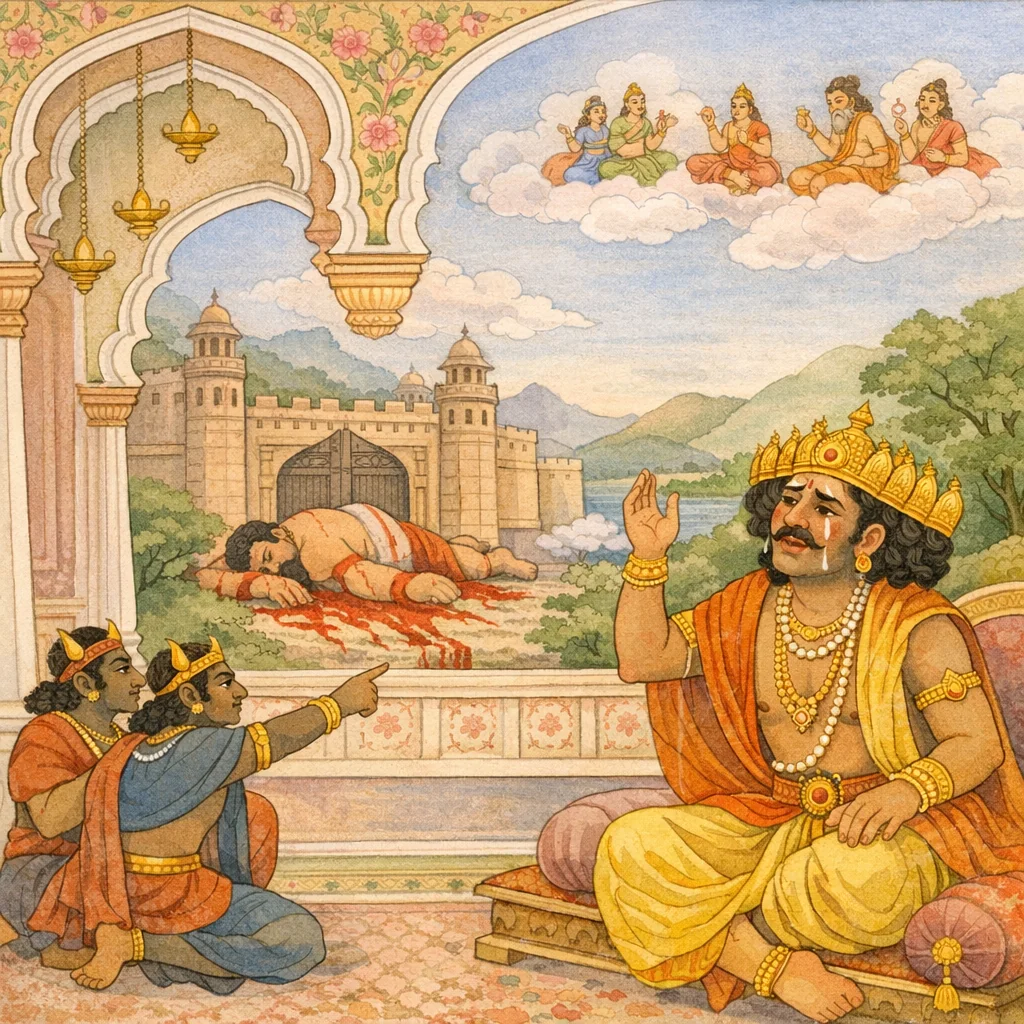
This sarga pivots from battlefield result to courtly psychological consequence. Rākṣasa messengers report that Kumbhakarṇa has been slain by the glorious Rāghava, despite Kumbhakarṇa’s brief but devastating onslaught in which he scattered and devoured vānaras. The report dwells on the corpse’s horrifying, monumental imagery—Rāma’s arrows reduce the mountain-like body to a mutilated trunk, bleeding profusely and blocking a gate of Laṅkā—thereby translating martial defeat into civic omen. Rāvaṇa, hearing the news, collapses into stupor and then awakens to prolonged vilāpa: he addresses Kumbhakarṇa as his “right arm,” questions how such a devas-and-dānavas-pride-crusher could fall to Rāma, and interprets the event as kāla (fate) overruling prowess. He anticipates cosmic mockery (devas and ṛṣis rejoicing in the sky) and strategic crisis (vānaras now emboldened to scale Laṅkā’s defenses). The lament turns inward as political self-indictment: Rāvaṇa recognizes the calamity as the vipāka (ripening) of earlier adharma, especially the expulsion and ignored counsel of the righteous Vibhīṣaṇa. The sarga closes with Rāvaṇa’s resolve that life is worthless unless he kills Rāghava, followed by his physical collapse in grief, marking a narrative transition from heroic resistance to desperate, fate-shadowed determination.
Shlokas
Verse 1
कुम्भकर्णंहतंदृष्टवाराघवेणमहात्मना ।राक्षसाराक्षसेन्द्रायरावणायन्यवेदयन् ।।।।
Seeing that Kumbhakarṇa had been slain by the great-souled Rāghava, the rākṣasas reported the news to Rāvaṇa, lord of the rākṣasas.
Verse 2
राजन् स कालसङ्काशस्संयुक्तःकालकर्मणा ।विद्राव्यवानरींसेनांभक्षयित्वा च वानरान् ।।।।
O King, that Kumbhakarṇa—terrible as Death itself—after scattering the monkey-host and devouring many vānaras, has now met his own end, brought about by the workings of Time (fate).
Verse 3
प्रतपित्वा मुहूर्तंतुप्रशान्तोरामतेजसा ।कायेनार्थप्रविष्टेनसमुद्रंभीमदर्शनम् ।।।।निकृत्तकण्ठोरुभुजोविक्षरन्रुधिरंबहु ।रुद्ध्वाद्वारंशरीरेणलङ्कायाःपर्वतोपमः ।।।।कुम्भकर्णस्तवभ्राताकाकुत्स्थशरपीडितः ।लगण्डभूतोविकृतोदावदग्धइवद्रुमः ।।।।
For a brief while your brother Kumbhakarṇa displayed his might; but he was brought to stillness by the blazing power of Rāma. His mountain-like body—mutilated, pouring forth much blood—lay like a dreadful sea of ruin, blocking the gate of Laṅkā with his very corpse. Struck down by the arrows of Kakutstha, he looked distorted, like a tree burned in a forest-fire.
Verse 4
प्रतपित्वा मुहूर्तंतुप्रशान्तोरामतेजसा ।कायेनार्थप्रविष्टेनसमुद्रंभीमदर्शनम् ।।6.68.3।।निकृत्तकण्ठोरुभुजोविक्षरन्रुधिरंबहु ।रुद्ध्वाद्वारंशरीरेणलङ्कायाःपर्वतोपमः ।।6.68.4।।कुम्भकर्णस्तवभ्राताकाकुत्स्थशरपीडितः ।लगण्डभूतोविकृतोदावदग्धइवद्रुमः ।।6.68.5।।
Then the foremost of the rākṣasas, regaining consciousness with great difficulty, lamented in misery over Kumbhakarṇa’s killing, his senses thrown into turmoil.
Verse 5
प्रतपित्वा मुहूर्तंतुप्रशान्तोरामतेजसा ।कायेनार्थप्रविष्टेनसमुद्रंभीमदर्शनम् ।।6.68.3।।निकृत्तकण्ठोरुभुजोविक्षरन्रुधिरंबहु ।रुद्ध्वाद्वारंशरीरेणलङ्कायाःपर्वतोपमः ।।6.68.4।।कुम्भकर्णस्तवभ्राताकाकुत्स्थशरपीडितः ।लगण्डभूतोविकृतोदावदग्धइवद्रुमः ।।6.68.5।।
This dreadful ruin—the loss of Kumbhakarṇa and Prahasta—has come upon us because Vibhīṣaṇa’s counsel was not followed in full; it fills me with bitter shame.
Verse 6
तंश्रुत्वाविनिहतंसङ्ख्येकुम्भकर्णंमहाबलम् ।रावणश्शोकसन्तप्तोमुमोह च पपात च ।।।।
Hearing that the mighty Kumbhakarṇa had been slain in battle, Rāvaṇa—scorched by grief—lost his senses and fell down.
Verse 7
पितृव्यंनिहतंश्रुत्वादेवान्तकनरान्तकौ ।त्रिशिराश्चातिकायश्चरुरुदुश्शोकपीडिताः ।।।।
Hearing that their uncle had been killed, Devāntaka and Narāntaka, and also Triśiras and Atikāya, cried out loudly, crushed by grief.
Verse 8
भ्रातरंनिहतंश्रुत्वारामेणाक्लिष्टकर्मणा ।महोदरमहापार्श्वौशोकाक्रान्तौबभूवतुः ।।।।
Hearing that their brother had been slain by Rāma of tireless deeds, Mahodara and Mahāpārśva were overwhelmed by sorrow.
Verse 9
ततःकृच्छ्रात्समासाद्यसंज्ञांराक्षसपुङ्गवः ।कुम्भकर्णवधाद्दीनोविललापकुलेन्द्रियः ।।।।
Then the foremost of the rākṣasas, regaining consciousness with great difficulty, lamented in misery over Kumbhakarṇa’s killing, his senses thrown into turmoil.
Verse 10
हावीर रिपुदर्पघ्न कुम्भकर्ण महाबल ।त्वंमांविहायवैदैवाद्यातोऽसियमसादनम् ।।।।
“Alas, hero Kumbhakarṇa—crusher of the enemy’s pride, mighty in strength! Leaving me behind, you have gone, by fate indeed, to the abode of Yama.”
Verse 11
ममशल्यमनुद्धृत्यबान्धवानांमहाबल ।शत्रुसैन्यंप्रताप्यैकस्त्वंमांसन्त्यज्यगच्छसि ।।।।
“O mighty one! Without removing the thorn of anguish from me and my kinsmen, after scorching the enemy host all by yourself, you go—abandoning me.”
Verse 12
इदानींखल्वहंनास्मियस्यमेदक्षिणोभुजः ।पतितोयंसमाश्रित्य न बिभेमिसुरासुरान् ।।।।
“Now indeed I am as good as undone—for my right arm has fallen. Relying on him, I feared neither gods nor demons.”
Verse 13
कथमेवंविधोवीरोदेवदानवदर्पहा ।कालाग्निरुद्राप्रतिमोरणेराघवेणवैहतः ।।।।
How could such a hero—who once crushed the pride of devas and dānavas, and who seemed like Rudra’s fire at the end of time—be slain in battle by Rāghava?
Verse 14
यस्यतेवज्रनिष्पेषो न कुर्वाद्व्यसनंसदा ।स कथंरामबाणार्तंप्रसुप्तोऽसिमहीतले ।।।।
You whom even the crushing blow of Indra’s thunderbolt could never bring to ruin—how is it that, struck and pained by Rāma’s arrows, you now lie as though asleep upon the earth?
Verse 15
एतेदेवगणास्सार्थमृषिभिर्गगनेस्थिताः ।निहतंत्वांरणेदृष्टवानिनदन्तिप्रहर्षिताः ।।।।
See—hosts of devas, together with sages, stand in the sky; beholding you slain in battle, they cry out in loud exultation.
Verse 16
ध्रुवमद्यैवसंहृष्टालब्धलक्षाःप्लवङ्गमाः ।आरोक्ष्यन्तीहदुर्गाणिलङ्काद्वाराणिसर्वशः ।।।।
Surely, this very day the plavaṅgamas—rejoicing at their chance—will swarm and climb upon the fortifications and gates of Laṅkā from every side.
Verse 17
राज्येननास्तिमेकार्यंकिंकरिष्यामिसीतया ।कुम्भकर्णविहीनस्यजीवितेनास्तिमेमतिः ।।।।
I have no use for kingship—what would I do with Sītā? Deprived of Kumbhakarṇa, my very will to live has deserted me.
Verse 18
यद्यहंभ्रातृहन्तारं न हन्मियुधिराघवम् ।ननुमेमरणंश्रेयो न चेदंव्यर्थजीवितम् ।।।।
If I do not slay in battle Rāghava—the killer of my brother—then surely death is better for me; otherwise this life is meaningless.
Verse 19
अद्यैवतंगमिष्यामिदेशंयत्रानुजोमम ।न हिभ्रातृ़न् समुत्सृज्यक्षणंजीवितमुत्सहे ।।।।
This very day I shall go to that place where my younger brother lies; for having abandoned my brothers, I cannot bear to live even for a moment.
Verse 20
देवाहिमांहसिष्यन्तिदृष्टवापूर्वापकारिणम् ।कथमिन्द्रंजयिष्यामिकुम्भकर्ण हतेत्वयि ।।।।
The devas—seeing me, their former offender—will surely laugh at me now. How could I ever conquer Indra, when you, Kumbhakarṇa, have been slain?
Verse 21
तदिदंमामनुप्राप्तंविभीषणवचश्शुभम् ।यदज्ञानान्मयातस्य न गृहीतंमहात्मनः ।।।।
This calamity has now come upon me because, in my ignorance, I did not accept the wholesome counsel spoken by that great-souled Vibhīṣaṇa.
Verse 22
विभीषणवचोयावत्कुम्भकर्णप्रहस्तयोः ।विनाशोऽयंसमुत्पन्नोमांव्रीडयतिदारुणः ।।।।
This dreadful ruin—the loss of Kumbhakarṇa and Prahasta—has come upon us because Vibhīṣaṇa’s counsel was not followed in full; it fills me with bitter shame.
Verse 23
तस्यायंकर्मणःप्राप्तोविपाकोममशोकदः ।यन्मयाधार्मिकश्शमान् स निरस्तोविभीषणः ।।।।
This grief-bearing result has come to me as the ripening of that deed—because I cast out Vibhīṣaṇa, who was righteous and illustrious.
Verse 24
इतिबहुविधमाकुलान्तरात्माकृपणमतीवविलप्यकुम्भकर्णम् ।न्यपदथदशाननोभृशार्तस्तमनुजमिन्द्ररिपुंहतंविदित्वा ।।।।
Thus, with his inner self utterly shaken, Daśānana lamented Kumbhakarṇa piteously in many ways; and knowing that his younger brother—Indra’s foe—had been slain, he fell down, grievously afflicted.
Frequently Asked Questions
Rāvaṇa confronts a rājadharma crisis: whether to continue a war driven by ego and possession (kingdom and Sītā) or to acknowledge moral causality. His speeches frame a decisive action—he must personally face and kill Rāghava or accept death—while recognizing that prior unethical choices (notably rejecting righteous counsel) have produced the present catastrophe.
The sarga teaches that power without discernment is fragile: kāla can overturn prowess, and grief can erode judgment. It also emphasizes the epics’ counsel-ethic—good advice (Vibhīṣaṇa’s) is part of dharma, and rejecting it generates vipāka (ripened consequences) that manifest as both strategic loss and inner collapse.
Laṅkā’s defensive architecture—its forts and gates—becomes a narrative landmark when Kumbhakarṇa’s body blocks a gate, and the vānaras are predicted to scale the fortifications. The sarga also invokes the cosmic “sky-stage” where devas and ṛṣis observe, reflecting a cultural motif of divine spectatorship over righteous warfare.