Sarga 33
सरमा-सीता संवादः (Saramā Consoles Sītā; Preparations in Laṅkā)
युद्धकाण्ड
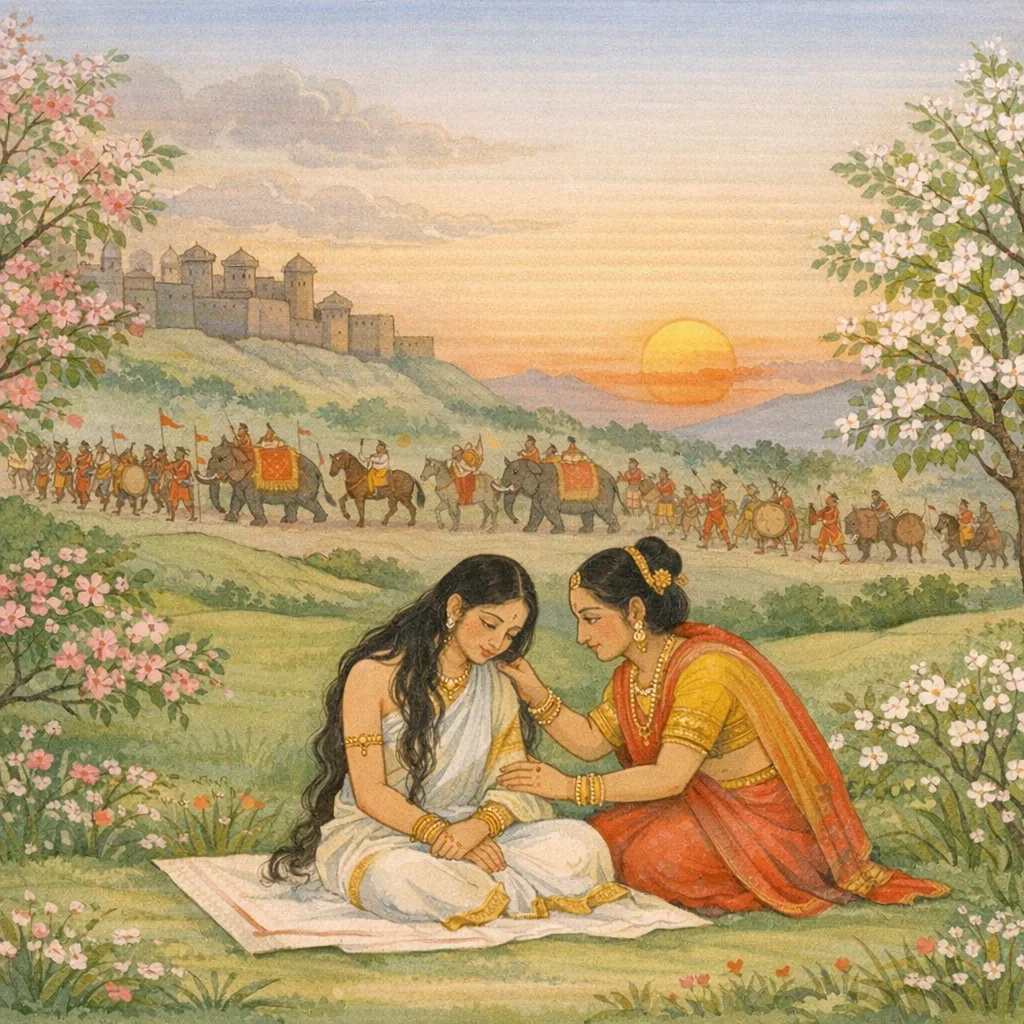
Sarga 33 stages a consolatory and intelligence-bearing dialogue in Aśoka-like captivity space: the rākṣasī Saramā, described as compassionate and friendly to Vaidehī, approaches Sītā when she is distraught and even fainting from grief. Saramā reports that she overheard Sītā’s exchange with Rāvaṇa and explains why Rāvaṇa is agitated—Rāma cannot be killed by a stealth attack in sleep, and his death is deemed implausible. She further asserts the tactical reality that the tree-wielding Vānara fighters are difficult to slay because they are “protected by Rāma,” analogized to the devas protected by Indra. The chapter repeatedly amplifies Rāma’s profile—righteous, famed, bow-bearing, broad-chested, and unconquerable—alongside Lakṣmaṇa as co-protector. Saramā then provides situational updates: Rāma has crossed the ocean and is stationed on the southern shore with forces; scouts have informed Laṅkā; Rāvaṇa consults ministers. The scene culminates in an auditory panorama of Laṅkā’s mobilization—drums, bells, chariots, horses, elephants, weapons, armor—presented as a sensory index of impending battle. The sarga closes with a ritual-ethical counsel: Sītā is urged to seek refuge in the Sun (Divasakara), framed as a cosmic regulator of beings’ fortunes.
Shlokas
Verse 1
सीतांतुमोहितांदृष्टवासरमानामराक्षसी ।आससादाथवैदेहींप्रियांप्रणयिनींसखी ।।।।
Seeing Sītā overcome with distress, the rākṣasī named Saramā—her affectionate and trusted friend—approached Vaidehī.
Verse 2
मोहितांराक्षसेन्द्रेणसीतांपरमदुःखिताम् ।आश्वासयामासतदासरमामृदुभाषिणी ।।।।
Then Saramā, gentle in speech, consoled Sītā—bewildered by the rākṣasa king and sunk in deepest sorrow.
Verse 3
साहितत्रकृतामित्रंसीतयारक्ष्यमाणया ।रक्षन्तीरावणादिष्टासानुक्रोशादृढव्रता ।।।।
There, that steadfast and compassionate woman—appointed by Rāvaṇa to keep watch—formed a bond of friendship with Sītā while continuing to protect and attend her.
Verse 4
साददर्शसखीसीतांसरमानष्टचेतनाम् ।उपावृत्त्योत्थितांध्वस्तांबडबामिवपांसुलाम् ।।।।
Then Saramā saw her friend Sītā, senseless and thrown into disarray, risen after rolling about—dust-covered like a mare on a filthy ground.
Verse 5
तांसमाश्वासयामाससखीस्नेहेनसुव्रता ।समाश्वसिहिवैदेही माभूत्तेमवसोव्यथा ।।।।
Her friend, the virtuous Saramā, consoled her with affection: “Be calm, O Vaidehī; let there be no anguish in your heart.”
Verse 6
उक्तायद्रावणेनत्वंप्रत्युक्तश्चस्वयंत्वया ।सखीस्नेहेनतभदीरुमयासर्वंप्रतिश्रुतम् ।।।।लीनयागहनेशून्येभयमुत्सृज्यरावणात् ।तवहेतोर्विशालाक्षी नहिमेजीवितंप्रियम् ।।।।
“Whatever Rāvaṇa said to you, and whatever you yourself replied—O timid one—out of friendship I have overheard it all.”
Verse 7
उक्तायद्रावणेनत्वंप्रत्युक्तश्चस्वयंत्वया ।सखीस्नेहेनतभदीरुमयासर्वंप्रतिश्रुतम् ।।6.33.6।।लीनयागहनेशून्येभयमुत्सृज्यरावणात् ।तवहेतोर्विशालाक्षी नहिमेजीवितंप्रियम् ।।6.33.7।।
“Hiding in a secluded, deserted place, I cast aside fear of Rāvaṇa; for your sake, O large-eyed one, my own life is not dear to me.”
Verse 8
ससम्भ्रान्तश्चनिष्क्रान्तोयत्कृतेराक्षसाधिपः ।तच्चमेविदितंसर्वमभिनिष्क्रम्यमैथिलि:।। ।।
O Maithilī, I know in full the reason for which the lord of the Rākṣasas went out in agitation—and then turned back.
Verse 9
नशक्यंसौप्तिकंकर्तुंरामस्यविदितात्मनः ।वधश्चपुरुषव्याघ्रेतस्मिन्नैवोपपद्यते ।।।।
Rāma, who truly knows the Self, cannot be slain by a stealthy attack in sleep; and death itself is not fitting for that tiger among men.
Verse 10
नत्वेववानराहन्तुंशक्याःपादपयोधिपः ।सुरादेवर्षभेणेवरामेणहिसुरक्षिताः ।।।।
"Those tree-wielding vānara-warriors cannot truly be slain; for they are well-protected by Rāma—just as the gods are protected by the lord of the gods."
Verse 11
दीर्घवृत्तभुज्शीमान्महोरस्कःप्रतापवान् ।धन्वीसंहननोपेतोधर्मात्माभुविविश्रुतः ।।।।विक्रान्तोरक्षितानित्यमात्मनश्चपरस्यच ।लक्ष्मणेनसहभ्रात्राकुशलीनयशास्त्रवित् ।।।।हन्तापरबलौघनामचिन्त्यबलपौरुषः ।नहतोराघवश्रशीमान्सीते: शत्रुनिबर्हणः ।।।।
"O Sītā, that illustrious Rāghava—long-armed, broad-chested, radiant with valor, bow-bearing, renowned in the world, righteous at heart—ever protects both himself and others. With his brother Lakṣmaṇa, skilled in statecraft and right conduct, he destroys the masses of enemy forces by unimaginable strength and manliness. That glorious foe-destroyer is not slain."
Verse 12
दीर्घवृत्तभुज्शीमान्महोरस्कःप्रतापवान् ।धन्वीसंहननोपेतोधर्मात्माभुविविश्रुतः ।।6.33.11।।विक्रान्तोरक्षितानित्यमात्मनश्चपरस्यच ।लक्ष्मणेनसहभ्रात्राकुशलीनयशास्त्रवित् ।।6.33.12।।हन्तापरबलौघनामचिन्त्यबलपौरुषः ।नहतोराघवश्रशीमान्सीते: शत्रुनिबर्हणः ।।6.33.13।।
"By perverse counsel and hostility toward all beings, the trickster has, in wrath, cast an illusion here against you."
Verse 13
दीर्घवृत्तभुज्शीमान्महोरस्कःप्रतापवान् ।धन्वीसंहननोपेतोधर्मात्माभुविविश्रुतः ।।6.33.11।।विक्रान्तोरक्षितानित्यमात्मनश्चपरस्यच ।लक्ष्मणेनसहभ्रात्राकुशलीनयशास्त्रवित् ।।6.33.12।।हन्तापरबलौघनामचिन्त्यबलपौरुषः ।नहतोराघवश्रशीमान्सीते: शत्रुनिबर्हणः ।।6.33.13।।
"Let all your grief depart; auspiciousness stands before you. Surely good fortune will come to you—now hear from me words that are dear and heartening."
Verse 14
अयुक्तबुद्धिकृत्येनसर्वभूतविरोधिना ।इहप्रमुक्तारौद्रेणमायामायाविदात्वयि ।।।।
"By perverse counsel and hostility toward all beings, the trickster has, in wrath, cast an illusion here against you."
Verse 15
शोकस्तेविगतस्सर्वःकल्याणंत्वामुपस्थितम् ।ध्रुवंत्वांभजतेलक्ष्मीःप्रियंतेप्रीतिकरंशृणुः ।।।।
"Let all your grief depart; auspiciousness stands before you. Surely good fortune will come to you—now hear from me words that are dear and heartening."
Verse 16
उत्तीर्यसागरंरामस्सहवानरसेनया ।सन्निविष्टःसमुद्रस्यतीरमासाद्यदक्षिणम् ।।।।
Rāma, accompanied by the vānaras’ army, crossed the ocean and, reaching the ocean’s southern shore, took up a firm position there.
Verse 17
दृष्टोमेपरिपूर्णार्थःकाकुत्स्थस्सहलक्ष्मणः ।सहितैस्सागरान्तस्थैर्बलैस्तिष्ठतिरक्षितः ।।।।
I have seen the Kakutstha prince—his purpose fully accomplished—standing with Lakṣmaṇa, protected and supported by the forces stationed along the seashore.
Verse 18
अनेनप्रेषितायेचराक्षसालघुविक्रमाः ।राघवस्तीर्णइत्येवप्रवृत्तिस्तैरिहाहृता ।।।।
And those swift-moving rākṣasas, dispatched by him, have brought here the report: ‘Rāghava has crossed (the sea).’
Verse 19
सतांश्रुत्वाविशालाक्षी: प्रवृत्तिंराक्षसाधिपः ।एषमन्त्रयतेसर्वैस्सचिवैस्सहरावणः ।।।।
O large-eyed (Sītā), having heard this true report, the lord of rākṣasas—Rāvaṇa—now deliberates with all his ministers on what course to take.
Verse 20
इतिब्रुवाणासरमाराक्षसीसीतयासह ।सर्वोद्योगेनसैन्यानांशब्दंशुश्रावभैरवम् ।।।।
As Saramā the rākṣasī spoke thus with Sītā, she heard the terrifying din of armies making every kind of preparation.
Verse 21
दण्डनिर्घातवादिन्याश्रुत्वाभेर्यामहास्वनम् ।उवाचसरमासीतामिदंमधुरभाषिणी ।।।।
Hearing the great roar of drums and the clashing sounds of maces and staffs, Saramā—sweet-spoken—said this to Sītā.
Verse 22
सन्नाहजननीह्येषाभैरवाभीरु: भेरिका ।भेरीनादंचगम्भीरंशृणुतोयदनिःस्वनम् ।।।।
O timid one, this fearsome drum-call is what gives rise to battle-preparations; listen to the deep drum-sound, like the rumbling of rain-clouds.
Verse 23
कल्प्यन्तेमत्तमातङ्गायुज्यन्तेरथवाजिन ।हृष्यन्तेतुरगारूढाःप्रासहस्तस्सहस्रशः ।।।।
Rut-elephants are being arrayed; chariots and horses are being yoked; and thousands of horsemen, lances in hand, rejoice as they mount.
Verse 24
तत्रतत्रचसन्नद्धास्सपततनिपदातयः ।अपूर्यन्तेराजमार्गास्सैन्यैरद्भुतदर्शनैः ।।।।वेगवभदिन्नदभदिश्चतोयौघैरिवसागरः ।
Here and there, armed foot-soldiers mass together; the royal roads fill up with troops of astonishing appearance—swift-moving and roaring—like the ocean swelling with rushing torrents.
Verse 25
शस्त्राणांचप्रसन्नानांचर्मणांवर्मणांतथा ।।।।रथवाजिगजानांचभूषितानांचराक्षसाम् ।संभ्रमोराक्षसामेषहृषितानांतरस्विनाम् ।।।।प्रभांविसृजतांपश्यनानावर्णांसमुत्थिताम् ।वनंनिर्धहतोघर्मेयथारूपंविभावसोः ।।।।
Behold the gleam of their bright weapons, their leather shields and armor, and the chariots, horses, and elephants of the rākṣasas adorned with ornaments. In their exhilaration, these powerful rākṣasas cast forth a many-colored radiance—like the blaze of fire consuming a forest in the heat of summer.
Verse 26
शस्त्राणांचप्रसन्नानांचर्मणांवर्मणांतथा ।।6.33.25।।रथवाजिगजानांचभूषितानांचराक्षसाम् ।संभ्रमोराक्षसामेषहृषितानांतरस्विनाम् ।।6.33.26।।प्रभांविसृजतांपश्यनानावर्णांसमुत्थिताम् ।वनंनिर्धहतोघर्मेयथारूपंविभावसोः ।।6.33.27।।
Look at the bright weapons, the leather shields and armor, and the ornamented chariots, horses, and elephants of the rākṣasas—this is the exultant bustle of those powerful warriors, rejoicing as they assemble.
Verse 27
शस्त्राणांचप्रसन्नानांचर्मणांवर्मणांतथा ।।6.33.25।।रथवाजिगजानांचभूषितानांचराक्षसाम् ।संभ्रमोराक्षसामेषहृषितानांतरस्विनाम् ।।6.33.26।।प्रभांविसृजतांपश्यनानावर्णांसमुत्थिताम् ।वनंनिर्धहतोघर्मेयथारूपंविभावसोः ।।6.33.27।।
See the many-colored radiance rising and spreading from them—like the appearance of fire in the summer heat as it burns down a forest.
Verse 28
घण्टानांशृणुनिर्घोषंरथानांशृणुनिःस्वनम् ।हयानांहेषमाणानांशृणुतूर्यध्वनिंयथा ।।।।उद्यतायुधहस्तानांराक्षसेन्द्रानुयायिनाम् ।सम्भ्रमोरक्षसामेषतुमुलोरोमहर्षणः ।।।।
Listen: the ringing of bells, the clatter of chariots, the neighing of horses, and the trumpet-blast-like din. Such is the tumultuous, hair-raising excitement of the rākṣasas—followers of their king—who advance with weapons raised.
Verse 29
घण्टानांशृणुनिर्घोषंरथानांशृणुनिःस्वनम् ।हयानांहेषमाणानांशृणुतूर्यध्वनिंयथा ।।6.33.28।।उद्यतायुधहस्तानांराक्षसेन्द्रानुयायिनाम् ।सम्भ्रमोरक्षसामेषतुमुलोरोमहर्षणः ।।6.33.29।।
This is the tumultuous, spine-tingling commotion of the rākṣasas—followers of their king—marching with weapons lifted high.
Verse 30
श्रीस्त्वांभजतिशोकघ्नीरक्षसांभयमागतम् ।रामःकमलपत्राक्षोदैत्यानामिववासवः ।।।।निर्जित्यजितक्रोधस्त्वामचिन्तपराक्रमः ।रावणंसमरेहत्वाभर्तात्वाऽधिगमिष्यति ।।।।
Fortune that destroys sorrow will come to you, and fear will come upon the rākṣasas. Lotus-eyed Rāma—like Vāsava (Indra) against the Dāityas—having subdued his anger and possessed of unimaginable prowess, will slay Rāvaṇa in battle and win you back, your husband reclaiming you.
Verse 31
श्रीस्त्वांभजतिशोकघ्नीरक्षसांभयमागतम् ।रामःकमलपत्राक्षोदैत्यानामिववासवः ।।6.33.30।।निर्जित्यजितक्रोधस्त्वामचिन्तपराक्रमः ।रावणंसमरेहत्वाभर्तात्वाऽधिगमिष्यति ।।6.33.31।।
Having conquered his anger, and with inconceivable prowess, your husband will slay Rāvaṇa in battle and regain you.
Verse 32
विक्रमिष्यतिरक्षस्सुभर्तातेसहलक्ष्मणः ।यथाशत्रुषुशत्रुघ्नोविष्णुनासहवासवः ।।।।
Your husband, accompanied by Lakṣmaṇa, will display his valor against the rākṣasas—just as Vāsava (Indra), destroyer of foes, did against enemies together with Viṣṇu.
Verse 33
हिरामस्यक्षिप्रमङ्कागतांसतीम् ।अहंद्रक्ष्यामिसिद्धार्धांत्वांशत्रौविनिपातिते ।।।।
For soon I shall see you—chaste and restored—seated upon Rāma’s lap, once the enemy has been struck down and your purpose fulfilled.
Verse 34
अश्रूण्यानन्दजानित्वंवर्तयिष्यसिशोभने ।समागम्यपरिष्वज्यतस्योरसिमहोरसः ।।।।
“O noble lady, you will shed tears born of joy when you meet him—embraced by broad-chested Rāma upon his breast.”
Verse 35
अचिरान्मोक्ष्यतेसीते देवितेजघनंगताम् ।धृतामेताम्बहून्मासान्वेणींरामोमहाबलः ।।।।
“Very soon, O Sītā, O divine lady, mighty Rāma will release this single braid of yours—kept for many months, hanging down to your hips.”
Verse 36
तस्यदृष्टवामुखंदेवी पूर्णचन्द्रमिवोदितम् ।मोक्ष्यसेशोकजंवारिनिर्मोकमिवपन्नगी ।।।।
“O divine lady, once you behold his face—like the full moon newly risen—you will cast off the tears born of sorrow, as a she-snake sheds her slough.”
Verse 37
रावणंसमरेहत्वानचिराद्धेवी: मैथिली: ।त्वयासमग्रःप्रिययासुखार्होलप्स्यतेसुखम् ।।।।
“O divine Maithilī, before long—having slain Rāvaṇa in battle—your beloved, worthy of happiness, will attain happiness, whole again with you at his side.”
Verse 38
समागतात्वंवीर्येणमोदिष्यसिमहात्मना ।सुवर्षेणसमायुक्तायथासस्येनमेदिनी ।।।।
“You will rejoice upon the arrival of that great-souled one, through his valor—just as the earth, blessed with good rains, delights in its crops.”
Verse 39
गिरिवरमभितोऽनुवर्तमानोहयइवमण्डलमाशुयःकरोति ।तमिहशरणमभ्युपैहिदेवंदिवसकरंप्रभवोह्ययंप्रजानाम् ।।।।
“Here, seek refuge in the god Sūrya—who swiftly makes his circuit like a horse running around a great mountain; for he is indeed the source and sustainer of living beings.”
Frequently Asked Questions
The sarga addresses captivity ethics and psychological survival: Sītā’s despair is met by Saramā’s compassionate intervention, which combines emotional care with truthful intelligence—an act of moral agency by a rākṣasī operating under Rāvaṇa’s regime.
Dharma is portrayed as protective order rather than mere power: Rāma’s righteousness is framed as an active safeguard for allies, while Sītā is guided toward steadiness through assurance, discernment about threats, and a final gesture of śaraṇāgati (refuge) in the Sun as cosmic regulator.
Key landmarks include the ocean crossing and Rāma’s encampment on the southern seashore, contrasted with Laṅkā’s internal royal road and war infrastructure (drums, chariots, elephants), culminating in the cultural-religious invocation of Divasakara (the Sun) as a refuge.