Sarga 105
रावणक्रोधः—रामस्य परुषवाक्यम् (Ravana’s Fury and Rama’s Harsh Admonition)
युद्धकाण्ड
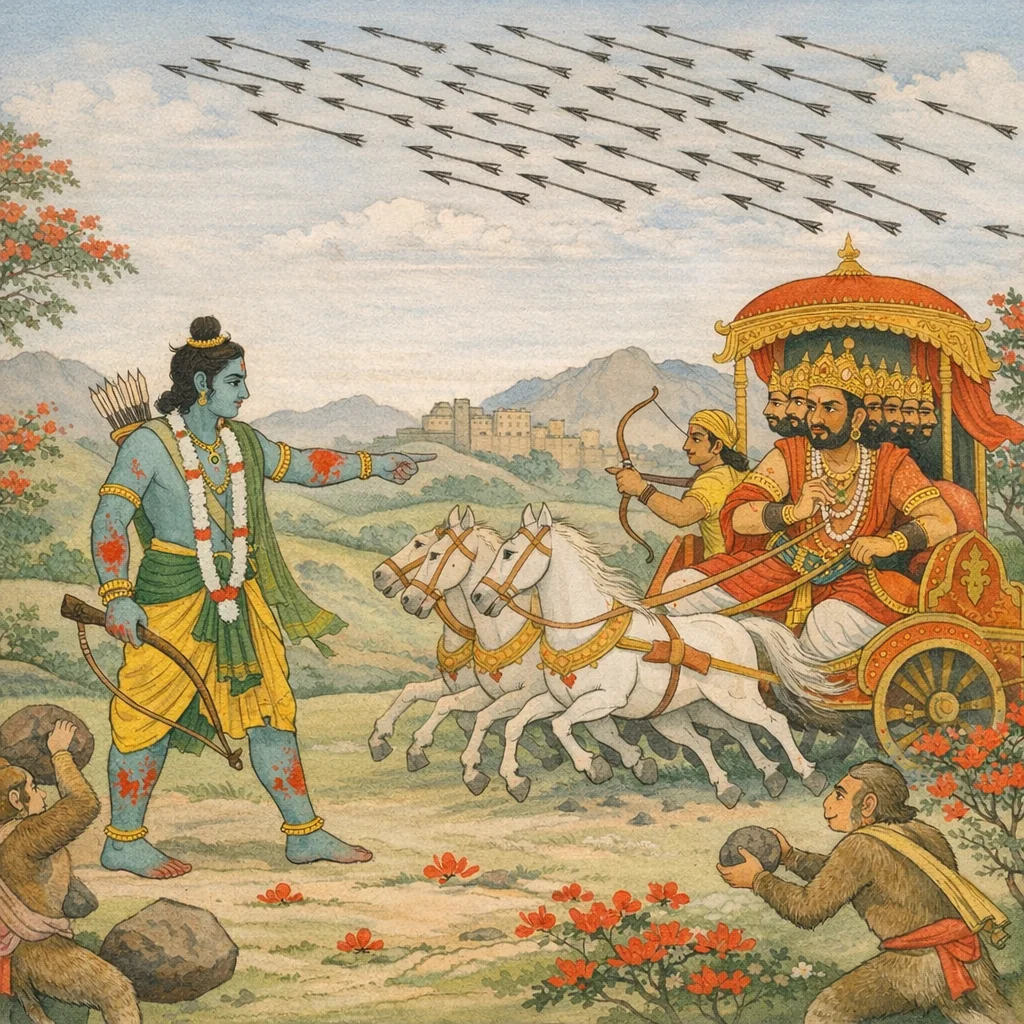
Sarga 105 frames a psychological turning point within the duel. Rāvaṇa, famed for battlefield pride, is pained by Kakutstha’s shafts and surges into great anger, responding with a dense rain of arrows that momentarily darkens the field. Rāma remains unshaken—likened to an immovable mountain—intercepting the arrow-net and enduring it as the sun’s rays. As blood marks Rāma’s body, the imagery shifts to a blossoming kiṃśuka tree, emphasizing endurance rather than defeat. Rāma’s anger then crystallizes into a moral indictment: he denies Rāvaṇa the status of “vīryavān” (truly valiant) because Sītā was taken in helplessness, “like a thief,” and because such conduct violates maryādā and accepted cāritra. The speech escalates into prophetic battlefield imagery—severed head, vultures, torn entrails—functioning as both psychological warfare and a dharma-judgment. Rāma’s martial capacity is described as doubling; astras ‘appear’ to him through self-knowledge and auspicious signs, after which he intensifies his assault. Under combined pressure from Rāma’s arrow-showers and Vānara stone volleys, Rāvaṇa becomes mentally confused, fails to respond effectively, and his charioteer withdraws him from the battlefield, signaling a temporary collapse in morale and agency.
Shlokas
Verse 1
स तेनतुतदाक्रोधात्काकुत्स्थेनार्दितोरणे ।रावणस्समरश्लाघिमहाक्रोधामुपागमत् ।।।।
Then, wounded in battle by the enraged Kakutstha (Rāma), Rāvaṇa—boastful of his prowess in war—fell into a great fury.
Verse 2
स दीप्तनयनोरोषाच्चापमायाम्यवीर्यवान् ।अभ्यर्दयत्सुसङ्कृद्धोराघवंपरमाहवे ।।।।बाणधारसहस्रैस्तैस्सतोयदइवाम्बरात् ।राघवंरावणोबाणैस्तटकमिवपूरयन् ।।।।
Then the mighty Rāvaṇa, his eyes blazing with rage, drew his bow and, in that supreme battle, fiercely pressed Rāghava with volleys—showering thousands of arrows like rainwater from the sky, filling the space around Rāma as rain fills a tank.
Verse 3
स दीप्तनयनोरोषाच्चापमायाम्यवीर्यवान् ।अभ्यर्दयत्सुसङ्कृद्धोराघवंपरमाहवे ।।6.105.2।।बाणधारसहस्रैस्तैस्सतोयदइवाम्बरात् ।राघवंरावणोबाणैस्तटकमिवपूरयन् ।।6.105.3।।
Then Rāvaṇa, pouring forth thousands of streams of arrows from the sky like rain-clouds, filled the space around Rāghava with shafts as though flooding a tank with water.
Verse 4
पूरितःशरजालेनधनुर्मुक्तेनसम्युगे ।महागिरिरिवाकम्प्यःकाकुत्स्थो न प्रकम्पते ।।।।
In the thick of battle, though covered by a net of arrows released from the bow, Kakutstha did not tremble—unshakable like a great mountain.
Verse 5
स शरैश्शरजालानिवारयन् समरेस्थितः ।गभस्तीनिवसूर्यस्यप्रतिजग्राहवीर्यवान् ।।।।
Standing firm in the fight, the valiant one checked those nets of arrows with his own shafts, enduring them like the sun’s rays.
Verse 6
ततश्शरसहस्राणिक्षिप्रहस्तोनिशाचरः ।निजघानोरसिक्रुद्धोराघवस्यमहात्मनः ।।।।
Thereafter the night-ranger, quick of hand and enraged, struck the great-souled Rāghava upon the chest with thousands of arrows.
Verse 7
स शोणितसमादिग्धस्समरेलक्ष्मणाग्रजः ।दृष्टःफुल्लइवारण्येसुमहान् किंशुकद्रुमः ।।।।
In that battle, Lakṣmaṇa’s elder brother—smeared all over with blood—appeared like a vast kiṁśuka tree in full bloom in the forest.
Verse 8
शराभिघातसम्रब्दःसोऽभिजग्राहसायकान् ।काकुत्स्थ: सुमहातेजायुगान्तादित्यतेजसः ।।।।
Kakutstha—of immense brilliance—angered by the impact of the arrows, seized his shafts, blazing like the sun at the end of the age (of dissolution).
Verse 9
ततोऽन्योन्यंसुसम्रब्धौतावुभौरामरावणौ ।शरान्धकारेसमरेनोपलक्ष्यतांतदा ।।।।
Then those two—Rāma and Rāvaṇa—fiercely trading volleys at one another, were, at that time, not visible to each other in the battle, as the field was darkened by arrows.
Verse 10
ततःक्रोधसमाविष्टोरामोदशरथात्मजः ।उवाचरावणंवीरःप्रहस्यपरुषंवचः ।।।।
Then Rāma, Daśaratha’s heroic son, overcome with anger, laughed and addressed Rāvaṇa with harsh words.
Verse 11
ममभार्याजनस्थानादज्ञानाद्राक्षसाधम ।हृतातेविवशायस्मात्तस्मात्त्वंनासिवीर्यवान् ।।।।
“Vilest of rākṣasas! Since you abducted my wife from Jana-sthāna when she was helpless and unaware, you cannot be called truly valiant.”
Verse 12
मयाविरहितांदीनांवर्तमानांमहावने ।वैदेहींप्रसभंहृत्वाशूरोऽहमितिमन्यसे ।।।।
“When Vaidehī was separated from me, miserable, living in the great forest—having seized her by force—do you imagine, ‘I am a hero’?”
Verse 13
स्त्रीषुशूरविनाथासुपरदाराभिमर्शक ।कृत्वाकापुरुषंकर्मशूरोऽहमितिमन्यसे ।।।।
“You who prey upon women deprived of protectors, and who lay hands on another’s wife—having done such a coward’s deed, do you still think, ‘I am a hero’?”
Verse 14
भिन्नमर्यादनिर्लज्ज चारित्रेष्वनवस्थित ।दर्पान्मृत्युमुपादायशूरोऽहमितिमन्यसे ।।।।
“You who have shattered the bounds of propriety, shameless and unsteady in right conduct—driven by arrogance you rush toward death, yet you think, ‘I am a hero’!”
Verse 15
शूरेणधनदभ्रात्राबलैःसमुदितेन च ।श्लाघनीयंमहत्कर्मयशस्यं च कृतंत्वया ।।।।
“Indeed, you—heroic brother of Dhanada (Kubera), risen in power and strength—have performed a great deed that is much spoken of and has brought you fame.”
Verse 16
उत्सेकानाभिपन्नस्यगर्हितस्याहितस्य च ।कर्मणःप्राप्नुहीदानांतस्याद्यसुमहत्फलम् ।।।।
“Overpowered by arrogance, having committed a blameworthy and harmful deed—now, today, receive the immense fruit of that action.”
Verse 17
शूरोऽहमितिचात्मानमवगच्छसिदुर्मते ।नैवलज्जास्तितेसीतांचौरवद्वृपकर्षतः ।।।।
“Wicked-minded one! You fancy yourself a hero, yet when you dragged Sītā away like a thief, shame did not stand before you at all.”
Verse 18
यदिमत्सन्निधौसीताधर्षितास्यात्त्वयाबलात् ।भ्रातरंतुखरंपश्येस्तदामत्सायकैर्हतः ।।।।
Had Sītā been violated by you by force in my very presence, then you would have been slain by my arrows—so that you would have gone to meet your brother Khara.
Verse 19
दिष्ट्यासिममदुष्टात्मश्चक्षुर्विषयमागतः ।अद्यत्वांसायकैस्तीक्ष्णैर्नयामियमसादनम् ।।।।
By good fortune, O wicked-souled one, you have come within my sight; today, with my sharp arrows, I shall send you to Yama’s abode.
Verse 20
अद्यतेमच्छरैश्चिन्नंशिरोज्वलितकुण्डलम् ।क्रव्यादाव्यपकर्षन्तुविकीर्णंरणपांसुषु ।।।।
Today, may your head—severed by my arrows, its earrings still gleaming—lie scattered in the dust of battle, to be dragged away by flesh-eating creatures.
Verse 21
निपत्योरसिगृध्रास्तेक्षितौक्षिप्तस्यरावण ।पिबन्तुरुधिरंतर्षाद्बाणशल्यान्तरोत्थितम् ।।।।
O Rāvaṇa, when you are cast down upon the ground, may vultures alight upon your chest and, in their thirst, drink the blood that wells up from the wounds made by the arrow-heads.
Verse 22
अद्यमद्बाणभिन्नस्यगतासोःपतितस्यते ।कर्षन्त्वन्त्राणिपतगागरुत्मन्तइवोरगान् ।।।।
Today, when you have fallen lifeless, your body split by my arrows, may birds drag out your intestines—like Garuḍa tearing up serpents.
Verse 23
इत्येवं स वदन्वीरोरामश्शत्रुनिबर्हणः ।राक्षसेन्द्रंसमीपस्थंशरवर्षैरवाकिरत् ।।।।
Speaking thus, the heroic Rāma—destroyer of foes—poured down showers of arrows upon the rākṣasa-king who stood near him.
Verse 24
बभूवद्विगुणंवीर्यंबलंहर्षश्चसंयुगे ।रामस्यास्त्रबलंचैवशत्रोर्निधनकाङ्क्षिणः ।।।।
In the thick of battle, Rāma’s valor, strength, and exhilaration doubled—along with the power of his weapons—since he sought the enemy’s destruction.
Verse 25
प्रादुर्भभूवुरस्त्राणिसर्वाणिविदितात्मनः ।प्रहर्षाच्चमहातेजाश्शीघ्रहस्ततरोऽभवत् ।।।।
All weapons revealed themselves to Rāma, the self-knowing one; and from exhilaration that great-splendored hero became even swifter of hand.
Verse 26
शुभान्येतानिचिह्नानिविज्ञायात्मगतानिसः ।भूयएवार्दयद्रामोरावणंराक्षसान्तकृत् ।।।।
Recognizing these auspicious signs arising within himself, Rāma—terminator of the rākṣasas—struck Rāvaṇa again with still greater force.
Verse 27
हरीणांचाश्मनिकरैश्शरवर्षाच्चराघवात् ।हन्यमानोदशग्रीवोविघूर्णहृदयोऽभवत् ।।।।
Assailed by the monkeys’ volleys of stones and by Rāghava’s rain of arrows, the ten-headed Rāvaṇa was struck hard and his heart fell into confusion.
Verse 28
यदा च शस्त्रंनारेभे न चकर्षशरासनम् ।नास्यप्रत्यकरोवदीर्यंविक्लबेनान्तरात्मना ।।।।
Then, with his mind thrown into confusion, he could neither set his weapons in motion nor draw his bow; his courage failed, and he could not withstand Rāma’s prowess.
Verse 29
क्षिप्ताःश्चाशुशरास्तेनशस्त्राणिविविधानि च ।मरणार्थायवर्तन्तेमृत्युकालोऽभ्यवर्तत ।।।।
The arrows he swiftly hurled—and his many kinds of weapons as well—were rendered futile; for death had become their end, and the appointed hour of death had drawn near.
Verse 30
सूतस्तुरथनेतास्यतदवस्थंनिरीक्ष्यतम् ।शनैर्युद्धासम्भ्रान्तोरथंतस्यापवाहयत् ।।।।
Seeing him in that condition, his charioteer—alarmed—slowly drew his chariot away from the battlefield.
Verse 31
रथं च तस्याथजवेनसाथिर्निवार्यभीमंजलदस्वनंतदा ।जगामभीत्यासमरान्महीपतिंनिरस्तवीर्यंपतितंसमीक्ष्य ।।।।
Then the charioteer, checking that fearsome, cloud-roaring chariot with speed, fled the battlefield in terror—having seen the king fallen, his valor spent.
Frequently Asked Questions
The pivotal ethical claim is Rāma’s denial of Rāvaṇa’s ‘heroism’: abducting Sītā when she was helpless and separated is framed as theft-like coercion, violating maryādā and disqualifying the act from kṣātra valor.
Power and skill in war are not sufficient for legitimacy; conduct determines moral status. Pride (darpā/utseka) and predatory action generate their own consequences, while steadiness and self-knowledge are portrayed as force-multipliers for righteous action.
No named locale within Laṅkā is foregrounded; instead, the Sarga emphasizes battlefield culture—chariot warfare, astras, omen-language (auspicious signs), and funerary imagery (vultures, Yama’s abode) as markers of epic martial ethos.