Sarga 67
अभिज्ञानवृत्तान्त-प्रत्यायनम् (Token of Recognition and the Crow–Brahmāstra Episode)
सुन्दरकाण्ड
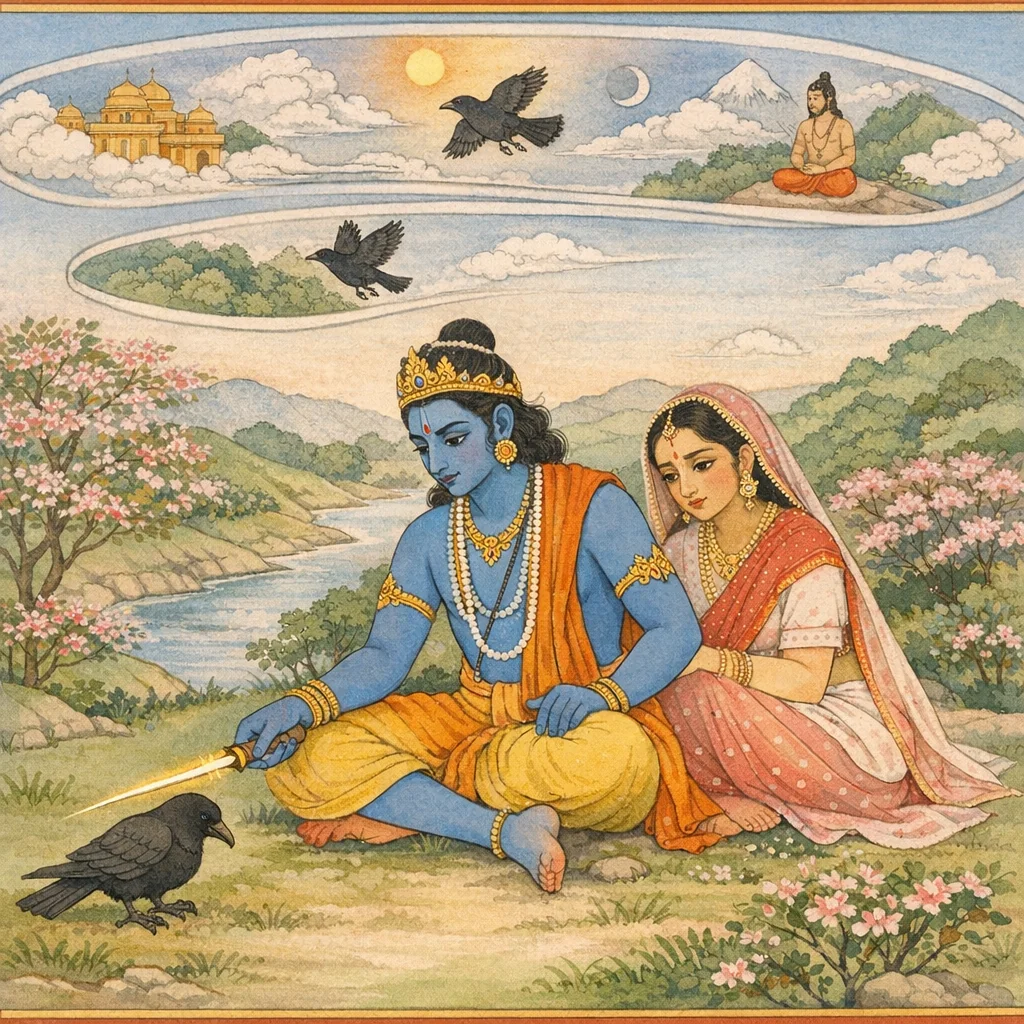
Sarga 67 is structured as Hanumān’s formal debriefing to Rāma: he transmits Sītā’s words in full, including an ‘abhijñāna’ (recognition-token narrative) meant to authenticate the messenger and stabilize trust across separation. Sītā recounts the Citrakūṭa incident where an Indra-born crow wounds her; Rāma, angered yet principled, invokes Brahmāstra using a blade of darbha-grass. The weapon pursues the crow across the three worlds; abandoned by gods and sages, it returns for refuge, and Rāma—unable to render a divine missile futile—mitigates harm by striking only the crow’s right eye, sparing its life. The episode functions as ethical proof-text: Rāma’s power is real, his restraint is deliberate, and his compassion extends even to offenders who seek śaraṇāgati (refuge). Sītā then questions why such power is not deployed immediately against rākṣasas, voicing anguish and perceived neglect; Hanumān responds with oath-bound reassurance that Rāma and Lakṣmaṇa are overwhelmed by grief yet preparing decisive action. The chapter culminates in the transfer of a divine jewel (maṇi) preserved in Sītā’s garment/hair arrangement as a tangible token for Rāma, and in Sītā’s final instructions to convey her welfare, her suffering under rākṣasī threats, and her steadfast fidelity.
Shlokas
Verse 1
एवमुक्तस्तु हनुमान् राघवेण महात्मना।सीताया भाषितं सर्वं न्यवेदयत राघवे।।।।
Thus addressed by great-souled Rāghava, Hanuman reported to Rama in full everything that Sita had spoken.
Verse 2
इदमुक्तवती देवी जानकी पुरुषर्षभ।पूर्व वृत्तमभिज्ञानं चित्रकूटे यथातथम्।।।।
O best of men, Devī Jānakī told me this—an earlier incident at Citrakūṭa—exactly as it happened, as a sign of recognition.
Verse 3
सुखसुप्ता त्वया सार्धं जानकी पूर्वमुत्थिता।वायस स्सहसोत्पत्य विददार स्तनान्तरे।।।।
While Jānakī lay happily asleep with you, she awoke early; then a crow suddenly sprang up and tore at the space between her breasts.
Verse 4
पर्यायेण च सुप्तस्त्वं देव्यङ्के भरताग्रज।पुनश्च किल पक्षी स देव्या जनयति व्यथाम्।।।।
“O elder brother of Bharata, when the lady lay resting, you slept upon her lap; and that bird again, it is said, caused the lady pain.”
Verse 5
पुनः पुनरुपागम्य विददार भृशं किल।ततस्त्वं बोधितस्तस्याश्शोणितेन समुक्षितः।।।।
“Again and again it came near and violently tore at her; then you were awakened—splashed with her blood.”
Verse 6
वायसेन च तेनैव सततं बाध्यमानया।बोधितः किल देव्या त्वं सुखसुप्तः परन्तप।।।।
“O scorcher of foes, while you slept at ease, the lady—continually pained by that very crow—indeed awakened you.”
Verse 7
तां तु दृष्ट्वा महाबाहो दारितां च स्तनान्तरे।आशीविष इव क्रुद्धो निश्वसन्नभ्यभाषथाः।।।।
“Seeing her wounded, with blood torn at the breast, you grew furious like an enraged serpent, breathing hard, and you spoke.”
Verse 8
नखाग्रैः केन ते भीरु दारितं तु स्तनान्तरम्।कः क्रीडति सरोषेण पञ्चवक्त्रेण भोगिना।।।।
O timid one, who has torn the space between your breasts with the tips of his nails? Who would dare sport with a furious, five-hooded serpent?
Verse 9
निरीक्षमाणस्सहसा वायसं समवैक्षथाः।नखै स्सरुधिरैस्तीक्ष्णैस्तामेवाभिमुखं स्थितम्।।।।
As I looked about, I suddenly saw a crow standing right before her, its sharp nails stained with blood.
Verse 10
सुतः किल स शक्रस्य वायसः पततां वरः।धरान्तरचरश्शीघ्रं पवनस्य गतौ समः।।।।
That crow—foremost among flying creatures—was, it is said, the son of Indra; roaming swiftly over the earth, it moved with a speed equal to the wind.
Verse 11
ततस्तस्मिन्महाबाहो कोपसंवर्तितेक्षणः।वायसे त्वं कृथाः क्रूरां मतिं मतिमतां वर।।।।
Then, O mighty-armed one—your eyes tightened with anger—you formed a harsh resolve against that crow, O best among the discerning.
Verse 12
स दर्भं संस्तराद्गृह्य ब्रह्मास्त्रेण ह्ययोजयः।स दीप्त इव कालाग्निर्जज्वालाभिमुखः खगम्।।।।
Taking a blade of darbha-grass from the mat, you invoked the Brahmā-weapon; blazing like the fire at the end of time, it flared forth toward the bird.
Verse 13
क्षिप्तवांस्त्वं प्रदीप्तं हि दर्भं तं वायसं प्रति।ततस्तु वायसं दीप्तस्स दर्भोऽनुजगाम ह।।।।
You cast that blazing blade of darbha toward the crow; and then the burning darbha pursued the crow relentlessly.
Verse 14
स पित्रा च परित्यक्तस्सुरैश्च समहर्षिभिः।त्रीन् लोकान् सम्परिक्रम्य त्रातारं नाधिगच्छति।।।।
Abandoned by his father, and even by the gods together with the great sages, he wandered through the three worlds—yet found no protector.
Verse 15
पुनरेवागतस्त्रस्तस्त्वत्सकाशमरिंदम।स तं निपतितं भूमौ शरण्यश्शरणागतम्।।।।वधार्हमपि काकुत्स्थ कृपया पर्यपालयः।
O subduer of foes—trembling, he returned again to you. When he fell upon the ground seeking refuge, you—who grant protection—spared him in compassion, though he deserved death.
Verse 16
मोघमस्त्रं न शक्यं तु कर्तुमित्येव राघव।।।।भवांस्तस्याक्षि काकस्य हिनस्ति स्म स दक्षिणम्।
‘A divine missile cannot be made fruitless,’—so, O Rāghava, it struck the crow’s right eye.
Verse 17
राम त्वां स नमस्कृत्य राज्ञे दशरथाय च।।।।विसृष्टस्तु तदा काक प्रतिपेदे स्वमालयम्।
Then the crow, released alive, bowed to you, O Rāma, and also to King Daśaratha, and returned to his own abode.
Verse 18
एवमस्त्रविदां श्रेष्ठस्सत्त्ववान् शीलवानपि।।।।किमर्थमस्त्रं रक्षस्सु न योजयति राघवः।
Though Rāghava is the foremost among weapon-knowers—courageous and of noble conduct—why does he not turn his weapons against the rākṣasas?
Verse 19
न नागा नापि गन्धर्वा नासुरा न मरुद्गणाः।।।।न च सर्वे रणे शक्ता रामं प्रतिसमासितुम्।
Neither nāgas, nor gandharvas, nor asuras, nor even the hosts of Maruts—all together—are able in battle to stand against Rāma.
Verse 20
तस्य वीर्यवतः कश्चिद्यद्यस्ति मयि सम्भ्रमः।।।।क्षिप्रं सुनिशितैर्बाणैर्हन्यतां युधि रावणः।
If that valiant one has any anxiety on my account, let Rāvaṇa be swiftly slain in battle with razor-sharp arrows.
Verse 21
भ्रातुरादेशमाज्ञाय लक्ष्मणो वा परन्तपः।।।।स किमर्थं नरवरो न मां रक्षति राघवः।
Or else—having received his brother’s command—why does Lakṣmaṇa, the scorcher of foes, not protect me? For what reason does Rāghava, the best of men, not rescue me?
Verse 22
शक्तौ तौ पुरुषव्याघ्रौ वाय्वग्निसमतेजसौ ।।।।सुराणामपि दुर्धर्षौ किमर्थं मामुपेक्षतः।
Those two tiger-like men, mighty and radiant like wind and fire—unassailable even to the gods—why do they ignore me?
Verse 23
ममैव दुष्कृतं किञ्चिन्महदस्ति न संशयः।।।।समर्थौ सहितौ यन्मां नावेक्षेते परन्तपौ।
Surely I must have committed some great wrong—there is no doubt—since those two enemy-scorchers, though capable and united, are not coming to look for me.
Verse 24
वैदेह्या वचनं श्रुत्वा करुणं साश्रु भाषितम्।पुनरप्यहमार्यां तामिदं वचनमब्रुवम्।।।।
Hearing Vaidehī’s piteous words, spoken through tears, I once again addressed these words to that noble lady.
Verse 25
त्वच्छोकविमुखो रामो देवि सत्येन ते शपे।।।।रामे दुःखाभिभूते तु लक्ष्मणः परितप्यते।
O lady, I swear to you by truth itself: Rāma, turned away from all else by grief for you, is wholly consumed by sorrow—and Lakṣmaṇa too burns with anguish as he sees Rāma overwhelmed.
Verse 26
कथञ्चिद्भवती दृष्टा न कालः परिशोचितुम्।।।।अस्मिन्मुहूर्ते दुःखानामन्तं द्रक्ष्यसि भामिनि।
O fair lady, I have somehow found you—this is no time for lamentation. In this very moment you will see the end of your sorrows.
Verse 27
तावुभौ नरशार्दूलौ राजपुत्रावनिन्दितौ।।।।त्वद्दर्शनकृतोत्साहौ लङ्कां भस्मीकरिष्यतः।
Those two blameless princes—tigers among men—made eager by the hope of seeing you, will reduce Laṅkā to ashes.
Verse 28
हत्वा च समरे रौद्रं रावणं सह बान्धवम्।।।।राघवस्त्वां वरारोहे स्वां पुरीं नयते ध्रुवम्।
O fair-hipped lady, after slaying the fierce Rāvaṇa in battle along with his kinsmen, Rāghava will surely take you back to his own city.
Verse 29
यत्तु रामो विजानीयादभिज्ञानमनिन्दिते।।।।प्रीतिसञ्जननं तस्य प्रदातुं त्वमिहार्हसि।
O blameless one, you should give me some token of recognition—something that Rāma will know for certain and that will awaken joy in him.
Verse 30
साभिवीक्ष्य दिशस्सर्वा वेण्युद्ग्रथितमुत्तमम्।।।।मुक्त्वा वस्त्राद्ददौ मह्यं मणिमेतं महाबल।
O mighty one, she glanced in every direction, then untied from her garment this finest jewel—kept bound in her braid—and gave it to me.
Verse 31
प्रतिगृह्य मणिं दिव्यं तव हेतो रघूद्वह।।।।शिरसा तां प्रणम्यार्यामहमागमने त्वरे।
O best of the Raghus, taking that radiant jewel for your sake, I bowed my head to the noble lady in reverence and hastened to return.
Verse 32
गमने च कृतोत्साहमवेक्ष्य वरवर्णिनी।।।।विवर्धमानं च हि मामुवाच जनकात्मजा।
Seeing that I was ready to depart—and that my form was enlarging—the fair-complexioned daughter of Janaka spoke to me.
Verse 33
अश्रुपूर्णमुखी दीना बाष्पसन्दिग्धभाषिणी।।।।ममोत्पतनसम्भ्रान्ता शोकवेगसमाहता।
Her face filled with tears, she was downcast; her words came indistinct through sobs. Disturbed by my imminent flight, she was overwhelmed by the surge of grief.
Verse 34
हनुमन् सिंहसंकाशावुभौ तौ रामलक्ष्मणौ।।।।सुग्रीवञ्च सहामात्यं सर्वान् ब्रूया ह्यनामयम्।
“O Hanumān, tell those two lion-like heroes, Rāma and Lakṣmaṇa—and Sugrīva with his ministers, indeed all of them—that I am well.”
Verse 35
यथा च स महाबाहुर्मां तारयति राघवः।अस्माद्धुःखाम्बुसंरोधात्त्वं समाधातुमर्हसि।।।।
“And you should also help bring about the means by which that strong-armed Rāghava may deliver me from this damming flood of sorrow.”
Verse 36
इमं च तीव्रं मम शोकवेगं रक्षोभिरेभिः परिभर्त्सनं च।ब्रूयास्तु रामस्य गतस्समीपम् शिवश्च तेऽध्वास्तु हरिप्रवीर।।।।
“And when you have gone near Rāma, tell him of this fierce rush of my grief—and also of the threats hurled by these rākṣasīs. O foremost of monkey-heroes, may your journey be auspicious.”
Verse 37
एतत्तवार्या नृपराजसिंह सीता वचः प्राह विषादपूर्वम्।एतच्च बुद्ध्वा गदितं मया त्वं श्रद्धत्स्व सीतां कुशलां समग्राम्।।।।
“O lion among kings, noble Sītā spoke these words in sorrow. Understanding what I have said, you should trust that Sītā is safe and steadfast in every way.”
Frequently Asked Questions
Rāma’s dilemma is how to respond to injury with righteous force without abandoning compassion: after invoking Brahmāstra against the offending crow, he cannot withdraw a divine missile, yet he limits its effect—damaging only the right eye—once the offender seeks refuge (śaraṇāgati).
Power and virtue are validated together: true capability is shown not merely by the ability to destroy, but by restraint, proportionality, and truthful communication; the ‘abhijñāna’ episode teaches that trust, memory, and ethical conduct can function as instruments as decisive as weapons.
Citrakūṭa is foregrounded as the remembered site anchoring Sītā’s identification narrative, while Laṅkā remains the present geopolitical theatre; culturally, the chapter highlights astra-mantra praxis (Brahmāstra invoked via darbha) and the use of a maṇi as a formal recognition token in diplomatic transmission.