Sarga 23
राक्षसी-भर्त्सना (The Demonesses’ Coercive Counsel to Sītā)
सुन्दरकाण्ड
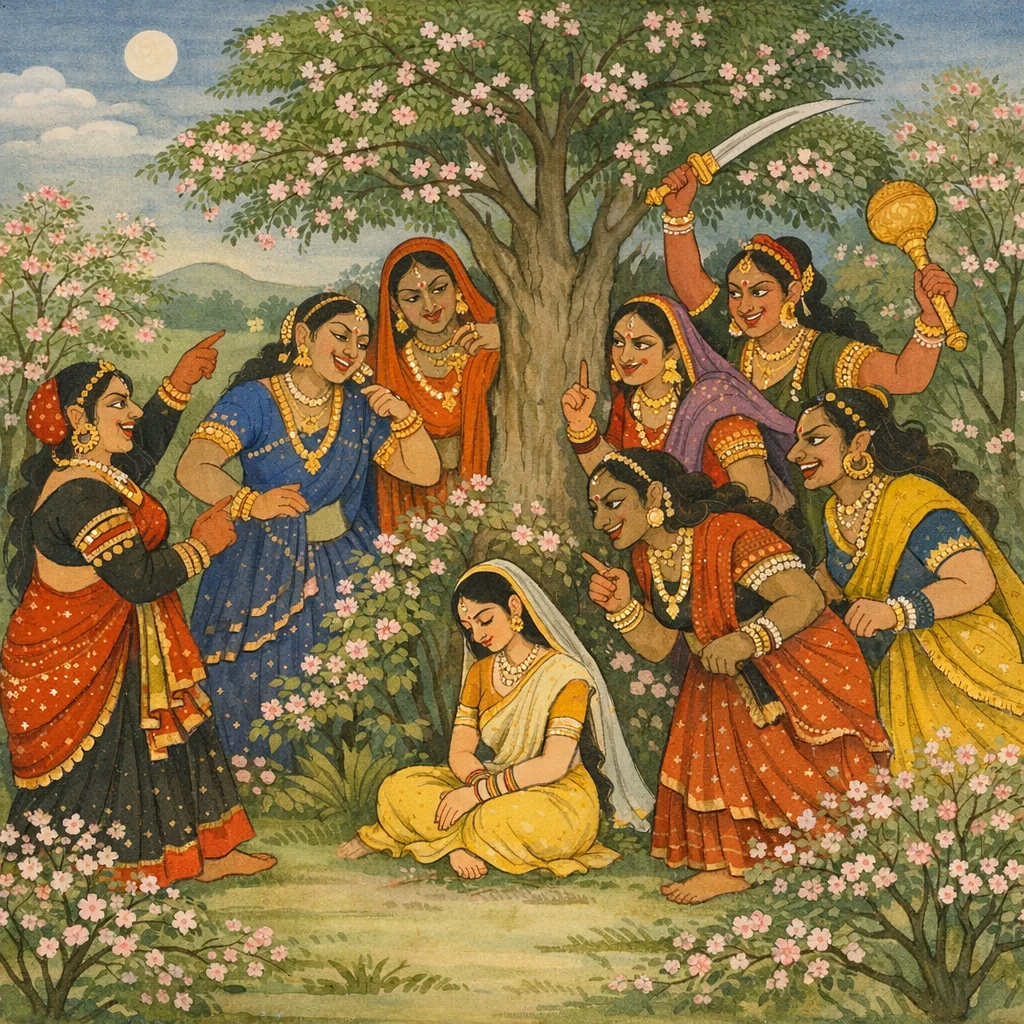
After Rāvaṇa concludes his direct pressure on Sītā and departs, he commands the rākṣasīs, who immediately crowd around her in Aśoka-grove confinement. The chapter is structured as a chorus of escalating speech-acts: harsh rebukes, genealogical legitimation of Rāvaṇa (Pulastya → Viśravas → Rāvaṇa), and repeated inducements that frame coerced marriage as “privilege.” Individual rākṣasīs—Ekajaṭā, Harijaṭā, Praghasā, Vikaṭā, and Durmukhī—advance complementary rhetorical strategies: lineage prestige, claims of military supremacy (victories over gods, Indra, nāgas, gandharvas, dānavas), wealth and harem imagery, and cosmic intimidation (sun and wind restrained by fear; nature yielding flowers and water). The sarga culminates in a pseudo-benevolent ultimatum: accept the advice or face death, highlighting the ethical contrast between consent-based dharma and fear-based domination, while foregrounding Sītā’s isolation as the moral crucible of Laṅkā’s captivity narrative.
Shlokas
Verse 1
इत्युक्त्वा मैथिलीं राजा रावणः शत्रुरावणः।सन्दिश्य च ततः सर्वा राक्षसीर्निर्जगाम ह।।।।
Having spoken thus to Maithilī, King Rāvaṇa, the subduer of foes, then issued orders to all the rākṣasī women and departed.
Verse 2
निष्क्रान्ते राक्षसेन्द्रे तु पुनरन्तःपुरं गते।राक्षस्यो भीमरूपास्ताः सीतां समभिदुद्रुवुः।।।।
When the lord of rākṣasas had departed and returned again to the inner palace, those demonesses of dreadful form rushed at Sītā and crowded around her.
Verse 3
ततः सीतामुपागम्य राक्षस्यः क्रोधमूर्छिताः।परं परुषया वाचा वैदेहीमिदमब्रुवन्।।।।
Then the demonesses, their senses overwhelmed by anger, went up to Sītā and addressed Vaidehī with extremely harsh words.
Verse 4
पौलस्त्यस्य वरिष्ठस्य रावणस्य महात्मनः।दशग्रीवस्य भार्या त्वं सीते न बहुमन्यसे।।।।
O Sītā, do you not regard it as an honor to become the wife of the great-souled Rāvaṇa—Daśagrīva—who is the most eminent scion of Pulastya’s lineage?
Verse 5
ततस्त्वेकजटा नाम राक्षसी वाक्यमब्रवीत्।आमन्त्य्र क्रोधाताम्राक्षी सीतां करतलोदरीम्।।।।
Then the rākṣasī named Ekajaṭā spoke; having called to Sītā, her eyes reddened with anger, she addressed her—Ekajaṭā, the palm-bellied one.
Verse 6
प्रजापतीनां षण्णां तु चतुर्थो यः प्रजापतिः।मानसो ब्रह्मणः पुत्रः पुलस्त्य इति विश्रुतः।।।।
Among the six Prajāpatis, the one famed as Pulastya—Brahmā’s mind-born son—is known as the fourth.
Verse 7
पुलस्त्यस्य तु तेजस्वी महर्षिर्मानसः सुतः।नाम्ना स विश्रवा नाम प्रजापतिसमप्रभः।।।।
Pulastya had a radiant, mind-born son— the great seer named Viśravas—whose splendor was equal to a Prajāpati’s.
Verse 8
तस्य पुत्रो विशालाक्षि रावणः शत्रुरावणः।तस्य त्वं राक्षसेन्द्रस्य भार्या भवितुमर्हसि।।।।मयोक्तं चारुसर्वाङ्गिः वाक्यं किं नानुमन्यसे।
O wide-eyed lady, his son is Rāvaṇa, the subduer of foes. You are fit to become the wife of that lord of rākṣasas. O fair-limbed one, why do you not agree to what I have said?
Verse 9
ततो हरिजटा नाम राक्षसी वाक्यमब्रवीत्।।।।विवर्त्य नयने कोपान्मार्जारसदृशेक्षणा।
Then the rākṣasī named Harijaṭā spoke; rolling her eyes in anger, she stared with cat-like gaze.
Verse 10
येन देवास्त्रयस्त्रिंशद्देवराजश्च निर्जिताः।।।।तस्य त्वं राक्षसेन्द्रस्य भार्या भवितुमर्हसि।
You should become the wife of that lord of rākṣasas by whom the thirty-three gods—and even Indra, their king—have been conquered.
Verse 11
ततस्तु प्रघसा नाम राक्षसी क्रोधमूर्छिता।।।।भर्त्सयन्ती तदा घोरमिदं वचनमब्रवीत्।
Then an ogress named Praghasā, overcome by anger, harshly taunting her, spoke these dreadful words.
Verse 12
वीर्योत्सिक्तस्य शूरस्य सङ्ग्रामेषु निवर्तिनः।।।।बलिनो वीर्ययुक्तस्य भार्यात्वं किं न लप्स्यसे।
Why will you not accept the status of wife to a powerful, valor-swollen hero—one who does not turn back in battle, endowed with might?
Verse 13
प्रियां बहुमतां भार्यां त्यक्त्वा राजा महाबलः।।।।सर्वासां च महाभागां त्वामुपैष्यति रावणः।
Mighty King Rāvaṇa, even abandoning his dear and most favored wife, will come to you—honored among all women—seeking you.
Verse 14
समृद्धं स्त्रीसहस्रेण नानारत्नोपशोभितम्।।।।अन्तःपुरं समुत्सृज्य त्वामुपैष्यति रावणः।
Rāvaṇa, abandoning his splendid inner palace—rich with a thousand women and adorned with many kinds of jewels—seeks you.
Verse 15
अन्या तु विकटा नाम राक्षसी वाक्यमब्रवीत्।।।।असकृद्देवता युद्धे नागगन्धर्वदानवाः।निर्जिताः समरे येन स ते पार्श्वमुपागतः।।।।
Another demoness, named Vikaṭā, spoke: ‘He by whom the gods have repeatedly been defeated in war, and by whom nāgas, gandharvas, and dānavas have been conquered in battle—he has come to your side.’
Verse 16
अन्या तु विकटा नाम राक्षसी वाक्यमब्रवीत्।।5.23.15।।असकृद्देवता युद्धे नागगन्धर्वदानवाः।निर्जिताः समरे येन स ते पार्श्वमुपागतः।।5.23.16।।
Another demoness, named Vikaṭā, spoke: ‘He who has again and again defeated the gods in war, and conquered nāgas, gandharvas, and dānavas in battle—he has come to your side.’
Verse 17
तस्य सर्वसमृद्धस्य रावणस्य महात्मनः।किमद्य राक्षसेन्द्रस्य भार्यात्वं नेच्छसेऽधमे।।।।
‘Why, you wretched woman, do you not now desire the status of wife to that Rāvaṇa—lord of rākṣasas—who possesses every prosperity and calls himself “great-souled”?’
Verse 18
ततस्तु दुर्मुखी नाम राक्षसी वाक्यमब्रवीत्।यस्य सूर्यो न तपति भीतो यस्य च मारुतः।।।।न वाति स्मायतापाङ्गे किं त्वं तस्य न तिष्ठसि।
Then the demoness named Durmukhī spoke: ‘O long-eyed lady, in fear of whom the sun does not burn and the wind does not blow—why do you not yield to him?’
Verse 19
पुष्पवृष्टिं च तरवो मुमुचुर्यस्य वै भयात्।।।।शैलाश्च सुभ्रु पानीयं जलदाश्च यदेच्छति।तस्य नैरृतराजस्य राजराजस्य भामिनि ।।।।किं त्वं न कुरुषे बुद्धिं भार्यार्थे रावणस्य हि।
‘O fair-browed lady, in fear of whom the trees let fall showers of flowers; and whenever he wishes, even mountains and clouds give forth water—O radiant one, why do you not set your mind on becoming the wife of that king of the rākṣasas, the king of kings, Rāvaṇa?’
Verse 20
‘O fair-browed lady, in fear of whom the trees let fall showers of flowers; and whenever he wishes, even mountains and clouds give forth water—O radiant one, why do you not set your mind on becoming the wife of that king of the rākṣasas, the king of kings, Rāvaṇa?’
Verse 21
साधु ते तत्त्वतो देवि कथितं साधु भामिनि।।।।गृहाण सुस्मिते वाक्यमन्यथा न भविष्यसि।
O queen—fair lady—what has been told to you is truly sound and meant for your good. Accept these words, gentle-smiling one; otherwise, you will not remain alive.
Frequently Asked Questions
The central dilemma is coercion versus consent: Sītā is threatened with harm unless she accepts marriage to Rāvaṇa, while the rākṣasīs attempt to reframe forced compliance as social advantage and political inevitability.
The sarga illustrates how adharma often disguises itself as “pragmatic counsel,” using fear and prestige to override conscience; it implicitly elevates steadfast fidelity and inner autonomy as the ethical counter-force to intimidation.
Cultural markers include Laṅkā’s antaḥpura (royal inner chambers/harem) as a symbol of imperial luxury and control; cosmological imagery (sun, wind, nature’s compliance) functions as a rhetorical landmark to project Rāvaṇa’s supposed sovereignty.