Sarga 4
हनूमद्-दूत्यम् / Hanuman’s Mediation and Lakshmana’s Appeal to Sugriva
किष्किन्धाकाण्ड
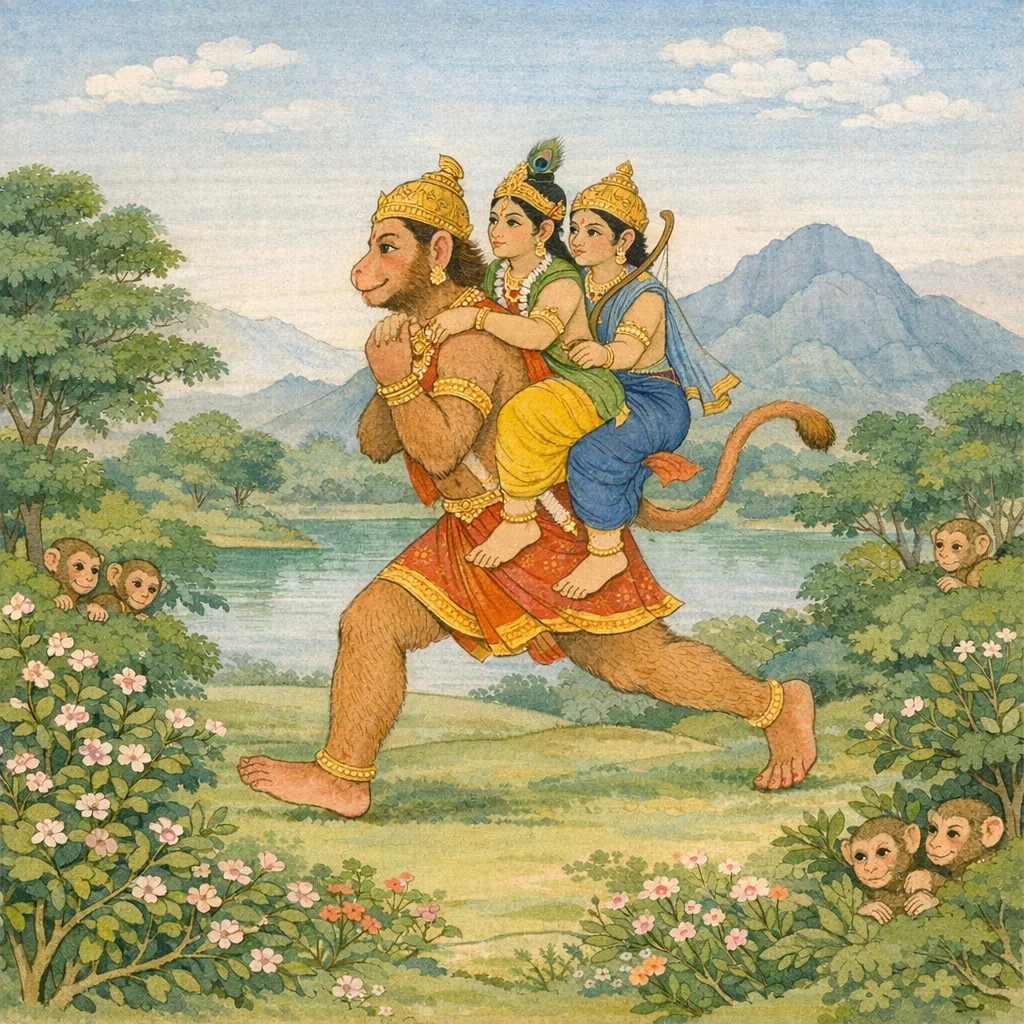
This sarga structures an alliance through formal dialogue. Hanumān, pleased after hearing Lakṣmaṇa’s courteous speech, internally anticipates Sugrīva’s restoration (rājyāgama) because Rāma’s arrival signals effective assistance. Hanumān questions the brothers’ purpose in the perilous Pampā-forest region; urged by Rāma, Lakṣmaṇa delivers a compact genealogy-and-virtue discourse: Daśaratha’s dharmic kingship, Rāma’s royal marks and renown, the injustice of exile, and the central crisis—Sītā’s abduction by an unknown shape-shifting rākṣasa. Lakṣmaṇa articulates śaraṇāgati explicitly: he and Rāma seek Sugrīva’s shelter, reversing worldly hierarchy to emphasize moral urgency. A prophetic assurance is introduced via Danu (Diti’s son), cursed into rākṣasa-state, who foretells Sugrīva’s capability to identify the abducting demon. Hanumān replies with polished reassurance: Sugrīva himself is wronged by Vālin, abandoned and dispossessed, therefore disposed to reciprocate help; he promises cooperation in Sītā’s search. The chapter closes with ritual courtesy (Lakṣmaṇa honoring Hanumān), Lakṣmaṇa’s confidence in Hanumān’s truthfulness, and Hanumān physically conveying Rāma and Lakṣmaṇa—abandoning mendicant disguise, assuming vānar-form, and carrying them toward Sugrīva at Ṛśyamūka—signaling the alliance’s imminent formalization.
Shlokas
Verse 1
ततः प्रहृष्टौ हनुमान्कृत्यवानिति तद्वचः।श्रुत्वा मधुरसम्भाषं सुग्रीवं मनसा गतः।।
Then Hanumān, delighted that his task was accomplished, having heard those sweet words, turned his mind toward Sugrīva (to report and proceed).
Verse 2
भव्यो राज्यागमस्तस्य सुग्रीवस्य महात्मनः।यदयं कृत्यवान्प्राप्तः कृत्यं चैतदुपागतम्।।
“For that great-souled Sugriva, the recovery of kingship seems auspicious—since this dutiful one has arrived, and the needed task (for Sugriva) has also come within reach.”
Verse 3
ततः परमसंहृष्टो हनुमान् प्लवगर्षभः।प्रत्युवाच ततो वाक्यं रामं वाक्यविशारदः।।
Then Hanumān—bull among the monkeys, skilled in speech—became exceedingly delighted and replied to Rāma with words.
Verse 4
किमिर्थं त्वं वनं घोरं पम्पाकाननमण्डितम्।आगतस्सानुजो दुर्गं नानाव्याळमृगायुतम्।।
For what purpose have you come—along with your brother—into this dreadful, hard-to-reach forest adorned by the groves of Pampā, crowded with many kinds of serpents and wild beasts?
Verse 5
तस्य तद्वचनं श्रुत्वा लक्ष्मणो रामचोदितः।आचचक्षे महात्मानं रामं दशरथात्मजम्।।
Hearing his words, Lakṣmaṇa—prompted by Rāma—described to him Rāma, the great-souled son of Daśaratha.
Verse 6
राजा दशरथो नाम द्युतिमान्धर्मवत्सलः।चातुर्वर्ण्यं स्वधर्मेण नित्यमेवाभ्यपालयत्4.4.6।।
There was a king named Daśaratha—radiant and devoted to dharma—who always protected the four social orders by faithfully upholding his kingly duty.
Verse 7
न द्वेष्टा विद्यते तस्य न च स द्वेष्टि कञ्चन।स च सर्वेषु भूतेषु पितामह इवापरः।।अग्निष्टोमादिभिर्यज्ञैरिष्टवानाप्तदक्षिणैः।
He had no enemy, nor did he hate anyone; among all beings he was like another grandsire—like Brahmā himself. And he performed Agniṣṭoma and other sacrifices, giving the proper gifts (dakṣiṇā).
Verse 8
तस्यायं पूर्वजः पुत्रो रामो नाम जनैः श्रुतः।।।।शरण्यस्सर्वभूतानां पितुर्निर्देशपारगः।
This is his eldest son, named Rāma, renowned among the people— a refuge for all beings, and one who perfectly carried out his father’s commands.
Verse 9
वीरो दशरथस्यायं पुत्राणां गुणवत्तमः।।4.4.9।।राजलक्षणसम्पन्नस्सम्युक्तो राजसम्पदा।राज्याद्भ्रष्टो वने वस्तुं मया सार्धमिहागतः4.4.10।।
This hero is Daśaratha’s finest son in virtue—endowed with the marks of royalty and possessed of kingly excellence. Yet, cast out from the kingdom, he has come here with me to dwell in the forest.
Verse 10
वीरो दशरथस्यायं पुत्राणां गुणवत्तमः।।4.4.9।।राजलक्षणसम्पन्नस्सम्युक्तो राजसम्पदा।राज्याद्भ्रष्टो वने वस्तुं मया सार्धमिहागतः4.4.10।।
This is the heroic son of Daśaratha—foremost in virtue among his sons—endowed with the marks of royalty and royal prosperity; yet, driven from the kingdom, he has come here with me to dwell in the forest.
Verse 11
भार्यया च महातेजास्सीतयाऽनुगतो वशी।दिनक्षये महातेजाः प्रभयेव दिवाकरः।।
That radiant, self-controlled prince was accompanied by his wife Sītā—like the glorious Sun at day’s end is followed by its own light.
Verse 12
अहमस्यावरो भ्राता गुणैर्दास्यमुपागतः।कृतज्ञस्य बहुज्ञस्य लक्ष्मणो नाम नामतः।।
I am his younger brother; moved by his virtues, I have taken up service to him. By name I am called Lakṣmaṇa—he is grateful and deeply wise.
Verse 13
सुखार्हस्य महार्हस्य सर्वभूतहितात्मनः।ऐश्वर्येण च हीनस्य वनवासाश्रितस्य च।।रक्षसाऽपहृता भार्या रहिते कामरूपिणा।तच्च न ज्ञायते रक्षः पत्नी येनास्य सा हृता।।
Though fit for comfort and honor, a benefactor of all beings, now deprived of sovereignty and living in the forest—his wife has been abducted in our absence by a shape-shifting rākṣasa; and that demon’s identity is still unknown, by whom his spouse was taken.
Verse 14
सुखार्हस्य महार्हस्य सर्वभूतहितात्मनः।ऐश्वर्येण च हीनस्य वनवासाश्रितस्य च4.4.13।।रक्षसाऽपहृता भार्या रहिते कामरूपिणा।तच्च न ज्ञायते रक्षः पत्नी येनास्य सा हृता4.4.14।।
This repeats the same statement: though worthy of comfort and honor and devoted to the welfare of all, Rāma—deprived of sovereignty and living in the forest—has had his wife abducted in his absence by a shape-shifting rākṣasa, whose identity remains unknown.
Verse 15
दनुर्नाम दितेः पुत्रश्शापाद्राक्षसतां गतः।आख्यातस्तेन सुग्रीवस्समर्थो वानरर्षभः।।
Diti’s son named Danu—made to live as a rākṣasa by a curse—had declared that Sugrīva, the bull among vānaras, would be capable (of accomplishing this task).
Verse 16
स ज्ञास्यति महावीर्यस्तव भार्यापहारिणम्।एवमुक्त्वा दनुस्स्वर्गं भ्राजमानो गतस्सुखम्।।
“That mighty hero will recognize the one who abducted your wife.” Saying so, Danu—radiant—departed happily to heaven.
Verse 17
एतत्ते सर्वमाख्यातं यथा तथ्येन पृच्छतः।अहं चैव हि रामश्च सुग्रीवं शरणं गतौ।।
“Since you asked in earnest for the truth, I have told you everything as it is. Now Rama and I have come, seeking refuge with Sugriva.”
Verse 18
एष दत्त्वा च वित्तानि प्राप्य चानुत्तमं यशः।लोकनाथः पुरा भूत्वा सुग्रीवं नाथमिच्छति।।
“This one, having given wealth and gained unsurpassed fame, though once a protector-lord of the world, now wishes to have Sugriva as his support.”
Verse 19
पिता यस्य पुरा ह्यासीच्छरण्यो धर्मवत्सलः।तस्य पुत्रश्शरण्यश्च सुग्रीवं शरणं गतः।।
“His father in former times was a refuge to all, devoted to dharma. That son—himself worthy to grant refuge—has now come to Sugriva for shelter.”
Verse 20
सर्वलोकस्य धर्मात्मा शरण्यश्शरणं पुरा।गुरुर्मे राघवस्सोऽयं सुग्रीवं शरणं गतः।।
“This Rāghava—righteous-souled, once a refuge for all the worlds, and worthy of reverence to me—has now come seeking refuge with Sugriva.”
Verse 21
यस्य प्रसादे सततं प्रसीदेयुरिमाः प्रजाः।स रामो वानरेन्द्रस्य प्रसादमभिकाङ्क्षते। ।।
“By whose gracious favor these subjects would ever remain content—this very Rama now longs for the favor of the lord of monkeys.”
Verse 22
येन सर्वगुणोपेताः पृथिव्यां सर्वपार्थिवाः।मानितास्सततं राज्ञा सदा दशरथेन वैतस्यायं पूर्वजः पुत्रस्त्रिषु लोकेषु विश्रुतः।सुग्रीवं वानरेन्द्रं तु रामश्शरणमागतः।।
“By King Daśaratha, all the earthly rulers—endowed with every virtue—were always honored. Of him, this firstborn son, renowned in the three worlds, Rama, has come to Sugriva, lord of monkeys, seeking refuge.”
Verse 23
येन सर्वगुणोपेताः पृथिव्यां सर्वपार्थिवाः।मानितास्सततं राज्ञा सदा दशरथेन वै4.4.22तस्यायं पूर्वजः पुत्रस्त्रिषु लोकेषु विश्रुतः।सुग्रीवं वानरेन्द्रं तु रामश्शरणमागतः4.4.23।।
This verse repeats/continues the same statement: Dasaratha’s honoring of virtuous kings and Rama—his famed firstborn—coming to Sugriva, the monkey-lord, for refuge.
Verse 24
शोकाभिभूते रामे तु शोकार्ते शरणं गते।कर्तुमर्हति सुग्रीवः प्रसादं हरियूधपः।।
“When Rama—overcome and afflicted with grief—has come seeking refuge, Sugriva, commander of the monkey hosts, ought to grant him favor and help.”
Verse 25
एवं ब्रुवाणं सौमित्रिं करुणं साश्रुलोचनम्।हनुमान्प्रत्युवाचेदं वाक्यं वाक्यविशारदः।।
As Saumitri spoke in this piteous way, his eyes filled with tears, Hanumān—skilled in speech—replied with these words.
Verse 26
ईदृशा बुद्धिसम्पन्ना जितक्रोधा जितेन्द्रियाः।द्रष्टव्या वानरेन्द्रेण दिष्ट्या दर्शनमागताः।।
“Fortunate indeed! Such men—endowed with intelligence, having conquered anger and mastered the senses—have come to be seen. It is the lord of monkeys who should seek audience with you.”
Verse 27
स हि राज्यात्परिभ्रष्टः कृतवैरश्च वालिना।हृतदारो वने त्यक्तो भ्रात्रा विनिकृतो भृशम्।।
“For he has been driven out from his kingdom; Vālin has turned hostile toward him. His wife has been taken, he has been cast into the forest—grievously wronged by his own brother.”
Verse 28
करिष्यति स साहाय्यं युवयोर्भास्करात्मजः।सुग्रीवस्सह चास्माभि स्सीतायाः परिमार्गणे।।
“Sugrīva, the son of the Sun, will render help to you both; together with us he will aid in the search for Sītā.”
Verse 29
इत्येवमुक्त्वा हनुमान् श्लक्ष्णं मधुरया गिरा।बभाषे सोऽभिगच्छेम सुग्रीवमिति राघवम्।।
Having spoken thus, Hanumān, in gentle and sweet words, said to Rāghava: “Let us go and approach Sugrīva.”
Verse 30
एवं ब्रुवाणं धर्मात्मा हनुमन्तं स लक्ष्मणः।प्रतिपूज्य यथान्यायमिदं प्रोवाच राघवम्।।
As Hanumān spoke thus, righteous Lakṣmaṇa—having duly honored him according to proper custom—said this to Rāghava (Rāma).
Verse 31
कपिः कथयते हृष्टो यथाऽयं मारुतात्मजः।कृत्यवांत्सोऽपि सम्प्राप्तः कृतकृत्योऽसि राघव।।
“O Rāghava, as this monkey—the son of the Wind—speaks with evident delight, so too has a man of action arrived. Consider your purpose achieved.”
Verse 32
प्रसन्नमुखवर्णश्च व्यक्तं हृष्टश्च भाषते।नानृतं वक्ष्यते वीरो हनुमान्मारुतात्मजः।।
“His bright, cheerful expression makes it plain that he speaks with joy. The heroic Hanumān, son of the Wind, will not speak untruth.”
Verse 33
ततस्स तु महाप्राज्ञो हनुमान्मारुतात्मजः।जगामादाय तौ वीरौ हरिराजाय राघवौ।।
Then the great-minded Hanumān, son of the Wind, led the two heroic Rāghavas to the king of the monkeys.
Verse 34
भिक्षुरूपं परित्यज्य वानरं रूपमास्थितः।पृष्ठमारोप्य तौ वीरौ जगाम कपिकुञ्जरः।।
Hanumān—mighty like an elephant among monkeys—cast off the mendicant’s disguise, assumed his true monkey-form, lifted the two heroes onto his back, and set out.
Verse 35
स तु विपुलयशाः कपिप्रवीरःपवनसुतः कृतकृत्यवत्प्रहृष्टः।गिरिवरमुरुविक्रमः प्रयातस्स शुभमतिस्सह रामलक्ष्मणाभ्याम्।।
Then that famed and foremost monkey—Hanumān, son of the Wind—rejoiced as one who has fulfilled his duty; mighty in prowess and of auspicious intent, he departed with Rāma and Lakṣmaṇa toward the great mountain.
Frequently Asked Questions
The pivotal action is formal śaraṇāgati: Rāma—formerly a protector of others—now seeks protection from Sugrīva, reframing power as responsibility and making alliance a dharmic obligation rather than a political convenience.
The chapter teaches that truthful, courteous speech and transparent motives create legitimate bonds; dharma is advanced through disciplined rhetoric, mutual aid, and compassion for the wronged (both Rāma and Sugrīva).
The Pampā forest region is foregrounded as a dangerous liminal zone, and Ṛśyamūka mountain is the strategic destination where Sugrīva resides—together forming the spatial corridor in which the alliance is initiated.