Sarga 31
लक्ष्मणक्रोधः सुग्रीवप्रबोधनं च (Lakshmana’s Wrath and the Summoning of Sugriva)
किष्किन्धाकाण्ड
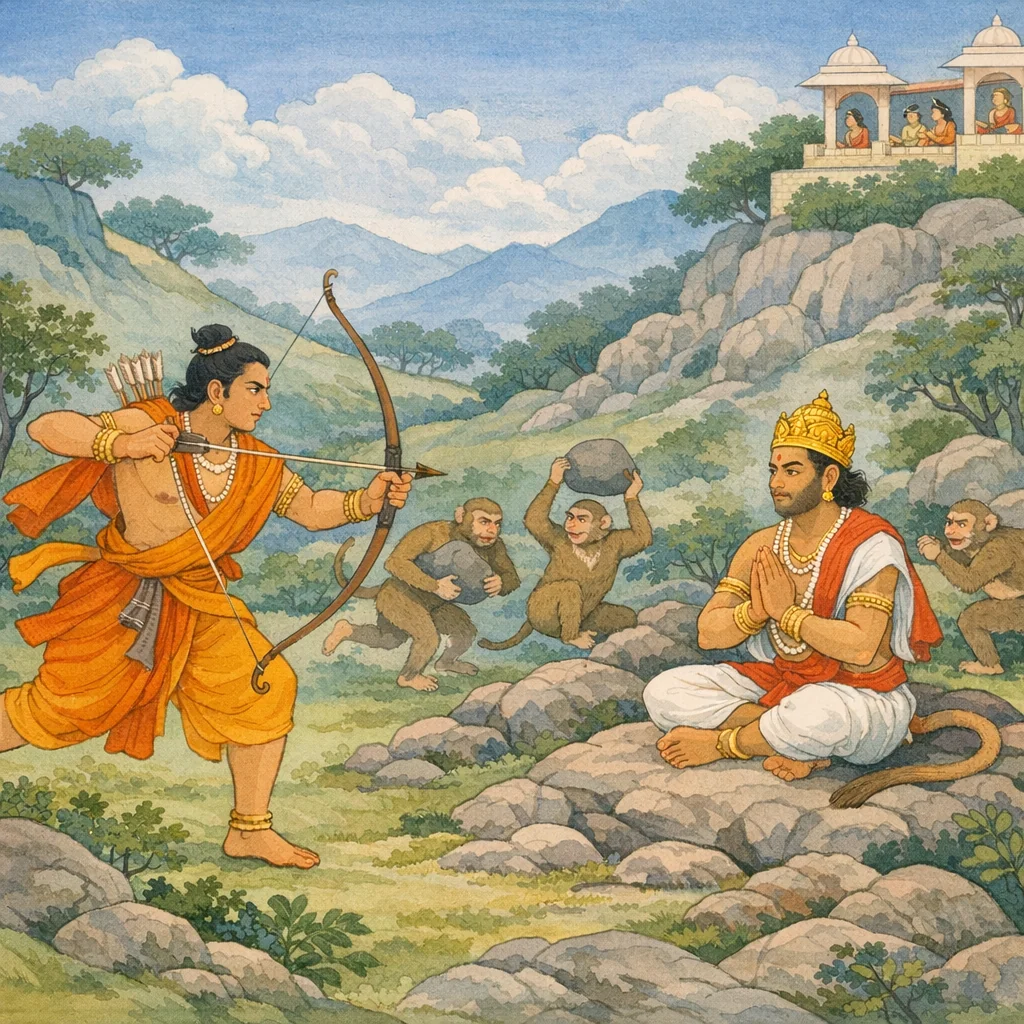
Sarga 31 stages a governance crisis inside the Rama–Sugriva alliance. Lakshmana, seeing Rama grief-stricken and judging Sugriva negligent, is urged by Rama to restrain anger and speak with sāman (conciliation) rather than harshness. Armed with a bow likened to Indra’s and moving like a storm or flood, Lakshmana enters Kishkindha; his furious presence panics the vanara guards, who arm themselves with trees and rocks and then scatter in fear. Angada becomes the diplomatic conduit: Lakshmana instructs him to announce his arrival and invite Sugriva to respond as he chooses. Sugriva, intoxicated and absorbed in pleasure with Tara, initially ignores the warning; ministers Plaksha and Prabhava then brief him on Lakshmana’s approach and the seriousness of dharma and artha at stake. Counsel culminates in practical protocol: Sugriva should go quickly with kin, salute Lakshmana, and avert his anger—reaffirming promises to righteous Rama and restoring the alliance’s moral timetable.
Shlokas
Verse 1
स कामिनं दीनमदीनसत्त्वंशोकाभिपन्नं समुदीर्णकोपम्।नरेन्द्रसूनुर्नरदेवपुत्रंरामानुजः पूर्वजमित्युवाच।।
Then Rāma’s younger brother—the prince, son of a king—addressed his elder brother: though love-stricken and dejected, he remained unbroken in spirit, yet was overcome by grief and surged with anger.
Verse 2
न वानरः स्थास्यति साधुवृत्तेन मंस्यते कर्मफलानुषङ्गान्।न भोज्यते वानरराज्यलक्ष्मींतथाहि नाभिक्रमतेऽस्य बुद्धिः।।
That monkey-king will not stand by righteous conduct; he does not acknowledge the rightful linkage of deeds and their fruits. Since his mind does not move in the proper course, he will not long enjoy the prosperity of the monkey-kingdom.
Verse 3
मतिक्षयाद्ग्राम्यसुखेषु सक्तस्तव प्रसादाप्रतिकारबुद्धिः।हतोऽग्रजं पश्यतु वीर तस्यन राज्यमेवं विगुणस्य देयम्।।
‘O hero! His mind has dwindled, and he is absorbed in coarse pleasures, ungrateful and unwilling to repay your favor. Let him behold his slain elder brother. Kingship should not be granted to one so devoid of virtue.’
Verse 4
न धारये कोपमुदीर्णवेगंनिहन्मि सुग्रीवमसत्यमद्य।हरिप्रवीरैस्सह वालिपुत्रोनरेन्द्रपत्न्या विचयं करोतु।।
I cannot restrain my anger, now surging with irresistible force. Today I shall kill that untruthful Sugrīva. Let Vāli’s son, together with the foremost of the monkeys, undertake the search for the king’s consort (Sītā).
Verse 5
तमात्तबाणासनमुत्पतन्तंनिवेदितार्थं रणचण्डकोपम्।उवाच रामः परवीरहन्तास्ववेक्षितं सानुनयं च वाक्यम्।।
Seeing Lakshmana spring up with bow and arrows in hand—his purpose declared and his wrath fierce for battle—Rama, slayer of enemy champions, spoke to him measured words, gentle and conciliatory.
Verse 6
न हि वै त्वद्विधो लोके पापमेवं समाचरेत्।पापमार्येण यो हन्ति स वीरः पुरुषोत्तमः4.31.6।।
For one like you would not commit such a wrong in this world. He is the true hero, the best of men, who strikes down wrongdoing by noble means.
Verse 7
नेदमत्र त्वया ग्राह्यं साधुवृत्तेन लक्ष्मण।तां प्रीतिमनुवर्तस्व पूर्ववृत्तं च सङ्गतम्।।
Lakshmana, you whose conduct is good—do not adopt this course here. Maintain that goodwill, and the friendship established earlier.
Verse 8
सामोपहितया वाचा रूक्षाणि परिवर्जयन्।वक्तुमर्हसि सुग्रीवं व्यतीतं कालपर्यये।।
Sugriva has let the appointed time pass; therefore you should speak to him using conciliatory words, avoiding harsh speech.
Verse 9
सोऽग्रजेनानुशिष्टार्थो यथावत्पुरुषर्षभः।प्रविवेश पुरीं वीरो लक्ष्मणः परवीरहा।।
Thus instructed properly by his elder brother, the heroic Lakshmana—bull among men, slayer of enemy champions—entered the city.
Verse 10
ततश्शुभमतिः प्राज्ञो भ्रातुः प्रियहिते रतः।लक्ष्मणः प्रतिसंरब्धो जगाम भवनं कपेः।।शक्रबाणासनप्रख्यं धनुः कालान्तकोपमः।प्रगृह्य गिरिशृङ्गाभं मन्दरः सानुमानिव।।।।
Then wise Lakṣmaṇa—noble in intent and devoted to his brother’s welfare—went, bristling with resolve, to the monkey-king’s dwelling. Taking up a bow like Indra’s, terrible as death’s final wrath, and towering like a mountain peak—like Mandara with its ridges—he advanced.
Verse 11
ततश्शुभमतिः प्राज्ञो भ्रातुः प्रियहिते रतः।लक्ष्मणः प्रतिसंरब्धो जगाम भवनं कपेः4.31.10।।शक्रबाणासनप्रख्यं धनुः कालान्तकोपमः।प्रगृह्य गिरिशृङ्गाभं मन्दरः सानुमानिव।।4.31.11।।
This verse repeats and continues the description: Lakṣmaṇa, wise and intent on his brother’s good, went to Sugrīva’s dwelling—grasping a bow like Indra’s, dreadful as death’s end-time fury, and towering like a mountain peak, like Mandara with its slopes.
Verse 12
यथोक्तकारी वचनमुत्तरं चैव सोत्तरम्।बृहस्पतिसमो बुद्ध्या मत्वा रामानुजस्तदा।।कामक्रोधसमुत्थेन भ्रातुः कोपाग्निना वृतः।प्रभञ्जन इवाप्रीतः प्रययौ लक्ष्मणस्तदा।।
Then Lakṣmaṇa—Rāma’s younger brother—obedient to instruction and wise as Bṛhaspati, reflected on what reply should be given and how it should be framed; and, wrapped in the fire of his brother’s anger, born of love and wrath, he set out displeased, like a raging wind.
Verse 13
यथोक्तकारी वचनमुत्तरं चैव सोत्तरम्।बृहस्पतिसमो बुद्ध्या मत्वा रामानुजस्तदा4.31.12।।कामक्रोधसमुत्थेन भ्रातुः कोपाग्निना वृतः।प्रभञ्जन इवाप्रीतः प्रययौ लक्ष्मणस्तदा4.31.13।।
In this recension’s combined numbering, the same description continues: Lakṣmaṇa, obedient and wise, considered the proper reply; and, stirred by love and anger and wrapped in his brother’s blazing wrath, departed displeased like a storm-wind.
Verse 14
सालतालाश्वकर्णांश्च तरसा पातयन्बहून्।पर्यस्यन्गिरिकूटानि द्रुमानन्यांश्च वेगतः।।शिलाश्च शकलीकुर्वन्पद्भ्यां गज इवाशुगः।दूरामेकपदं त्यक्त्वा ययौ कार्यवशाद्द्रुतम्।।
Driven by urgency, Lakṣmaṇa sped on, violently felling many sāla, tāla, and aśvakarṇa trees, and tossing aside rocky crags and other trees; like a swift elephant he shattered stones underfoot, covering great distance in a single stride as he hurried to accomplish his task.
Verse 15
सालतालाश्वकर्णांश्च तरसा पातयन्बहून्।पर्यस्यन्गिरिकूटानि द्रुमानन्यांश्च वेगतः4.31.14।।शिलाश्च शकलीकुर्वन्पद्भ्यां गज इवाशुगः।दूरामेकपदं त्यक्त्वा ययौ कार्यवशाद्द्रुतम्4.31.15।।
In this combined Southern Recension presentation, the same action is reiterated with explicit verse markers: Lakṣmaṇa, compelled by duty, rushed forward with elephant-like speed, felling trees, overturning crags, and crushing stones as he went.
Verse 16
तामपश्यद्बलाकीर्णां हरिराजमहापुरीम्।दुर्गामिक्ष्वाकुशार्दूलः किष्किन्धां गिरिसङ्गटे।।
Then the tiger among the Ikṣvāku line beheld Kiṣkindhā—the great city of the monkey-king—crowded with troops, hard to approach, and situated in the cleft between mountains.
Verse 17
रोषात्प्रस्फुरमाणोष्ठ स्सुग्रीवं प्रति लक्ष्मणः।ददर्श वानरान्भीमाकनिष्किन्धाया बहिश्चरान्।।
With lips trembling from anger as he turned his thoughts toward Sugrīva, Lakṣmaṇa saw the fearsome monkey-guards stationed outside Kiṣkindhā.
Verse 18
तं दृष्ट्वा वानरास्सर्वे लक्ष्मणं पुरुषर्षभम्।शैलशृङ्गाणि शतशः प्रवृद्धांश्च महीरुहान्।।जगृहुः कुञ्जरप्रख्या वानराः पर्वतान्तरे।
Seeing Lakṣmaṇa, the bull among men, all the monkeys—elephant-like in size within the mountain region—seized by the hundreds rocky crags and fully grown great trees as weapons.
Verse 19
तान्गृहीतप्रहरणान्सर्वान्दृष्ट्वा तु लक्ष्मणः।।बभूव द्विगुणं क्रुद्धो बह्विन्धन इवानलः।
But when Lakṣmaṇa saw them all armed with weapons, his anger flared twice over—like a fire fed with abundant fuel.
Verse 20
तं ते भयपरीताङ्गाः क्रुद्धं दृष्ट्वा प्लवङ्गमाः।।कालमृत्युयुगान्ताभं शतशो विद्रुता दिशः।
Seeing him enraged—like Death, Time, and the doom at the world’s end—those monkeys, their bodies seized by fear, fled by the hundreds in every direction.
Verse 21
ततस्सुग्रीवभवनं प्रविश्य हरिपुङ्गवाः।।क्रोधमागमनं चैव लक्ष्मणस्य न्यवेदयन्।
Then the foremost of the monkeys entered Sugrīva’s residence and reported Lakṣmaṇa’s arrival—along with his anger.
Verse 22
तारया सहितः कामी सक्तः कपिवृषो रहः।।न तेषां कपिवीराणां शुश्राव वचनं तदा।
But Sugrīva—the bull among monkeys—secluded with Tārā and absorbed in passion, did not then heed the words of those monkey-heroes.
Verse 23
ततस्सचिवसन्दिष्टा हरयो रोमहर्षणाः।गिरिकुञ्जर मेघाभा नगर्या निर्ययुस्तदा।।।।
Then, directed by the ministers, the monkeys—terrifying to behold, resembling mountains, elephants, and storm-clouds—poured out from the city.
Verse 24
नखदंष्ट्रायुधा घोरास्सर्वे विकृतदर्शनाः।।सर्वे शार्दूलदर्पाश्च सर्वे च विकृताननाः।
Dreadful were they all—armed with nails and fangs—grim to look upon; all were tiger-proud, and all had fierce, distorted faces.
Verse 25
दशनागबलाः केचित्केचिद्दशगुणोत्तराः।।केचिन्नागसहस्रस्य बभूवुस्तुल्यविक्रमाः।
Some had the strength of ten elephants, some tenfold greater, and some matched the might of a thousand elephants—yet all were equal in valor.
Verse 26
कृत्स्नांहि कपिभिर्व्याप्तां द्रुमहस्सैर्महाबलैः।।अपश्यल्लक्ष्मणः क्रुद्धः किष्किन्धां तां दुरासदाम्।
Lakṣmaṇa, enraged, beheld that hard-to-assail Kishkindhā—entirely filled with mighty monkeys bearing trees in their hands.
Verse 27
ततस्ते हरयस्सर्वे प्राकारपरिघान्तरात्।।निष्क्रम्योदग्रसत्त्वास्तु तस्थुराविष्कृतं तदा।
Then all those monkeys of conspicuous strength came out from within the rampart and iron-barred enclosure, revealed themselves, and stood ready.
Verse 28
सुग्रीवस्य प्रमादं च पूर्वजं चार्तमात्मवान्।।बुद्ध्वा कोपवशं वीरः पुनरेव जगाम सः।
The self-possessed hero, recognizing Sugrīva’s negligence and recalling his afflicted elder brother (Rāma), was once again swept under the power of anger.
Verse 29
स दीर्घोष्णमहोच्छवासः कोपसंरक्तलोचनः।।बभूव नरशार्दूल स्सधूम इव पावकः।
Breathing long, hot sighs, his eyes reddened with wrath, that tiger among men appeared like a fire wreathed in smoke.
Verse 30
बाणशल्यस्फुरज्जिह्वस्सायकासनभोगवान्।।स्वतेजोविषसङ्घातः पञ्चास्य इव पन्नगः।
He seemed like a five-hooded serpent: his arrows’ iron tips were like flickering fangs, his bow like the coiled body, and the blaze of his own radiance like concentrated venom.
Verse 31
तं दीप्तमिव कालाग्निं नागेन्द्रमिव कोपितम्।।समासाद्याङ्गदस्त्रासाद्विषादमगमद्भृशम्।
Drawing near to him—blazing like the fire of cosmic dissolution and enraged like the lord of serpents—Angada, shaken with fear, fell into deep dismay.
Verse 32
सोऽङ्गदं रोषताम्राक्षस्सन्दिदेश महायशाः।।सुग्रीवः कथ्यतां वत्स ममागमनमित्युत।
Then the renowned Lakshmana, his eyes reddened with anger, sent Angada a message: “Dear one, tell Sugriva that I have come.”
Verse 33
एष रामानुजः प्राप्तस्वत्सकाशमरिन्दम।।भ्रातुर्व्यसनसन्तप्तो द्वारि तिष्ठति लक्ष्मणः।तस्य वाक्यं यदि रुचिः क्रियतां साधु वानर।।इत्युक्त्वा शीघ्रमागच्छ वत्स वाक्यमरिन्दम।
“O subduer of enemies, say this: ‘Lakshmana, Rama’s younger brother, has come to you and stands at the gate, burning with grief over his brother’s distress. If you wish to hear his words, act rightly, O Vanara.’ Having said this, return quickly, dear one.”
Verse 34
एष रामानुजः प्राप्तस्वत्सकाशमरिन्दम4.31.33।।भ्रातुर्व्यसनसन्तप्तो द्वारि तिष्ठति लक्ष्मणः।तस्य वाक्यं यदि रुचिः क्रियतां साधु वानर4.31.34।।इत्युक्त्वा शीघ्रमागच्छ वत्स वाक्यमरिन्दम।
This verse is a duplicated/overlapping transmission of the previous instruction to Angada (4.31.33), continuing the same message: Lakshmana stands at the gate, afflicted for Rama, and Sugriva should respond appropriately if he wishes to hear him.
Verse 35
लक्ष्मणस्य वचः श्रुत्वा शोकाविष्टोऽङ्गदोऽब्रवीत्।पितुस्समीपमागम्य सौमित्रिरयमागतः।।
Hearing Lakshmana’s words, Angada, overcome with sorrow, went near his father and said: “Saumitri has arrived.”
Verse 36
अथाङ्गदस्तस्य वचो निशम्यसम्भ्रान्तभावः परिदीनवक्त्रः।निपत्य तूर्णं नृपतेस्तरस्वीततः रुमायाश्चरणौ ववन्दे।।
Then Angada, hearing that message, his mind shaken and his face grown pale, at once prostrated before the king; thereafter he bowed to Queen Ruma’s feet.
Verse 37
संङ्गृह्य पादौ पितुरग्र्यतेजाःजग्राह मातुः पुनरेव पादौ।पादौ रुमायाश्च निपीडयित्वानिवेदयामास ततस्तमर्थम्।।
The radiant Angada clasped his father’s feet, then again took his mother’s feet; pressing also Ruma’s feet in reverence, he then reported the matter.
Verse 38
स निद्रामदसंवीतो वानरो न विबुद्धवान्।बभूव मदमत्तश्च मदनेन च मोहितः।।
But the Vanara, wrapped in sleep and drunkenness, did not come to his senses—intoxicated and further deluded by desire.
Verse 39
ततः किलकिलां चक्रुर्लक्ष्मणं प्रेक्ष्य वानराः।प्रसादयन्तस्तं क्रुद्धं भयमोहितचेतसः।।
Then, seeing Lakshmana enraged, the Vanaras—hearts dazed with fear—raised a clamorous noise, trying to appease him.
Verse 40
ते महौघनिभं दृष्ट्वा वज्राशनिसमस्वनम्।सिंहनादं समं चक्रुर्लक्ष्मणस्य समीपतः।।
Seeing Lakṣmaṇa advancing like a mighty flood, they drew near him, raising a tumult like thunderbolt-crash—like the roar of a lion.
Verse 41
तेन शब्देन महता प्रत्यबुध्यत वानरः।मदविह्वलताम्राक्षो व्याकुलस्रग्विभूषणः।।
Roused by that great uproar, the monkey-king awoke—his eyes reddened by intoxication, his garlands and ornaments thrown into disarray.
Verse 42
अथाङ्गदवचः श्रुत्वा तेनैव च समागतौ।मन्त्रिणौ वानरेन्द्रस्य सम्मतौ दारदर्शिनौ।।प्लक्षश्चैव प्रभावश्च मन्त्रिणावर्थधर्मयोः।वक्तुमुच्चावचं प्राप्तं लक्ष्मणं तौ शशंसतुः।।
Then, hearing Aṅgada’s words, two ministers of the lord of monkeys—Plakṣa and Prabhāva—who were authorized to enter the women’s quarters, came along with him. They informed Sugrīva that Lakṣmaṇa had arrived, intent on speaking to him on matters of policy and righteousness.
Verse 43
अथाङ्गदवचः श्रुत्वा तेनैव च समागतौ।मन्त्रिणौ वानरेन्द्रस्य सम्मतौ दारदर्शिनौ4.31.42।।प्लक्षश्चैव प्रभावश्च मन्त्रिणावर्थधर्मयोः।वक्तुमुच्चावचं प्राप्तं लक्ष्मणं तौ शशंसतुः4.31.43।।
Then, hearing Aṅgada’s words, the two ministers—Plakṣa and Prabhāva—authorized to enter the inner apartments, came with him and reported to Sugrīva that Lakṣmaṇa had arrived to speak on matters of governance and dharma.
Verse 44
प्रसादयित्वा सुग्रीवं वचनैस्सामनिश्चितैः।आसीनं पर्युपासीनौ यथा शक्रं मरुत्पतिम्।।
Having soothed Sugrīva with words firmly set in conciliation, the two sat close beside him as attendants sit near Śakra (Indra), the lord of the Maruts.
Verse 45
सत्यसन्धौ महाभागौ भ्रातरौ रामलक्ष्मणौ।वयस्यभावं सम्प्राप्तौ राज्यार्हौ राज्यदायिनौ।।
Rāma and Lakṣmaṇa—those fortunate brothers steadfast in truth—have entered into friendship with you; they are worthy of sovereignty, and indeed they are the very givers of your kingship.
Verse 46
तयोरेको धनुष्पाणिर्द्वारि तिष्ठति लक्ष्मणः।यस्य भीताः प्रवेपन्तो नादान्मुञ्चन्ति वानराः।।
Of those two, Lakṣmaṇa alone stands at the doorway, bow in hand. In fear of him the monkeys tremble, crying out in agitation.
Verse 47
स एष राघवभ्राता लक्ष्मणो वाक्यसारथिः।व्यवसायरथः प्राप्तस्तस्य रामस्य शासनात्।।
This is Lakṣmaṇa, Rāghava’s brother—bearing Rāma’s words as his charioteer and driven by resolve as his chariot—who has come by Rāma’s command.
Verse 48
अयं च दयितो राजंस्ताराया स्तनयोऽङ्गदः।लक्ष्मणेन सकाशं ते प्रेषितस्त्वरयाऽनघ।।
And this dear Aṅgada, son of Tārā—O King, O blameless one—has been sent swiftly by Lakṣmaṇa into your presence.
Verse 49
सोऽयं रोषपरीताक्षो द्वारि तिष्ठति वीर्यवान्।वानरान्वानरपते चक्षुषा प्रदहन्निव।।
O lord of the Vanaras, that valiant Lakshmana stands at the gate, his eyes seized by anger, as though he would burn the monkeys with his gaze.
Verse 50
तस्य मूर्ध्ना प्रणम्य त्वं सपुत्रस्सहबन्धुभिः।गच्छ शीघ्रं महाराज रोषो ह्यस्य निवर्त्यताम्।।
O great king, go quickly with your son and your kinsmen; bow your head to him in salutation, so that his anger may indeed be turned away.
Verse 51
यदाह रामो धर्मात्मा तत्कुरुष्व समाहितः।राजं स्तिष्ठस्व समये भव सत्यप्रतिश्रवाः।।
O king, with a steady mind do exactly what righteous Rama has said; stand by the agreement, and be one whose pledged word is true.
Frequently Asked Questions
The dilemma is whether alliance-partners may use force when a promised duty is delayed: Lakshmana’s anger presses toward punitive action against Sugriva, while Rama reframes the response as disciplined correction through timely, lawful counsel rather than impulsive violence.
Power must be governed by speech-ethics and purpose: even justified anger should be channeled through sāman, remembrance of prior friendship, and adherence to agreements, so that dharma repairs relationships instead of escalating conflict.
Kiṣkindhā is presented as an inaccessible, fortified capital set between mountains (girisaṅgaṭa), with guarded entrances and rampart imagery; the landscape (trees, rocks, peaks) functions both as geography and as the material culture of vanara defense.