Sarga 10
सुग्रीवस्य वैरानुकथनम् (Sugriva’s Account of Enmity and Appeal to Rama)
किष्किन्धाकाण्ड
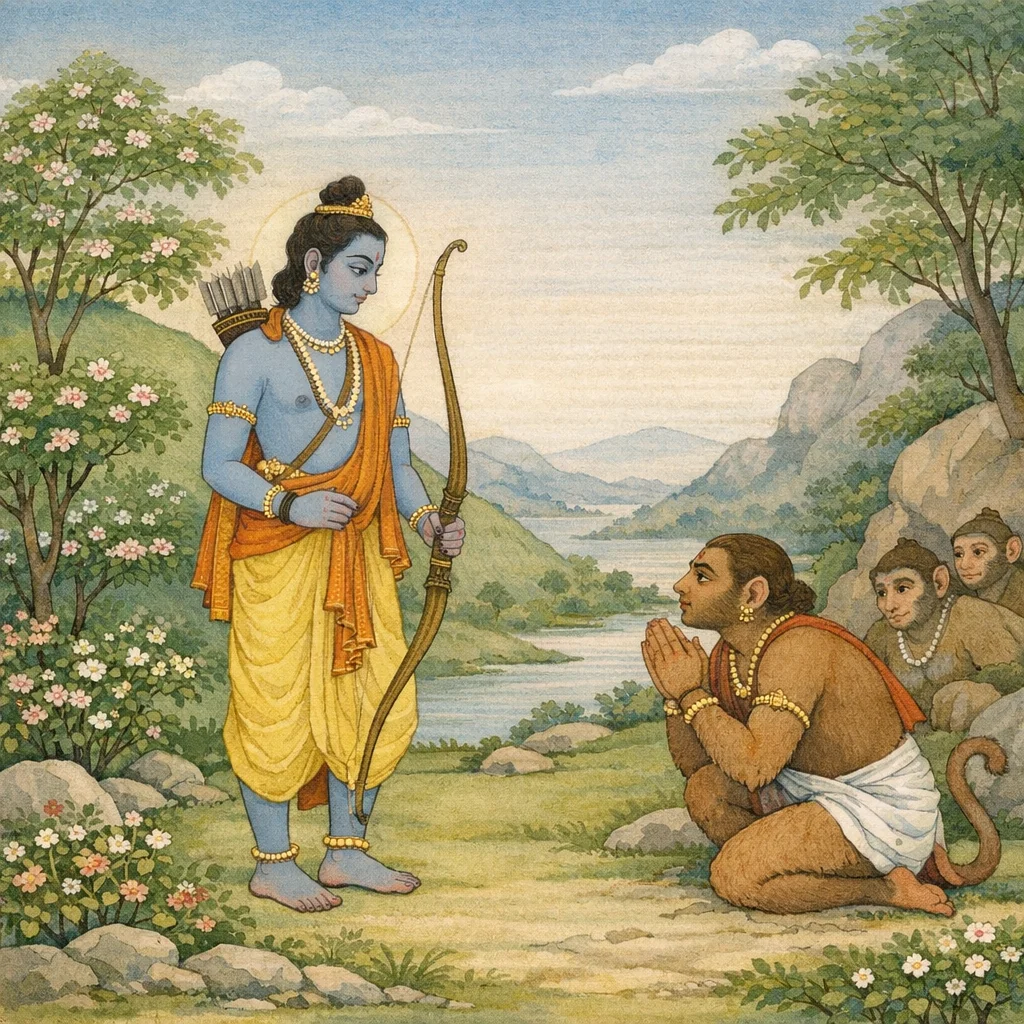
अस्मिन् सर्गे सुग्रीवः रामस्य समक्षं वालिना सह वैरस्य मूल-कारणं क्रमशः निवेदयति। आरम्भे सः भ्रातृ-सम्बन्ध-रक्षणाय वालिं क्रोधसमाविष्टं प्रसादयितुं प्रयत्नं करोति, तथा राज्य-व्यवहारस्य ‘न्यास’ (trusteeship) भावनया राज्यमपि प्रत्यर्पयितुमिच्छति। ततः मायावी-नाम्ना महासुरेण रात्रौ समाह्वाने कृते, सुग्रीव-वालिनौ अनुगच्छतः; असुरः महाबिलं प्रविशति, सुग्रीवः बिलद्वारि प्रतीक्षते, दीर्घकालात् शोणित-प्रवाहं दृष्ट्वा शोक-विषादेन द्वारं शैलशृङ्गेण पिहित्वा किष्किन्धां प्रत्यागच्छति। पौर-मन्त्रि-समूहः ‘राजभावे’ तं बलात् नियोजयति; पुनरपि सुग्रीवः वालिं शिरसा याचमानः क्षमां प्रार्थयते। वालिः तु सभामध्ये निर्भर्त्स्य, सुग्रीवं निर्वासयति, दार-हरणं च करोति; सुग्रीवः भयार्तः ऋष्यमूकं प्रविश्य रामं शरणं गच्छति। अन्ते रामः धर्मसंहितं वचनं दत्त्वा वालि-वधप्रतिज्ञां प्रकाशयति—अमोघ-शर-निपातेन दुष्टवृत्त-निग्रहः, तथा सुग्रीवस्य शोक-सागरात् तारणा इति।
Shlokas
Verse 1
ततः क्रोधसमाविष्टं सम्रब्धं तमुपागतम्।अहं प्रसादयाञ्चक्रे भ्रातरं प्रियकाम्यया
Then, when my brother arrived—agitated and overcome with anger—I tried to pacify him, seeking what was dear and beneficial (for us).
Verse 2
दिष्ट्यासि कुशली प्राप्तो निहतश्च त्वया रिपुः।अनाथस्य हि मे नाथस्त्वमेकोऽनाथनन्दनः।।
‘By good fortune you have returned safely, and the enemy has been slain by you. For me—bereft of support—you alone are the protector, O compassionate one to the helpless.’
Verse 3
इदं बहुशलाकं ते पूर्णचन्द्रमिवोदितम्।छत्रं सवालव्यजनं प्रतीच्छस्व मया धृतम्।।
Accept from me this parasol with many ribs, rising like the full moon, along with the yak-tail fan—both held out for you.
Verse 4
आर्तश्चाथ बिलद्वारि स्थितस्संवत्सरं नृप।दृष्ट्वाऽहं शोणितं द्वारि बिलाच्चापि समुत्थितम्।।शोकसंविग्नहृदयो भृशं व्याकुलितेन्द्रियः।अपिधाय बिलद्वारं शैलशृङ्गेण तत्तथा।।तस्माद्देशादपाक्रम्य किष्किन्धां प्राविशं पुनः।
‘O King, distressed, I waited at the cave’s entrance for a full year. Then, seeing blood welling out from the cave and spreading at the doorway, my heart sank in grief and my senses were thrown into confusion. I sealed the cave-mouth with a mountain-peak-like rock and, withdrawing from that place, returned again to Kiṣkindhā.’
Verse 5
आर्तश्चाथ बिलद्वारि स्थितस्संवत्सरं नृप।दृष्ट्वाऽहं शोणितं द्वारि बिलाच्चापि समुत्थितम्4.10.4।।शोकसंविग्नहृदयो भृशं व्याकुलितेन्द्रियः।अपिधाय बिलद्वारं शैलशृङ्गेण तत्तथा4.10.5।।तस्माद्देशादपाक्रम्य किष्किन्धां प्राविशं पुनः।
This is a continuation/overlap of the preceding passage: Sugrīva reiterates that, overwhelmed by grief and shaken senses after seeing blood emerge from the cave, he sealed the entrance with a massive rock and returned to Kiṣkindhā.
Verse 6
विषादात्विह मां दृष्ट्वा पौरैर्मन्त्रिभिरेव च।।अभिषिक्तो न कामेन तन्मेत्वं क्षन्तुमर्हसि।
‘Seeing me here sunk in grief, the citizens and ministers consecrated me—but not out of my own desire. Therefore you ought to forgive me for that.’
Verse 7
त्वमेव राजा मानार्हस्सदा चाहं यथा पुरम्।।राजभावनियोगोऽयं मम त्वद्विरहात्कृतः।सामात्यपौरनगरं स्थितं निहतकण्टकम्।।
‘You alone are the king, ever worthy of honor; and I remain as before, your brother. This exercise of royal authority was undertaken by me only because of your absence. With ministers and citizens, the city and realm have been kept steady, with threats removed.’
Verse 8
त्वमेव राजा मानार्हस्सदा चाहं यथा पुरम्4.10.7।।राजभावनियोगोऽयं मम त्वद्विरहात्कृतः।सामात्यपौरनगरं स्थितं निहतकण्टकम्4.10.8।।
This Southern Recension numbering continues the same statement: Sugrīva affirms Vāli’s rightful kingship and explains that his own governance was only a temporary duty performed in Vāli’s absence to keep the realm secure and stable.
Verse 9
न्यासभूतमिदं राज्यं तव निर्यातयाम्यहम्।मा च रोषं कृथास्सौम्य मयि शत्रुनिबर्हण।।
‘This kingdom was held by me only as a trust; I now return it to you. O gentle one, slayer of enemies—do not direct your anger toward me.’
Verse 10
याचे त्वां शिरसा राजन्मया बद्धोऽयमञ्जलिः।बलादस्मिन् समागम्य मन्त्रिभिः पुरवासिभिः।।राजभावे नियुक्तोऽहं शून्यदेशजिगीषया।
O King, I beg you with my head bowed—my palms joined in supplication. The ministers and the townspeople assembled and, by force of circumstance, appointed me to royal authority, fearing that a kingless realm would invite conquest.
Verse 11
स्निग्धमेवं ब्रुवाणं मां स तु निर्भर्त्स्य वानरः।।धिक्त्वामिति च मा मुक्त्वा बहु तत्तदुवाच ह।
Though I spoke to him affectionately in this way, that vānara rebuked me; saying “Shame on you!”, he did not let me be and hurled many accusations.
Verse 12
प्रकृतीश्च समानीय मुन्त्रिणश्चैव सम्मतान्।।मामाह सुहृदां मध्ये वाक्यं परमगर्हितम्।
Summoning common people and the ministers he favored, he spoke to me amid friends—uttering words of the deepest contempt.
Verse 13
विदितं वो यथा रात्रौ मायावी स महासुरः।।मां समाह्वयत क्रूरो युद्धाकाङ्क्षी सुदुर्मतिः।
You know how, at night, that great demon Māyāvī—cruel, wicked-minded, and hungry for battle—challenged me to combat.
Verse 14
तस्य तद्वचनं श्रुत्वा निस्सृतोऽहं नृपालयात्।।अनुयातश्च मां तूर्णमयं भ्राता सुदारुणः।
Hearing his words, I came out from the royal dwelling; and this brother of mine—fierce in temper—followed me quickly.
Verse 15
स तु दृष्ट्वैव मां रात्रौ सद्वितीयं महाबलः।।प्राद्रवद्भयसन्त्रस्तो वीक्ष्यावां समुपागतौ।अनुद्रुतश्च वेगेन प्रविवेश महाबिलम्।।
But that powerful one, seeing me at night accompanied by another, panicked in fear; when he saw the two of us advancing, he fled, and—pursued—rushed into a vast cave.
Verse 16
स तु दृष्ट्वैव मां रात्रौ सद्वितीयं महाबलः4.10.15।।प्राद्रवद्भयसन्त्रस्तो वीक्ष्यावां समुपागतौ।अनुद्रुतश्च वेगेन प्रविवेश महाबिलम्4.10.16।।
This verse repeats the previous description: the powerful demon, seeing me with a companion at night, fled in fear and, chased closely, rushed into a vast cave.
Verse 17
तं प्रविष्टं विदित्वा सुघोरं सुमहद्बिलम्।अयमुक्तोऽथ मे भ्राता मया तु क्रूरदर्शनः।।
Seeing that dreadful foe had entered the vast and terrifying cave, I then addressed my own brother—grim of aspect—with these words.
Verse 18
अहत्वा नास्ति मे शक्तिः प्रतिगन्तुमितः पुरीम्।बिलद्वारि प्रतीक्ष त्वं यावदेनं निहन्म्यहम्।।
‘Without killing him, I have no strength to return from here to the city. You wait at the cave’s entrance until I strike him down.’
Verse 19
स्थितोऽयमिति मत्वा तु प्रविष्टोऽहं दुरासदम्।तं च मे मार्गमाणस्य गतस्संवत्सरस्तदा।।
Thinking, ‘He is waiting there,’ I entered that hard-to-assail place; and as I searched for him within, a full year passed.
Verse 20
स तु दृष्टो मया शत्रुरनिर्वेदाद्भयावहः।निहतश्च मया तत्र सोऽसुरो बन्धुभिस्सह।।।।
There I found that fearsome enemy, and without faltering I slew that asura on the spot, together with his kinsmen.
Verse 21
तस्यास्यात्तु प्रवृत्तेन रुधिरौघेण तद्बिलम्।पूर्णमासीद्दुराक्रामं स्तनतस्तस्य भूतले4.10.21।।
Then, from his gaping mouth, a torrent of blood poured forth and filled that cave; as he roared upon the ground, the place became perilous and hard to traverse.
Verse 22
सूदयित्वा तु तं शत्रुं विक्रान्तं दुन्दुभेस्सुतम्।निष्क्रामन्नेव पश्यामि बिलस्य पिहितं मुखम्4.10.22।।
Having slain that enemy—the valiant son of Dundubhi—when I was coming out, I saw that the cave’s mouth had been sealed shut.
Verse 23
विक्रोशमानस्य तु मे सुग्रीवेति पुनः पुनः।यदा प्रतिवचो नास्ति ततोऽहं भृशदुःखितः।।
As I cried out again and again, ‘Sugrīva!’, when no reply came back, I was overwhelmed with grief.
Verse 24
पादप्रहारैस्तु मया बहुभिस्तद्विदारितम्।ततोऽहं तेन निष्क्रम्य यथा पुरमुपागतः।।
With many kicks I broke it open; then, by that opening, I came out and made my way back to the city.
Verse 25
अत्रानेनास्मि संरुद्धो राज्यं प्रार्थयताऽत्मनः।सुग्रीवेण नृशंसेन विस्मृत्य भ्रातृसौहृदम्।।।।
Here I have been shut out by him—by cruel Sugrīva—who, forgetting brotherly affection, coveted the kingdom for himself.
Verse 26
एवमुक्त्वा तु मां तत्र वस्त्रेणैकेन वानरः।निर्वासयामास तदा वाली विगतसाध्वसः।।
After speaking to me in that manner, Vālī—the monkey—then banished me from there, while I had only a single cloth as my garment; and he did so without the least hesitation or fear.
Verse 27
तेनाहमपविद्धश्च हृतदारश्च राघव।तद्भयाच्छ महीकृत्स्ना क्रान्तेयं सवनार्णवा।।
Because of him, O Rāghava, I have been cast out and robbed of my wife; and out of fear of him I have wandered over this whole earth—filled with forests and bounded by oceans.
Verse 28
ऋष्यमूकं गिरिवरं भार्याहरणदुःखितः।प्रविष्टोऽस्मि दुराधर्षं वालिनः कारणान्तरे।।
Grieving over the abduction of my wife, I have entered the excellent mountain Ṛṣyamūka—unassailable to Vālī for a different reason.
Verse 29
एतत्ते सर्वमाख्यातं वैरानुकथनं महत्।अनागसा मया प्राप्तं व्यसनं पश्य राघव।।
All this has been told to you—the long account of our enmity. See, O Rāghava, what calamity has befallen me though I am without fault.
Verse 30
वालिनस्तु भयार्तस्य सर्वलोकभयङ्कर।कर्तुमर्हसि मे वीर प्रसादं तस्य निग्रहात्।।
But I am tormented by fear of Vālī. O hero who can strike fear into all the worlds, grant me your favor by restraining him.
Verse 31
एवमुक्तस्स तेजस्वी धर्मज्ञो धर्मसंहितम्।वचनं वक्तुमारेभे सुग्रीवं प्रहसन्निव।।
Thus addressed, the glorious Rāma—knower of dharma—began to speak words aligned with righteousness to Sugrīva, as though with a gentle smile.
Verse 32
अमोघास्सूर्यसङ्काशा ममैते निशिता श्शराः।तस्मिन्वालिनि दुर्वृत्ते निपतिष्यन्ति वेगिताः।।
These sharp arrows of mine, unfailing and radiant like the sun, will swiftly fall upon that wicked Vālī.
Verse 33
यावत्तं नाभिपश्यामि तव भार्यापहारिणम्।तावत्स जीवेत्पापात्मा वाली चारित्रदूषकः।।
That sinful Vālī—abductor of your wife and corrupter of moral conduct—will live only so long as I have not yet set eyes upon him.
Verse 34
आत्मानुमानात्पश्यामि मग्नं त्वां शोकसागरे।त्वामहं तारयिष्यामि कामं प्राप्स्यसि पुष्कलम्।।
By reflecting on my own experience, I see you sunk in an ocean of grief. I will bring you across it—you will fully attain your desired end.
Verse 35
तस्य तद्वचनं श्रुत्वा हर्षपौरुषवर्धनम्।सुग्रीवः परमप्रीतस्सुमहद्वाक्यमब्रवीत्।।
Hearing his words—which heightened his joy and courage—Sugrīva, greatly delighted, spoke in a weighty and gracious manner.
Frequently Asked Questions
The central dilemma is contested legitimacy: Sugriva is compelled by ministers and citizens to assume royal charge while Vali is absent, yet he frames it as a temporary trusteeship (न्यास) and seeks forgiveness—contrasted with Vali’s punitive response and usurpation (banishment and wife-abduction).
The sarga teaches that political necessity must remain accountable to dharma: public order may require interim governance, but moral legitimacy depends on intention, transparency, and willingness to restore rightful authority; likewise, refuge-seeking and vow-based protection become ethical instruments against tyranny.
Key landmarks include the great cave (महाबिलम्) and its sealed entrance (बिलद्वारम्), Kishkindha as the seat of vanara polity, and Rishyamuka Mountain as a culturally significant refuge-space described as inaccessible to Vali for an additional reason (कारणान्तरे).