Sarga 7
अमात्य-गुणवर्णनम् (The Virtues of Daśaratha’s Ministers and the Order of Governance)
बालकाण्ड
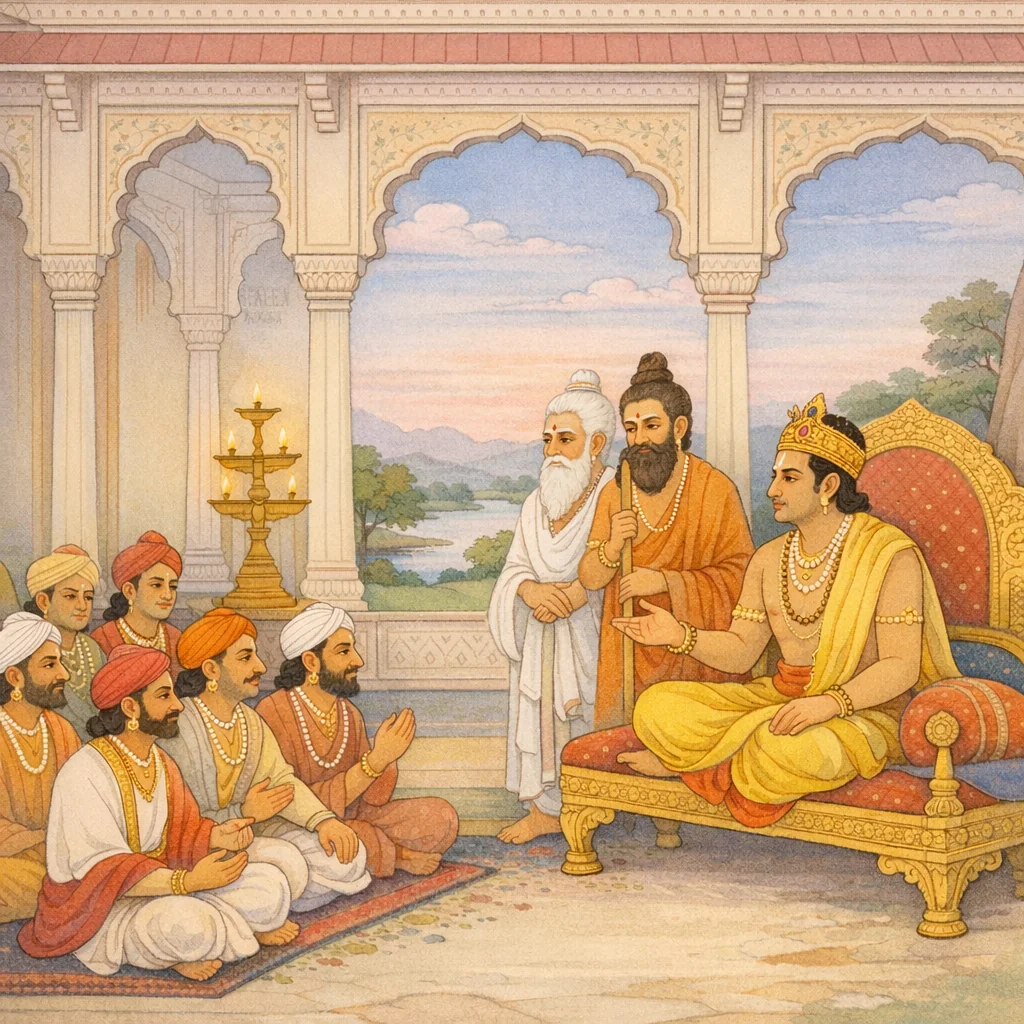
Sarga 7 provides an institutional portrait of Ayodhyā under King Daśaratha by describing the caliber and ethical discipline of his ministers and advisers. The chapter first characterizes the amātyas as virtuous, skilled in counsel (mantra-jñā) and in reading intentions (iṅgita-jñā), consistently oriented toward what is both pleasing and beneficial to the king (1.7.1). It then specifies their number—eight—and names them: Dhṛṣṭi, Jayanta, Vijaya, Siddhārtha, Arthasādhaka, Aśoka, Mantrapāla, and Sumantra (1.7.2–1.7.3). Alongside them stand the highly esteemed royal priests Vasiṣṭha and Vāmadeva (1.7.4), reinforcing the synthesis of political prudence and Vedic-ritual authority. The ministers are depicted as educated, self-restrained, truthful, consistent between word and deed, and socially adept (1.7.5–1.7.8), while also competent in fiscal replenishment and military organization (1.7.9–1.7.11). Governance is portrayed as impartial: punishment is timely and proportionate—even toward one’s own sons—yet the innocent are not harmed, and brahmins and kṣatriyas are not pained in thought, speech, or action (1.7.8–1.7.11). The result is civic-moral order: no liars, no sexual misconduct, and general serenity in city and realm (1.7.12–1.7.13). The sarga culminates by attributing Daśaratha’s glory and effective rule to this ministerial ecosystem—secrecy in counsel, peace/war discernment, ethical expertise, and pleasing speech—likening his radiance to the rising sun (1.7.16–1.7.22), with additional emphasis on spies, righteousness, and peerless sovereignty (1.7.19–1.7.21).
Shlokas
Verse 1
.तस्यामात्या गुणैरासन्निक्ष्वाकोस्तु महात्मन: ।मन्त्रज्ञाश्चेङ्गितज्ञाश्च नित्यं प्रियहिते रता: ।।।।
The magnanimous Ikṣvāku-descended king had ministers rich in virtues—skilled in counsel, skilled in reading intentions from outward signs, and ever intent on what was both pleasing and beneficial to their lord.
Verse 2
अष्टौ बभूवुर्वीरस्य तस्यामात्या यशस्विन: ।शुचयश्चानुरक्ताश्च राजकृत्येषु नित्यश: ।।।।
That mighty and renowned king (Daśaratha) had eight ministers—pure in conduct and loyally devoted—ever engaged in the duties of kingship.
Verse 3
धृष्टिर्जयन्तो विजयस्सिद्धार्थो ह्यर्थसाधक: ।अशोको मन्त्रपालश्च सुमन्त्रश्चाष्टमोऽभवत् ।।।।
They were Dhṛṣṭi, Jayanta, Vijaya, Siddhārtha, Arthasādhaka, Aśoka, Mantrapāla—and as the eighth, Sumantra.
Verse 4
ऋत्विजौ द्वावभिमतौ तस्याऽऽस्तामृषिसत्तमौ ।वसिष्ठो वामदेवश्च मन्त्रिणश्च तथापरे ।।।।
He also had two esteemed chief sages as royal priests—Vasiṣṭha and Vāmadeva—along with other counsellors as well.
Verse 5
विद्याविनीता ह्रीमन्त: कुशला नियतेन्द्रिया: ।श्रीमन्तश्च महात्मानश्शास्त्रज्ञा दृढविक्रमा: ।।।।कीर्तिमन्त: प्रणिहिता: यथावचनकारिण: ।तेज: क्षमायश:प्राप्ता स्मितपूर्वाभिभाषिण: ।।।।
They were educated and disciplined, ashamed to commit injustice, skilled and self-controlled; prosperous, high-minded, learned in the śāstras, and steadfast in valor. Renowned and attentive, they acted in accordance with their word; endowed with splendor, forbearance, and fame, they spoke with courtesy, beginning with a smile.
Verse 6
विद्याविनीता ह्रीमन्त: कुशला नियतेन्द्रिया: ।श्रीमन्तश्च महात्मानश्शास्त्रज्ञा दृढविक्रमा: ।।1.7.5।। कीर्तिमन्त: प्रणिहिता: यथावचनकारिण: ।तेज: क्षमायश:प्राप्ता स्मितपूर्वाभिभाषिण: ।।1.7.6।।
They were educated and disciplined, ashamed to commit injustice, skilled and self-controlled; prosperous, high-minded, learned in the śāstras, and steadfast in valor. Renowned and attentive, they acted in accordance with their word; endowed with splendor, forbearance, and fame, they spoke with courtesy, beginning with a smile.
Verse 7
क्रोधात्कामार्थहेतोर्वा न ब्रूयुरनृतं वच: ।तेषामविदितं किञ्चित्स्वेषु नास्ति परेषु वा ।क्रियमाणं कृतं वापि चारेणापि चिकीर्षितम् ।।।।
Whether from anger, or from desire, or for the sake of gain, they would not speak untruthful words. Nothing—whether among their own side or among opponents—remained unknown to them: what was being done, what had been done, or what was intended, even through the use of spies.
Verse 8
कुशला व्यवहारेषु सौहृदेषु परीक्षिता: ।प्राप्तकालं तु ते दण्डं धारयेयुस्सुतेष्वपि ।।।।
They were skilled in practical dealings and proven in friendship; and when the time was proper, they would administer punishment—even in matters concerning their own sons.
Verse 9
कोशसङ्ग्रहणे युक्ता बलस्य च परिग्रहे ।अहितं चापि पुरुषं न विहिंस्युरदूषकम् ।।।।
They were adept at building the treasury and maintaining the armed forces; yet they would not harm even an ill-disposed person, if he was without offence.
Verse 10
वीराश्च नियतोत्साहा राजशास्त्रमनुष्ठिता: ।शुचीनां रक्षितारश्च नित्यं विषयवासिनाम् ।।।।
They were heroic and steady in resolve, faithfully following the principles of governance; and they constantly protected the virtuous people dwelling throughout the realm.
Verse 11
ब्रह्म क्षत्रमहिंसन्तस्ते कोशं समपूरयन् ।सुतीक्ष्णदण्डास्संप्रेक्ष्य पुरुषस्य बलाबलम् ।।।।
Without harming brāhmaṇas or kṣatriyas, they filled the treasury; and, after assessing a person’s strength and weakness, they administered punishments that were strict and effective.
Verse 12
शुचीनामेकबुद्धीनां सर्वेषां सम्प्रजानताम् ।नासीत्पुरे वा राष्ट्रे वा मृषावादी नर: क्वचित् ।।।।
With administrators who were pure in conduct and of one mind, there was nowhere—neither in city nor countryside—any man who lived by falsehood.
Verse 13
कश्चिन्न दुष्टस्तत्रासीत्परदाररतो नर: ।प्रशान्तं सर्वमेवासीद्राष्ट्रं पुरवरं च तत् ।।।।
In that realm there was not even one wicked man, nor any who lusted after another’s wife; the whole kingdom—along with its excellent capital—remained tranquil and well-ordered.
Verse 14
सुवाससस्सुवेषाश्च ते च सर्वे सुशीलिन: ।हितार्थं च नरेन्द्रस्य जाग्रतो नयचक्षुषा ।।।।
All of them were well-clothed and well-adorned, and of excellent character; keeping ‘policy’ as their eyes, they stayed vigilant for the king’s welfare.
Verse 15
गुरोर्गुणगृहीताश्च प्रख्याताश्च पराक्रमे ।विदेशेष्वपि विज्ञातास्सर्वतो बुद्धिनिश्चयात् ।।।।
They had absorbed virtues from their elders and were famed for valor; guided by sound judgment in every matter, they were known even in foreign lands.
Verse 16
सन्धिविग्रहतत्त्वज्ञा: प्रकृत्या सम्पदान्विता: ।।।।मन्त्रसंवरणे शक्ताश्श्लक्ष्णास्सूक्ष्मासु बुद्धिषु ।नीतिशास्त्रविशेषज्ञास्सततं प्रियवादिन: ।।।।
They understood the true principles of alliance and conflict; by nature they were prosperous, capable of guarding counsel in secrecy, refined and subtle in intelligence—specialists in the science of polity—and always pleasant in speech.
Verse 17
सन्धिविग्रहतत्त्वज्ञा: प्रकृत्या सम्पदान्विता: ।।1.7.16।।मन्त्रसंवरणे शक्ताश्श्लक्ष्णास्सूक्ष्मासु बुद्धिषु ।नीतिशास्त्रविशेषज्ञास्सततं प्रियवादिन: ।।1.7.17।।
They understood the true principles of alliance and conflict; by nature they were prosperous, capable of guarding counsel in secrecy, refined and subtle in intelligence—specialists in the science of polity—and always pleasant in speech.
Verse 18
ईदृशैस्तैरमात्यैस्तु राजा दशरथोऽनघ: ।उपपन्नो गुणोपेतैरन्वशासद्वसुन्धराम् ।।।।
Surrounded by such ministers endowed with virtues, the sinless king Daśaratha governed the earth in due order.
Verse 19
अवेक्षमाणश्चारेण प्रजा धर्मेण रञ्जयन् ।प्रजानां पालनं कुर्वन्नधर्मान्परिवर्जयन् ।।।।विश्रुतस्त्रिषु लोकेषु वदान्यस्सत्यसङ्गर: ।स तत्र पुरुषव्याघ्रश्शशास पृथिवीमिमाम् ।।।।
Keeping watch through his agents, he protected the people, delighted them by righteousness, and kept away from unrighteousness. Renowned in the three worlds as generous and steadfast in truth, that tiger among men ruled this earth there (in Ayodhyā) in a dharmic manner.
Verse 20
अवेक्षमाणश्चारेण प्रजा धर्मेण रञ्जयन् ।प्रजानां पालनं कुर्वन्नधर्मान्परिवर्जयन् ।।1.7.19।। विश्रुतस्त्रिषु लोकेषु वदान्यस्सत्यसङ्गर: ।स तत्र पुरुषव्याघ्रश्शशास पृथिवीमिमाम् ।।1.7.20।।
Keeping watch through his agents, he protected the people, delighted them by righteousness, and kept away from unrighteousness. Renowned in the three worlds as generous and steadfast in truth, that tiger among men ruled this earth there (in Ayodhyā) in a dharmic manner.
Verse 21
नाध्यगच्छद्विशिष्टं वा तुल्यं वा शत्रुमात्मन: ।मित्रवान्नतसामन्त: प्रतापहतकण्टक: ।।।।स शशास जगद्राजा दिवं देवपतिर्यथा ।
He found no enemy who was superior to him or even his equal. Rich in allies, with neighboring kings humbled, and with thorn-like foes struck down by his might, that ruler of the world governed as the Lord of the gods rules heaven.
Verse 22
तैर्मन्त्रिभिर्मन्त्रहिते नियुक्तैर्वृतोऽनुरक्तै: कुशलैस्समर्थै: ।स पार्थिवो दीप्तिमवाप युक्तस्तेजोमयैर्गोभिरिवोदितोऽर्क: ।।।।
Surrounded by those ministers—appointed for counsel that served his welfare, loyal, skilled, and capable—the king attained radiance, like the rising sun filled with luminous rays.
Verse 23
He found no enemy who was superior to him or even his equal. Rich in allies, with neighboring kings humbled, and with thorn-like foes struck down by his might, that ruler of the world governed as the Lord of the gods rules heaven.
Frequently Asked Questions
The sarga formalizes the ethical tension of governance—how to impose stringent punishment (daṇḍa) while remaining non-injurious to protected social orders and never punishing the innocent—by insisting on examination of a person’s strength/weakness and guilt before coercive action.
Legitimate sovereignty is shown as systems-based dharma: a king’s glory depends on virtuous institutions—truthful, educated, self-restrained ministers who protect subjects, preserve confidentiality, discern peace and war, and align policy with welfare rather than impulse.
Rather than a travel geography, the chapter highlights the cultural infrastructure of Ayodhyā’s court: the rāṣṭra/pura (kingdom and capital), the kośa (treasury), cāra (intelligence network), and the priestly establishment (Vasiṣṭha, Vāmadeva) that anchors political authority in ritual and law.