Sarga 51
शतानन्दोपदेशः — Śatānanda’s Welcome to Rāma and the Prelude to Viśvāmitra’s History
बालकाण्ड
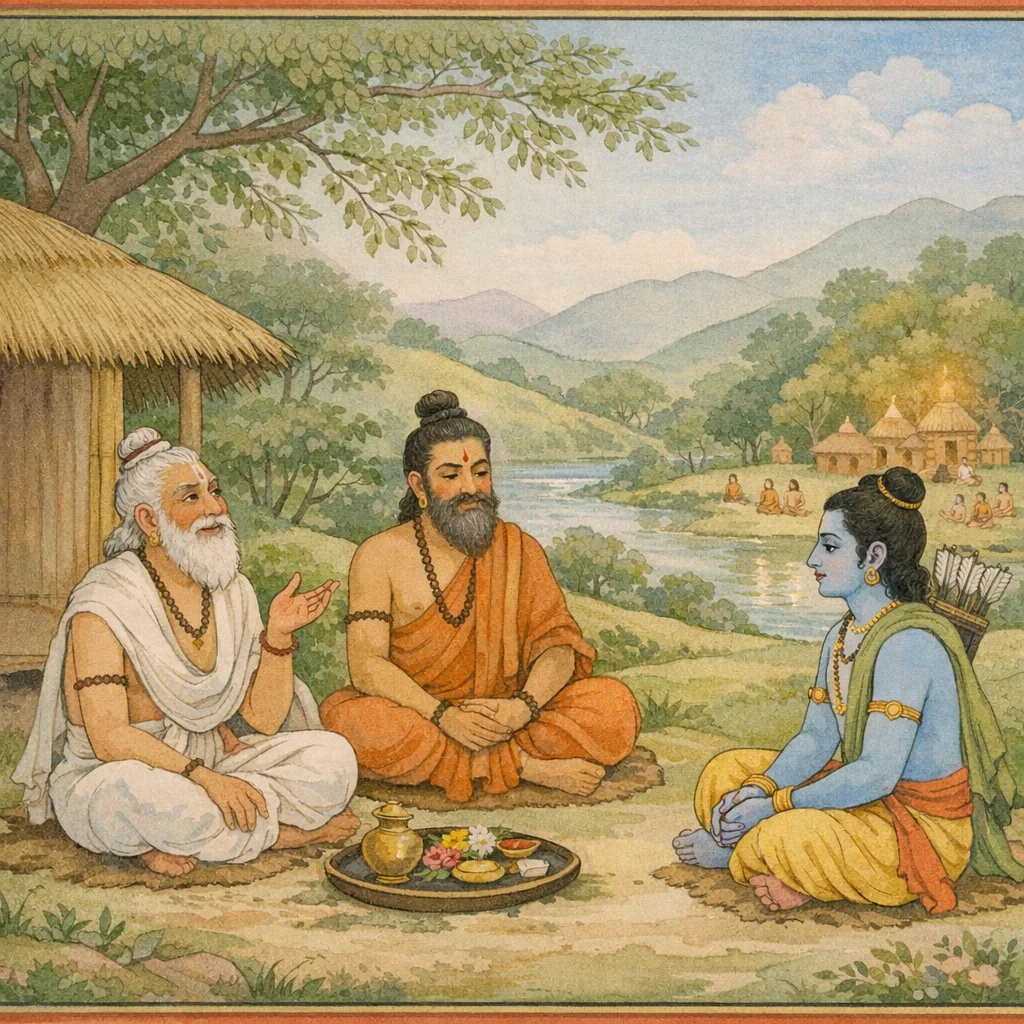
Sarga 51 centers on a hermitage-mediated dialogue that links personal restoration, hospitality ethics, and lineage-history as pedagogy. Śatānanda—Gautama’s eldest son, ascetically radiant—reacts with exhilaration and astonishment upon hearing Viśvāmitra and seeing Rāma (1.51.1–2). He questions Viśvāmitra about Ahalyā: whether she was shown to Rāma, whether she offered forest-oblations and honor, whether Rāma was told the ancient episode involving Indra’s wrongdoing, and whether Ahalyā was reunited with Gautama through Rāma’s presence (1.51.3–9). Viśvāmitra replies that nothing required was omitted and that Ahalyā has been reunited with Gautama, compared to Reṇukā’s union with Jamadagni (1.51.10–11). Śatānanda then formally welcomes Rāma, praises Viśvāmitra as a Brahmarṣi of unimaginable deeds, and frames him as Rāma’s protector—thereby grounding Rāma’s journey in authorized ascetic guidance (1.51.12–16). The sarga transitions into a structured historical account: Viśvāmitra’s earlier kingship, his righteous rule, and his genealogy from Kuśa → Kuśanābha → Gādhi → Viśvāmitra (1.51.17–21). The chapter culminates in a vivid topographical and cultural description of Vasiṣṭha’s āśrama—likened to a second Brahmaloka—populated by siddhas, cāraṇas, devarṣis, brahmarṣis, and diverse ascetic practices (water-, air-, leaf-, fruit-root subsistence), setting the stage for the forthcoming Vasiṣṭha–Viśvāmitra encounter (1.51.22–28).
Shlokas
Verse 1
तस्य तद्वचनं श्रुत्वा विश्वामित्रस्य धीमत:।हृष्टरोमा महातेजाश्शतानन्दो महातपा:।।।।गौतमस्य सुतो ज्येष्ठस्तपसा द्योतितप्रभ:।रामसन्दर्शनादेव परं विस्मयमागत:।।।।
Hearing the words of the wise Viśvāmitra, Śatānanda—Gautama’s eldest son, a great ascetic radiant through austerity—was thrilled, and on seeing Rāma himself he was seized with profound wonder.
Verse 2
तस्य तद्वचनं श्रुत्वा विश्वामित्रस्य धीमत:।हृष्टरोमा महातेजाश्शतानन्दो महातपा:।।1.51.1।।गौतमस्य सुतो ज्येष्ठस्तपसा द्योतितप्रभ:।रामसन्दर्शनादेव परं विस्मयमागत:।।1.51.2।।
Śatānanda—Gautama’s eldest son, shining with the radiance born of austerity—was filled with profound wonder simply by beholding Rāma.
Verse 3
स तौ निषण्णौ सम्प्रेक्ष्य सुखासीनौ नृपात्मजौ।शतानन्दो मुनिश्रेष्ठं विश्वामित्रमथामब्रवीत्।।।।
Seeing the two princes seated nearby at ease, Śatānanda then spoke to Viśvāmitra, the foremost among sages.
Verse 4
अपि ते मुनिशार्दूल मम माता यशस्विनी।दर्शिता राजपुत्राय तपो दीर्घमुपागता।।।।
O tiger among sages, was my renowned mother—who had long undertaken austerity—shown by you to the prince?
Verse 5
अपि रामे महातेजा मम माता यशस्विनी।वन्यैरुपाहरत्पूजां पूजार्हे सर्वदेहिनाम्।।।।
O great one, did my illustrious mother offer worship to Rāma—worthy of reverence for all embodied beings—using forest offerings?
Verse 6
अपि रामाय कथितं यथावृत्तं पुरातनम्।मम मातुर्महातेजो दैवेन दुरनुष्ठितम्।।।।
O great-souled one, was Rāma told the ancient account exactly as it happened—how, by a god’s wrongdoing, my mother was grievously wronged?
Verse 7
अपि कौशिक भद्रं ते गुरुणा मम सङ्गता।मम माता मुनिश्रेष्ठ रामसन्दर्शनादित:।।।।
O Kauśika, may good be yours. O best of sages—has my mother been reunited with my father, as a consequence of beholding Rāma?
Verse 8
अपि मे गुरुणा राम: पूजित: कुशिकात्मज।इहागतो महातेजा: पूजां प्राप्तो महात्मन:।।।।
O son of Kuśika, was Rāma duly honoured by my father? And when that greatly radiant Rāma arrived here, did he in turn render honour to my illustrious father?
Verse 9
अपि शान्तेन मनसा गुरुर्मे कुशिकात्मज ।इहाऽगतेन रामेण प्रयतेनाभिवादित:।।।।
O son of Kuśika, was my father respectfully saluted by Rāma—who came here disciplined and devout—doing so with a tranquil mind?
Verse 10
तच्छ्रुत्वा वचनं तस्य विश्वामित्रो महामुनि:।प्रत्युवाच शतानन्दं वाक्यज्ञो वाक्यकोविदम्।।।।
Hearing his words, the great sage Viśvāmitra—skilled in speech—replied to Śatānanda, who was himself proficient in words.
Verse 11
नातिक्रान्तं मुनिश्रेष्ठ यत्कर्तव्यं कृतं मया।सङ्गता मुनिना पत्नी भार्गवेणेव रेणुका।।।।
“O best of sages, nothing has been neglected by me: what ought to be done has been done. The sage’s wife has been reunited with the sage—just as Reṇukā was with the Bhārgava (Jamadagni).”
Verse 12
तच्छ्रुत्वा वचनं तस्य विश्वामित्रस्य भाषितम् ।शतानन्दो महातेजा रामं वचनमब्रवीत्।।।।
Having heard Viśvāmitra’s words, the radiant Śatānanda spoke these words to Rāma.
Verse 13
स्वागतं ते नरश्रेष्ठ दिष्ट्या प्राप्तोऽसि राघव।विश्वामित्रं पुरस्कृत्य महर्षिमपराजितम्।।।।
“Welcome to you, O best of men, O Rāghava. By good fortune you have arrived, with the invincible great seer Viśvāmitra before you (as your guide).”
Verse 14
अचिन्त्यकर्मा तपसा ब्रह्मर्षिरतुलप्रभ:।विश्वामित्रो महातेजा वेत्स्येनं परमां गतिम्।।।।
“The highly radiant Viśvāmitra has accomplished deeds beyond imagination; through austerity he became a Brahmarṣi, of incomparable splendor. Know him as the highest refuge and goal.”
Verse 15
नास्ति धन्यतरो राम त्वत्तोऽन्यो भुवि कश्चन।गोप्ता कुशिकपुत्रस्ते येन तप्तं महत्तप:।।।।
“O Rāma, no one on earth is more fortunate than you: the son of Kuśika is your protector—he who has performed mighty austerities.”
Verse 16
श्रूयतां चाभिधास्यामि कौशिकस्य महात्मन:।यथा बलं यथा वृत्तं तन्मे निगदत: श्रुणु।।।।
“Now listen: I shall tell of the great-souled son of Kuśika—his power and the course of his life. Hear as I relate it.”
Verse 17
राजाऽभूदेष धर्मात्मा दीर्घकालमरिन्दम:।धर्मज्ञ: कृतविद्यश्च प्रजानां च हिते रत:।।।।
“This one was a king for a long time—righteous in mind, a subduer of enemies; a knower of dharma, trained in learning, and devoted to the welfare of his subjects.”
Verse 18
प्रजापतिसुतश्चासीत्कुशो नाम महीपति:।कुशस्य पुत्रो बलवान् कुशनाभस्सुधार्मिक:।।।।
There was a king named Kuśa, a son of Prajāpati. Kuśa’s son was Kuśanābha—mighty in strength and steadfastly righteous.
Verse 19
कुशनाभसुतस्त्वासीद्गाधिरित्येव विश्रृत:।गाधे: पुत्रो महातेजा विश्वामित्रो महामुनि:।।।।
Kuśanābha’s son was famed as Gādhi. And Gādhi’s son was Viśvāmitra—the great sage, radiant with spiritual splendor.
Verse 20
विश्वामित्रो महातेजा: पालयामास मेदिनीम्।बहुवर्षसहस्राणि राजा राज्यमकारयत्।।।।
Viśvāmitra, radiant with great vigor, protected the earth; as king he governed his realm for many thousands of years.
Verse 21
कदाचित्तु महातेजा योजयित्वा वरूथिनीम्।अक्षौहीणीपरिवृत: परिचक्राम मेदिनीम्।।।।
Once, that mighty and radiant king assembled his army; surrounded by an akṣauhiṇī host, he toured the earth on a royal circuit.
Verse 22
नगराणि सराष्ट्राणि सरितश्च तथा गिरीन्।आश्रमान्क्रमशो राम विचरन्नाजगाम ह।।।।वसिष्ठस्याश्रमपदं नानावृक्षसमाकुलम्।नानामृगगणाकीर्णं सिद्धचारणसेवितम्।।।।देवदानवगन्धर्वै: किन्नरैरुपशोभितम्।प्रशान्तहरिणाकीर्णं द्विजसङ्घनिषेवितम्।।।।ब्रह्मर्षिगणसङ्कीर्णं देवर्षिगणसेवितम्।तपश्चरणसंसिद्धैरग्निकल्पैर्महात्मभि:।।।।अब्भक्षैर्वायुभक्षैश्च शीर्णपर्णाशनैस्तथा।फलमूलाशनैर्दान्तैर्जितरोषैर्जितेन्द्रियै:।।।।ऋषिभिर्वालखिल्यैश्च जपहोमपरायणै:।अन्यैर्वैखानसैश्चैव समन्तादुपशोभितम्।।।।
Rāma, as he moved in due course through cities and kingdoms, along rivers and mountains, visiting hermitages, he finally reached Vasiṣṭha’s sacred retreat. It was thick with many kinds of trees, alive with varied herds of animals, and frequented by Siddhas and Cāraṇas. It shone with the presence of Devas, Dānavas, Gandharvas, and Kinnaras; it was filled with gentle deer and resorted to by flocks of birds. It was crowded with hosts of Brahmarṣis and attended by Devarṣis, and by great souls perfected in austerity—blazing like fire. There were ascetics who lived on water or on air, others who ate fallen leaves, and others who lived on fruits and roots—self-restrained, having conquered anger, and masters of their senses. Sages such as the Vālakhilyas, devoted to japa and homa, and other Vaikhānasas, adorned it on every side.
Verse 23
नगराणि सराष्ट्राणि सरितश्च तथा गिरीन्।आश्रमान्क्रमशो राम विचरन्नाजगाम ह।।1.51.22।।वसिष्ठस्याश्रमपदं नानावृक्षसमाकुलम्।नानामृगगणाकीर्णं सिद्धचारणसेवितम्।।1.51.23।।देवदानवगन्धर्वै: किन्नरैरुपशोभितम्।प्रशान्तहरिणाकीर्णं द्विजसङ्घनिषेवितम्।।1.51.24।।ब्रह्मर्षिगणसङ्कीर्णं देवर्षिगणसेवितम्।तपश्चरणसंसिद्धैरग्निकल्पैर्महात्मभि:।।1.51.25।।अब्भक्षैर्वायुभक्षैश्च शीर्णपर्णाशनैस्तथा।फलमूलाशनैर्दान्तैर्जितरोषैर्जितेन्द्रियै:।।1.51.26।।ऋषिभिर्वालखिल्यैश्च जपहोमपरायणै:।अन्यैर्वैखानसैश्चैव समन्तादुपशोभितम्।।1.51.27।।
He reached Vasiṣṭha’s hermitage-site, dense with many kinds of trees, filled with herds of diverse animals, and frequented by siddhas and cāraṇas.
Verse 24
नगराणि सराष्ट्राणि सरितश्च तथा गिरीन्।आश्रमान्क्रमशो राम विचरन्नाजगाम ह।।1.51.22।।वसिष्ठस्याश्रमपदं नानावृक्षसमाकुलम्।नानामृगगणाकीर्णं सिद्धचारणसेवितम्।।1.51.23।।देवदानवगन्धर्वै: किन्नरैरुपशोभितम्।प्रशान्तहरिणाकीर्णं द्विजसङ्घनिषेवितम्।।1.51.24।।ब्रह्मर्षिगणसङ्कीर्णं देवर्षिगणसेवितम्।तपश्चरणसंसिद्धैरग्निकल्पैर्महात्मभि:।।1.51.25।।अब्भक्षैर्वायुभक्षैश्च शीर्णपर्णाशनैस्तथा।फलमूलाशनैर्दान्तैर्जितरोषैर्जितेन्द्रियै:।।1.51.26।।ऋषिभिर्वालखिल्यैश्च जपहोमपरायणै:।अन्यैर्वैखानसैश्चैव समन्तादुपशोभितम्।।1.51.27।।
It was adorned by devas, dānavas, gandharvas, and kinnaras; it was filled with gentle, tranquil deer and frequented by flocks of dvijas (the twice-born—here, chiefly birds).
Verse 25
नगराणि सराष्ट्राणि सरितश्च तथा गिरीन्।आश्रमान्क्रमशो राम विचरन्नाजगाम ह।।1.51.22।।वसिष्ठस्याश्रमपदं नानावृक्षसमाकुलम्।नानामृगगणाकीर्णं सिद्धचारणसेवितम्।।1.51.23।।देवदानवगन्धर्वै: किन्नरैरुपशोभितम्।प्रशान्तहरिणाकीर्णं द्विजसङ्घनिषेवितम्।।1.51.24।।ब्रह्मर्षिगणसङ्कीर्णं देवर्षिगणसेवितम्।तपश्चरणसंसिद्धैरग्निकल्पैर्महात्मभि:।।1.51.25।।अब्भक्षैर्वायुभक्षैश्च शीर्णपर्णाशनैस्तथा।फलमूलाशनैर्दान्तैर्जितरोषैर्जितेन्द्रियै:।।1.51.26।।ऋषिभिर्वालखिल्यैश्च जपहोमपरायणै:।अन्यैर्वैखानसैश्चैव समन्तादुपशोभितम्।।1.51.27।।
It was crowded with hosts of brahmarṣis and attended by companies of devarṣis; it was graced by great souls who, perfected through the practice of austerity, shone like fire.
Verse 26
नगराणि सराष्ट्राणि सरितश्च तथा गिरीन्।आश्रमान्क्रमशो राम विचरन्नाजगाम ह।।1.51.22।।वसिष्ठस्याश्रमपदं नानावृक्षसमाकुलम्।नानामृगगणाकीर्णं सिद्धचारणसेवितम्।।1.51.23।।देवदानवगन्धर्वै: किन्नरैरुपशोभितम्।प्रशान्तहरिणाकीर्णं द्विजसङ्घनिषेवितम्।।1.51.24।।ब्रह्मर्षिगणसङ्कीर्णं देवर्षिगणसेवितम्।तपश्चरणसंसिद्धैरग्निकल्पैर्महात्मभि:।।1.51.25।।अब्भक्षैर्वायुभक्षैश्च शीर्णपर्णाशनैस्तथा।फलमूलाशनैर्दान्तैर्जितरोषैर्जितेन्द्रियै:।।1.51.26।।ऋषिभिर्वालखिल्यैश्च जपहोमपरायणै:।अन्यैर्वैखानसैश्चैव समन्तादुपशोभितम्।।1.51.27।।
It was adorned on all sides by ascetics—some living only on water, some on air; some eating fallen leaves, others fruits and roots—self-restrained, having conquered anger, and masters of their senses.
Verse 27
नगराणि सराष्ट्राणि सरितश्च तथा गिरीन्।आश्रमान्क्रमशो राम विचरन्नाजगाम ह।।1.51.22।।वसिष्ठस्याश्रमपदं नानावृक्षसमाकुलम्।नानामृगगणाकीर्णं सिद्धचारणसेवितम्।।1.51.23।।देवदानवगन्धर्वै: किन्नरैरुपशोभितम्।प्रशान्तहरिणाकीर्णं द्विजसङ्घनिषेवितम्।।1.51.24।।ब्रह्मर्षिगणसङ्कीर्णं देवर्षिगणसेवितम्।तपश्चरणसंसिद्धैरग्निकल्पैर्महात्मभि:।।1.51.25।।अब्भक्षैर्वायुभक्षैश्च शीर्णपर्णाशनैस्तथा।फलमूलाशनैर्दान्तैर्जितरोषैर्जितेन्द्रियै:।।1.51.26।।ऋषिभिर्वालखिल्यैश्च जपहोमपरायणै:।अन्यैर्वैखानसैश्चैव समन्तादुपशोभितम्।।1.51.27।।
Everywhere it was beautified by sages—by the Vālakhilyas devoted to japa and homa, and also by other Vaikhānasas—so that the whole hermitage shone on all sides.
Verse 28
वसिष्ठस्याश्रमपदं ब्रह्मलोकमिवापरम्।ददर्श जयतां श्रेष्ठो विश्वामित्रो महाबल:।।।।
Then the mighty Viśvāmitra—foremost among conquerors—beheld Vasiṣṭha’s hermitage, like a second Brahmaloka.
Frequently Asked Questions
The pivotal action is the completion of Ahalyā’s restoration and reunion with Gautama, treated as a dharmic repair after a past transgression attributed to Indra; Śatānanda seeks verification that proper honoring, narration of the incident, and ritual-ethical closure were performed without omission.
The sarga teaches that dharma operates through authorized guidance and completion of required acts: restoration is not merely emotional but procedural (nothing omitted), and legitimate spiritual authority (tapas → brahmarṣi status) provides the framework within which a prince’s conduct becomes exemplary.
Vasiṣṭha’s hermitage is presented as a cultural microcosm—likened to Brahmaloka—cataloguing ascetic communities (Vālakhilya, Vaikhānasa), devotional practices (japa, homa), and ecological richness (trees, animals, rivers/mountains in the approach), thereby mapping the āśrama as a key civilizational landmark.