Sarga 13
हयमेध-यज्ञोपक्रमः — Commencement of the Aśvamedha Preparations
बालकाण्ड
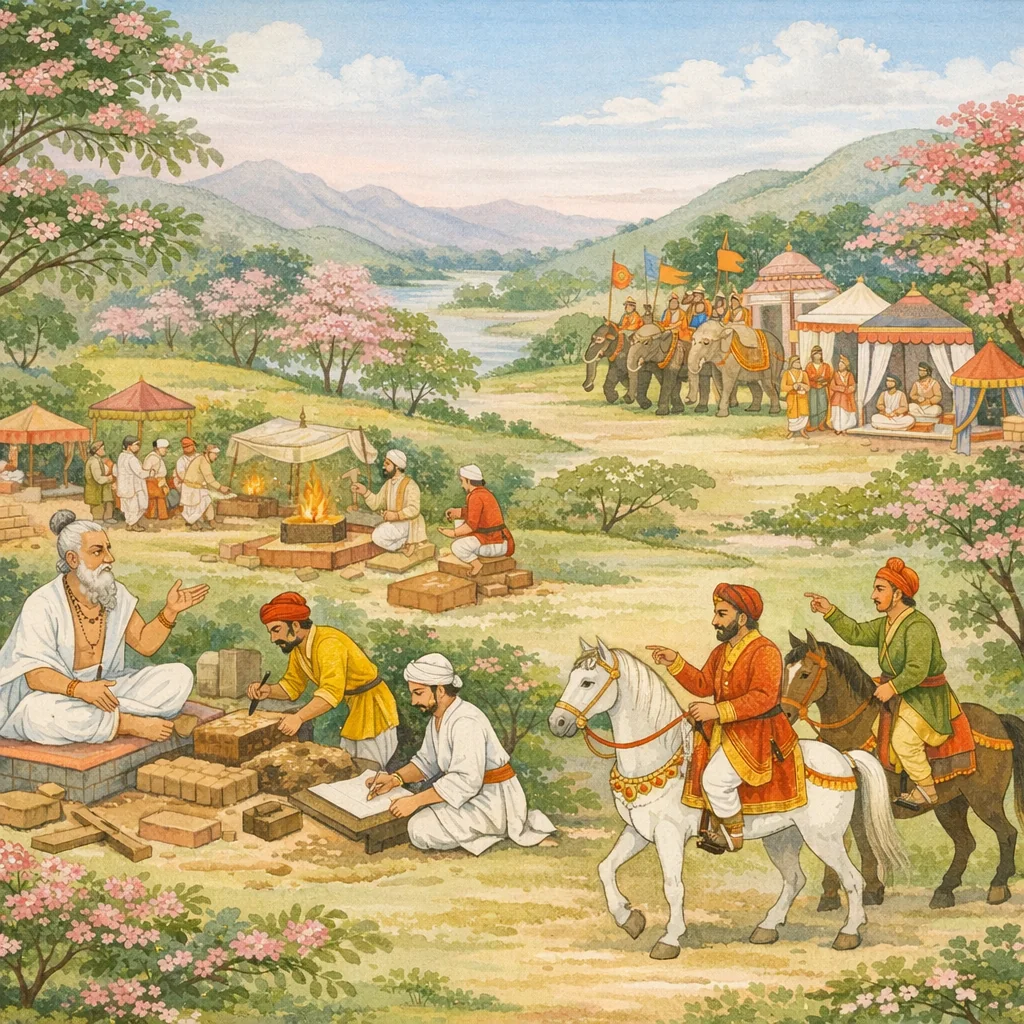
Sarga 13 details the operational and ethical organization of Daśaratha’s horse-sacrifice undertaken for progeny. With the return of spring after a full year, the king enters the sacrificial enclosure to begin worship directed toward begetting sons. Vasiṣṭha assumes the supervisory role and issues procedural directives: mobilizing expert Brahmins and skilled workers (architects, brick-makers, carpenters, diggers, artisans, accountants), as well as performers, to establish the yajña infrastructure. A major thematic emphasis is hospitality and non-contempt: residences are to be prepared in abundance for Brahmins and for visitors from towns and rural regions; food and entertainments must be offered according to custom, with respect extended to all varṇas and to those laboring in ritual tasks. Vasiṣṭha warns that gifts given with disregard harm the donor. He then instructs Sumantra to invite righteous kings across regions, naming prominent allies (Janaka of Mithilā, the king of Kāśī, the Kekaya king, Romapāda of Aṅga) and wider eastern, southern, Sindhu-Sauvīra, and Saurāṣṭra rulers. Emissaries are dispatched; kings arrive with gifts; Vasiṣṭha reports successful hospitality and readiness. On an auspicious day, Daśaratha proceeds to the yajña site, and the Brahmin assembly, led by Vasiṣṭha with Ṛśyaśṛṅga at the fore, formally begins the rites per śāstra and vidhi.
Shlokas
Verse 1
पुन: प्राप्ते वसन्ते तु पूर्णस्संवत्सरोऽभवत्।प्रसवार्थं गतो यष्टुं हयमेधेन वीर्यवान्।।1.13.1।।
When spring returned again and a full year had passed, the valiant king proceeded to perform the Horse-sacrifice, seeking offspring.
Verse 2
अभिवाद्य वसिष्ठं च न्यायत: परिपूज्य च।अब्रवीत्प्रश्रितं वाक्यं प्रसवार्थं द्विजोत्तमम्।।1.13.2।।
Having respectfully saluted Vasiṣṭha and duly honored that best of twice-born sages according to proper rule, the king spoke submissively, seeking the means for obtaining offspring.
Verse 3
यज्ञो मे क्रियतां ब्रह्मन्यथोक्तं मुनिपुङ्गव।यथा न विघ्न: क्रियते यज्ञाङ्गेषु विधीयताम्।।1.13.3।।
And all the officiating workers reported to the wise Vasiṣṭha everything that had been duly arranged for the sacrifice.
Verse 4
भवान् स्निग्धस्सुहृन्मह्यं गुरुश्च परमो महान्।ओढव्यो भवता चैव भारो यज्ञस्य चोद्यत:।।1.13.4।।
“You are to me an affectionate friend, and also my venerable and exalted teacher. Therefore, the responsibility for this sacrifice—now undertaken—must indeed be borne by you.”
Verse 5
तथेति च स राजानमब्रवीद्द्विजसत्तमः।करिष्ये सर्वमेवैतद्भवता यत्समर्थितम्।।1.13.5।।
The foremost of brāhmaṇas (Vasiṣṭha) replied to the king, “So be it. I will carry out in full whatever has been resolved by you.”
Verse 6
ततोऽब्रवीद्विजान्वृद्धान्यज्ञकर्मसु निष्ठितान्।स्थापत्ये निष्ठितांश्चैव वृद्धान्परमधार्मिकान्।।1.13.6।।कर्मान्तिकान् शिल्पकरान्वर्धकीन् खनकानपि।गणकान्शिल्पिनश्चैव तथैव नटनर्तकान्।।1.13.7।। तथा शुचीन्शास्त्रविद: पुरुषान् सुबहुश्रुतान्।यज्ञकर्म समीहन्तां भवन्तो राजशासनात्।।1.13.8।। इष्टका बहु साहस्राश्शीघ्रमानीयतामिति। 0उपकार्या: क्रियन्तां च राज्ञां बहुगुणान्विता:।।1.13.9।।
Then he addressed venerable brāhmaṇas experienced in sacrificial duties, and also venerable experts in architecture—men of the highest righteousness.
Verse 7
ततोऽब्रवीद्विजान्वृद्धान्यज्ञकर्मसु निष्ठितान्।स्थापत्ये निष्ठितांश्चैव वृद्धान्परमधार्मिकान्।।1.13.6।।कर्मान्तिकान् शिल्पकरान्वर्धकीन् खनकानपि।गणकान्शिल्पिनश्चैव तथैव नटनर्तकान्।।1.13.7।। तथा शुचीन्शास्त्रविद: पुरुषान् सुबहुश्रुतान्।यज्ञकर्म समीहन्तां भवन्तो राजशासनात्।।1.13.8।। इष्टका बहु साहस्राश्शीघ्रमानीयतामिति। 0उपकार्या: क्रियन्तां च राज्ञां बहुगुणान्विता:।।1.13.9।।
He also called in workers and craftsmen—brick-makers, carpenters, and diggers—as well as accountants, artisans, and likewise actors and dancers.
Verse 8
ततोऽब्रवीद्विजान्वृद्धान्यज्ञकर्मसु निष्ठितान्।स्थापत्ये निष्ठितांश्चैव वृद्धान्परमधार्मिकान्।।1.13.6।।कर्मान्तिकान् शिल्पकरान्वर्धकीन् खनकानपि।गणकान्शिल्पिनश्चैव तथैव नटनर्तकान्।।1.13.7।। तथा शुचीन्शास्त्रविद: पुरुषान् सुबहुश्रुतान्।यज्ञकर्म समीहन्तां भवन्तो राजशासनात्।।1.13.8।। इष्टका बहु साहस्राश्शीघ्रमानीयतामिति। 0उपकार्या: क्रियन्तां च राज्ञां बहुगुणान्विता:।।1.13.9।।
Likewise he summoned men of clean conduct, learned in the scriptures and widely educated, and said: “By the king’s command, let the work of the sacrifice be duly undertaken.”
Verse 9
ततोऽब्रवीद्विजान्वृद्धान्यज्ञकर्मसु निष्ठितान्।स्थापत्ये निष्ठितांश्चैव वृद्धान्परमधार्मिकान्।।1.13.6।।कर्मान्तिकान् शिल्पकरान्वर्धकीन् खनकानपि।गणकान्शिल्पिनश्चैव तथैव नटनर्तकान्।।1.13.7।। तथा शुचीन्शास्त्रविद: पुरुषान् सुबहुश्रुतान्।यज्ञकर्म समीहन्तां भवन्तो राजशासनात्।।1.13.8।। इष्टका बहु साहस्राश्शीघ्रमानीयतामिति। 0उपकार्या: क्रियन्तां च राज्ञां बहुगुणान्विता:।।1.13.9।।
“Let many thousands of bricks be brought at once; and let temporary dwellings—well furnished in every way for kings—be constructed.”
Verse 10
ब्राह्मणावसथाश्चैव कर्तव्याश्शतशश्शुभा:।भक्ष्यान्नपानैर्बहुभिस्समुपेतास्सुनिष्ठिता:।।1.13.10।।
Auspicious dwellings for brahmins were to be prepared in the hundreds—well arranged and fully supplied with abundant foods and drinks.
Verse 11
तथा पौरजनस्यापि कर्तव्या बहुविस्तरा:।आवासा बहुभक्ष्या वै सर्वकामैरुपस्थिता:।।1.13.11।।
Likewise, for townspeople and visitors, spacious accommodations were to be made—provided with plentiful food and supplied with every comfort and enjoyment.
Verse 12
तथा जानपदस्यापि जनस्य बहुशोभनम्।दातव्यमन्नं विधिवत्सत्कृत्य न तु लीलया।।1.13.12।।
Likewise, to the people from the countryside one should give food that is truly befitting—offered according to proper custom and with respectful hospitality, not in a careless or playful manner.
Verse 13
सर्वे वर्णा यथा पूजां प्राप्नुवन्ति सुसत्कृता:।न चावज्ञा प्रयोक्तव्या कामक्रोधवशादपि।।1.13.13।।
Let people of every varṇa receive honor through good hospitality; and no one should be treated with contempt—even under the influence of desire or anger.
Verse 14
यज्ञकर्मसु ये व्यग्रा: पुरुषाश्शिल्पिनस्तथा।तेषामपि विशेषेण पूजा कार्या यथाक्रमम्।।1.13.14।।ते च स्युस्सम्भृतास्सर्वे वसुभिर्भोजनेन च।
Those men—especially the artisans—who are intensely engaged in the works of the sacrifice should be honored in a special way, each according to his role; and all of them should be kept content with payment and with food.
Verse 15
यथा सर्वं सुविहितं न किञ्चित्परिहीयते।।1.13.15।। तथा भवन्त: कुर्वन्तु प्रीतिस्निग्धेन चेतसा।
See to it that everything is well arranged and that nothing at all is left undone; let you all carry out the work with minds softened by affection and goodwill.
Verse 16
ततस्सर्वे समागम्य वसिष्ठमिदमब्रुवन्।।1.13.16।।यथोक्तं तत्सुविहितं न किञ्चित्परिहीयते।यथोक्तं तत्करिष्यामो न किञ्चित्परिहास्यते।।1.13.17।।
Then all of them assembled and said to Vasiṣṭha: “Just as you instructed, everything has been well arranged; nothing is lacking. Just as you instructed, so shall we do—nothing at all will be omitted.”
Verse 17
ततस्सर्वे समागम्य वसिष्ठमिदमब्रुवन्।।1.13.16।।यथोक्तं तत्सुविहितं न किञ्चित्परिहीयते।यथोक्तं तत्करिष्यामो न किञ्चित्परिहास्यते।।1.13.17।।
Then all of them assembled and said to Vasiṣṭha: “Just as you instructed, everything has been well arranged; nothing is lacking. Just as you instructed, so shall we do—nothing at all will be omitted.”
Verse 18
ततस्सुमन्त्रमानीय वसिष्ठो वाक्यमब्रवीत्।निमन्त्रयस्व नृपतीन्पृथिव्यां ये च धार्मिका:।।1.13.18।।
Then Vasiṣṭha summoned Sumantra and said: “Invite the kings upon the earth who are righteous.”
Verse 19
ब्राह्मणान्क्षत्रियान्वैश्याञ्छूद्रांश्चैव सहस्रश:।समानयस्व सत्कृत्य सर्वदेशेषु मानवान्।।1.13.19।।
Gather, with due honor, thousands of people—brāhmaṇas, kṣatriyas, vaiśyas, and śūdras—from every region.
Verse 20
मिथिलाधिपतिं शूरं जनकं सत्यविक्रमम्।निष्ठितं सर्वशास्त्रेषु तथा वेदेषु निष्ठितम्।।1.13.20।।तमानय महाभागं स्वयमेव सुसत्कृतम्।पूर्वसम्बन्धिनं ज्ञात्वा तत: पूर्वं ब्रवीमि ते।।1.13.21।।
Bring Janaka, the heroic lord of Mithilā, whose valor is grounded in truth—well established in all śāstras and likewise well versed in the Vedas. Bring that distinguished man with personal honor; knowing him to be an ally from earlier ties, I tell you this beforehand.
Verse 21
मिथिलाधिपतिं शूरं जनकं सत्यविक्रमम्।निष्ठितं सर्वशास्त्रेषु तथा वेदेषु निष्ठितम्।।1.13.20।।तमानय महाभागं स्वयमेव सुसत्कृतम्।पूर्वसम्बन्धिनं ज्ञात्वा तत: पूर्वं ब्रवीमि ते।।1.13.21।।
Bring Janaka, the heroic lord of Mithilā, whose valor is grounded in truth—well established in all śāstras and likewise well versed in the Vedas. Bring that distinguished man with personal honor; knowing him to be an ally from earlier ties, I tell you this beforehand.
Verse 22
तथा काशीपतिं स्निग्धं सततं प्रियवादिनम्।वयस्यं राजसिंहस्य स्वयमेवानयस्व ह।।1.13.22।।
Likewise, personally bring the king of Kāśī—ever affectionate and pleasant-spoken—who is a close friend of the lion among kings.
Verse 23
तथा केकयराजानं वृद्धं परमधार्मिकम्।श्वशुरं राजसिंहस्य सपुत्रं त्वमिहानय।।1.13.23।।
Also bring here the aged king of Kekaya, supremely righteous—father-in-law of the lion among kings—together with his sons.
Verse 24
अङ्गेश्वरम् महाभागं रोमपादं सुसत्कृतम्।वयस्यं राजसिंहस्य समानय यशस्विनम्।।1.13.24।।
Bring with due honor Romapāda, the illustrious lord of Aṅga—famed and fortunate—who is a friend of the lion among kings.
Verse 25
प्राचीनान्सिन्धु सौवीरान्सौराष्ट्रेयांश्च पार्थिवान्।दाक्षिणात्यान्नरेन्द्रांश्च समस्तानानयस्व ह।।1.13.25।।
Invite all the rulers as well—kings of the eastern regions, of Sindhu and Sauvīra, the sovereigns of Saurāṣṭra, and the kings of the southern lands.
Verse 26
सन्ति स्निग्धाश्च ये चान्ये राजान: पृथिवीतले।तानानय यथाक्षिप्रं सानुगान्सह बान्धवान्।।1.13.26।।
And whatever other kings there are on the earth who are friendly—bring them as quickly as possible, together with their followers and with their kinsmen.
Verse 27
वसिष्ठवाक्यं तच्छ्रुत्वा सुमन्त्रस्त्वरितस्तदा।व्यादिशत्पुरुषांस्तत्र राज्ञामानयने शुभान्।।1.13.27।।
Hearing Vasiṣṭha’s words, Sumantra at once hastened and dispatched there virtuous and auspicious emissaries for bringing the kings.
Verse 28
स्वयमेव हि धर्मात्मा प्रययौ मुनिशासनात्।सुमन्त्रस्त्वरितो भूत्वा समानेतुं महीक्षित:।।1.13.28।।
Indeed, the righteous Sumantra himself set out quickly, in accordance with the sage’s command, to escort the kings.
Verse 29
ते च कर्मान्तिकास्सर्वे वसिष्ठाय च धीमते।सर्वं निवेदयन्ति स्म यज्ञे यदुपकल्पितम्।।1.13.29।।
And all the officiating workers reported to the wise Vasiṣṭha everything that had been duly arranged for the sacrifice.
Verse 30
तत:प्रीतो द्विजश्रेष्ठस्तान् सर्वानिदमब्रवीत् ।अवज्ञया न दातव्यं कस्यचिल्लीलयाऽपि वा।।1.13.30।। अवज्ञया कृतं हन्याद्दातारं नात्र संशय:। 28
Then Vasiṣṭha, pleased, addressed them all: “Nothing should be given to anyone with contempt—nor even casually. A gift made in disrespect harms the giver; of this there is no doubt.”
Verse 31
तत: कैश्चिदहोरात्रैरुपयाता महीक्षित:।।1.13.31।।बहूनि रत्नान्यादाय राज्ञो दशरथस्य वै।
After that, within a few days and nights, many kings arrived, bringing numerous precious gifts for King Daśaratha.
Verse 32
ततो वसिष्ठस्सुप्रीतो राजानमिदमब्रवीत्।।1.13.32।।उपयाता नरव्याघ्र राजानस्तव शासनात्।मयापि सत्कृता: सर्वे यथार्हं राजसत्तमा:।।1.13.33।।
Then Vasiṣṭha, greatly pleased, said to the king: “O tiger among men, the kings have arrived in obedience to your command; and I too have honored all those excellent rulers, each according to his due rank.”
Verse 33
ततो वसिष्ठस्सुप्रीतो राजानमिदमब्रवीत्।।1.13.32।।उपयाता नरव्याघ्र राजानस्तव शासनात्।मयापि सत्कृता: सर्वे यथार्हं राजसत्तमा:।।1.13.33।।
Then Vasiṣṭha, greatly pleased, said to the king: “O tiger among men, the kings have arrived in obedience to your command; and I too have honored all those excellent rulers, each according to his due rank.”
Verse 34
यज्ञीयं च कृतं राजन् पुरुषैस्सुसमाहितै:।निर्यातु च भवान्यष्टुं यज्ञायतनमन्तिकात्।।1.13.34।।
“O King, the sacrificial arrangements have been completed by men of steady, composed minds. Now please proceed to the nearby sacrificial ground to perform the rite.”
Verse 35
सर्वकामैरुपहृतैरुपेतं च समन्तत:। द्रष्टुमर्हसि राजेन्द्र मनसेव विनिर्मितम्।।1.13.35।।
“O lord of kings, you should behold the sacrificial ground—abundantly furnished on every side with every desirable provision—so perfect it seems fashioned by the mind itself.”
Verse 36
तथा वसिष्ठवचनादृश्यशृङ्गस्य चोभयो:।शुभे दिवसनक्षत्रे निर्यातो जगतीपति:।।1.13.36।।
Thus, following the words of both Vasiṣṭha and Ṛśyaśṛṅga, the lord of the earth set out on an auspicious day under a favorable constellation.
Verse 37
ततो वसिष्ठप्रमुखास्सर्व एव द्विजोत्तमा:।ऋश्यशृङ्गं पुरस्कृत्य यज्ञकर्मारभन् तदा।।1.13.37।।यज्ञवाटगतास्सर्वे यथाशास्त्रं यथाविधि। 3
Then all the foremost brahmins, with Vasiṣṭha at their head and placing Ṛśyaśṛṅga in front, entered the sacrificial enclosure and began the rites—exactly as the scriptures prescribe and as tradition requires.
Verse 38
“You are to me an affectionate friend, and also my venerable and exalted teacher. Therefore, the responsibility for this sacrifice—now undertaken—must indeed be borne by you.”
Frequently Asked Questions
The pivotal ethical action is the regulation of hospitality and gifting: Vasiṣṭha mandates that no guest or worker be treated with contempt and warns that offerings given with disregard (avajñā) spiritually and socially rebound upon the donor, undermining the yajña’s integrity.
The chapter teaches that dharma is enacted through procedure and attitude together: correct ritual performance (vidhi) must be matched by respectful conduct (satkāra) and careful administration, so that sacred action becomes an ethical public good rather than a display of power.
Culturally, the yajñāyatana/yajñavāṭa functions as a civic-ritual center; geographically, the invitation network spans Mithilā (Janaka), Kāśī, Kekaya, Aṅga (Romapāda), and broader regions—Prācīna (east), Sindhu-Sauvīra, Saurāṣṭra, and Dākṣiṇātya (south)—mapping a pan-regional alliance sphere.