Sarga 97
भरतागमनशङ्कानिवारणम् / Dispelling Suspicion about Bharata’s Arrival (Chitrakuta Encampment)
अयोध्याकाण्ड
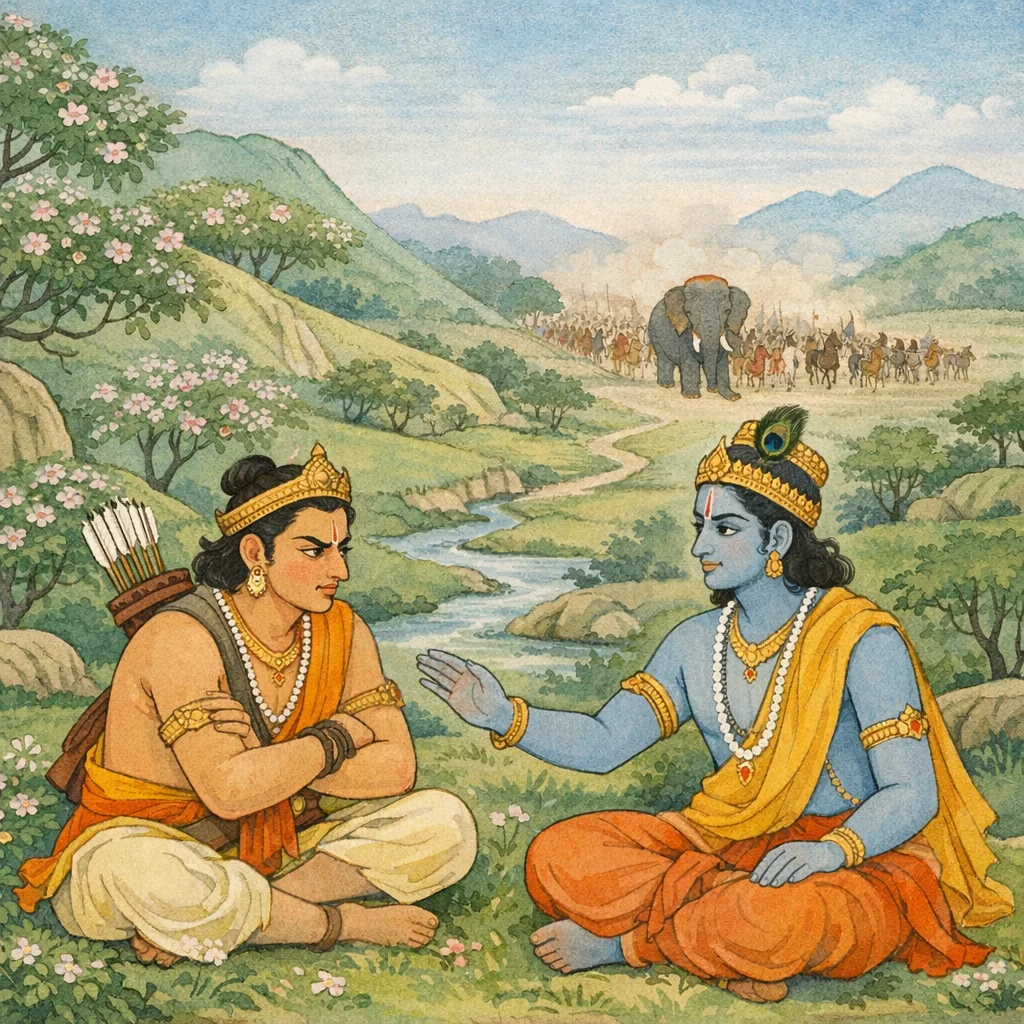
Sarga 97 centers on Rāma’s measured pacification of Lakṣmaṇa, who is overwhelmed by anger and suspicion upon perceiving an approaching force near Citrakūṭa. Rāma argues through ethical inference: Bharata is naturally brother-affectionate, dearer than life, and would have come only after learning of the exile, motivated by kula-dharma and grief rather than hostility. He further reasons that any kingdom gained through violence against kin would be morally tainted, likened to poisoned food, and thus unacceptable. Rāma prohibits harsh speech against Bharata, asserting that such words would effectively target himself. He also frames fratricide and patricide as unthinkable even in calamity, and offers a rhetorical test: if Lakṣmaṇa’s concern is kingship, Rāma would ask Bharata to transfer it to Lakṣmaṇa—confident Bharata would consent. Lakṣmaṇa, shamed, revises his inference, momentarily thinking Daśaratha himself has come, while observational details (horses, the elephant Śatruñjaya, absence of the royal white canopy) create narrative ambiguity. The sarga concludes with Bharata’s instruction to prevent crowding and the army’s disciplined encampment around the mountain, foregrounding humility and dharma in statecraft.
Shlokas
Verse 1
सुसंरब्धं तु सौमित्रिं लक्ष्मणं क्रोधमूर्छितम्।रामस्तु परिसान्त्व्याथ वचनं चेदमब्रवीत्।।।।
Then Rama, having calmed Lakshmana—Sumitra’s son—who was fiercely agitated and overcome by anger, spoke these words.
Verse 2
किमत्र धनुषा कार्यमसिना वा सचर्मणा।महेष्वासे महाप्राज्ञे भरते स्वयमागते।।।।
When Bharata—mighty with the bow and wise—has himself come here, what need is there for a bow, or a sword, or even a shield?
Verse 3
पितुस्सत्यं प्रतिश्रुत्य हत्वा भरतमागतम्।किं करिष्यामि राज्येन सापवादेन लक्ष्मण।।।।
O Lakṣmaṇa, even if I had sworn to uphold our father’s truth, what use would a kingdom be to me if it were won under slander—by killing Bharata who has come here?
Verse 4
यद्द्रव्यं बान्धवानां वा मित्राणां वा क्षये भवेत्।नाहं तत्प्रतिगृह्णीयां भक्षान्विषकृतानिव।।।।
I would never accept wealth that comes through the ruin of kinsmen or friends—like food that has been laced with poison.
Verse 5
धर्ममर्थं च कामं च पृथिवीं चापि लक्ष्मण।इच्छामि भवतामर्थे एतत् प्रतिशृणोमि ते।।।।
O Lakṣmaṇa, for your sake I desire dharma, prosperity, pleasure, and even the earth (sovereignty); this I solemnly affirm to you.
Verse 6
भ्रात्रूणां संग्रहार्थं च सुखार्थं चापि लक्ष्मण।राज्यमप्यहमिच्छामि सत्येनाऽयुधमालभे।।।।
O Lakṣmaṇa, I would accept even kingship only to keep my brothers united and happy; I swear it in truth, holding my weapon as witness.
Verse 7
नेयं मम मही सौम्य दुर्लभा सागराम्बरा।न हीच्छेयमधर्मेण शक्रत्वमपि लक्ष्मण।।।।
O gentle Lakṣmaṇa, this earth—girt by the ocean—is not hard for me to obtain; yet I would not wish for even Indra’s sovereignty if it required unrighteousness.
Verse 8
यद्विना भरतं त्वां च शत्रुघ्नं चापि मानद।भवेन्मम सुखं किञ्चिद्भस्म तत्कुरुतां शिखी।।।।
O upholder of honor, if any happiness were possible for me without Bharata, without you, and without Śatrughna—may that happiness be burned to ashes by fire.
Verse 9
मन्येऽहमागतोऽयोध्यां भरतो भ्रातृवत्सलः।मम प्राणात्प्रियतरः कुलधर्ममनुस्मरन्।।।।श्रुत्वा प्रव्राजितं मां हि जटावल्कलधारिणम्।जानक्यासहितं वीर त्वया च पुरुषर्षभ।।।।स्नेहेनाऽक्रान्तहृदय श्शोकेनाकुलितेन्द्रियः।द्रष्टुमभ्यागतो ह्येष भरतो नान्यथाऽगतः।।।।
O valiant one, best of men—my thought is that Bharata, devoted to his brothers and dearer to me than life, has come from Ayodhyā. Hearing that I have been exiled—wearing matted hair and bark garments—together with Jānakī and with you, and remembering the dharma of our lineage, his heart overwhelmed by affection and his senses shaken by grief, he has come to see me. He has not come for any other purpose.
Verse 10
मन्येऽहमागतोऽयोध्यां भरतो भ्रातृवत्सलः।मम प्राणात्प्रियतरः कुलधर्ममनुस्मरन्।।2.97.9।।श्रुत्वा प्रव्राजितं मां हि जटावल्कलधारिणम्।जानक्यासहितं वीर त्वया च पुरुषर्षभ।।2.97.10।।स्नेहेनाऽक्रान्तहृदय श्शोकेनाकुलितेन्द्रियः।द्रष्टुमभ्यागतो ह्येष भरतो नान्यथाऽगतः।।2.97.11।।
“I think Bharata—so devoted to his brothers, and dearer to me than life—has returned to Ayodhya and heard that I have been sent into exile, wearing matted hair and bark-cloth, together with Janaki and you, O best of men. His heart seized by affection and his senses troubled by grief, Bharata has come here only to see me; he has not come for any other purpose.”
Verse 11
मन्येऽहमागतोऽयोध्यां भरतो भ्रातृवत्सलः।मम प्राणात्प्रियतरः कुलधर्ममनुस्मरन्।।2.97.9।।श्रुत्वा प्रव्राजितं मां हि जटावल्कलधारिणम्।जानक्यासहितं वीर त्वया च पुरुषर्षभ।।2.97.10।।स्नेहेनाऽक्रान्तहृदय श्शोकेनाकुलितेन्द्रियः।द्रष्टुमभ्यागतो ह्येष भरतो नान्यथाऽगतः।।2.97.11।।
His heart is overcome with affection, and his senses are shaken by grief; Bharata has truly come only to see me—he has not come for any other purpose.
Verse 12
अम्बां च कैकयीं रुष्य परुषं चाप्रियं वदन्।प्रसाद्य पितरं श्रीमार्नाज्यं मे दातुमागतः।।।।
Angered at his mother Kaikeyī, speaking harsh and unwelcome words, and having sought to appease our father, the illustrious Bharata has come to offer the kingdom to me.
Verse 13
प्राप्तकालं यदेषोऽस्मान्भरतो द्रष्टुमिच्छति।अस्मासु मनसाऽप्येष नाप्रियं किञ्चिदाचरेत्।।।।
It is timely that Bharata wishes to see us; even in thought he would do nothing at all that is harmful or displeasing toward us.
Verse 14
विप्रियं कृतपूर्वं ते भरतेन कदा नु किम्।ईदृशं वा भयं तेऽद्य भरतं योऽत्र शङ्कसे।।।।
When, indeed, has Bharata ever done anything disagreeable to you? What fear of this kind do you have today, that you suspect Bharata here?
Verse 15
न हि ते निष्ठुरं वाच्यो भरतो नाप्रियं वचः।अहं ह्यप्रियमुक्त स्स्यां भरतस्याप्रिये कृते।।।।
You must not speak harsh or unpleasant words about Bharata; for if you do so, it would be as though those bitter words were spoken against me.
Verse 16
कथं नु पुत्राः पितरं हन्युः कस्यां चिदापदि।भ्राता वा भ्रातरं हन्यात्सौमित्रे प्राणमात्मनः।।।।
In whatever calamity, O Saumitri, how could sons kill their father? Or how could a brother kill his own brother—who is as dear to him as his very life?
Verse 17
यदि राज्यस्य हेतोस्त्वमिमां वाचं प्रभाषसे।वक्ष्यामि भरतं दृष्ट्वा राज्यमस्मै प्रदीयताम्।।।।
If you are speaking these words for the sake of the kingdom, then when I see Bharata I will say: ‘Let the kingdom be given to you.’
Verse 18
उच्यमानोऽपि भरतो मया लक्ष्मण तद्वचः।राज्यमस्मै प्रयच्छेति बाढमित्येव वक्ष्यति।।।।
O Lakshmana, even if I were to tell Bharata those words—‘Give the kingdom to him’—Bharata would surely reply, ‘So be it.’
Verse 19
तथोक्तो धर्मशीलेन भ्रात्रा तस्य हिते रतः।लक्ष्मणः प्रविवेशेव स्वानि गात्राणि लज्जया।।।।
Thus addressed by his dharma-minded brother, devoted to his welfare, Lakshmana—overcome with shame—seemed to shrink back into his own limbs.
Verse 20
तद्वाक्यं लक्ष्मण श्श्रुत्वा व्रीलितः प्रत्युवाच ह।त्वां मन्ये द्रष्टुमायातः पिता दशरथ स्स्वयम्।।।।
Hearing those words, Lakṣmaṇa—now abashed—replied: “I think our father Daśaratha himself has come here in person, to see you.”
Verse 21
व्रीलितं लक्ष्मणं दृष्ट्वा राघवः प्रत्युवाच ह।एष मन्ये महाबाहुरिहास्मान्द्रष्टुमागतः।।।।
Seeing Lakṣmaṇa’s embarrassment, Rāghava replied: “I think that mighty-armed one has come here to see us.”
Verse 22
अथवा नौ ध्रुवं मन्ये मन्यमान स्सुखोचितौ।वनवासमनुध्याय गृहाय प्रतिनेष्यति।।।।
Or else—this I take as certain—thinking of our forest life and judging that we are used to comforts, he has come to lead us back home.
Verse 23
इमां वाप्येष वैदेहीमत्यन्तसुखसेविनीम्।पिता मे राघव श्श्रीमान्वनादादाय यास्यति।।।।
Or else, Rāghava—my prosperous father will take Vaidehī, raised in every luxury, away from the forest and return.
Verse 24
एतौ तौ सम्प्रकाशेते गोत्रवन्तौ मनोरमौ।वायुवेगसमौ वीर जवनौ तुरगोत्तमौ।।।।
O valiant one, look—those two splendid horses shine forth: of noble lineage, charming, swift, and equal to the wind in speed.
Verse 25
स एष सुमहाकायः कम्पते वाहिनीमुखे।नागश्शत्रुञ्जयो नाम वृद्धस्तातस्य धीमतः।।।।
There, at the very front of the host, moves that huge elephant—aged, named Śatruñjaya—belonging to our wise father.
Verse 26
न तु पश्यामि तच्छत्रं पाण्डुरं लोकसत्कृतम् |पितुर्दिव्यं महाबाहो संशयो भवतीह मे।।।।
Yet, O long-armed one, I do not see my father’s splendid white royal canopy—honoured among men; this raises doubt in my mind.
Verse 27
वृक्षाग्रादवरोह त्वं कुरु लक्ष्मण मद्वचः।इतीव रामो धर्मात्मा सौमित्रिं तमुवाच ह।।।।
“Come down from the treetop, Lakṣmaṇa, and do as I say.” Thus spoke righteous Rāma to Saumitrī.
Verse 28
अवतीर्य तु सालाग्रात्तस्मात्स समितिञ्जयः।लक्ष्मणः प्राञ्जलिर्भूत्वा तस्थौ रामस्य पार्श्वतः।।।।
Then Lakṣmaṇa, conqueror in battle, descended from the top of that śāla tree and stood beside Rāma with folded hands.
Verse 29
भरतेनापि सन्दिष्टा सम्मर्दो न भवेदिति।समन्तात्तस्य शैलस्य सेना वासमकल्पयत्।।।।
Instructed by Bharata as well—“Let there be no crowding”—the army made its camp all around that mountain.
Verse 30
अध्यर्धमिक्ष्वाकुचमूर्योजनं पर्वतस्य सा।पार्श्वे न्यविशदावृत्य गजवाजिरथाकुला।।।।
That Ikṣvāku army—crowded with elephants, horses, and chariots—spread for more than a yojana and a half and, surrounding the mountain’s flank, made camp beside it.
Verse 31
सा चित्रकूटे भरतेन सेना धर्मं पुरस्कृत्य विधूय दर्पम्।प्रसादनार्थं रघुनन्दनस्य विराजते नीतिमता प्रणीता।।।।
On Citrakūṭa, that army led by Bharata shone forth—placing dharma in the forefront, casting away pride, and proceeding under a moral leader for the purpose of winning the favor of Raghunandana (Rāma).
Frequently Asked Questions
The dilemma is whether to interpret Bharata’s approach as a political threat warranting armed resistance. Rāma rejects preemptive violence, arguing that harming a brother for sovereignty would produce illegitimate, slander-bearing rule and violate dharma.
Ethical judgment should be guided by character-knowledge, prior conduct, and dharmic principles rather than fear. Restraint in speech and action preserves legitimacy; power pursued through kin-harm is treated as intrinsically polluted.
Citrakūṭa and its surrounding mountain terrain are foregrounded, along with the sāla tree vantage point used for reconnaissance. Cultural markers of kingship and military order—royal canopy, cavalry, elephants, and regulated encampment—serve as narrative signals of intent and protocol.