Sarga 95
मन्दाकिनीनदीदर्शनम् (The Vision of the Mandākinī at Citrakūṭa)
अयोध्याकाण्ड
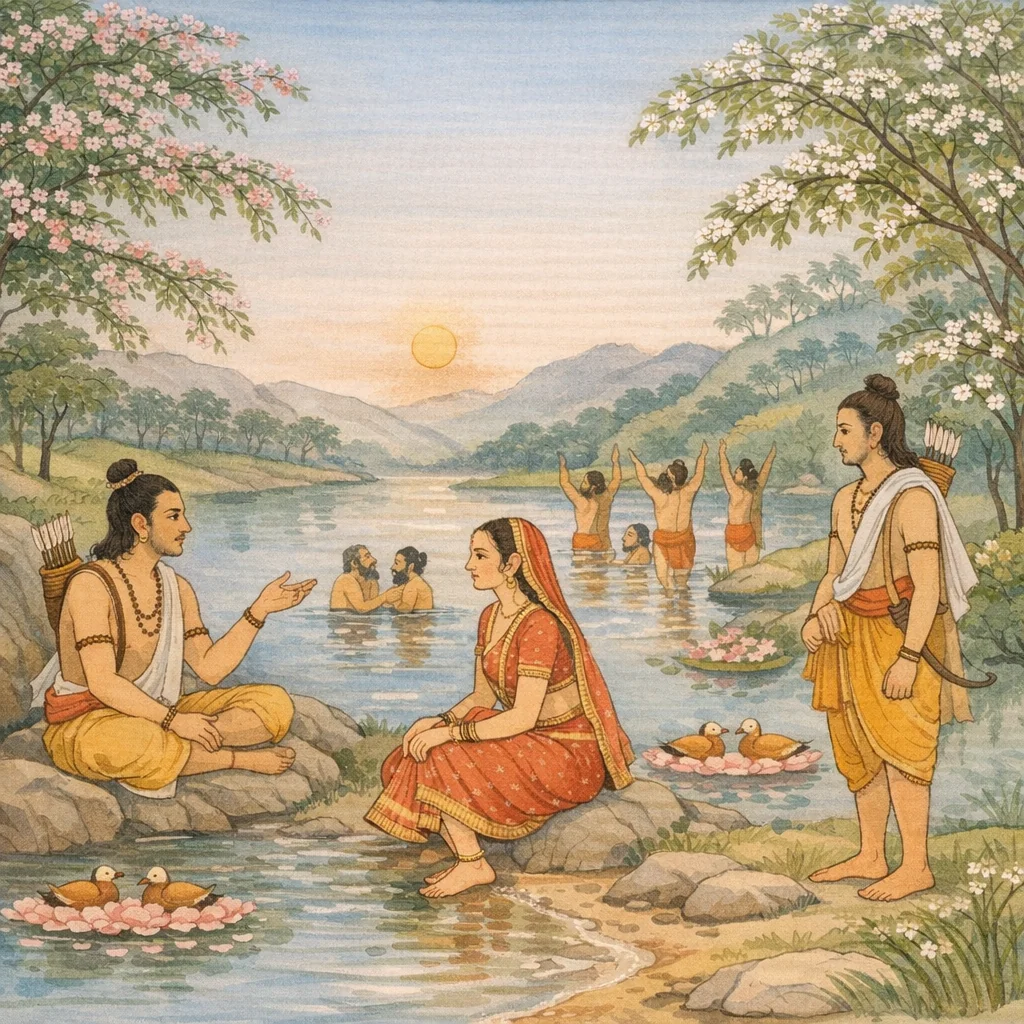
Sarga 95 is a scenic-theological tableau in which Rāma, having descended from the mountain at Citrakūṭa, guides Sītā’s perception of the Mandākinī. He points out variegated sandbanks, lotus-filled waters, and banks crowded with flowering and fruit-bearing trees, comparing the river’s beauty to Kubera’s lake Nalini. The chapter integrates natural observation with ritual life: ṛṣis bathe at appointed times, and other ascetics worship the Sun with uplifted arms, situating the landscape within disciplined religious practice. Wind-shaken treetops make the mountain appear to “dance,” while fallen blossoms form floating heaps on which sweet-voiced cakravāka birds alight. Rāma’s discourse reframes exile as a superior mode of life: seeing Citrakūṭa and Mandākinī with Sītā surpasses residence in Ayodhyā, and he invites her to enter the river ‘like a friend,’ imagining Mandākinī as Sarayū and the mountain as Ayodhyā. The sarga closes with a statement of contentment—simple foods, thrice-daily bathing, companionship—wherein desire for kingdom and city is suspended by dharmic serenity.
Shlokas
Verse 1
अथ शैलाद्विनिष्क्रम्य मैथिलीं कोसलेश्वरः।अदर्शयच्छुभजलां रम्यां मन्दाकिनीं नदीम्।।।।
Then Rāma, lord of Kosala, descending from the mountain, showed Maithilī (Sītā) the lovely river Mandākinī, rich with pure and auspicious waters.
Verse 2
अब्रवीच्च वरारोहां चारुचन्द्रनिभाननाम्।विदेहराजस्य सुतां रामो राजीवलोचनः।।।।
Lotus-eyed Rāma spoke to Sītā—the daughter of the king of Videha—graceful in form, her face like the lovely moon.
Verse 3
विचित्रपुलिनां रम्यां हंससारससेविताम्।कमलैरुपसम्पन्नां पश्य मन्दाकिनीं नदीम्।।।।
Look, beloved, at the enchanting river Mandākinī—its sandbanks beautifully varied, visited by geese and sārasas, and richly adorned with lotuses.
Verse 4
नानाविधैस्तीररुहै र्वृतां पुष्पफलद्रुमैः।राजन्तीं राजराजस्य नलिनीमिव सर्वतः।।।।
See how it gleams, ringed by many kinds of riverside trees laden with flowers and fruits—everywhere like Kubera’s famed lake Nalinī in its splendor.
Verse 5
मृगयूथनिपीतानि कलुषाम्भांसि साम्प्रतम्।तीर्थानि रमणीयानि रतिं सञ्जनयन्ति मे।।।।
Even now, the waters are clouded where herds of deer have drunk; yet these lovely fords and landing-places awaken delight in me.
Verse 6
जटाजिनधराः काले वल्कलोत्तरवाससः।ऋषय स्त्ववगाहन्ते नदीं मन्दाकिनीं प्रिये।।।।
Beloved, at the appointed hour the ṛṣis—wearing matted hair and deerskin, with bark-cloth as their upper garment—enter the river Mandākinī to bathe.
Verse 7
आदित्यमुपतिष्ठन्ते नियमादूर्ध्वबाहवः।एते परे विशालाक्षि मुनय स्संशितव्रताः।।।।
Large-eyed one, there are other sages of firm vows who, following their observances, stand with arms uplifted and worship the Sun.
Verse 8
मारुतोद्धूतशिखरैः प्रनृत्त इव पर्वतः।पादपैः पत्रपुष्पाणि सृजद्भिरभितो नदीम्।।।।
With treetops whipped by the wind, the mountain seemed to dance, as the trees shed leaves and blossoms all around the river.
Verse 9
चिन्मणिनिकाशोदां क्वचित्पुलिनशालिनीम्।क्वचित्सिद्धजनाकीर्णां पश्य मन्दाकिनीं नदीम्।।।।
Behold the Mandākinī: in some places its water is clear like crystal; in some it shines with sandbanks; and in others it is thronged with siddhas.
Verse 10
निर्धूतान्वायुना पश्य विततान्पुष्पसञ्चयान्।पोप्लूयमानानपरान्पश्य त्वं जलमध्यगान्।।।।
See the heaps of flowers scattered and shaken down by the wind; and see, too, other masses of flowers floating in midstream upon the water.
Verse 11
तांश्चातिवल्गुवचसो रथाङ्गाह्वयना द्विजाः।अधिरोहन्ति कल्याणि निष्कूजन्त श्शुभा गिरः।।।।
O auspicious Sītā, sweet-voiced birds called rathāṅga (cakravāka) alight upon those heaps (of fallen flowers), calling out in most pleasant notes.
Verse 12
दर्शनं चित्रकूटस्य मन्दाकिन्याश्च शोभने।अधिकं पुरवासाच्च मन्ये तव च दर्शनात्।।।।
O lovely Sītā, I deem the sight of Citrakūṭa and the Mandākinī—seen in your presence—more delightful than dwelling in the city (Ayodhyā).
Verse 13
विधूतकलुषै स्सिद्धैस्तपोदमशमान्वितैः।नित्यविक्षोभितजलां विगाहस्व मया सह।।।।
Plunge with me into this river, whose waters are ever stirred by siddhas—purified of sin and endowed with austerity, self-restraint, and serenity.
Verse 14
सखीवच्च विगाहस्व सीते मन्दाकिनीं नदीम्।कमलान्यवमज्जन्ती पुष्कराणि च भामिनि।।।।
O Sītā, O lovely one—enter the river Mandākinī like a close companion, dipping the red lotuses and the white lotuses as you play in the water.
Verse 15
त्वं पौरजनवद्व्यालानयोध्यामिव पर्वतम्।मन्यस्व वनिते नित्यं सरयूवदिमां नदीम्।।।।
O lady, always regard these wild creatures as though they were the townspeople, this mountain as Ayodhyā itself, and this river as the Sarayū.
Verse 16
लक्ष्मणश्चापि धर्मात्मा मन्निदेशे व्यवस्थितः।त्वं चानुकूला वैदेहि प्रीतिं जनयथो मम।।।।
Lakṣmaṇa too—righteous-souled—stands ready at my command; and you, O Vaidehī, being ever supportive, bring joy to my heart.
Verse 17
उपस्पृशंस्त्रिषवणं मधुमूलफलाशनः।नायोध्यायैन राज्याय स्पृहयेऽद्य त्वया सह।।।।
Bathing at the three prayer-times and living on honey, roots, and fruits—today, with you beside me, I do not long for Ayodhyā, nor even for kingship.
Verse 18
इमांहि रम्यां मृगयूथशालिनीं निपीततोयां गजसिंहवानरैः।सुपुष्पितां पुष्पभरैरलङ्कृतां नसोऽस्ति य स्स्यान्न गतक्लम स्सुखी।।।।
For this Mandākinī is enchanting—filled with herds of deer, its waters drunk by elephants, lions, and monkeys, adorned with masses of fallen blossoms from trees in full bloom; who could behold it and not become happy, with fatigue dispelled?
Verse 19
इतीव रामो बहुसङ्गतं वचः प्रियासहाय स्सरितं प्रति ब्रुवन्।चचार रम्यं नयनाञ्जनप्रभं स चित्रकूटं रघुवंशवर्धनः।।।।
Speaking thus—at length and aptly—about the river, Rāma, the upholder of the Raghu line, wandered with his beloved companion upon delightful Citrakūṭa, dark-hued like collyrium.
Frequently Asked Questions
Rather than a conflict, the pivotal action is Rāma’s deliberate revaluation of exile: he invites Sītā into the Mandākinī and explicitly states he does not yearn for Ayodhyā or kingship, converting displacement into chosen dharmic steadiness.
The sarga teaches that inner fulfilment arises from disciplined living, sacred routine, and harmonious companionship; political power is shown as secondary when the mind is stabilized by dharma, tapas-aligned communities, and reverent engagement with nature.
Citrakūṭa and the Mandākinī form the primary sacred landscape, linked by comparison to Ayodhyā and the Sarayū; cultural markers include triṣavaṇa bathing, ascetic immersion, and Sun worship (Āditya-upasthāna), mapping the river as a living tīrtha.