Sarga 8
मन्थराकैकेयीसंवादः — Mantharā’s Counsel to Kaikeyī (Ayodhyā’s Succession Alarm)
अयोध्याकाण्ड
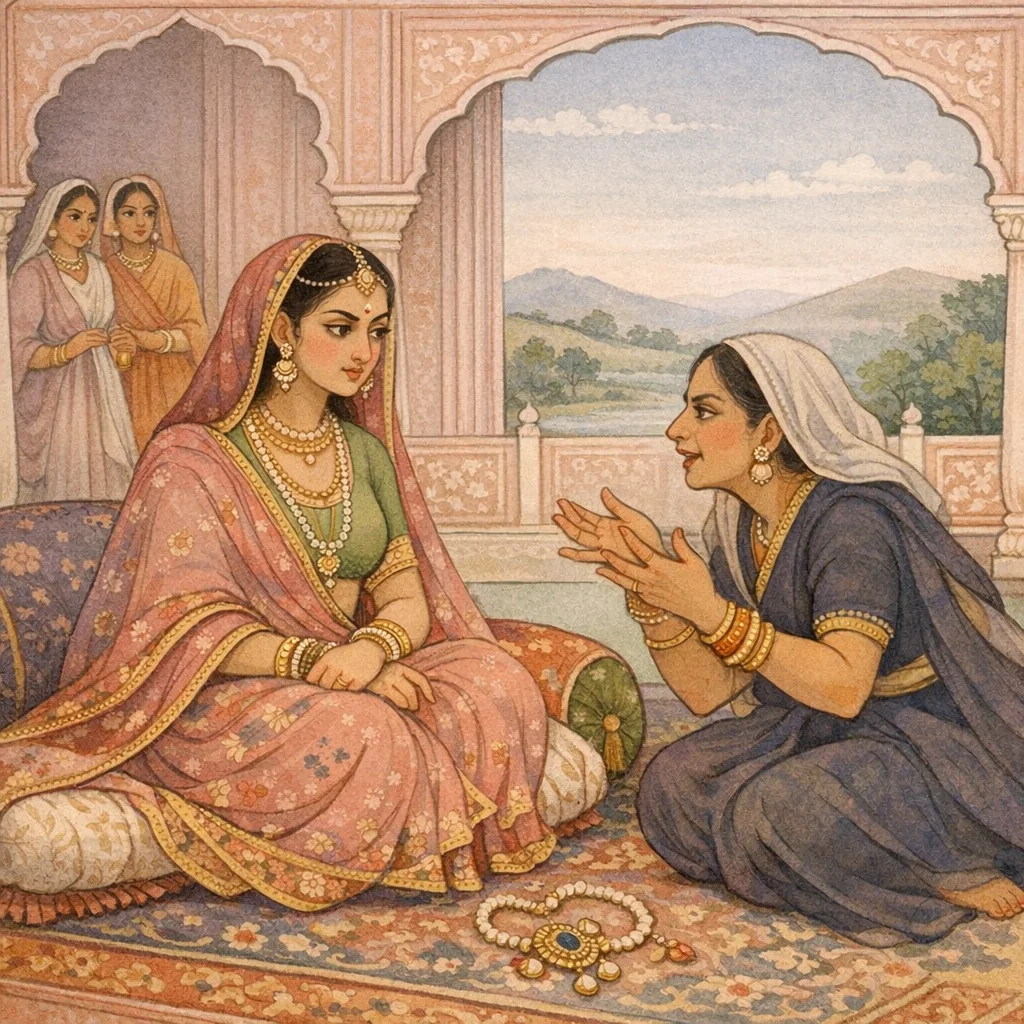
Sarga 8 is a tightly argued persuasion scene in which Mantharā reframes the imminent yuvarājya-abhiṣeka of Rāma as an existential threat to Kaikeyī and Bharata. The episode opens with Mantharā’s visible rupture of courtly reciprocity: she discards the ornament gifted to her, signaling refusal of appeasement and the start of strategic admonition. Mantharā accuses Kaikeyī of misplaced joy, repeatedly invoking the metaphor of an ‘ocean of sorrow’ to reposition celebration as impending loss. She advances a political thesis: succession will consolidate around Rāma and then Rāma’s son, excluding Bharata; shared royal power is portrayed as administratively impossible. To intensify urgency, she predicts Kaikeyī’s servitude to Kausalyā and Bharata’s deprivation, exile, or worse, arguing that proximity and factional alignments (Lakṣmaṇa with Rāma; Śatrughna with Bharata) determine protection and peril. Kaikeyī, initially praising Rāma’s virtues—dharmajña, self-restrained, grateful, truthful—fails to accept Mantharā’s alarm, prompting Mantharā to renew her warnings with sharper forecasts of disgrace. The sarga functions as a rhetorical blueprint for how emotion is weaponized into policy, preparing the ground for the demand of boons and the reversal of the coronation plan.
Shlokas
Verse 1
मन्थरा त्वभ्यसूयैनामुत्सृज्याभरणं च तत्।उवाचेदं ततो वाक्यं कोपदुःखसमन्विता।।2.8.1।।
But Mantharā, resentful toward her, cast away that ornament; then, filled with anger and sorrow, she spoke these words.
Verse 2
हर्षं किमिदमस्थाने कृतवत्यसि बालिशे।शोकसागरमध्यस्थमात्मानं नावबुध्यसे।।2.8.2।।
O foolish woman, why do you show joy at the wrong moment, not realizing that you stand in the very midst of an ocean of sorrow?
Verse 3
मनसा प्रहसामि त्वां देवि दुःखार्दिता सती।यच्छोचितव्ये हृष्टाऽसि प्राप्येदं व्यसनं महत्।।2.8.3।।
O Queen, though I am distressed, I laugh at you inwardly: for when you ought to grieve, you are rejoicing—though this great calamity has come upon you.
Verse 4
शोचामि दुर्मतित्वं ते का हि प्राज्ञा प्रहर्षयेत्।अरेस्सपत्नीपुत्रस्य वृद्धिं मृत्योरिवागताम्।।2.8.4।।
I grieve over your misguided thinking. What wise woman would rejoice at the rise of the son of a co-wife—an enemy—when that rise comes like the approach of death?
Verse 5
भरतादेव रामस्य राज्यसाधारणाद्भयम्।तद्विचिन्त्य विषण्णाऽस्मि भयं भीताऽद्धि जायते।।2.8.5।।
It is from Bharata alone that fear arises for Rāma, because the claim to the kingdom is shared. Thinking on this, I am distressed—for danger is born from one who is afraid.
Verse 6
लक्ष्मणो हि महेष्वासो रामं सर्वात्मना गतः।शत्रुघ्नश्चापि भरतं काकुत्स्थं लक्ष्मणो यथा।।2.8.6।।
Lakṣmaṇa, the great archer, is devoted to Rāma with his whole being; and Śatrughna likewise is devoted to Bharata—just as Lakṣmaṇa is to the Kakutstha (Rāma).
Verse 7
प्रत्यासन्नक्रमेणापि भरतस्यैव भामिनि।राज्यक्रमो विप्रकृष्टस्तयोस्तावत्कनीयसोः।।2.8.7।।
O fair lady, even by the order of birth the succession to the kingdom lies next with Bharata; for the two younger ones, the prospect is far removed.
Verse 8
विदुषः क्षत्रचारित्रे प्राज्ञस्य प्राप्तकारिणः।भयात्प्रवेपे रामस्य चिन्तयन्ती तवात्मजम्।।2.8.8।।
Rāma is learned in the conduct of a kṣatriya, wise, and one who acts at the proper time; thinking of your son, I tremble with fear of him.
Verse 9
सुभगा खलु कौशल्या यस्याः पुत्रोऽभिषेक्ष्यते।यौवराज्येन महता श्वः पुष्येण द्विजोत्तमैः।।2.8.9।।
Indeed fortunate is Kauśalyā—her son is to be consecrated tomorrow, under the Puṣya constellation, by eminent brāhmaṇas, to the great office of heir-apparent.
Verse 10
प्राप्तां सुमहतीं प्रीतिं प्रतीतां तां हतद्विषम्।उपस्थास्यसि कौसल्यां दासीव त्त्वं कृताञ्जलिः।।2.8.10।।
You will have to wait upon Kausalyā—renowned and now exultant, with her foes subdued—like a maidservant, hands folded in submission.
Verse 11
एवं चेत्त्वं सहास्माभिस्तस्याः प्रेष्या भविष्यसि।पुत्रश्च तव रामस्य प्रेष्यभावं गमिष्यति।।2.8.11।।
If things go thus, you will become her servant along with us—and your son too will sink into servitude to Rama.
Verse 12
हृष्टाः खलु भविष्यन्ति रामस्य परमास्स्त्रियः।अप्रहृष्टा भविष्यन्ति स्नुषास्ते भरतक्षये।।2.8.12।।
All the women on Rama’s side will surely rejoice; but with Bharata’s decline, your daughters-in-law will be left joyless.
Verse 13
तां दृष्ट्वा परमप्रीतां ब्रुवन्तीं मन्थरां ततः।रामस्यैव गुणान्देवी कैकेयी प्रशशंस ह।।2.8.13।।
Seeing Mantharā speaking so, Queen Kaikeyī then praised Rama’s virtues alone.
Verse 14
धर्मज्ञो गुरुभिर्दान्तः कृतज्ञस्सत्यवाक्छुचिः।रामो राज्ञ स्सुतो ज्येष्ठो यौवराज्यमतोऽर्हति।।2.8.14।।
Rama knows dharma; trained by elders, he is self-restrained; he is grateful, truthful in speech, and pure. As the king’s eldest son, therefore, he deserves the status of heir-apparent.
Verse 15
भ्रातृ़न्भृत्यांश्च दीर्घायुः पितृवत्पालयिष्यति।सन्तप्स्यसे कथं कुब्जे श्रुत्वा रामाभिषेचनम्।।2.8.15।।
Long-lived, he will protect his brothers and servants like a father. O hunchback, why do you grieve on hearing of Rama’s consecration?
Verse 16
भरतश्चापि रामस्य ध्रुवं वर्षशतात्परम्।पितृपैतामहं राज्यमवाप्ता पुरुषर्षभः।।2.8.16।।
And Bharata too, surely—after more than a hundred years of Rama’s reign—will inherit the ancestral kingdom, that best of men.
Verse 17
सा त्वमभ्युदये प्राप्ते वर्तमाने च मन्थरे।भविष्यति च कल्याणे किमर्थं परितप्यसे।।2.8.17।।
O Mantharā, you have attained prosperity, you have it even now, and well-being will continue in the future—so why do you grieve?
Verse 18
यथा मे भरतो मान्यस्तथा भूयोऽपि राघवः।कौशल्यातोऽतिरिक्तं च सोऽनुशुश्रूषते हि माम्।।2.8.18।।
As Bharata is dear and worthy of honor to me, so Rāghava (Rāma) is even more so; indeed, he serves and attends to me even beyond what he does for Kauśalyā.
Verse 19
राज्यं यदि हि रामस्य भरतस्यापि तत्तदा।मन्यते हि यथात्मानं तथा भ्रातृ़ंश्च राघवः।।2.8.19।।
If the kingdom belongs to Rāma, then it belongs to Bharata as well—for Rāghava regards his brothers as he regards his own self.
Verse 20
कैकेयीवचनं श्रुत्वा मन्थरा भृशदुःखिता।दीर्घमुष्णं च विनिश्वस्य कैकेयीमिदमब्रवीत्।।2.8.20।।
Hearing Kaikeyī’s words, Mantharā became deeply distressed; drawing long, heated breaths, she spoke these words to Kaikeyī.
Verse 21
अनर्थदर्शिनी मौर्ख्यान्नात्मानमवबुध्यसे। शोकव्यसनविस्तीर्णे मज्जन्ती दुःखसागरे।।2.8.21।।
Blinded by folly, you do not understand your own predicament; sinking in an ocean of sorrow spread wide by grief and calamity, you fail to see the harm ahead.
Verse 22
भविता राघवो राजा राघवस्यानु यस्सुतः।राजवंशात्तु कैकेयि भरतःपरिहास्यते।।2.8.22।।
Rāghava will become king, and after Rāghava his own son will succeed; but, O Kaikeyī, Bharata will be pushed out of the royal line and made a byword.
Verse 23
न हि राज्ञस्सुता स्सर्वे राज्ये तिष्ठन्ति भामिनि।स्थाप्यमानेषु सर्वेषु सुमहाननयो भवेत्।।2.8.23।।
Not all the king’s sons can hold the throne, O passionate lady; if all were installed as rulers, there would be immense disorder.
Verse 24
तस्माज्ज्येष्ठे हि कैकेयि राज्यतन्त्राणि पार्थिवाः।स्थापयन्त्यनवद्याङ्गि गुणवत्स्वितरेष्वपि।।2.8.24।।
Therefore, O Kaikeyī—O faultless-limbed lady—kings entrust the machinery of rule either to the eldest son, or else to another son who is endowed with virtues.
Verse 25
असावत्यन्तनिर्भग्नस्तव पुत्रो भविष्यति।अनाथवत्सुखेभ्यश्च राजवंशाच्च वत्सले।।2.8.25।।
Your son will be utterly crushed, O dear one—like an orphan, cut off from comforts and from the royal line of succession.
Verse 26
साऽहं त्वदर्थे सम्प्राप्ता त्वं तु मां नावबुद्ध्यसे।सपत्नि वृद्धौ या मे त्वं प्रदेयं दातुमिच्छसि।।2.8.26।।
I have come here for your sake; yet you do not understand me. Instead, at the time when your co-wife prospers, you wish to give me some gift that I am ‘owed’.
Verse 27
ध्रुवं तु भरतं रामः प्राप्य राज्यमकण्टकम्।देशान्तरं वा नयिता लोकान्तरमथाऽपि वा।।2.8.27।।
Once Rāma obtains the kingdom, free of all ‘thorns’ (rivals), he will certainly drive Bharata into exile—or even send him to the next world.
Verse 28
बाल एव हि मातुल्यं भरतो नायितस्त्वया।सन्निकर्षाच्च सौहार्दं जायते स्थावरेष्वपि।।2.8.28।।
For Bharata was sent by you to his maternal uncle’s home while still a child. And closeness breeds affection—even among inanimate things.
Verse 29
भरतस्याप्यनुवशश्शत्रुघ्नोऽपि समं गतः।लक्ष्मणो हि यथा रामं तथाऽसौ भरतं गतः।।2.8.29।।
And Śatrughna too, obedient to Bharata, has gone along with him. Just as Lakṣmaṇa stands by Rāma, so does Śatrughna stand by Bharata.
Verse 30
श्रूयते हि द्रुमः कश्चिच्छेत्तव्यो वनजीविभिः।सन्निकर्षादिषीकाभिर्मोचितः परमाद्भयात्।।2.8.30।।
It is said that a certain tree, marked to be felled by forest-dwellers, is spared from great danger because of thorny grass (iṣīkā) growing close around it.
Verse 31
गोप्ता हि रामं सौमित्रिर्लक्ष्मणं चापि राघवः।अश्विनोरिव सौभ्रात्रं तयोर्लोकेषु विश्रुतम्।।2.8.31।।
Lakṣmaṇa (Saumitrī) protects Rāma, and Rāma (Rāghava) protects Lakṣmaṇa as well. Their brotherhood is famed in the world like that of the Aśvins.
Verse 32
तस्मान्न लक्ष्मणे रामः पापं किञ्चित्करिष्यति।रामस्तु भरते पापं कुर्यादिति न संशयः।।2.8.32।।
Therefore Rāma will not do even the slightest harm to Lakṣmaṇa; but regarding Bharata, there is no doubt—Rāma would do him harm.
Verse 33
तस्माद्राजगृहादेव वनं गच्छतु ते सुतः।एतद्धि रोचते मह्यं भृशं चापि हितं तव।।2.8.33।।
Therefore, let your son go straight to the forest from Rājagṛha itself. This alone pleases me—and it is, in truth, greatly beneficial for you as well.
Verse 34
एवं ते ज्ञातिपक्षस्य श्रेयश्चैव भविष्यति।यदि चेद्भरतो धर्मात्पित्र्यं राज्यमवाप्स्यसि।।2.8.34।।
Thus there will indeed be welfare for you and for your whole kin-group—if Bharata obtains, by righteousness, the ancestral kingdom.
Verse 35
स ते सुखोचितो बालो रामस्य सहजो रिपुः।समृद्धार्थस्य नष्टार्थो जीविष्यति कथं वशे।।2.8.35।।
That boy—your Bharata—accustomed to comfort, is by nature a rival to Rāma. Once stripped of all means, how will he live under the control of a prosperous Rāma?
Verse 36
अभिद्रुतमिवारण्ये सिंहेन गजयूथपम्।प्रच्छाद्यमानं रामेण भरतं त्रातुमर्हसि।।2.8.36।।
As an elephant-herd leader is assailed by a lion in the forest, so Bharata will be overpowered by Rāma; it is right for you to save him.
Verse 37
दर्पान्निराकृता पूर्वं त्वया सौभाग्यवत्तया।राममाता सपत्नी ते कथं वैरं न शातयेत्।।2.8.37।।
Earlier, in pride—because you were favored—you slighted your co-wife, Rāma’s mother. How would she not seek to repay that enmity?
Verse 38
यदा हि रामः पृथिवीमवाप्स्यतिप्रभूतरत्नाकरशैलपत्तनाम्।तदा गमिष्यस्यशुभं पराभवंसहैव दीना भरतेन भामिनि।।2.8.38।।
O fair lady, when Rāma gains this earth—rich with oceans, mountains, and cities—then you, together with Bharata, will fall into misfortune, misery, and disgrace.
Verse 39
यदा हि रामः पृथिवीमवाप्स्यतिध्रुवं प्रणष्टो भरतो भविष्यति।अतो हि सञ्चिन्तय राज्यमात्मजे परस्य चैवाद्य विवासकारणम्।।2.8.39।।
For when Rāma gains the earth, Bharata will surely be ruined. Therefore, think—right now—of the kingdom for your son, and also of the means to banish your rival, Rāma.
Frequently Asked Questions
The pivotal action is Mantharā’s rejection of Kaikeyī’s gift (discarding the ornament) followed by an ethical-political reframing: whether Kaikeyī should treat Rāma’s coronation as a shared family good or as a threat requiring defensive action for Bharata’s future.
The sarga demonstrates how virtues and intentions can be overridden by fear-driven narratives: persuasive speech can convert private emotion into public policy, and dharma-discourse (praising Rāma’s qualities) may fail when security, status, and rivalry dominate decision-making.
Cultural markers include the Puṣya nakṣatra timing for coronation, the reference to Rājagṛha as Bharata’s maternal-uncle residence, and illustrative tradition through the Iśīkā-grass analogy and the Aśvins simile for ideal brotherhood.