Sarga 79
भरतस्य राज्यत्यागः तथा रामानयनप्रतिज्ञा (Bharata Rejects Kingship and Vows to Bring Rama Back)
अयोध्याकाण्ड
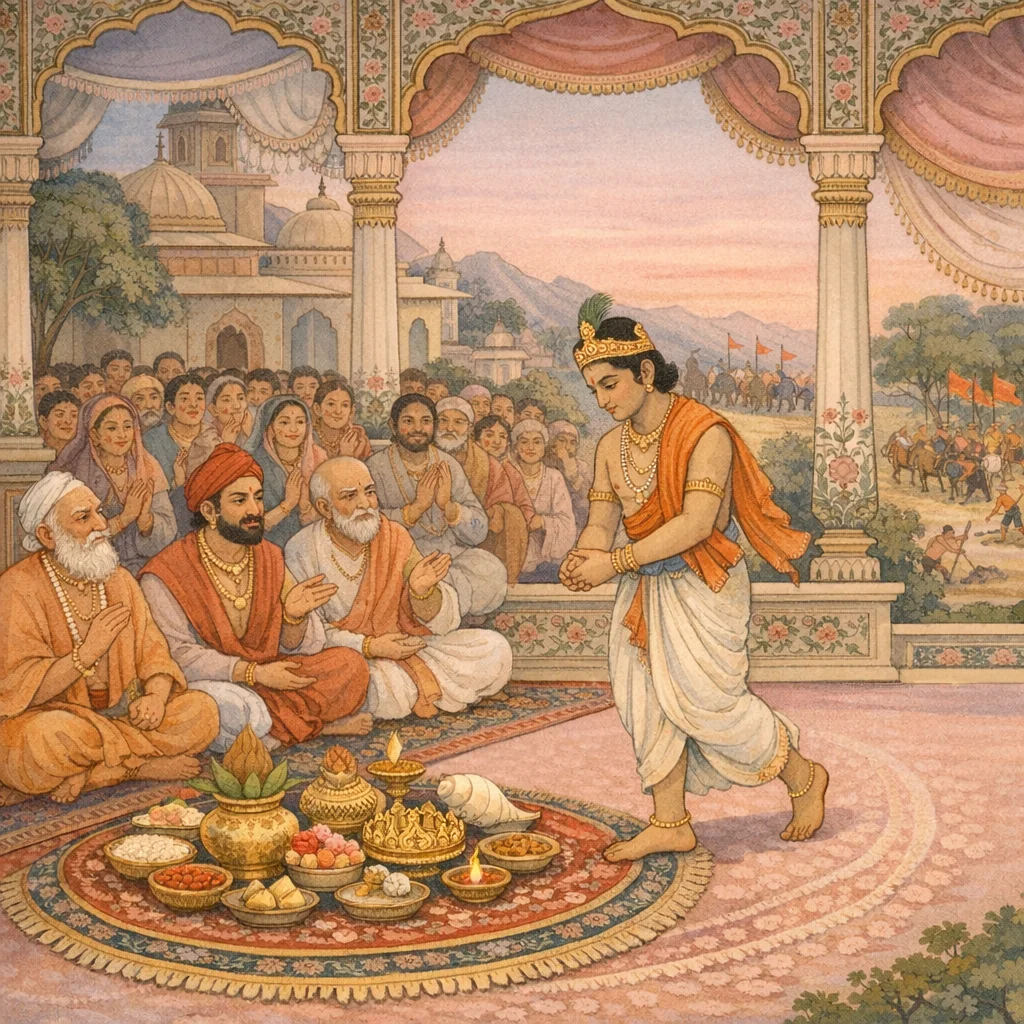
At dawn on the fourteenth day, the king-makers (those authorized to proclaim and consecrate a ruler) assemble and urge Bharata to accept immediate kingship, stressing the danger of a leaderless realm after Daśaratha’s death and the availability of coronation materials. Bharata, steadfast in vow, circumambulates the abhiṣeka articles and rejects their proposal on grounds of dynastic propriety: kingship belongs to the eldest, Rāma. He proposes a reversal of roles—he will endure forest life for fourteen years while Rāma is installed as king. Bharata orders practical preparations: marshal a fourfold army, carry the consecration implements before them, and have artisans level and align roads, with guards skilled in assessing difficult terrain. The people and council respond with auspicious acclaim, invoking Lakṣmī upon Bharata for his intention to bestow the kingdom on the rightful heir; tears of joy mark collective relief. The sarga thus fuses constitutional legitimacy, ritual readiness (abhiṣeka), and logistical statecraft into a single ethical declaration: authority is validated by renunciation and fidelity to dharma rather than by opportunity.
Shlokas
Verse 1
ततः प्रभातसमये दिवसेऽथ चतुर्दशे।समेत्य राजकर्तारो भरतं वाक्यमब्रुवन्।।2.79.1।।
Then, at dawn on the fourteenth day, those empowered to install a king assembled and spoke these words to Bharata.
Verse 2
गतो दशरथस्स्वर्गं यो नो गुरुतरो गुरुः।रामं प्रव्राज्य वै ज्येष्ठं लक्ष्मणं च महाबलम्।।2.79.2।।
Daśaratha—our most venerable teacher and master—has gone to heaven, after sending his eldest son Rāma into exile, along with mighty Lakṣmaṇa.
Verse 3
त्वमद्य भव नो राजा राजपुत्र महायशः।सङ्गत्या नापराध्नोति राज्यमेतदनायकम्।।2.79.3।।
O illustrious prince, become our king today; this kingdom, lacking a leader, has not yet fallen into disorder through harmful associations.
Verse 4
अभिषेचनिकं सर्वमिदमादाय राघव।प्रतीक्षते त्वां स्वजनश्श्रेणयश्च नृपात्मज।।2.79.4।।
O Rāghava, O prince—your own people, and the guilds as well, have brought all the consecration materials and are waiting for you.
Verse 5
राज्यं गृहाण भरत पितृपैतामहं ध्रुवम्।अभिषेचय चात्मानं पाहि चास्मान्नरर्षभ।।2.79.5।।
O Bharata, accept this firm ancestral kingdom; have yourself consecrated, O best of men, and protect us.
Verse 6
अभिषेचनिकं भाण्डं कृत्वा सर्वं प्रदक्षिणम्।भरतस्तं जनं सर्वं प्रत्युवाच धृतव्रतः।।2.79.6।।
Bharata, steadfast in his vows, circumambulated all the coronation articles and then replied to all those people.
Verse 7
ज्येष्ठस्य राजता नित्यमुचिता हि कुलस्य नः।नैवं भवन्तो मां वक्तुमर्हन्ति कुशला जनाः।।2.79.7।।
Kingship always belongs to the eldest in our dynasty; capable people like you should not speak to me in this manner.
Verse 8
रामः पूर्वो हि नो भ्राता भविष्यति महीपतिः।अहं त्वरण्ये वत्स्यामि वर्षाणि नव पञ्च च।।2.79.8।।
Rama, our eldest brother, shall indeed become king; as for me, I will dwell in the forest for fourteen years.
Verse 9
युज्यतां महती सेना चतुरङ्गमहाबला।आनयिष्याम्यहं ज्येष्ठं भ्रातरं राघवं वनात्।।2.79.9।।
Let the great, mighty fourfold army be assembled; I will bring back my eldest brother, Rāghava, from the forest.
Verse 10
अभिषेचनिकं चैव सर्वमेतदुपस्कृतम्।पुरस्कृत्य गमिष्यामि रामहेतोर्वनं प्रति।।2.79.10।।
With all these coronation articles prepared and set at the fore, I will go to the forest for Rāma’s sake (to bring him back and restore what is right).
Verse 11
तत्रैवं तं नरव्याघ्रमभिषिच्य पुरस्कृतम्।आनेष्यामि तु वै रामं हव्यवाहमिवाध्वरात्।।2.79.11।
There, having consecrated that tiger among men—Rāma—and letting him go before me, I will surely bring him back, like the sacred fire brought forth from a sacrifice.
Verse 12
न सकामां करिष्यामि स्वामिमां मातृगन्धिनीम्।वने वत्स्याम्यहं दुर्गे रामो राजा भविष्यति।।2.79.12।।
I will not fulfill the desire of that woman—my own—who bears only the name of ‘mother.’ I will live in the hard-to-reach forest; Rāma shall be king.
Verse 13
क्रियतां शिल्पिभिः पन्था स्समानि विषमाणि च।रक्षिणश्चानुसम्यान्तु पथि दुर्गविचारकाः।।2.79.13।।
Let artisans prepare the road—leveling the uneven stretches—and let guards skilled in assessing difficult terrain accompany (the party) along the route.
Verse 14
एवं सम्भाषमाणं तं रामहेतोर्नृपात्मजम्।प्रत्युवाच जनस्सर्व श्श्रीमद्वाक्यमनुत्तमम्।।2.79.14।।
As that prince spoke in this way on Rāma’s behalf, all the people replied to him with excellent and auspicious words.
Verse 15
एवं ते भाषमाणस्य पद्मा श्रीरुपतिष्ठतात्।यस्त्वं ज्येष्ठे नृपसुते पृथिवीं दातुमिच्छसि।।2.79.15।।
May Padmā Śrī (Lakṣmī) favor you, since you speak thus—wishing to hand over the earth (kingdom) to the king’s eldest son.
Verse 16
अनुत्तमं तद्वचनं नृपात्मजप्रभाषितं संश्रवणे निशम्य च।प्रहर्षजास्तं प्रति बाष्पबिन्दवो निपेतुरार्यानननेत्रसम्भवाः।।2.79.16।।
Hearing within their range those unsurpassed words spoken by the prince, tears born of joy fell toward him—springing from the eyes and faces of the noble people.
Verse 17
ऊचुस्ते वचनमिदं निशम्य हृष्टा स्सामात्या स्सपरिषदो वियातशोकाः।पन्थानं नरवर भक्तिमान् जनश्च व्यादिष्टस्तव वचनाच्च शिल्पिवर्गः।।2.79.17।
Hearing your words, the ministers and council members—freed from sorrow—spoke with delight: “O best of men, at your command devoted citizens and the guilds of artisans have been directed to prepare the road.”
Frequently Asked Questions
Bharata faces a legitimacy dilemma: accept a politically expedient coronation in a leaderless kingdom or uphold dynastic and moral law by insisting that the eldest, Rama, alone deserves kingship. He chooses refusal and commits to restoring Rama.
Authority is not merely positional but dharmic: Bharata’s renunciation, fidelity to tradition, and prioritization of rightful order show that moral restraint can be a higher form of sovereignty than immediate power.
The sarga emphasizes the forest as the exile-space to be traversed, and the cultural-ritual landmarks of kingship—abhiṣeka materials, processional precedence, and the sacrificial-fire simile (havyavāha from adhvara)—to frame Rama’s return as both political and sacred restoration.