Sarga 73
भरतस्य कैकेय्याः प्रति धिक्कारः — Bharata’s Rebuke of Kaikeyi and Affirmation of Ikshvaku Royal Dharma
अयोध्याकाण्ड
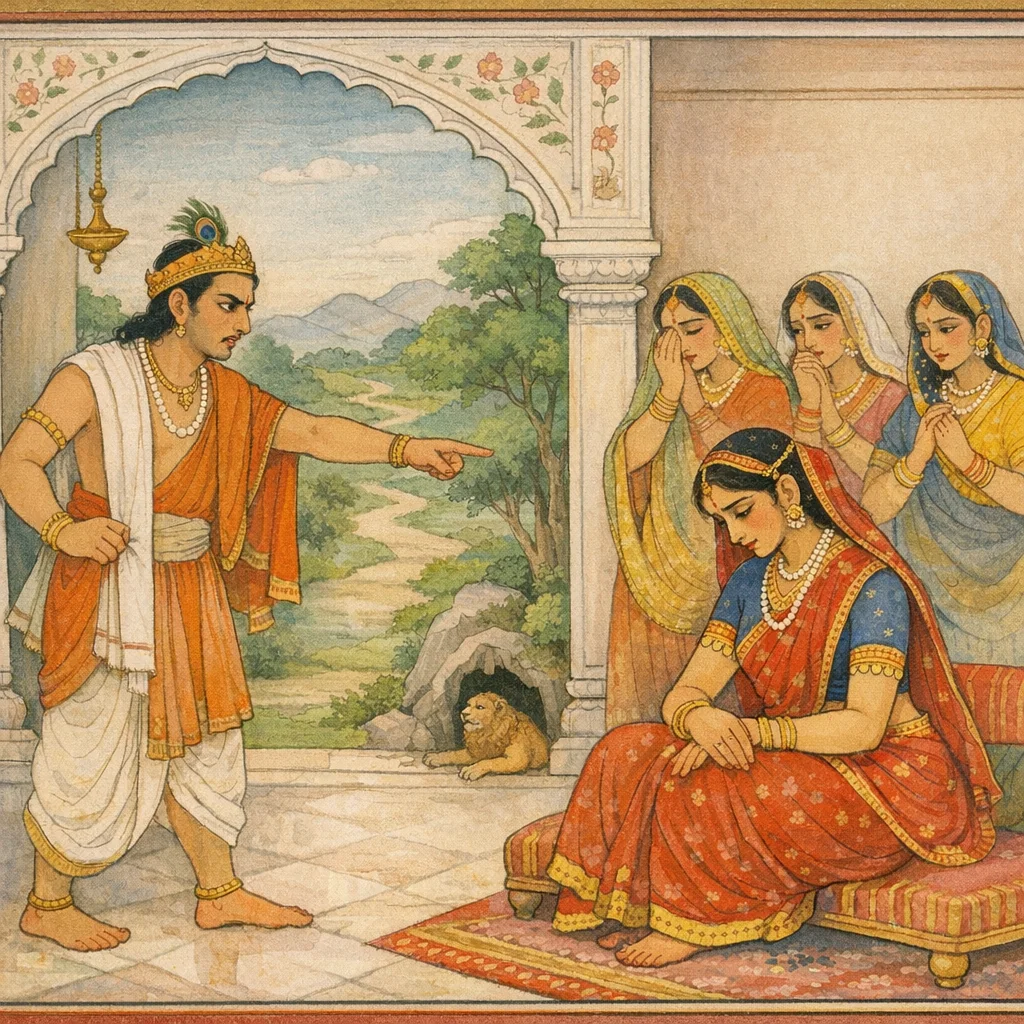
Sarga 73 presents Bharata’s grief-driven yet legally reasoned denunciation of Kaikeyī after he hears of Daśaratha’s death and the exile of Rāma and Lakṣmaṇa. He rejects the kingdom as meaningless without father and elder brothers, framing his sorrow as compounded injury. Bharata accuses Kaikeyī of bringing ruin upon the dynasty and intensifying the suffering of Kausalyā and Sumitrā, while stressing that Rāma maintained exemplary conduct toward Kaikeyī as toward his own mother. He then pivots to normative argument: the Ikṣvāku custom crowns the eldest, and younger brothers support him with disciplined respect; Kaikeyī’s actions are portrayed as a rupture of enduring rājadharma and ancestral reputation. Bharata declares he will not fulfill Kaikeyī’s ambition for her son’s accession, vows to retrieve the faultless, people-beloved Rāma from the forest, and resolves to serve him with steadfast inner commitment. The sarga ends with Bharata roaring in grief, likened to a lion in a mountain cave—an image that fuses emotional intensity with moral indictment.
Shlokas
Verse 1
सश्रूत्वा तु पितरं वृत्तं भ्रातरौ च विवासितौ।भरतो दुःखसन्तप्त इदं वचनमब्रवीत्।।।।
Having heard that his father had passed away and that his two brothers had been sent into exile, Bharata—burning with grief—spoke these words.
Verse 2
किं नु कार्यं हतस्येह मम राज्येन शोचतः।विहीनस्याथ पित्रा च भ्रात्रा पितृसमेन च।।।।
Bereft of my father and of my brother—who was like a father to me—what use is this kingdom to me now, when I am stricken by calamity and overwhelmed with grief?
Verse 3
दुःखे मे दुःखमकरोर्व्रणे क्षारमिवादधाः।राजानं प्रेतभावस्थं कृत्वा रामं च तापसम्।।।।
In my sorrow you have added yet another sorrow—like rubbing salt into a wound—by bringing the king to a corpse-like end and turning Rama into a forest ascetic.
Verse 4
कुलस्य त्वमभावाय कालरात्रिरिवाऽगता।अङ्गारमुपगूह्य स्म पिता मे नावबुद्धवान्।।।।
You have come like a night of doom for the ruin of this lineage; my father did not realize that, in embracing you, he was clasping a live coal.
Verse 5
मृत्युमापादितो पिता त्वया मे पापदर्शिनि।सुखं परिहृतं मोहात्कुलेऽस्मिन्कुलपांसनि।।।।
By you my father has been driven to death, O woman of sinful intent; through delusion you have stripped this house of its happiness, O blot upon the lineage.
Verse 6
त्वां प्राप्य हि पिता मेऽद्य सत्यसन्धो महायशाः।तीव्रदुःखाभिसन्तप्तो वृत्तो दशरथो नृपः।।।।
For, after falling under your sway, my father—the renowned king Dasharatha, steadfast to truth—burned with intense grief and has now passed away.
Verse 7
विनाशितो महाराजः पिता मे धर्मवत्सलः।कस्मात्प्रव्राजितो रामः कस्मादेव वनं गतः।।।।
Why has my father, the great king devoted to dharma, been brought to ruin? For what cause was Rama banished—why indeed did he go to the forest?
Verse 8
कौसल्या च सुमित्रा च पुत्रशोकाभिपीडिते।दुष्करं यदि जीवेतां प्राप्य त्वां जननीं मम।।।।
Kausalya and Sumitra, crushed by grief for their sons, can scarcely be expected to live on, having you—my own mother—set over them.
Verse 9
ननुत्वार्योऽपि धर्मात्मा त्वयि वृतिमनुत्तमाम्।वर्तते गुरुवृत्तिज्ञो यथा मातरि वर्तते।।।।
And yet Rama—noble and righteous, knowing well the proper conduct toward elders—behaved toward you with impeccable propriety, just as he would toward his own mother.
Verse 10
तथा ज्येष्ठा हि मे माता कौसल्या दीर्घदर्शिनी।त्वयि धर्मं समास्थाय भगिन्यामिव वर्तते।।।।
Likewise my eldest mother, far-seeing Kausalyā, standing firmly in dharma, has behaved toward you as though you were her own sister.
Verse 10
तथा ज्येष्ठा हि मे माता कौसल्या दीर्घदर्शिनी।त्वयि धर्मं समास्थाय भगिन्यामिव वर्तते।।।।
Likewise my eldest mother, far-seeing Kausalyā, standing firmly in dharma, has behaved toward you as though you were her own sister.
Verse 11
तस्याः पुत्रं कृताऽत्मानं चीरवल्कलवाससम्।प्रस्थाप्य वनवासाय कथं पापे न शोचसि।।।।
After sending her son—pure in self-discipline—clad in bark and rags to dwell in the forest, how is it, O sinful woman, that you do not grieve (in remorse)?
Verse 12
अपापदर्शनं शूरं कृतात्मानं यशस्विनम्।प्रव्राज्य चीरवसनं किन्नु पश्यसि कारणम्।।।।
He who never looked toward evil—valiant, self-ruled, and renowned—has been driven into exile, clothed in ascetic rags. What reason, then, do you claim to see for this?
Verse 13
लुब्धाया विदितो मन्ये न तेऽहं राघवं प्रति।तथाह्यनर्धो राज्यार्थं त्वयाऽनीतो महानयम्।।।।
Because you are greedy, I think you do not understand my devotion toward Rāghava. For, in pursuit of the kingdom, you have brought about this great calamity.
Verse 14
अहं हि पुरुषव्याघ्रावपश्यन्रामलक्ष्मणौ।केन शक्तिप्रभावेन राज्यं रक्षितुमुत्सहे।।।।
Without seeing Rāma and Lakṣmaṇa—those tigers among men—by what power or might could I presume to protect this kingdom?
Verse 15
तं हि नित्यं महाराजो बलवन्तं महाबलः।उपाश्रितोऽभूद्धर्मात्मा मेरुर्मेरुवनं यथा।।।।
That righteous great king, himself mighty, always relied upon the powerful Rāma—just as Mount Meru relies upon the forest around Meru.
Verse 16
सोऽहं कथमिमं भारं महाधुर्यसमुद्धृतम्।दम्योधुरमिवाऽऽसाद्य वहेयं केनचौजसा।। ।।
How could I bear this burden—one fit to be carried by a great, well-yoked bull—when, like an untrained young bull faced with a heavy yoke, with what strength could I carry it?
Verse 17
अथवा मे भवेच्छक्तिर्योगैर्बुद्धिबलेन वा।सकामां न करिष्यामि त्वामहं पुत्रगर्धिनीम्।।।।
Or, even if I were to gain strength through political expedients or through the power of intellect, I will not let you—greedy for your son—achieve your desired end.
Verse 18
न मे विकाङ्क्षा जायेत त्यक्तुं त्वां पापनिश्चयाम्।यदि रामस्य नावेक्षा त्वयि स्यान्मातृवत्सदा।।।।
Had Rāma not always regarded you as a mother, I would feel no hesitation at all in abandoning you—one fixed in sinful resolve.
Verse 19
उत्पन्नातु कथं बुद्धिस्तवेयं पापदर्शिनि।साधुचारित्रविभ्रष्टे पूर्वेषां नो विगर्हिता।।।।
O woman whose vision is turned toward sin, fallen from noble conduct—how could such a thought arise in you, a thought that brings reproach upon our forebears?
Verse 20
अस्मिन्कुले हि पूर्वेषां ज्येष्ठो राज्येऽभिषिच्यते।अपरे भ्रातरस्तस्मिन्प्रवर्तन्ते समाहिताः।।।।
In this lineage, by ancestral custom, it is indeed the eldest who is consecrated to the kingdom; the other brothers remain disciplined and act in loyal regard toward him.
Verse 21
न हि मन्ये नृशंसे त्वं राजधर्ममवेक्षसे।गतिं वा न विजानासि राजवृत्तस्य शाश्वतीम्।।।।
O cruel one, I think you neither respect the royal dharma nor understand the enduring course and consequence of proper royal conduct.
Verse 22
सततं राजवृत्ते हि ज्येष्ठो राज्येऽभिषिच्यते।राज्ञामेतत्समं तत्स्यादिक्ष्वाकूणां विशेषतः।।।।
By established royal practice, the eldest is always consecrated to rule. This principle holds for kings in general, and it applies with particular force to the Ikṣvāku line.
Verse 23
तेषां धर्मैकरक्षाणां कुलचारित्रशोभिनाम्।अद्य चारित्रशौण्डीर्यं त्वां प्राप्य विनिवर्तितम्।।।।
For those kings whose sole protection was dharma and whose glory lay in the customs of their lineage—today, by admitting you, the proud steadiness of that tradition has been overturned.
Verse 24
तवापि सुमहाभागा जनेन्द्राः कुलपूर्वगाः।बुद्धेर्मोहः कथमयं सम्भूतस्त्वयि गर्हितः।।।।
Even in your own lineage, the kings—your forebears—were men of great distinction. How, then, did this blameworthy delusion arise within your mind?
Verse 25
न तु कामं करिष्यामि तवाऽहं पापनिश्चये।त्वया व्यसनमारब्धं जीवितान्तकरं मम।।।।
But I will not fulfill your desire, O woman resolved upon sin. By you a calamity has been set in motion—one that is fatal to my very life.
Verse 26
एषत्विदानीमेवाहमप्रियार्थं तवानघम्।निवर्तयिष्यामि वनाद्भ्रातरं स्वजनप्रियम्।।।।
So now, precisely to thwart you and cause you displeasure, I will bring back from the forest my faultless brother—beloved of his own people.
Verse 27
निवर्तयित्वा रामं च तस्याहं दीप्ततेजसः।दासभूतो भविष्यामि सुस्थिरेणान्तरात्मना।।।।
Once I have brought Rama back—he of radiant splendour—I will live in service to him, with an inward mind made firm and steady.
Verse 28
इत्येवमुक्त्वा भरतो महात्मा प्रियेतरैर्वाक्यगणैस्तुदंस्ताम्।शोकातुरश्चापि ननाद भूयः सिंहो यथा पर्वतगह्वरस्थः।।।।
Having spoken thus, the high-souled Bharata—piercing her with harsh clusters of words—though overwhelmed with grief, roared out again, like a lion lodged in a mountain cave.
Frequently Asked Questions
Bharata confronts the legitimacy of kingship obtained through coercive boons and exile: he refuses to accept a kingdom secured by adharma, and instead commits to restoring the rightful eldest heir (Rāma) in alignment with Ikṣvāku succession custom.
The sarga teaches that political authority must be grounded in dharma and lineage norms, not desire; grief does not negate ethical reasoning, and true loyalty may require rejecting personal gain to preserve moral order and public legitimacy.
Culturally, the Ikṣvāku rājavṛtta (royal custom) of crowning the eldest is foregrounded; symbolically, Mount Meru and the lion-in-cave simile frame Rāma as the dynasty’s stabilizing power and Bharata’s grief as both natural and morally forceful.