Sarga 6
रामाभिषेकपूर्वसज्जा — Preparations for Rama’s Coronation
अयोध्याकाण्ड
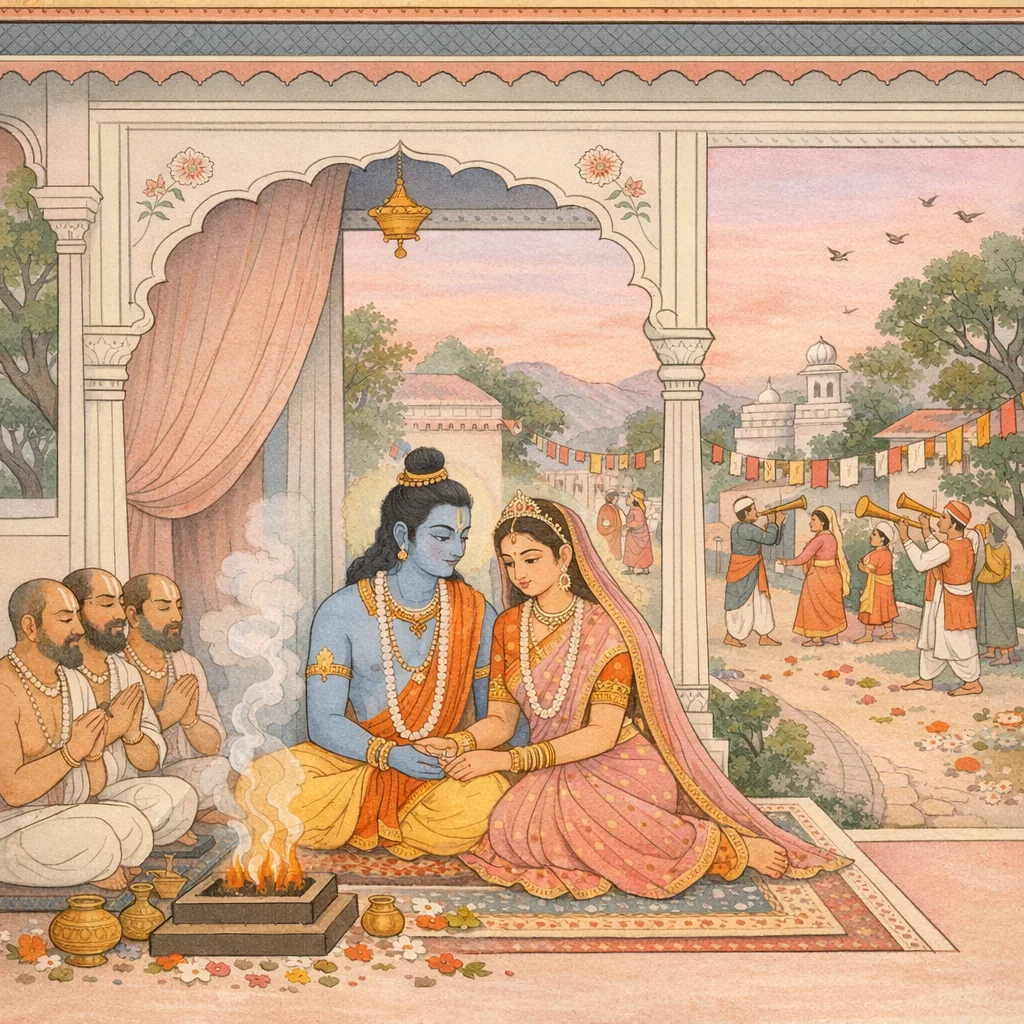
Sarga 6 presents a dual-focus tableau: (1) Rāma’s private ritual discipline and (2) Ayodhyā’s public mobilization for the impending yuvarājābhiṣeka. After Vasiṣṭha departs, Rāma bathes, approaches Nārāyaṇa, and performs fire-offerings (ājya-homa) according to rite, then partakes of the remaining havis and observes silence while meditating in Viṣṇu’s auspicious shrine, resting on kuśa-grass with Sītā. Rising in the final watch of night, he orders full decoration of his residence, attends the dawn observances, and listens to Brahmins reciting purificatory mantras; auspicious proclamations (puṇyāha) mingle with trumpet-sounds across the city. The narrative then widens to civic space: citizens begin decorating at daybreak, raising banners and flags on temples, crossroads, streets, towers, marketplaces, homes, and assembly halls; performers and singers animate the soundscape; adults and children alike converse about the coronation. Highways are strewn with flowers and perfumed with incense, and lamp-trees are arranged to ensure illumination should night fall. Villagers arrive from all directions to witness the event, filling Ayodhyā with ocean-like roar; groups gather in squares and halls praising Daśaratha’s decision to install the virtuous, learned, non-arrogant Rāma as protector-king.
Shlokas
Verse 1
गते पुरोहिते रामः स्नातो नियतमानसः।सह पत्न्या विशालाक्ष्या नारायणमुपागमत्।।2.6.1।।
After the family priest had departed, Rāma—having bathed and with his mind disciplined—approached Lord Nārāyaṇa together with his large-eyed wife, Sītā.
Verse 2
प्रगृह्य शिरसा पात्रीं हविषो विधिवत्तदा।महते दैवतायाज्यं जुहाव ज्वलितेऽनले।।2.6.2।।
Then, in accordance with ritual rule, holding the vessel of oblations upon his head, he poured clarified butter into the blazing sacred fire as an offering to the great divinity (Viṣṇu).
Verse 3
शेषं च हविषस्तस्य प्राश्याशास्यात्मनः प्रियम्।ध्यायन्नारायणं देवं स्वास्तीर्णे कुशसंस्तरे।।2.6.3।।वाग्यत स्सह वैदेह्या भूत्वा नियतमानसः।श्रीमत्यायतने विष्णो श्शिश्ये नरवरात्मजः।।2.6.4।।
After partaking of the remaining sacrificial oblation, he prayed for his own welfare; and meditating on Lord Nārāyaṇa, he lay down upon a well-spread bed of kuśa grass.
Verse 4
शेषं च हविषस्तस्य प्राश्याशास्यात्मनः प्रियम्।ध्यायन्नारायणं देवं स्वास्तीर्णे कुशसंस्तरे।।2.6.3।।वाग्यत स्सह वैदेह्या भूत्वा नियतमानसः।श्रीमत्यायतने विष्णो श्शिश्ये नरवरात्मजः।।2.6.4।।
Maintaining silence and a restrained mind, the king’s son slept together with Vaidehī in the auspicious sanctuary of Viṣṇu.
Verse 5
एकयामावशिष्टायां रात्र्यां प्रतिविबुद्ध्य सः।अलङ्कारविधिं कृत्स्नं कारयामास वेश्मनः।।2.6.5।।
When only one watch of the night remained, he awoke and had the entire arrangement of decorations made for his residence.
Verse 6
तत्र श्रृण्वन्सुखा वाच स्सूतमागधवन्दिनाम्।पूर्वां सध्यामुपासीनो जजाप यतमानसः।।2.6.6।।
There, listening to the pleasant words of bards, minstrels, and panegyrists, he performed the morning twilight worship and recited his prayers with a disciplined mind.
Verse 7
तुष्टाव प्रणतश्चैव शिरसा मधुसूदनम्।विमलक्षौमसंवीतो वाचयामास स द्विजान्।।2.6.7।।
With his head bowed, he praised Madhusūdana; clad in spotless linen-silk, he had the brahmins recite the purificatory mantras.
Verse 8
तेषां पुण्याहघोषोऽथ गम्भीरमधुरस्तदा।अयोध्यां पूरयामास तूर्यघोषानुनादितः।।2.6.8।।
Then their deep and sweet cries of “Auspicious day!”—echoing with the blare of instruments—filled Ayodhyā.
Verse 9
कृतोपवासं तु तदा वैदेह्या सह राघवम्।अयोध्यानिलयश्श्रुत्वा सर्वः प्रमुदितो जनः।।2.6.9।।
Hearing that Rāghava, together with Vaidehī, had undertaken a fast, all the people dwelling in Ayodhyā rejoiced.
Verse 10
ततः पौरजनस्सर्वश्श्रुत्वा रामाभिषेचनम्।प्रभातां रजनीं दृष्ट्वा चक्रे शोभयितुं पुरीम्।।2.6.10।।
Thereafter, all the citizens, having heard of Rāma’s consecration, and seeing that the night had brightened into dawn, set about adorning the city.
Verse 11
सिताभ्रशिखराभेषु देवतायतनेषु च।चतुष्पथेषु रथ्यासु चैत्येष्वट्टालकेषु च।।2.6.11।।नानापण्यसमृद्धेषु वणिजामापणेषु च।कुटुम्बिनां समृद्धेषु श्रीमत्सु भवनेषु च।।2.6.12।।सभासु चैव सर्वासु वृक्षेष्वालक्षितेषु च।ध्वजा स्समुच्छ्रिताश्चित्राः पताकाश्चाभवंस्तदा।।2.6.13।।
On temples gleaming like mountain-peaks wrapped in white clouds, at crossroads and on the main streets, on avenue-trees and upon towers as well, banners and flags were set up.
Verse 12
सिताभ्रशिखराभेषु देवतायतनेषु च।चतुष्पथेषु रथ्यासु चैत्येष्वट्टालकेषु च।।2.6.11।।नानापण्यसमृद्धेषु वणिजामापणेषु च।कुटुम्बिनां समृद्धेषु श्रीमत्सु भवनेषु च।।2.6.12।।सभासु चैव सर्वासु वृक्षेष्वालक्षितेषु च।ध्वजा स्समुच्छ्रिताश्चित्राः पताकाश्चाभवंस्तदा।।2.6.13।।
In the merchants’ shops rich with many kinds of goods, and in the prosperous, splendid houses of householders too, decorations were put up for the consecration festivities.
Verse 13
सिताभ्रशिखराभेषु देवतायतनेषु च।चतुष्पथेषु रथ्यासु चैत्येष्वट्टालकेषु च।।2.6.11।।नानापण्यसमृद्धेषु वणिजामापणेषु च।कुटुम्बिनां समृद्धेषु श्रीमत्सु भवनेषु च।।2.6.12।।सभासु चैव सर्वासु वृक्षेष्वालक्षितेषु च।ध्वजा स्समुच्छ्रिताश्चित्राः पताकाश्चाभवंस्तदा।।2.6.13।।
Then, in all the public halls, and on trees visible from afar, colorful banners were raised, and flags too appeared everywhere.
Verse 14
नटनर्तकसङ्घानां गायकानां च गायताम्।मनः कर्णसुखा वाच श्शुशृवुश्च ततस्ततः।।2.6.14।।
Here and there were heard the pleasing voices—delightful to mind and ear—of troupes of actors and dancers, and of singers as they sang.
Verse 15
रामाभिषेकयुक्ताश्च कथाश्चक्रुर्मिथो जनाः।रामाभिषेके सम्प्राप्ते चत्वरेषु गृहेषु च।।2.6.15।।
As Rāma’s consecration drew near, people in public squares and in their homes spoke with one another, conversing on the coming coronation.
Verse 16
बाला अपि क्रीडमाना गृहद्वारेषु सङ्घशः।रामाभिषवसंयुक्ताश्चक्रुरेवं मिथः कथाः।।2.6.16।।
Even children, playing in groups at the doorways of houses, likewise spoke among themselves in talk connected with Rāma’s consecration.
Verse 17
कृतपुष्पोपहारश्च धूपगन्धाधिवासितः।राजमार्गः कृतः श्रीमान्पौरै रामाभिषेचने।।2.6.17।।
For Rāma’s coronation, the citizens made the royal highway splendid—strewn with offerings of flowers and permeated with the fragrance of incense.
Verse 18
प्रकाशकरणार्थं च निशागमनशङ्कया।दीपवृक्षां स्तथा चक्रुरनु रथ्यासु सर्वशः।।2.6.18।।
And fearing that night might fall, they also set up ‘lamp-trees’ all along the streets everywhere, so that the city would remain well lit.
Verse 19
अलङ्कारं पुरस्यैवं कृत्वा तत्पुरवासिनः।आकाङ्क्षमाणा रामस्य यौवराज्याभिषेचनम्।।2.6.19।।समेत्य सङ्घशस्सर्वे चत्वरेषु सभासु च।कथयन्तो मिथस्तत्र प्रशशंसुर्जनाधिपम्।।2.6.20।।
Thus, having adorned the city, its residents eagerly awaited Rāma’s consecration as heir-apparent.
Verse 20
अलङ्कारं पुरस्यैवं कृत्वा तत्पुरवासिनः।आकाङ्क्षमाणा रामस्य यौवराज्याभिषेचनम्।।2.6.19।।समेत्य सङ्घशस्सर्वे चत्वरेषु सभासु च।कथयन्तो मिथस्तत्र प्रशशंसुर्जनाधिपम्।।2.6.20।।
Gathering in groups in the public squares and assembly halls, they spoke among themselves there, praising the lord of men—King Daśaratha.
Verse 21
अहो महात्मा राजाऽयमिक्ष्वाकुकुलनन्दनः।ज्ञात्वा यो वृद्धमात्मानं रामं राज्येऽभिषेक्ष्यति।।2.6.21।।
“Ah! This great-souled king—the joy of the Ikṣvāku line—knowing himself to have grown old, will consecrate Rāma to rule the kingdom.”
Verse 22
सर्वेप्यनुगृहीता स्मो यन्नो रामो महीपतिः।चिराय भविता गोप्ता दृष्टलोकपरावरः।।2.6.22।।
“All of us are truly favored, since Rāma—who understands the world’s higher and lower conditions—will become our king and protector for a long time.”
Verse 23
अनुद्धतमनाः विद्वान्धर्मात्मा भ्रातृवत्सलः।यथा च भ्रातृषु स्निग्धस्तथाऽस्मास्वपि राघवः।।2.6.23।।
“Rāghava is humble, learned, and righteous, affectionate toward his brothers; and just as he is warm to them, so is he warm to us as well.”
Verse 24
चिरं जीवतु धर्मात्मा राजा दशरथोऽनघः।यत्प्रसादोनभिषिक्तं तु रामं द्रक्ष्यामहे वयम्।।2.6.24।।
“May the virtuous, sinless King Daśaratha live long—by whose favor we shall behold Rāma consecrated.”
Verse 25
एवंविधं कथयतां पौराणां शुश्रुवु स्तदा।दिग्भ्योपि श्रुतवृत्तान्ता: प्राप्ता जानपदा जनाः।।2.6.25।।
While the citizens were speaking in this manner, people from the countryside—having heard the news—arrived then from every direction and listened.
Verse 26
ते तु दिग्भ्यः पुरीं प्राप्ता द्रष्टुं रामाभिषेचनम्।रामस्य पूरयामासुः पुरीं जानपदा जनाः।।2.6.26।।
But the countryfolk arrived at the city from every direction to witness Rāma’s consecration, and they filled the city of Rāma.
Verse 27
जनौघैस्तैर्विसर्पद्भिः शुश्रुवे तत्र निस्वनः।पर्वसूदीर्णवेगस्य सागरस्येव निस्वनः।।2.6.27।।
From those surging multitudes moving about, a din was heard there—like the roar of the ocean when its force swells at the tide-times of the lunar phases.
Verse 28
ततस्तदिन्द्रक्षयसन्निभं पुरंदिदृक्षुभिर्जानपदैरुपागतैः।समन्तत स्सस्वनमाकुलं बभौसमुद्रयादोभिरिवार्णवोदकम्।।2.6.28।।
Then that city—like the dwelling of Indra—became crowded and noisy on every side with countryfolk who had come eager to see; it shone like ocean-water alive with sea-creatures.
Frequently Asked Questions
The chapter foregrounds disciplined kingship-in-formation: Rāma undertakes ritual purity (snāna), correct oblation (homa), controlled mind (niyata-mānasa), and a vow of silence (vāg-yama), presenting political elevation as grounded in restraint and sacred duty rather than celebration alone.
Private worship and public order are shown as mutually reinforcing: personal ācāra and devotion generate moral authority, while communal participation (decoration, praise, collective discourse) generates legitimacy. The Sarga models how auspicious ritual and civic cohesion frame ethical governance.
Key mapped nodes include Ayodhyā’s Viṣṇu shrine, crossroads (catuṣpatha), thoroughfares (rathyā), royal road (rājamārga), market stalls (āpaṇa), towers (aṭṭālaka), public squares (catvara), and assembly halls (sabhā), along with cultural markers such as puṇyāha proclamations, dhvaja/patākā installations, incense-perfumed roads, and dīpavṛkṣa street lighting.