Sarga 50
गङ्गादर्शनम् तथा गुहसमागमः (Vision of the Gaṅgā and Meeting with Guha)
अयोध्याकाण्ड
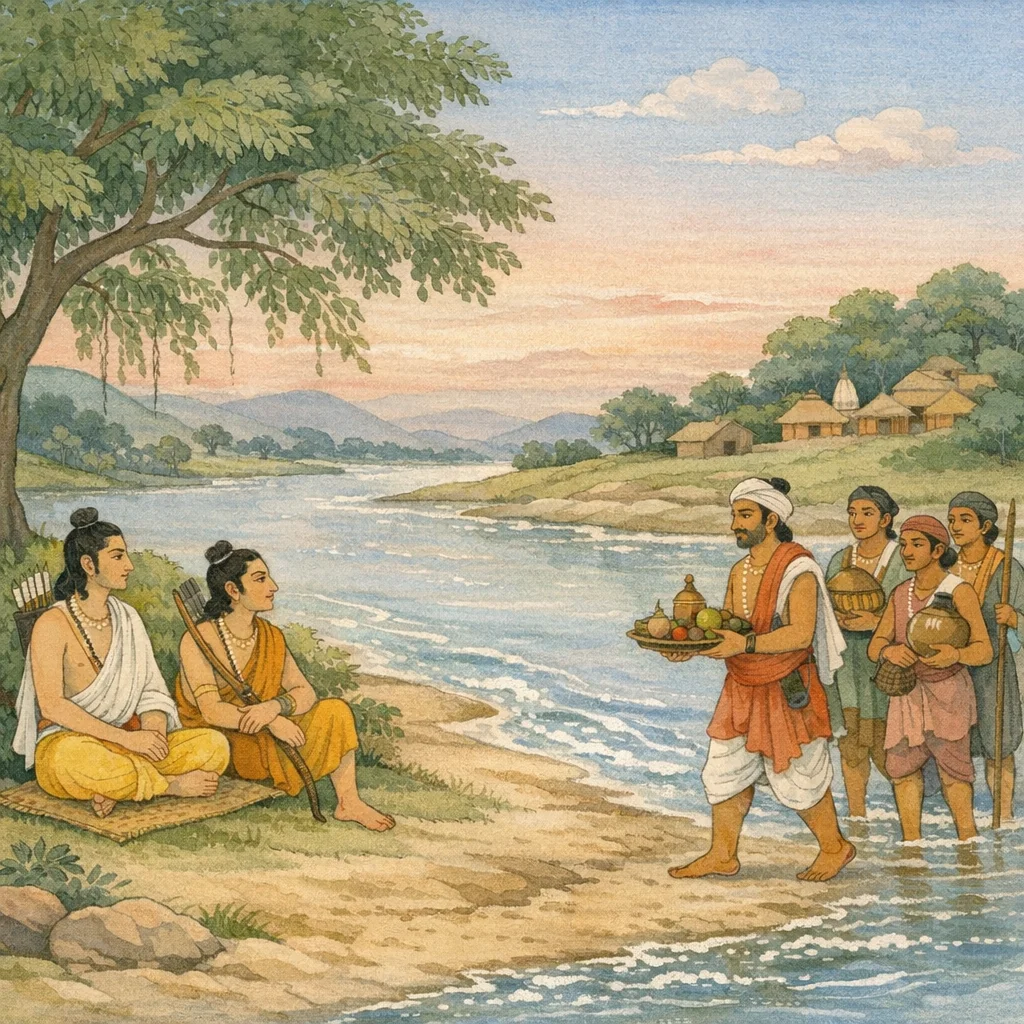
Sarga 50 moves from farewell discourse to topographical and ethical transition. Rāma, having crossed the prosperous Kosala region, turns toward Ayodhyā and offers a formal leave-taking to the city and its protecting deities, while the populace laments as he passes beyond sight. The narration then shifts to an ornate description of Kosala’s auspiciousness—its ritual markers (yūpa, caitya), agrarian abundance, fearless civic life, and the soundscape of Vedic recitation—framing good governance as a cultural ecology. Rāma next beholds the Gaṅgā, portrayed through layered similes (foam as smile, waters as braided hair) and cosmological genealogy (Viṣṇupāda-origin, Śiva’s jaṭā, Bhāgīratha’s tapas), emphasizing sanctity and liminality. Reaching Śṛṅgiberapura, Rāma decides to camp by an ingudī tree; Guha, Niṣāda king and intimate ally, arrives with hospitality and offers his realm. Rāma declines gifts consistent with ascetic discipline, requesting only fodder and water for Daśaratha’s horses. The night passes with Guha keeping vigilant watch, highlighting friendship, restraint, and protective duty at the threshold of the wilderness.
Shlokas
Verse 1
विशालान् कोसलान् रम्यान् यात्वा लक्ष्मणपूर्वजः।अयोध्याभिमुखो धीमान् प्राञ्जलिर्वाक्यमब्रवीत्।।2.50.1।।
Having passed through the vast and lovely land of Kosala, the wise elder brother of Lakṣmaṇa turned toward Ayodhyā; with folded hands he spoke these words.
Verse 2
आपृच्छे त्वां पुरीश्रेष्ठे काकुत्स्थपरिपालिते।दैवतानि च यानि त्वां पालयन्ति वसन्ति च।।2.50.2।।
I take leave of you, O Ayodhyā—the foremost of cities, protected by the Kakutstha line—and also of all the deities who dwell in you and keep watch over you.
Verse 3
निवृत्तवनवासस्त्वामनृणो जगतीपतेः।पुनर्द्रक्ष्यामि मात्रा च पित्रा च सह सङ्गतः।।2.50.3।।
When my forest-exile is completed, and when I have discharged my obligation to the lord of the world (my father), I shall see you again—reunited with my mother and father.
Verse 4
ततो रुधिरताम्राक्षो भुजमुद्यम्य दक्षिणम्।अश्रुपूर्णमुखो दीनोऽब्रवीज्जानपदं जनम्।।2.50.4।।
Then, dejected—his face filled with tears and his eyes copper-red—he raised his right arm and spoke to the countryfolk gathered there.
Verse 5
अनुक्रोशो दया चैव यथार्हं मयि वः कृतः।चिरं दुःखस्य पापीयो गम्यतामर्थसिद्धये।।2.50.5।।
You have shown me fitting compassion and kindness. To prolong grief too long is blameworthy; go now, so that your duties may be fulfilled.
Verse 6
तेऽभिवाद्य महात्मानं कृत्वा चापि प्रदक्षिणम्।विलपन्तो नरा घोरं व्यतिष्ठन्त क्वचित् क्वचित्।।2.50.6।।
Having saluted the great-souled one and circumambulated him, the men—lamenting bitterly—stood about here and there.
Verse 7
तथा विलपतां तेषामतृप्तानां च राघवः।अचक्षुर्विषयं प्रायाद्यथार्कः क्षणदामुखे।।2.50.7।।
While they still wept, unsated in their longing to see him longer, Rāghava moved on and passed beyond their sight—just as the sun disappears at the coming of night.
Verse 8
ततो धान्यधनोपेतान् दानशीलजनान् शिवान्।अकुतश्चिद्भयान् रम्यांश्चैत्ययूपसमावृतान्।।2.50.8।।उद्यानाम्रवनोपेतान् सम्पन्नसलिलाशयान्।तुष्टपुष्टजनाकीर्णान् गोकुलाकुलसेवितान्।।2.50.9।।लक्षणीयान्नरेन्द्राणां ब्रह्मघोषाभिनादितान्। रथेन पुरुषव्याघ्रः कोसलानत्यवर्तत।।2.50.10।।
Then the tiger among men crossed by chariot through the land of Kosala—prosperous with grain and wealth, inhabited by generous and auspicious people, free from fear on every side, charming with shrines and sacrificial posts, rich with gardens and mango-groves, well supplied with waters, crowded with contented and well-nourished folk, thronged with herds and cattle-villages, worthy to be seen by kings, and resonant with the recitation of the Veda.
Verse 9
ततो धान्यधनोपेतान् दानशीलजनान् शिवान्।अकुतश्चिद्भयान् रम्यांश्चैत्ययूपसमावृतान्।।2.50.8।।उद्यानाम्रवनोपेतान् सम्पन्नसलिलाशयान्।तुष्टपुष्टजनाकीर्णान् गोकुलाकुलसेवितान्।।2.50.9।।लक्षणीयान्नरेन्द्राणां ब्रह्मघोषाभिनादितान्। रथेन पुरुषव्याघ्रः कोसलानत्यवर्तत।।2.50.10।।
Then the tiger among men crossed by chariot through the land of Kosala—prosperous with grain and wealth, inhabited by generous and auspicious people, free from fear on every side, charming with shrines and sacrificial posts, rich with gardens and mango-groves, well supplied with waters, crowded with contented and well-nourished folk, thronged with herds and cattle-villages, worthy to be seen by kings, and resonant with the recitation of the Veda.
Verse 10
ततो धान्यधनोपेतान् दानशीलजनान् शिवान्।अकुतश्चिद्भयान् रम्यांश्चैत्ययूपसमावृतान्।।2.50.8।।उद्यानाम्रवनोपेतान् सम्पन्नसलिलाशयान्।तुष्टपुष्टजनाकीर्णान् गोकुलाकुलसेवितान्।।2.50.9।।लक्षणीयान्नरेन्द्राणां ब्रह्मघोषाभिनादितान्। रथेन पुरुषव्याघ्रः कोसलानत्यवर्तत।।2.50.10।।
Then the tiger among men crossed by chariot the land of Kosala—rich in grain and wealth; auspicious, inhabited by charitable people; charming and free from fear on any side; adorned with sacred shrines and sacrificial posts; filled with gardens and mango groves and well-watered reservoirs; crowded with content and well-nourished folk, frequented by herds of cattle; worthy to be seen by kings, and resounding with the sound of Vedic recitation.
Verse 11
मध्येनमुदितं स्फीतं रम्योद्यानसमाकुलम्।राज्यं भोग्यं नरेन्द्राणां ययौ धृतिमतां वरः।।2.50.11।।
The best of the steadfast journeyed through the heart of that kingdom—joyful and flourishing, filled with delightful gardens—fit to be enjoyed by kings.
Verse 12
तत स्त्रिपथगां दिव्यां शिवतोयामशैवलाम्।ददर्श राघवो गङ्गां पुण्यामृषिनिषेविताम्।।2.50.12।।
Then Rāghava beheld the holy Gaṅgā—divine, flowing through the three worlds, with auspicious waters free of moss, revered and frequented by sages.
Verse 13
आश्रमैरविदूरस्थैः श्रीमद्भिस्समलङ्कृताम्।कालेऽप्सरोभिर्हृष्टाभि स्सेविताम्भोह्रदां शिवाम्।।2.50.13।।
Auspicious Gaṅgā—adorned by splendid hermitages set not far from her banks—was at times visited by joyful apsarases, who sported in her clear water-lakes.
Verse 14
देवदानवगन्धर्वैः किन्नरैरुपशोभिताम्।नानागन्धर्वपत्नीभि स्सेवितां सततं शिवाम्।।2.50.14।।
That auspicious Gaṅgā shone, adorned by devas, dānavas, gandharvas, and kinnaras, and was continually frequented by the wives of many gandharvas.
Verse 15
देवाऽऽक्रीडशताकीर्णां देवोद्यानशतायुताम्।देवार्थमाकाशगमां विख्यातां देवपद्मिनीम्।।2.50.15।।
Filled with hundreds of divine playgrounds and joined to hundreds of heavenly gardens, flowing through the sky for the sake of the gods, she was famed as Devapadminī—the river of celestial lotuses.
Verse 16
जलाघाताट्टहासोग्रां फेननिर्मलहासिनीम्।क्वचिद्वेणीकृतजलां क्वचिदावर्तशोभिताम्।।2.50.16।।
Her crashing waters seemed like a fierce burst of laughter; her foam was a bright, smiling sheen. In some stretches her stream ran straight like a maiden’s braid, and in others she gleamed, adorned with whirlpools.
Verse 17
क्वचित् स्तिमितगम्भीरां क्वचिद्वेगजलाकुलाम्।क्वचिद्गम्भीरनिर्घोषां क्वचिद्भैरवनिस्वनाम्।।2.50.17।।
In some stretches she ran deep and still; in others she was churned by swift currents—here resounding with a grave, majestic rumble, and there roaring with a fearsome sound.
Verse 18
देवसङ्घाप्लुतजलां निर्मलोत्पलशोभिताम्।क्वचिदाभोगपुलिनां क्वचिन्निर्मलवालुकाम्।।2.50.18।।
Her waters were bathed in by hosts of celestials, and she shone with spotless blue lotuses; in places she had broad, sweeping sandbanks, and in places bright, clean sands.
Verse 19
हंससारससङ्घुष्टां चक्रवाकोपकूजिताम्।सदा मदैश्च विहगैरभिसन्नादितान्तराम्।।2.50.19।।
She was alive with the calls of swans and cranes, and with the cooing of cakravāka birds; again and again her stretches rang with the cries of birds stirred by ardor.
Verse 20
क्वचित्तीररुहैर्वृक्षैर्मालाभिरिवशोभिताम्।क्वचित्फुल्लोत्पलच्छन्नां क्वचित्पद्मवनाकुलाम्।।2.50.20।।
In some places, trees growing on her banks adorned her like garlands; in some places she was covered with blooming blue lotuses, and in others she was thick with groves of lotuses.
Verse 21
क्वचित्कुमुदषण्डैश्च कुड्मलैरुपशोभिताम्।नानापुष्परजोध्वस्तां समदामिव च क्वचित्।।2.50.21।।
In some places she was further adorned with clusters of kumuda lilies and half-open buds; elsewhere, dusted with pollen from many flowers, she seemed as though gently intoxicated.
Verse 22
व्यपेतमलसङ्घातां मणिनिर्मलदर्शनाम्।दिशागजैर्वनगजै र्मत्तैश्च वरवारणैः।।2.50.22।।देवोपवाह्यैश्च मुहुस्सन्नादितवनान्तराम्।
Freed from masses of impurity, she looked clear as a spotless jewel; and the forest depths along her banks repeatedly rang with the trumpeting of excellent, rut-maddened elephants—wild elephants and the mighty ‘quarter-elephants’, fit to bear the gods.
Verse 23
प्रमदामिव यत्नेन भूषितां भूषणोत्तमैः।।2.50.23।।फलैः पुष्पैः किसलयैर्वृतां गुल्मैर्द्विजैस्तथा।शिंशुमारैश्च नक्रैश्च भुजङ्गैश्च निषेविताम्।।2.50.24।।
She appeared like a noble lady, carefully adorned with the finest ornaments.
Verse 24
प्रमदामिव यत्नेन भूषितां भूषणोत्तमैः।।2.50.23।।फलैः पुष्पैः किसलयैर्वृतां गुल्मैर्द्विजैस्तथा।शिंशुमारैश्च नक्रैश्च भुजङ्गैश्च निषेविताम्।।2.50.24।।
Her banks were ringed with fruits, flowers, tender shoots, shrubs, and birds; and her waters were inhabited by śiṃśumāras, crocodiles, and serpents.
Verse 25
विष्णुपादच्युतां दिव्यामपापां पापनाशिनीम्।तां शङ्करजटाजूटाद्भ्रष्टां सागरतेजसा।।2.50.25।।समुद्रमहिषीं गङ्गां सारसक्रौञ्चनादिताम्।आससाद महाबाहुः शृङ्गिबेरपुरं प्रति।।2.50.26।।
Rāma, the mighty-armed, reached Śṛṅgiberapura, coming to that Gaṅgā—the ocean’s queen—echoing with the cries of cranes and krauñca birds: that divine, sinless river, destroyer of sins, said to have fallen from Viṣṇu’s feet and, by the splendor of Sagara’s line (Bhagīratha’s austerity), to have streamed down from Śaṅkara’s matted locks.
Verse 26
विष्णुपादच्युतां दिव्यामपापां पापनाशिनीम्।तां शङ्करजटाजूटाद्भ्रष्टां सागरतेजसा।।2.50.25।।समुद्रमहिषीं गङ्गां सारसक्रौञ्चनादिताम्।आससाद महाबाहुः शृङ्गिबेरपुरं प्रति।।2.50.26।।
Rāma, the mighty-armed, reached Śṛṅgiberapura, coming to that Gaṅgā—the ocean’s queen—echoing with the cries of cranes and krauñca birds: that divine, sinless river, destroyer of sins, said to have fallen from Viṣṇu’s feet and, by the splendor of Sagara’s line (Bhagīratha’s austerity), to have streamed down from Śaṅkara’s matted locks.
Verse 27
तामूर्मिकलिलावर्तामन्ववेक्ष्य महारथः।सुमन्त्रमब्रवीत्सूतमिहैवाद्य वसामहे।।2.50.27।।
Seeing the Gaṅgā, turbulent with waves and eddies, the great chariot-warrior Rāma said to the charioteer Sumantra, “We shall stay here tonight.”
Verse 28
अविदूरादयं नद्या बहुपुष्पप्रवालवान्।सुमहानिङ्गुदीवृक्षो वसामोऽत्रैव सारथे।।2.50.28।।
“O charioteer, not far from the river stands this very large iṅgudī tree, rich with many flowers and tender shoots; we shall stay right here.”
Verse 29
द्रक्ष्याम स्सरितां श्रेष्ठां सम्मान्यसलिलां शिवाम्।देवदानवगन्धर्वमृगमानुषपक्षिणाम्।।2.50.29।।
“We shall behold the most excellent of rivers—auspicious, with waters held in reverence by gods, dānavas, gandharvas, beasts, humans, and birds alike.”
Verse 30
लक्ष्मणश्च सुमन्त्रश्च बाढमित्येव राघवम्।उक्त्वा तमिङ्गुदीवृक्षं तदोपययतुर्हयैः।।2.50.30।।
Lakṣmaṇa and Sumantra replied to Rāghava, “So be it,” and then guided the horses toward that iṅgudī tree.
Verse 31
रामोऽभियाय तं रम्यं वृक्षमिक्ष्वाकुनन्दनः।रथादवातरत्तस्मात्सभार्य स्सहलक्ष्मणः।।2.50.31।।
Rāma, delight of the Ikṣvākus, reached that lovely tree and alighted from the chariot together with his wife and with Lakṣmaṇa.
Verse 32
सुमन्त्रोऽप्यवतीर्यास्मान्मोचयित्वा हयोत्तमान्।वृक्षमूलगतं राममुपतस्थे कृताञ्जलिः।।2.50.32।।
Sumantra too dismounted from the chariot, unyoked the excellent horses, and then stood near Rāma at the foot of the tree with folded palms.
Verse 33
तत्र राजा गुहो नाम रामस्यात्मसमस्सखा।निषादजात्यो बलवान् स्थपतिश्चेति विश्रुतः।।2.50.33।।
There lived a king named Guha—Rāma’s friend, as dear as his own self—born among the Niṣādas; powerful, and renowned as their chief.
Verse 34
स शृत्वा पुरुषव्याघ्रं रामं विषयमागतम्।वृद्धैः परिवृतोऽमात्यैः ज्ञातिभिश्चाभ्युपागतः।।2.50.34।।
Hearing that Rāma—the tiger among men—had come into his territory, Guha, surrounded by elder counselors, ministers, and kinsmen, went forth to welcome him.
Verse 35
ततो निषादाधिपतिं दृष्ट्वा दूरादुपस्थितम्।सह सौमित्रिणा राम स्समागच्छद्गुहेन सः।।2.50.35।।
Then Rama, together with Saumitrī (Lakshmana), saw from afar the lord of the Niṣādas approaching, and he went forward to meet Guha.
Verse 36
तमार्तस्सम्परिष्वज्य गुहो राघवमब्रवीत्।यथाऽयोध्या तथेयं ते राम किं करवाणि ते।।2.50.36।।ईदृशं हि महाबाहो कः प्राप्स्यत्यतिथिं प्रियम्।
Guha, anguished, embraced Rāghava and said: “O Rama, this place is for you as Ayodhyā itself. What shall I do for you? O mighty-armed one, who could ever obtain the fortune of receiving so dear a guest as you?”
Verse 37
ततो गुणवदन्नाद्यमुपादाय पृथग्विधम्।।2.50.37।।अर्घ्यं चोपानयत्क्षिप्रं वाक्यं चेदमुवाच ह।
Then, bringing various kinds of fine food, he quickly presented arghya (a respectful welcome-offering) and spoke these words.
Verse 38
स्वागतं ते महाबाहो तवेयमखिला मही।।2.50.38।।वयं प्रेष्या भवान्भर्ता साधु राज्यं प्रशाधि नः।
“Welcome to you, O mighty-armed one! This entire land is yours. We are your attendants; you are our lord. Rule this kingdom rightly for our good.”
Verse 39
भक्ष्यं भोज्यं च पेयं च लेह्यंचेदमुपस्थितम्।।2.50.39।।शयनानि च मुख्यानि वाजिनां खादनं च ते।
“Here are foods to bite, chew, drink, and lick, all made ready; fine beds as well—and fodder too for your horses.”
Verse 40
एवं ब्रुवाणं तु गुहं राघवः प्रत्युवाच ह।।2.50.40।।अर्चिताश्चैव हृष्टाश्च भवता सर्वथा वयम्।पद्भ्यामभिगमाच्चैव स्नेहसन्दर्शनेन च।।2.50.41।।
As Guha spoke thus, Rāghava replied: “In every way we have been honored and made glad by you—by your coming to meet us on foot, and by the affectionate regard you have shown.”
Verse 41
एवं ब्रुवाणं तु गुहं राघवः प्रत्युवाच ह।।2.50.40।।अर्चिताश्चैव हृष्टाश्च भवता सर्वथा वयम्।पद्भ्यामभिगमाच्चैव स्नेहसन्दर्शनेन च।।2.50.41।।
Pressing him tightly with his strong arms, Rama said: “Good fortune that I see you, O Guha, healthy along with your kinsmen. Is all well with your realm, your friends, and your wealth?”
Verse 42
भुजाभ्यां साधु पीनाभ्यां पीडयन्वाक्यमब्रवीत्।।दिष्ट्या त्वां गुह पश्यामि ह्यरोगं सह बान्धवैः।अपि ते कुशलं राष्ट्रे मित्रेषु च धनेषु च।।2.50.42।।
Pressing him tightly with his strong arms, Rama said: “Good fortune that I see you, O Guha, healthy along with your kinsmen. Is all well with your realm, your friends, and your wealth?”
Verse 43
यत्त्विदं भवता किञ्चित्प्रीत्या समुपकल्पितम्।सर्वं तदनुजानामि न हि वर्ते प्रतिग्रहे।।2.50.43।।
“Whatever you have arranged here out of affection—I release you from it entirely; for I am not in a position to accept gifts.”
Verse 44
कुशचीराजिनधरं फलमूलाशिनं च माम्।विद्धि प्रणिहितं धर्मे तापसं वनगोचरम्।।2.50.44।।
Know me as one established in dharma—living like an ascetic, roaming the forest, clad in kuśa-grass, bark-cloth, and antelope-skin, and sustaining myself on fruits and roots.
Verse 45
अश्वानां खादनेनाहमर्थी नान्येन केनचित्।एतावताऽत्र भवता भविष्यामि सुपूजितः।।2.50.45।।
I ask only for fodder for the horses—nothing else at all. If you do just this much here, I shall consider myself truly honored.
Verse 46
एते हि दयिता राज्ञः पितुर्दशरथस्य मे।एतैस्सुविहितैरश्वै भविष्याम्यहमर्चितः।।2.50.46।।
These horses are dear to my father, King Daśaratha. If these horses are well cared for, I shall feel duly honored.
Verse 47
अश्वानां प्रतिपानं च खादनं चैव सोऽन्वशात्।गुहस्तत्रैव पुरुषां स्त्वरितं दीयतामिति।।2.50.47।।
Then Guha issued orders right there to his men: “Quickly provide the horses with drink and fodder.”
Verse 48
ततश्चीरोत्तरासङ्गः सन्ध्यामन्वास्य पश्चिमाम्।जलमेवाददे भोज्यं लक्ष्मणेनाऽऽहृतं स्वयम्।।2.50.48।।
Then, wearing his bark-cloth upper garment, he performed the evening twilight rite; and as his refreshment he took only water, which Lakṣmaṇa himself had brought.
Verse 49
तस्य भूमौ शयानस्य पादौ प्रक्षाल्य लक्ष्मणः।सभार्यस्य ततोऽभ्येत्य तस्थौ वृक्षमुपाश्रितः।।2.50.49।।
When he lay upon the ground with his wife, Lakṣmaṇa washed his feet; then, returning, he stood taking shelter by a tree.
Verse 50
गुहोऽपि सह सूतेन सौमित्रिमनुभाषयन्।अन्वजाग्रत्ततो राममप्रमत्तो धनुर्धरः।।2.50.50।।
Guha too—bow in hand, vigilant—kept watch over Rama, conversing there with the charioteer and with Saumitrī (Lakṣmaṇa).
Verse 51
तथा शयानस्य ततोऽस्य धीमतो यशस्विनो दाशरथेर्महात्मनः।अदृष्टदुःखस्य सुखोचितस्य सा तदाव्यतीयाय चिरेण शर्वरी।।2.50.51।।
As that wise, illustrious, great-souled son of Daśaratha—accustomed to comfort and unacquainted with suffering—lay thus upon the ground, the night passed, seeming long.
Frequently Asked Questions
Rāma confronts the ethics of acceptance (pratigraha) during exile: although Guha offers extensive hospitality and even rulership, Rāma refuses material reception as incompatible with his ascetic vow, permitting only what is necessary for duty—fodder and water for Daśaratha’s horses.
The chapter teaches that dharma is contextual discipline: friendship and honor are affirmed through presence and service rather than consumption of wealth; legitimate hospitality is reframed as enabling another’s vow, not overriding it.
Key landmarks include Kosala’s ritually marked landscape (yūpa, caitya, Vedic recitation), the Gaṅgā as a cosmological tīrtha (Viṣṇu–Śiva–Bhāgīratha lineage), and Śṛṅgiberapura as a frontier polity where Guha’s Niṣāda kingship mediates passage from royal road to forest domain.