Sarga 3
यौवराज्याभिषेक-उपकल्पनम् (Preparations for Rama’s Installation as Yuvaraja)
अयोध्याकाण्ड
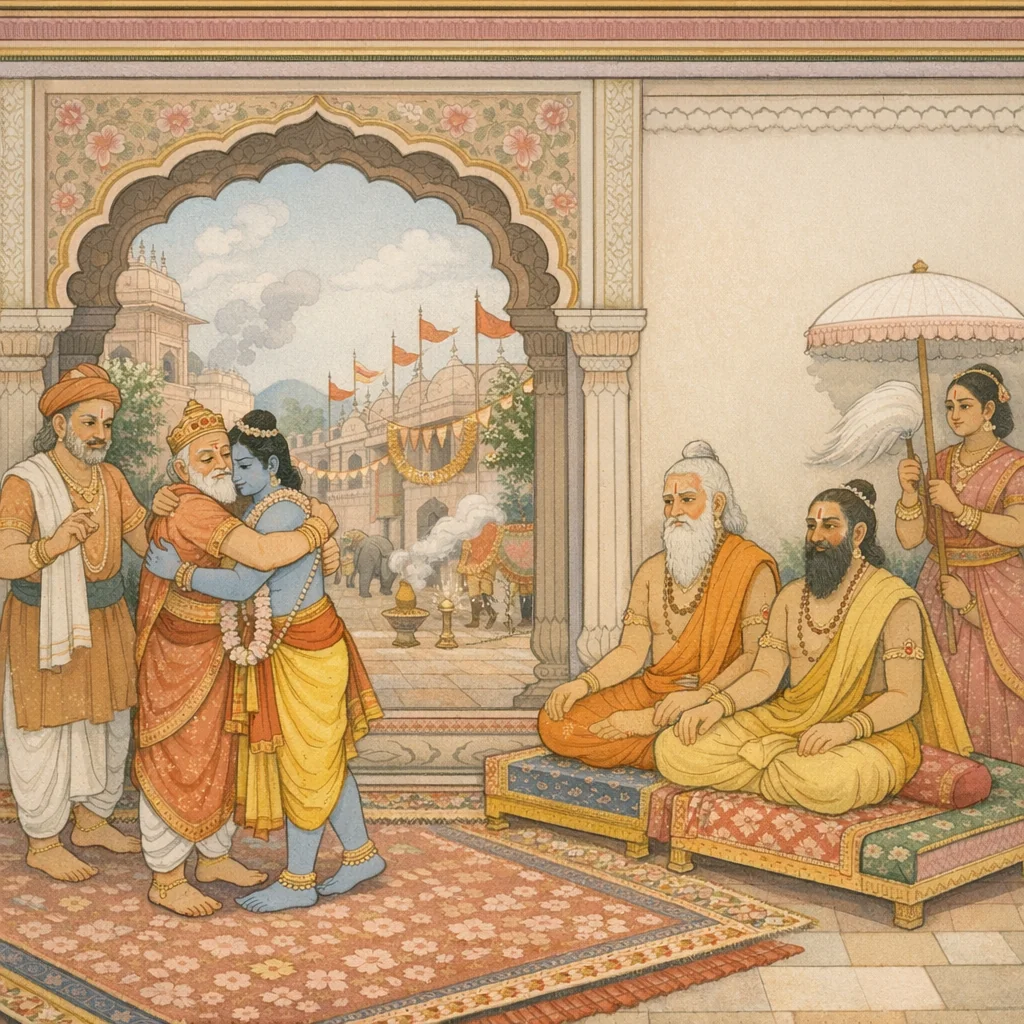
अस्मिन् सर्गे प्रजाजनाः अञ्जलिपद्म-प्रणामेन दशरथं यौवराज्याभिषेकाय प्रेरयन्ति; राजा प्रियहित-वचोभिः प्रत्यर्चयति (2.3.1–2.3.2)। ततः दशरथः वसिष्ठं वामदेवं च ब्राह्मण-समक्षं विधि-व्यवस्थापनाय नियोजयति, चैत्रमासस्य पुण्यत्वं निर्दिश्य ‘रामस्य यौवराज्याय सर्वमुपकल्प्यताम्’ इति राजाज्ञां घोषयति (2.3.4–2.3.6)। वसिष्ठः अमात्य-युक्तान् आदेशयति—अग्न्यागार-स्थाने सुवर्ण-रत्न-औषधि-शुक्लमाल्य-लाजा-मधु-घृत-वासांसि, रथ-आयुध-चतुरङ्गबल-शुभलक्षण-गज, चामर-ध्वज-छत्र, शातकुम्भ-कुम्भ-शत, हिरण्यशृङ्ग-ऋषभ, व्याघ्रचर्म इत्यादि समुपस्थापयितव्यानि (2.3.8–2.3.11)। नगर-द्वारालङ्कारः चन्दनस्रग्भिः, धूपैः; द्विजभोजन-दान-दक्षिणा-व्यवस्था; स्वस्तिवाचन-निमन्त्रण-आसन-कल्पना; राजमार्ग-सिञ्चन, पताका-बंधन, नाट्य-ताला-आवचर-गणिका-व्यवस्था; देवायतन-चैत्येषु पृथक्-उपस्थापनम्; योधानां सन्नद्ध-प्रवेशः—इति ‘राज्याभिषेक’स्य सार्वजनिक-धार्मिक-प्रशासनिक-समन्वयः प्रत्यक्षीकृतः (2.3.12–2.3.19)। क्रिया-समाप्तौ वसिष्ठ-वामदेवौ ‘कृतम्’ इति राज्ञे निवेदयतः (2.3.20–2.3.21)। ततः सुमन्त्रः रामम् आनयति; विविध-देशीय-भूमिपाः दशरथं देवा इव वासवं उपासते (2.3.22–2.3.26)। रामस्य आगमनं विस्तरेण रूप-गुण-वर्णनैः प्रदर्श्यते; दशरथः पुत्रं आलिङ्ग्य आसनं ददाति; ततः पुष्ययोगे यौवराज्य-प्राप्तिं वदन् राजोपदेशं ददाति—इन्द्रियनिग्रहः, कामक्रोध-त्यागः, अमात्य-प्रकृति-रञ्जनम्, कोष्ठागार-आयुधागार-सञ्चयः, मित्र-तोषः इत्यादि (2.3.27–2.3.45)। अन्ते राममित्राः कौसल्यां सूचयन्ति; सा दूतान् दानैः सत्करोति; रामः राजानं नमस्कृत्य स्वगृहं प्रतियाति; पौराः देवपूजां कुर्वन्ति (2.3.46–2.3.49)।
Shlokas
Verse 1
तेषामञ्जलिपद्मानि प्रगृहीतानि सर्वशः।प्रतिगृह्याब्रवीद्राजा तेभ्यः प्रियहितं वचः।।।।
Receiving their lotus-like folded palms held up in reverence, the king spoke to them words that were both pleasing and beneficial.
Verse 2
अहोऽस्मि परमप्रीतः प्रभावश्चातुलो मम।यन्मे ज्येष्ठं प्रियं पुत्रं यौवराज्यस्थमिच्छथ।।।।
I am supremely delighted; my splendour too is beyond compare—since you desire my beloved eldest son to be installed in the office of prince-regent.
Verse 3
इति प्रत्यर्च्य तान्राजा ब्राह्मणानिदमब्रवीत्।वसिष्ठं वामदेवं च तेषामेवोपशृण्वताम्।।।।
Thus, having duly honored those brāhmaṇas in return, the king spoke these words—addressing Vasiṣṭha and Vāmadeva while the others listened.
Verse 4
चैत्रश्श्रीमानयं मासः पुण्यः पुष्पितकाननः।यौवराज्याय रामस्य सर्वमेवोपकल्प्यताम्।।।।राज्ञस्तूपरते वाक्ये जनघोषो महानभूत्।
“This auspicious month of Caitra is sacred, with groves in full bloom. Let everything be prepared for Rāma’s consecration as heir-apparent.” When the king finished speaking, a great roar of acclaim rose from the people.
Verse 5
शनैस्तस्मिन्प्रशान्ते च जनघोषे जनाधिपः।।।।वसिष्ठं मुनिशार्दूलं राजा वचनमब्रवीत्।
When the uproar of the people had gradually subsided, the king—lord of his subjects—addressed Vasiṣṭha, the tiger among sages, with these words.
Verse 6
अभिषेकाय रामस्य यत्कर्म सपरिच्छदम्।।।।तदद्य भगवन् सर्वमाज्ञापयितु मर्हसि।
O revered one, please issue the orders today for everything—together with all required articles—needed to carry out Rama’s consecration (installation) ceremony.
Verse 7
तच्छ्रुत्वा भूमिपालस्य वसिष्ठो द्विजसत्तमः।।।।आदिदेशाग्रतो राज्ञ स्स्थितान्युक्तान् कृताञ्जलीन्।
Hearing the king’s words, Vasiṣṭha—the foremost among brahmins—issued instructions to the appointed officials who stood before the king with folded hands.
Verse 8
सुवर्णादीनि रत्नानि बलीन् सर्वौषधीरपि।।।।शुक्लमाल्यांश्च लाजांश्च पृथक्च मधुसर्पिषी।अहतानि च वासांसि रथं सर्वायुधान्यपि।।।।चतुरङ्गबलं चैव गजं च शुभलक्षणम्।चामरव्यजने श्वेते ध्वजं छत्रं च पाण्डुरम्।।।।शतं च शातकुम्भानां कुम्भानाग्निवर्चसाम्।हिरण्यशृङ्गमृषभं समग्रं व्याघ्रचर्म च।।।।उपस्थापयत प्रातरग्न्यगारं महीपतेः।
By tomorrow morning, assemble in the king’s fire-sanctuary: gold and other precious metals, gems, offerings and medicinal herbs; white garlands, parched grain, and honey and ghee kept separately; unused garments, a chariot, and weapons of every kind; the fourfold army and an auspicious-marked elephant; white yak-tail fans, a banner and a pale parasol; a hundred radiant golden vessels; a complete tiger-skin; and a bull with gold-plated horns.
Verse 9
सुवर्णादीनि रत्नानि बलीन् सर्वौषधीरपि।।2.3.8।। शुक्लमाल्यांश्च लाजांश्च पृथक्च मधुसर्पिषी। अहतानि च वासांसि रथं सर्वायुधान्यपि।।2.3.9।। चतुरङ्गबलं चैव गजं च शुभलक्षणम्। चामरव्यजने श्वेते ध्वजं छत्रं च पाण्डुरम्।।2.3.10।। शतं च शातकुम्भानां कुम्भानाग्निवर्चसाम्। हिरण्यशृङ्गमृषभं समग्रं व्याघ्रचर्म च।।2.3.11।। उपस्थापयत प्रातरग्न्यगारं महीपतेः।
By tomorrow morning, assemble in the king’s fire-sanctuary: gold and other precious metals, gems, offerings and medicinal herbs; white garlands, parched grain, and honey and ghee kept separately; unused garments, a chariot, and weapons of every kind; the fourfold army and an auspicious-marked elephant; white yak-tail fans, a banner and a pale parasol; a hundred radiant golden vessels; a complete tiger-skin; and a bull with gold-plated horns.
Verse 10
सुवर्णादीनि रत्नानि बलीन् सर्वौषधीरपि।।2.3.8।। शुक्लमाल्यांश्च लाजांश्च पृथक्च मधुसर्पिषी। अहतानि च वासांसि रथं सर्वायुधान्यपि।।2.3.9।। चतुरङ्गबलं चैव गजं च शुभलक्षणम्। चामरव्यजने श्वेते ध्वजं छत्रं च पाण्डुरम्।।2.3.10।। शतं च शातकुम्भानां कुम्भानाग्निवर्चसाम्। हिरण्यशृङ्गमृषभं समग्रं व्याघ्रचर्म च।।2.3.11।। उपस्थापयत प्रातरग्न्यगारं महीपतेः।
By early morning, assemble in the king’s fire-sanctuary: gold and other precious metals, gems, offerings and medicinal herbs; white garlands and roasted grains; honey and ghee kept separately; fresh garments, a chariot and all kinds of weapons; the fourfold army, an auspiciously marked elephant; white yak-tail fans, a banner and a pale parasol; a hundred shining golden vessels; a complete bull with gold-plated horns, and a tiger-skin.
Verse 11
सुवर्णादीनि रत्नानि बलीन् सर्वौषधीरपि।।2.3.8।।शुक्लमाल्यांश्च लाजांश्च पृथक्च मधुसर्पिषी।अहतानि च वासांसि रथं सर्वायुधान्यपि।।2.3.9।।चतुरङ्गबलं चैव गजं च शुभलक्षणम्।चामरव्यजने श्वेते ध्वजं छत्रं च पाण्डुरम्।।2.3.10।।शतं च शातकुम्भानां कुम्भानाग्निवर्चसाम्।हिरण्यशृङ्गमृषभं समग्रं व्याघ्रचर्म च।।2.3.11।।उपस्थापयत प्रातरग्न्यगारं महीपतेः।
By early morning, assemble in the king’s fire-sanctuary: gold and other precious metals, gems, offerings and medicinal herbs; white garlands and roasted grains; honey and ghee kept separately; fresh garments, a chariot and all kinds of weapons; the fourfold army, an auspiciously marked elephant; white yak-tail fans, a banner and a pale parasol; a hundred shining golden vessels; a complete bull with gold-plated horns, and a tiger-skin.
Verse 12
यच्चान्यत्किञ्चिदेष्टव्यं तत्सर्वमुपकल्प्यताम्।।।।अन्तःपुरस्य द्वाराणि सर्वस्य नगरस्य च।चन्दनस्रग्भिरर्च्यन्तां धूपैश्च घ्राणहारिभिः।।।।
Let everything else, however small, that is required be duly prepared. Let the gates of the inner palace and of the entire city be honored with sandal-garlands, and with incense that is sweet to the smell.
Verse 13
यच्चान्यत्किञ्चिदेष्टव्यं तत्सर्वमुपकल्प्यताम्।।2.3.12।।अन्तःपुरस्य द्वाराणि सर्वस्य नगरस्य च।चन्दनस्रग्भिरर्च्यन्तां धूपैश्च घ्राणहारिभिः।।2.3.13।।
Let everything else, however small, that is required be duly prepared. Let the gates of the inner palace and of the entire city be honored with sandal-garlands, and with incense that is sweet to the smell.
Verse 14
प्रशस्तमन्नं गुणवद्दधिक्षीरोपसेचनम्।द्विजानां शतसाहस्रे यत्प्रकाममलं भवेत्।।।।
Let excellent food be prepared—fine rice enriched with curd and milk—so that it suffices for a hundred thousand brahmins to eat to their heart’s content.
Verse 15
सत्कृत्य द्विजमुख्यानां श्वःप्रभाते प्रदीयताम्।घृतं दधि च लाजाश्च दक्षिणाश्चापि पुष्कलाः।।।।
Having duly honoured the foremost brahmins, let ghee, curd, roasted grains, and ample gifts be given to them tomorrow at dawn.
Verse 16
सूर्येऽभ्युदितमात्रे श्वो भविता स्वस्तिवाचनम्।ब्राह्मणाश्च निमन्त्र्यन्तां कल्प्यन्तामासनानि च।।।।
Tomorrow, as soon as the sun has just risen, let benedictory recitations be performed; and let brahmins be invited and seats arranged for them.
Verse 17
आबध्यन्तां पताकाश्च राजमार्गश्च सिंच्यताम्।सर्वे च तालावचरा गणिकाश्च स्वलङ्कृताः।।।।कक्ष्यां द्वितीयामासाद्य तिष्ठन्तु नृपवेश्मनः।
Let banners be fastened, and let the royal roads be sprinkled with water. Let all performers and courtesans, beautifully adorned, proceed to the second inner court of the king’s palace and remain stationed there.
Verse 18
देवायतनचैत्येषुसान्नभक्षा स्सदक्षिणाः।।।।उपस्थापयितव्या स्स्युर्माल्ययोग्याः पृथक्पृथक्।
At temples and sacred shrines, let attendants be stationed separately—provided with food and eatables, along with gifts—fit to present garlands (to worshippers and guests).
Verse 19
दीर्घासिबद्धा योधाश्च सन्नद्धा मृष्टवाससः।।।।महाराजाङ्गणं सर्वे प्रविशन्तु महोदयम्।
Let all the warriors—wearing fresh garments, fully equipped, with long swords fastened—enter the glorious courtyard of the great king.
Verse 20
एवं व्यादिश्य विप्रौ तौ क्रियास्तत्र सुनिष्ठितौ।।।।चक्रतुश्चैव यच्छेषं पार्थिवाय निवेद्य च।
Thus, the two disciplined brahmins, having issued instructions for the rites there, also carried out what remained to be done and reported it to the king.
Verse 21
कृतमित्येव चाब्रूतां अभिगम्य जगत्पतिम्।।।।यथोक्तवचनं प्रीतौ हर्षयुक्तौ द्विजर्षभौ।
Approaching the lord of the land, the two eminent brahmins—pleased and filled with joy—said, “It is done,” in accordance with his command.
Verse 22
ततस्सुमन्त्रं द्युतिमान्राजा वचनमब्रवीत्।रामः कृतात्मा भवता शीघ्रमानीयतामिति।।।।
Then the radiant king said to Sumantra: “Let the self-possessed Rāma be brought here at once by you.”
Verse 23
स तथेति प्रतिज्ञाय सुमन्त्रो राजशासनात्।।।।रामं तत्रानयाञ्चक्रे रथेन रथिनां वरम्।
Sumantra, the foremost of charioteers, assented with “So be it,” and, acting on the king’s command, brought Rāma there in a chariot.
Verse 24
अथ तत्र समासीना स्तदा दशरथं नृपम्।।।।प्राच्योदीच्याः प्रतीच्याश्च दाक्षिणात्याश्च भूमिपाः।म्लेच्छाश्चार्याश्च ये चान्ये वनशैलान्तवासिनः।।।।उपासाञ्चक्रिरे सर्वे तं देवा इव वासवम्।
Then, seated there, kings from the east and north, from the west and the south—both mleccha and ārya rulers, and others dwelling by forests and mountain frontiers—all paid homage to King Daśaratha, as the gods do to Indra.
Verse 25
अथ तत्र समासीना स्तदा दशरथं नृपम्।।2.3.24।।प्राच्योदीच्याः प्रतीच्याश्च दाक्षिणात्याश्च भूमिपाः।म्लेच्छाश्चार्याश्च ये चान्ये वनशैलान्तवासिनः।।2.3.25।।उपासाञ्चक्रिरे सर्वे तं देवा इव वासवम्।
In their midst, that royal sage—like Indra among the Maruts—standing in the palace, saw his son approaching, seated in the chariot.
Verse 26
तेषां मध्ये स राजर्षिर्मरुतामिव वासवः।।।।प्रासादस्थो रथगतं ददर्शायान्तमात्मजम्।
In their midst, that royal sage—like Indra among the Maruts—standing in the palace, saw his son approaching, seated in the chariot.
Verse 27
गन्धर्वराजप्रतिमं लोके विख्यातपौरुषम्।।।।दीर्घबाहुं महासत्त्वं मत्तमातङ्गगामिनम्।चन्द्रकान्ताननं राममतीव प्रियदर्शनम्।।।।रूपौदार्यगुणैः पुंसां दृष्टिचित्तापहारिणम्।घर्माभितप्ताः पर्जन्यं ह्लादयन्तमिव प्रजाः।।।।न ततर्प समायान्तं पश्यमानो नराधिपः।
Rāma looked like the very image of the king of Gandharvas, famed in the world for valor—long-armed, mighty, moving with the majestic gait of an intoxicated elephant, with a moonstone-like face and exceedingly pleasing to behold. By his beauty, nobility, and virtues he stole the eyes and hearts of men; like rain that delights people scorched by heat, he gladdened the populace. Watching him draw near, the king could not be sated.
Verse 28
गन्धर्वराजप्रतिमं लोके विख्यातपौरुषम्।।2.3.27।।दीर्घबाहुं महासत्त्वं मत्तमातङ्गगामिनम्।चन्द्रकान्ताननं राममतीव प्रियदर्शनम्।।2.3.28।।रूपौदार्यगुणैः पुंसां दृष्टिचित्तापहारिणम्।घर्माभितप्ताः पर्जन्यं ह्लादयन्तमिव प्रजाः।।2.3.29।।न ततर्प समायान्तं पश्यमानो नराधिपः।
Rāghava, best among men, ascended that palace lofty like the peak of Kailāsa, accompanied by the charioteer, in order to see the king.
Verse 29
गन्धर्वराजप्रतिमं लोके विख्यातपौरुषम्।।2.3.27।।दीर्घबाहुं महासत्त्वं मत्तमातङ्गगामिनम्।चन्द्रकान्ताननं राममतीव प्रियदर्शनम्।।2.3.28।।रूपौदार्यगुणैः पुंसां दृष्टिचित्तापहारिणम्।घर्माभितप्ताः पर्जन्यं ह्लादयन्तमिव प्रजाः।।2.3.29।।न ततर्प समायान्तं पश्यमानो नराधिपः।
Thus, having duly honored those brāhmaṇas in return, the king spoke these words—addressing Vasiṣṭha and Vāmadeva while the others listened.
Verse 30
अवतार्य सुमन्त्रस्तं राघवं स्यन्दनोत्तमात्।।।।पितुस्समीपं गच्छन्तं प्राञ्जलिः पृष्ठतोऽन्वगात्।
Having helped Rāghava (Rāma) alight from the splendid chariot, Sumantra followed behind with folded hands as Rāma went toward his father.
Verse 31
स तं कैलासशृङ्गाभं प्रासादं नरपुङ्गवः।।।।आरुरोह नृपं द्रष्टुं सह सूतेन राघवः।
Rāghava, best among men, ascended that palace lofty like the peak of Kailāsa, accompanied by the charioteer, in order to see the king.
Verse 32
स प्राञ्जलिरभिप्रेत्य प्रणतः पितुरन्तिके।।।।नाम स्वं श्रावयन्रामो ववन्दे चरणौ पितुः।
With palms joined, Rāma approached his father, bowed low at his side, uttered his own name in humility, and reverently touched his father’s feet.
Verse 33
तं दृष्ट्वा प्रणतं पार्श्वे कृताञ्जलिपुटं नृपः।।।।गृह्याञ्जलौ समाकृष्य सस्वजे प्रियमात्मजम्।
Seeing his beloved son standing nearby, bowed with palms joined, the king clasped his folded hands, drew him close, and embraced him.
Verse 34
तस्मै चाभ्युदितं दिव्यं मणिकाञ्चनभूषितम्।।।।दिदेश राजा रुचिरं रामाय परमासनम्।
Then the king directed that a splendid, elevated, divine seat—adorned with gems and gold—be set for Rāma.
Verse 35
तदासनवरं प्राप्य व्यदीपयत राघवः।।।।स्वयैव प्रभया मेरुमुदये विमलो रविः।
Seated upon that excellent seat, Rāghava shone forth—like the spotless morning sun illuminating Mount Meru with its own radiance.
Verse 36
तेन विभ्राजता तत्र सा सभाऽभिव्यरोचत।।।।विमलग्रहनक्षत्रा शारदी द्यौरिवेन्दुना।
As he shone there, the assembly gleamed—like the clear autumn sky, bright with planets and stars, dazzled by the moon.
Verse 37
तं पश्यमानो नृपतिस्तुतोष प्रियमात्मजम्।।।।अलङ्कृतमिवात्मानमादर्शतलसंस्थितम्।
Beholding his beloved son, the king felt deep delight—as though he were seeing his own adorned self reflected upon the surface of a mirror.
Verse 38
स तं सस्मितमाभाष्य पुत्रं पुत्रवतां वरः।।।।उवाचेदं वचो राजा देवेन्द्रमिव काश्यपः।
Smiling as he addressed his son, the king—best among fathers—spoke these words, like Kaśyapa speaking to Devendra.
Verse 39
ज्येष्ठायामसि मे पत्न्यां सदृश्यां सदृशस्सुतः।।।।उत्पन्नस्त्वं गुणश्रेष्ठो मम रामात्मजः प्रियः।
O Rāma, from my eldest wife—herself most worthy—you were born a worthy son, foremost in virtues, and dear to me as my own child.
Verse 40
यतस्त्वया प्रजाश्चेमा स्स्वगुणैरनुरञ्जिताः।।।।तस्मात्त्वं पुष्ययोगेन यौवराज्यमवाप्नुहि।
Since by your own virtues you have won the hearts of these subjects, therefore, when the Moon joins Puṣya, you shall assume the office of heir-apparent.
Verse 41
कामतस्त्वं प्रकृत्यैव विनीतो गुणवानसि।।।।गुणवत्यपि तु स्नेहात्पुत्र वक्ष्यामि ते हितम्।
Indeed, by your very nature you are courteous and endowed with virtues; yet, my son, even to one so virtuous I will speak what is beneficial to you—out of affection.
Verse 42
भूयो विनयमास्थाय भव नित्यं जितेन्द्रियः।।।।कामक्रोधसमुत्थानि त्यजेथा व्यसनानि च।
Cultivate humility still more, and always keep your senses conquered; renounce also the failings that arise from desire and anger.
Verse 43
परोक्षया वर्तमानो वृत्त्या प्रत्यक्षया तथा।।।।अमात्यप्रभृतीस्सर्वाःप्रकृतीश्चानुरञ्जय।
By your conduct—whether in their absence or in their presence—keep all groups content: ministers and the people alike.
Verse 44
कोष्ठागारायुधागारैःकृत्वा सन्निचयान्बहून्।।।।तुष्टानुरक्तप्रकृतिर्यः पालयति मेदिनीम्।तस्यनन्दन्ति मित्राणि लब्ध्वाऽमृतमिवामराः।।।।तस्मात्त्वमपि चात्मानं नियम्यैवं समाचर।
One who governs the earth after building ample reserves in granaries and armories, while keeping the subjects content and devoted—his allies rejoice, like the gods who have obtained nectar. Therefore you too, restraining yourself, act in this very way.
Verse 45
कोष्ठागारायुधागारैःकृत्वा सन्निचयान्बहून्।।2.3.44।।तुष्टानुरक्तप्रकृतिर्यः पालयति मेदिनीम्।तस्यनन्दन्ति मित्राणि लब्ध्वाऽमृतमिवामराः।।2.3.45।।तस्मात्त्वमपि चात्मानं नियम्यैवं समाचर।
One who governs the earth after building ample reserves in granaries and armories, while keeping the subjects content and devoted—his allies rejoice, like the gods who have obtained nectar. Therefore you too, restraining yourself, act in this very way.
Verse 46
तच्छ्रुत्वा सुहृदस्तस्य रामस्य प्रियकारिणः।।।।त्वरिताः शीघ्रमभ्येत्य कौसल्यायै न्यवेदयन्।
Hearing this, Rāma’s well-wishers—eager to bring joy—hurried at once to Kauśalyā and informed her.
Verse 47
सा हिरण्यं च गाश्चैव रत्नानि विविधानि च।।।।व्यादिदेश प्रियाख्येभ्यः कौसल्या प्रमदोत्तमा।
Kauśalyā, foremost among women, ordered that gold, cows, and various gems be given to the messengers who brought the pleasing news.
Verse 48
अथाऽभिवाद्य राजानं रथमारुह्य राघवः।।।।ययौ स्वं द्युतिमद्वेश्म जनौघैः प्रतिपूजितः।
Then Rāghava, having paid obeisance to the king, mounted his chariot and proceeded to his radiant residence, honored by crowds of people.
Verse 49
ते चापि पौरा नृपतेर्वचस्तच्छृत्वा तथा लाभमिवेष्टमाशु।नरेन्द्रमामन्त्र्य गृहाणि गत्वादेवान्समानर्चुरतिप्रहृष्टाः।।।।
The citizens too, hearing the king’s announcement, felt it like a cherished gain. Taking leave of the ruler, they quickly went to their homes and, filled with joy, worshipped the gods.
Frequently Asked Questions
The pivotal action is the state’s move from public petition to legally-ritually validated succession: Dasaratha converts civic enthusiasm into a dharmically regulated abhisheka plan, ensuring legitimacy through brahmin-led procedure, public order, and accountable provisioning.
Dasaratha’s upadesha frames rulership as disciplined stewardship: conquer the senses, abandon vices born of desire and anger, keep ministers and subjects satisfied by transparent conduct, maintain strategic reserves (granaries and arsenals), and thereby secure alliances and social stability.
Culturally salient sites include the agnyagara (royal sacred-fire space), devayatana and caitya (temples and shrines), the rajamarga (royal highway), and the antahpura gates—mapping how ritual, urban space, and governance are integrated in Ayodhya’s coronation ecology.