Sarga 25
कौशल्याया मङ्गलविधानम् — Kausalya’s Benedictions and Protective Rites for Rama
अयोध्याकाण्ड
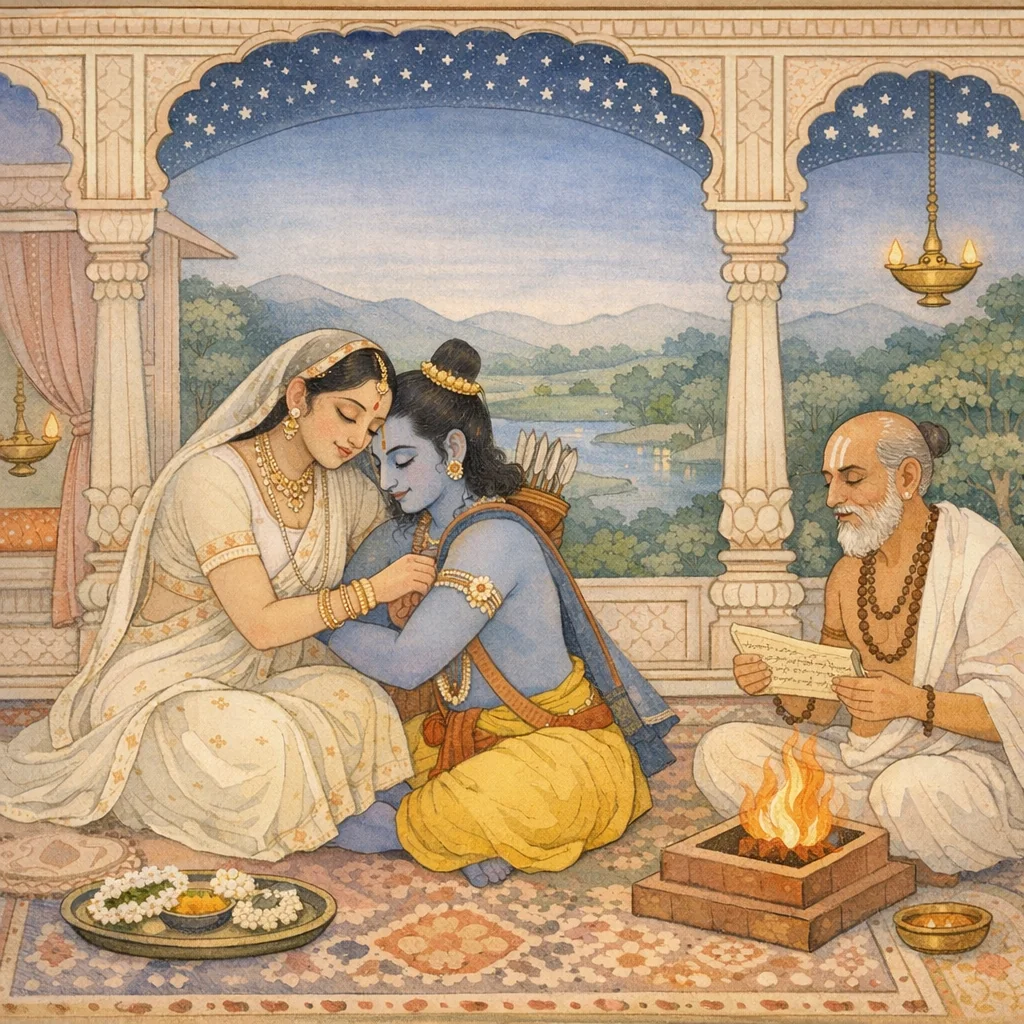
Sarga 25 presents a ritualized farewell in which Kauśalyā, subduing grief, performs ācamana and inaugurates maṅgala-kriyā for Rāma’s forest journey. She issues layered protective invocations: abstract guardians (Smṛti, Dhṛti, Dharma), deities (Skanda, Soma, Bṛhaspati, Varuṇa, Sūrya, Kubera, Yama), ṛṣis (Saptarṣi-s, Nārada), directional guardians, and cosmological supports (mountains, seas, rivers, stars, planets, day-night, dawn-dusk, seasons, months, years, muhūrta divisions). The chapter also enumerates forest dangers—Rākṣasa-s, Piśāca-s, flesh-eaters, insects, reptiles, and wild beasts—asking that none harm him. Kauśalyā worships the gods with garlands and fragrances, arranges sacred fire through a brāhmaṇa, offers oblations, procures white garlands and white mustard, and commissions svastyayana/benedictory recitations. She gives dakṣiṇā and pronounces exemplary maṅgala parallels (Indra’s Vṛtra-slaying, Garuḍa’s amṛta quest, Viṣṇu’s three strides). She applies sandal, places remnants of offerings on Rāma’s head, and ties the medicinal herb Viśalyakaraṇī as protective rakṣā. Despite inner distress, she speaks as if joyful, embraces him repeatedly, circumambulates him, and he departs to Sītā’s residence after clasping her feet.
Shlokas
Verse 1
साऽवनीय तमायासमुपस्पृश्य जलं शुचिः।चकार माता रामस्य मङ्गलानि मनस्विनी।।2.25.1।।
Then that high-minded mother—having restrained her anguish, purified herself by sipping water—performed auspicious rites for Rāma.
Verse 2
न शक्यसे वारयितुं गच्छेदानीं रघूत्तम।शीघ्रं च विनिवर्तस्व वर्तस्व च सतां क्रमे।।2.25.2।।
I am not able to dissuade you, O best of the Raghus, from setting out. Go now—but return swiftly, and conduct yourself in the path followed by the virtuous.
Verse 3
यं पालयसि धर्मं त्वं धृत्या च नियमेन च।स वै राघवशार्दूल धर्मस्त्वामभिरक्षतु।।2.25.3।।
The very dharma you uphold—with steadfast courage and disciplined restraint—O tiger among the Raghus, may that dharma itself protect you.
Verse 4
येभ्यः प्रणमसे पुत्र चैत्येष्वायतनेषु च।ते च त्वामभिरक्षन्तु वने सह महर्षिभिः।।2.25.4।।
O my son, may those divine powers to whom you bow in shrines and temples protect you in the forest—together with the great sages.
Verse 5
यानि दत्तानि तेऽस्त्राणि विश्वामित्रेण धीमता।तानि त्वामभिरक्षन्तु गुणैस्समुदितं सदा।।2.25.5।।
May the weapons bestowed on you by the wise Viśvāmitra—endowed with their potent mantric qualities—ever protect you.
Verse 6
पितृशुश्रूषया पुत्र मातृशुश्रूषया तथा।सत्येन च महाबाहो चिरं जीवाभिरक्षितः।।2.25.6।।
O son, O mighty-armed one—through service to your father, through service to your mother, and through truthfulness, you have been safeguarded; live long.
Verse 7
समित्कुश पवित्राणि वेद्यश्चायतनानि च।स्थण्डिलानि विचित्राणि शैला वृक्षाः क्षुपा ह्रदाः।।2.25.7।।पतङ्गाः पन्नगास्सिंहास्त्वां रक्षन्तु नरोत्तम।
O best of men, may sacrificial fuel, kuśa-grass sanctifiers, altars and shrines; may varied ritual grounds, mountains, trees, plants, and lakes; and may birds, serpents, and lions protect you.
Verse 8
स्वस्तिसाध्याश्च विश्वे च मरुतश्च महर्षयः।स्वस्ति धाता विधाता च स्वस्ति पूषा भगोऽर्यमा।।2.25.8।।लोकपालाश्च ते सर्वे वासवप्रमुखास्तथा।
May the Sādhyas, the Viśvedevas, the Maruts, and the great seers grant you well-being; may Dhātṛ and Vidhātṛ, and Pūṣan, Bhaga, and Aryaman grant you well-being; and may all the guardians of the worlds—led by Vāsava (Indra)—also bless you.
Verse 9
ऋतवश्चैव पक्षाश्च मासा स्संवत्सराः क्षपाः।।2.25.9।।दिनानि च मुहूर्ताश्च स्वस्ति कुर्वन्तु ते सदा।
May the seasons, fortnights, months, years, and nights—may days and even the muhūrtas—ever bring you auspiciousness.
Verse 10
स्मृतिर्धृतिश्च धर्मश्च पातु त्वां पुत्र सर्वतः।।2.25.10।।स्कन्दश्च भगवान्देव स्सोमश्च स बृहस्पतिः।सप्तर्षयो नारदश्च ते त्वां रक्षन्तु सर्वतः।।2.25.11।।
My son, may Memory (right recollection), Steadfastness, and Dharma guard you on every side.
Verse 11
स्मृतिर्धृतिश्च धर्मश्च पातु त्वां पुत्र सर्वतः।।2.25.10।।स्कन्दश्च भगवान्देव स्सोमश्च स बृहस्पतिः।सप्तर्षयो नारदश्च ते त्वां रक्षन्तु सर्वतः।।2.25.11।।
May the revered god Skanda, Soma, and Bṛhaspati—and the Seven Ṛṣis along with Nārada—protect you on every side.
Verse 12
याश्चापि सर्वतस्सिध्दा दिशश्च सदिगीश्वराः।स्तुता मया वने तस्मिन्पान्तु त्वां पुत्र नित्यशः।।2.25.12।।
And may the accomplished Siddhas, together with the Lords who guard the directions—those quarters I invoked there in that forest—protect you always, my son.
Verse 13
शैलास्सर्वे समुद्राश्च राजा वरुण एव च।द्यौरन्तरिक्षं पृथिवी नद्यस्सर्वास्तथैव च।।2.25.13।।नक्षत्राणि च सर्वाणि ग्रहाश्च सहदेवताः।अहोरात्रे तथा सन्ध्ये पान्तु त्वां वनमाश्रितम्।।2.25.14।।
May all the mountains and seas, and King Varuṇa; may heaven, the mid-space, the earth, and likewise all the rivers protect you.
Verse 14
शैलास्सर्वे समुद्राश्च राजा वरुण एव च।द्यौरन्तरिक्षं पृथिवी नद्यस्सर्वास्तथैव च।।2.25.13।।नक्षत्राणि च सर्वाणि ग्रहाश्च सहदेवताः।अहोरात्रे तथा सन्ध्ये पान्तु त्वां वनमाश्रितम्।।2.25.14।।
May all the constellations and planets, together with their presiding deities; and may day and night, and the twilights as well, protect you as you take refuge in the forest.
Verse 15
ऋतवश्चैव षट्पुण्या मासास्संवत्सरास्तथा।कलाश्च काष्ठाश्च तथा तव शर्म दिशन्तु ते।।2.25.15।।
May the six auspicious seasons, the months and the years, and even the minute measures of time—kalā and kāṣṭhā—grant you well-being.
Verse 16
महावने विचरतो मुनिवेषस्य धीमतः।तवादित्याश्च दैत्याश्च भवन्तु सुखदास्सदा।।2.25.16।।
As you wander in the great forest, clad like an ascetic and wise in mind, may both the Ādityas and the Daityas prove ever to be givers of peace to you.
Verse 17
राक्षसानां पिशाचानां रौद्राणां क्रूरकर्मणाम्।क्रव्यादानां च सर्वेषां मा भूत्पुत्रक ते भयम्।।2.25.17।।
My child, may no fear befall you from any of them—whether Rākṣasas, Piśācas, the dreadful and cruel-doing ones, or any flesh-eaters.
Verse 18
प्लवगा वृश्चिका दंशामशकाश्चैव कानने।सरीसृपाश्च कीटाश्च मा भूवन्गहने तव।।2.25.18।।
In that dense forest, may monkeys, scorpions, gnats, mosquitoes, reptiles, and insects not become a trouble to you.
Verse 19
महाद्विपाश्च सिंहाश्च व्याघ्रा ऋक्षाश्च दंष्ट्रिणः।महिषा श्शृङ्गिणो रौद्रा न ते द्रुह्यन्तु पुत्रक।।2.25.19।।
My child, may mighty elephants, lions with fearsome fangs, tigers, bears, and fierce horned buffaloes not do you any harm.
Verse 20
नृमांसभोजना रौद्रा ये चान्ये सत्वजातयः।मा च त्वां हिंसिषुः पुत्र मया संपूजितास्त्विह।।2.25.20।।
May the terrifying man-eaters—and all other fierce kinds of creatures—whom I have worshipped here, not harm you, my child.
Verse 21
आगमास्ते शिवास्सन्तु सिध्यन्तु च पराक्रमाः। सर्वसम्पत्तये राम स्वस्तिमान्गच्छ पुत्रक।।2.25.21।।
O Rama, my child—may your routes be auspicious; may your acts of valor find success. Go in safety, and attain well-being in every way.
Verse 22
स्वस्ति ते ऽस्त्वन्तरिक्षेभ्यः पार्थिवेभ्यः पुनः पुनः।सर्वेभ्यश्चैव देवेभ्यो ये च वै परिपन्थिनः।।2.25.22।।
May well-being be yours again and again—from the powers of the sky, from the earthly rulers, and from all the gods; and may those who would obstruct your way be rendered harmless.
Verse 23
गुरुस्सोमश्च सूर्यश्च धनदोऽथ यमस्तथा।पान्तु त्वामर्चिता राम दण्डकारण्यवासिनम्।।2.25.23।।
O Rama, as you dwell in the Daṇḍaka forest, may Guru (Bṛhaspati), Soma, Sūrya, Dhanada (Kubera), and Yama—propitiated by worship—protect you.
Verse 24
अग्निर्वायुस्तथा धूमो मन्त्राश्चर्षिमुखाच्च्युताः।उपस्पर्शनकाले तु पान्तु त्वां रघुनन्दन।।2.25.24।।
O joy of the Raghus, when you perform your purifying ablutions, may Agni, Vāyu, Dhūma, and the mantras uttered from the mouths of seers protect you.
Verse 25
सर्वलोकप्रभुर्ब्रह्मा भूतभर्ता तथर्षयः।ये च शेषास्सुरास्ते त्वां रक्षन्तु वनवासिनम्।।2.25.25।।
May Brahmā, the lord of all worlds; the supporter of beings; the seers; and all the remaining gods protect you as you dwell in the forest.
Verse 26
इति माल्यैस्सुरगणान्गन्धैश्चापि यशस्विनी।स्तुतिभिश्चानुरूपाभिरानर्चाऽयतलोचना।।2.25.26।।
Thus the illustrious, large-eyed lady worshipped the hosts of gods with garlands and fragrances, and with fitting hymns of praise.
Verse 27
ज्वलनं समुपादाय ब्राह्मणेन महात्मना।हावयामास विधिना राममङ्गलकारणात्।।2.25.27।।
Having duly arranged the sacred fire through a noble brahmin, she caused oblations to be offered according to rule, for the auspicious welfare of Rama.
Verse 28
घृतं श्वेतानि माल्यानि समिधश्श्वेतसर्षपान्।उपसम्पादयामास कौशल्या परमाङ्गना।।2.25.28।।
Noble Kausalya procured ghee, garlands of white flowers, sacred fuel-sticks, and white mustard seeds for the rite.
Verse 29
उपाध्याय स्सविधिना हुत्वा शान्तिमनामयम्।हुतहव्यावशेषेण बाह्यं बलिमकल्पयत्।।2.25.29।।
The officiating priest, following the proper rite, offered pacificatory oblations for well-being; and with what remained of the offerings, he arranged the external bali-rites.
Verse 30
मधु दध्यक्षतघृतैः स्वस्तिवाच्यद्विजांस्ततः।वाचयामास रामस्य वनेस्वस्त्ययनक्रियाः।।2.25.30।।
Then, with honey, curds, grains, and ghee, she had brahmins recite blessings; and she caused protective svastyayana rites to be chanted for Rāma for his life in the forest.
Verse 31
ततस्तस्मै द्विजेन्द्राय राममाता यशस्विनी।दक्षिणां प्रददौ काम्यां राघवं चेदमब्रवीत्।।2.25.31।।
Then the illustrious mother of Rāma gave the foremost brahmin the desired honorarium-gifts (dakṣiṇā), and she spoke these words to Rāghava.
Verse 32
यन्मङ्गलं सहस्राक्षे सर्वदेवनमस्कृते।वृत्रनाशे समभवत्तत्ते भवतु मङ्गलम्।।2.25.32।।
May the very auspicious blessing that came to the thousand-eyed Indra—honored by all the gods—when Vṛtra was slain, come upon you as well.
Verse 33
यन्मङ्गलं सुपर्णस्य विनताऽकल्पयत्पुरा।अमृतं प्रार्थयानस्य तत्ते भवतु मङ्गलम्।।2.25.33।।
May the same auspicious blessing that Vinatā once secured for Suparṇa (Garuḍa) when he sought the nectar of immortality be yours.
Verse 34
अमृतोत्पादने दैत्यान् घ्नतो वज्रधरस्य यत्।अदितिर्मङ्गलं प्रादात्तत्ते भवतु मङ्गलम्।।2.25.34।।
May the auspicious blessing that Aditi granted to Indra, the wielder of the thunderbolt, when he struck down the Daityas during the arising of nectar, be yours as well.
Verse 35
त्रीन्विक्रमान्प्रक्रमतो विष्णोरमिततेजसः।यदासीन्मङ्गलं राम तत्ते भवतु मङ्गलम्।।2.25.35।।
O Rāma, may the auspicious glory that belonged to the immeasurably radiant Viṣṇu when he strode forth in three mighty steps be yours.
Verse 36
ऋतवस्सागरा द्वीपा वेदा लोका दिशश्च ते।मङ्गलानि महाबाहो दिशन्तु शुभमङ्गलाः।।2.25.36।।
O mighty-armed one, may the seasons, oceans, islands, the Vedas, the worlds, and the quarters of space bestow auspicious blessings upon you.
Verse 37
इति पुत्रस्य शेषांश्च कृत्वा शिरसि भामिनी।गन्धैश्चापि समालभ्य राममायतलोचना।।2.25.37।।ओषधीं चापि सिद्धार्थां विशल्यकरणीं शुभाम्।चकार रक्षां कौशल्या मन्त्रैरभिजजाप च।।2.25.38।।
Having spoken thus, the fair lady placed upon her son’s head the remaining sacred substances, and anointed Rāma with fragrant unguents. Kauśalyā then fashioned a protective charm, tying on the auspicious herb Viśalyakaraṇī for success in his aims, while softly repeating protective mantras.
Verse 38
इति पुत्रस्य शेषांश्च कृत्वा शिरसि भामिनी।गन्धैश्चापि समालभ्य राममायतलोचना।।2.25.37।।ओषधीं चापि सिद्धार्थां विशल्यकरणीं शुभाम्।चकार रक्षां कौशल्या मन्त्रैरभिजजाप च।।2.25.38।।
Having spoken thus, the fair lady placed upon her son’s head the remaining sacred substances, and anointed Rāma with fragrant unguents. Kauśalyā then fashioned a protective charm, tying on the auspicious herb Viśalyakaraṇī for success in his aims, while softly repeating protective mantras.
Verse 39
उवाचातिप्रहृष्टेव सा दुःखवशवर्तिनी।वाङ्ग्मात्रेण न भावेन वाचाऽसंसज्जमानया।।2.25.39।।
Though mastered by grief, she spoke as if greatly delighted—only in words, not in heart—her voice faltering and unsteady.
Verse 40
आनम्य मूर्ध्नि चाघ्राय परिष्वज्य यशस्विनी।अवदत्पुत्र सिद्धार्थो गच्छ राम यथासुखम्।।2.25.40।।
The illustrious queen bent him down, smelled his forehead, and embraced him; then she said: “O son—O Rāma—go in peace, and return with your purpose fulfilled.”
Verse 41
अरोगं सर्वसिद्धार्थमयोध्यां पुनरागतम्।पश्यामि त्वां सुखं वत्स सुस्थितं राजवर्त्मनि।।2.25.41।।
O my dear child, may I see you return again to Ayodhyā—healthy, having achieved every purpose—happy and firmly established on the royal path.
Verse 42
प्रणष्टदुःखसङ्कल्पा हर्षविद्योतितानना।द्रक्ष्यामि त्वां वनात्प्राप्तं पूर्णचन्द्रमिवोदितम्।।2.25.42।।
When you come back from the forest, I shall behold you like the rising full moon—my sorrowful thoughts dispelled, my face shining with joy.
Verse 43
भद्रासनगतं राम वनवासादिहागतम्।द्रक्ष्यामि च पुनस्त्वां तु तीर्णवन्तं पितुर्वचः।।2.25.43।।
O Rāma, when you have crossed over—fulfilled—your father’s command and returned here from forest-dwelling, I shall see you again, seated upon the auspicious throne.
Verse 44
मङ्गलैरुपसपन्नो वनवासादिहागतः।वध्वा मम च नित्यं त्वं कामान्संवर्ध याहि भोः।।2.25.44।।
“O Rāma! When you return here from your forest-dwelling, adorned with auspicious signs, then go on fulfilling—always—both my wishes and those of your wife (my daughter-in-law).”
Verse 45
मयाऽर्चिता देवगणाश्शिवादयोमहर्षयो भूतमहासुरोरगाः।अभिप्रयातस्य वनं चिराय तेहितानि काङ्क्षन्तु दिशश्च राघव।।2.25.45।।
“O Rāghava! May the hosts of gods—Śiva and the rest—together with the great seers, the bhūtas, mighty asuras, serpents, and the very quarters (of space), whom I have worshipped, long seek and secure your welfare as you depart to dwell in the forest.”
Verse 46
इतीव साऽश्रुप्रतिपूर्णलोचनासमाप्य च स्वस्त्ययनं यथाविधि।प्रदक्षिणं चैव चकार राघवंपुनः पुनश्चापि निपीड्य सस्वजे।।2.25.46।।
Having spoken thus, she—her eyes brimming with tears—duly completed the benedictory rite; then she circumambulated Rāghava and, clasping him tightly, embraced him again and again.
Verse 47
तथा तु देव्या स कृतप्रदक्षिणो निपीड्य मातुश्चरणौ पुनः पुनः।जगाम सीतानिलयं महायशास्स राघवः प्रज्वलित स्स्वया श्रिया।।2.25.47।।
Thus, after circumambulating his mother Kausalyā and clasping her feet again and again, the illustrious Rāghava—radiant with his own innate splendour—went on to Sītā’s residence.
Frequently Asked Questions
The pivotal action is Kauśalyā’s acceptance of Rāma’s irreversible exile: she cannot dissuade him, so she transforms maternal grief into dharma-aligned support through vows of auspicious speech, ritual protection, and exhortation to follow the path of the virtuous.
The sarga teaches that dharma is both inner discipline and social-ritual order: Smṛti (moral memory), Dhṛti (steadfastness), and Dharma (right conduct) are invoked as guardians, implying that ethical stability is the primary protection amid uncertainty.
Culturally, the chapter highlights ācamana, homa/oblations, svastyayana recitations, dakṣiṇā, pradakṣiṇā, and protective rakṣā-tying with Viśalyakaraṇī; geographically, it frames Rāma’s movement from Ayodhyā toward forest life, explicitly anticipating residence in Daṇḍakāraṇya.