Sarga 24
कौशल्यारामसंवादः — Kausalya–Rama Dialogue on Exile-Dharma
अयोध्याकाण्ड
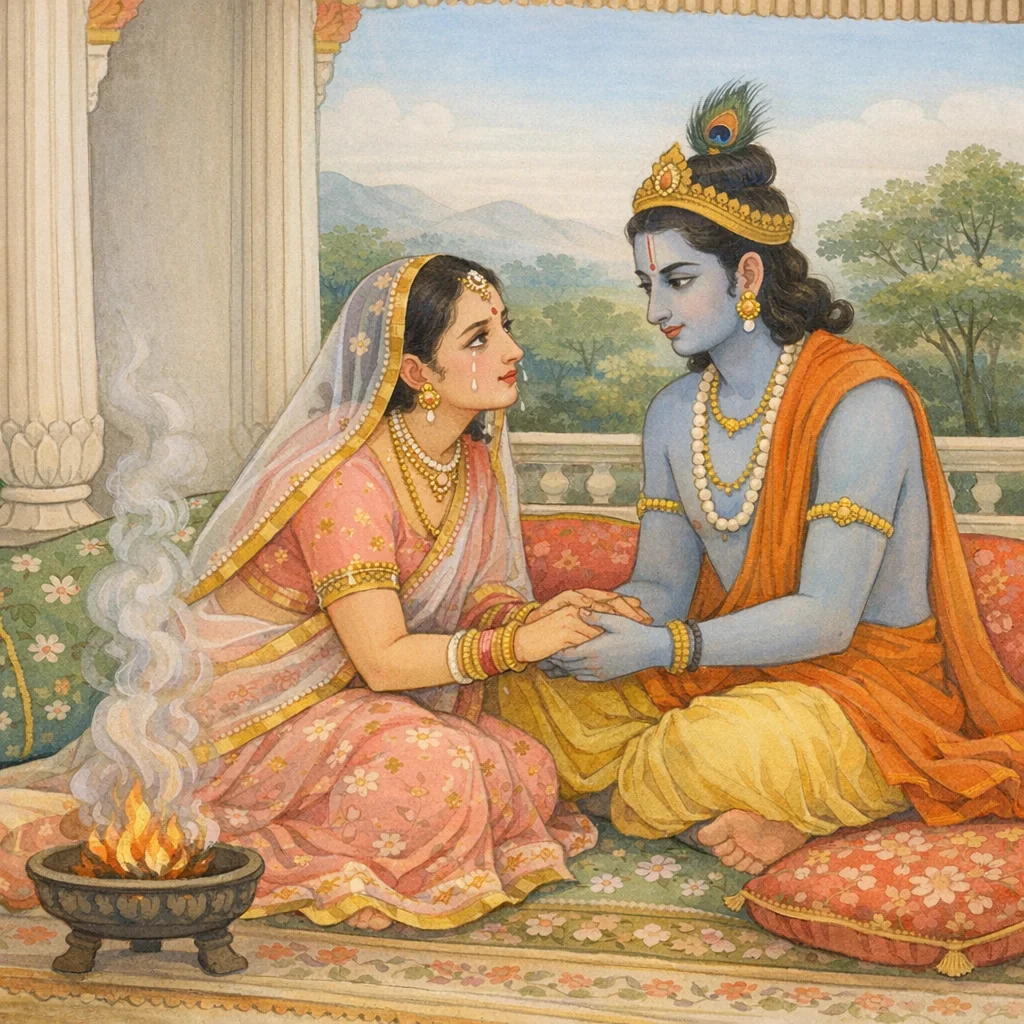
Sarga 24 presents an intimate dharma-discourse between Kauśalyā and Rāma after she perceives his unwavering resolve to fulfill Daśaratha’s command. Kauśalyā laments the implausibility of Rāma—accustomed to royal comfort—surviving on forest fare, and frames her grief through vivid fire imagery: separation kindles a ‘śokāgni’ fueled by lament, fanned by sighs, and offered oblations of tears. She insists on accompanying him, likening herself to a cow that must follow its calf, and later pleads to be taken like a ‘wild doe’ into the forest rather than remain among co-wives. Rāma responds with a structured ethical rationale: Kaikeyī has already deceived the king, and if Kauśalyā also abandons Daśaratha, the old monarch may not survive; for a wife, desertion of the husband is presented as morally censured. He instructs her to serve the king with composure, to prevent grief from destroying him, to honor household and ritual duties (including reverence to fire-rites and Brahmins), and to wait in disciplined hope for his return after fourteen years. Kauśalyā, unable to reverse his decision, grants consent, blesses him for safe return, and prepares to undertake protective wellbeing-rites for him, marking a transition from protest to ritualized support.
Shlokas
Verse 1
तं समीक्ष्य त्ववहितं पितुर्निर्देश पालने।कौशल्या बाष्पसंरुद्धा वचो धर्मिष्ठमब्रवीत्।।2.24.1।।
Seeing him firmly intent on carrying out his father’s command, Kauśalyā—her voice choked with tears—spoke words grounded in dharma.
Verse 2
अदृष्टदुःखो धर्मात्मा सर्वभूतप्रियंवदः।मयि जातो दशरथात्कथमुञ्छेन वर्तयेत्।।2.24.2।।
How will Rāma—righteous by nature, gentle-spoken to all beings, and never before acquainted with suffering—born to me through Daśaratha, sustain himself by gleaning scattered grains?
Verse 3
यस्य भृत्याश्च दासाश्च मृष्टान्यन्नानि भुञ्जते।कथं स भोक्ष्यतेऽनाथो वने मूलफलान्ययम्।।2.24.3।।
How will he—accustomed to servants and attendants enjoying exquisite foods—now live in the forest, eating only roots and fruits, bereft of support?
Verse 4
कः एतच्छ्रद्दधेच्छ्रुत्वा कस्य वा न भवेद्भयम्।गुणवान्दयितो राज्ञा राघवो यद्विवास्यते।।2.24.4।।
Who, on hearing this, could believe it—and who would not be shaken with fear—that Rāghava, virtuous and dearly loved, is being exiled by the king?
Verse 5
नूनं तु बलवान् लोके कृतान्तस्सर्वमादिशन्।लोके रामाभिरामस्त्वं वनं यत्र गमिष्यसि।।2.24.5।।
Surely destiny is powerful in the world, ordering everything—since even you, Rāma, the delight of the world, are being sent to the forest.
Verse 6
अयं तु मामात्मभव स्तवादर्शनमारुतः।विलापदुःखसमिधो रुदिताश्रुहुताहुतिः।।2.24.6।।चिन्ताबाष्पमहाधूमस्तवागमनचित्तजः। कर्शयित्वा भृशं पुत्र निश्वासायाससम्भवः।।2.24.7।।त्वया विहीनामिह मां शोकाग्निरतुलो महान्।प्रधक्ष्यति यथा कक्षं चित्रभानुर्हिमात्यये।।2.24.8।।
When you are gone, my son, an immense, incomparable fire of grief will rise within me—fanned by the wind of your absence, fed by lamentation and pain, with my tears as oblations and the thick smoke of anxious thoughts. Born of weary sighs, it will waste me away and burn me, as blazing fire burns dry grass in the heat of summer.
Verse 7
अयं तु मामात्मभव स्तवादर्शनमारुतः।विलापदुःखसमिधो रुदिताश्रुहुताहुतिः।।2.24.6।।चिन्ताबाष्पमहाधूमस्तवागमनचित्तजः। कर्शयित्वा भृशं पुत्र निश्वासायाससम्भवः।।2.24.7।।त्वया विहीनामिह मां शोकाग्निरतुलो महान्।प्रधक्ष्यति यथा कक्षं चित्रभानुर्हिमात्यये।।2.24.8।।
When you are gone, my son, an immense, incomparable fire of grief will rise within me—fanned by the wind of your absence, fed by lamentation and pain, with my tears as oblations and the thick smoke of anxious thoughts. Born of weary sighs, it will waste me away and burn me, as blazing fire burns dry grass in the heat of summer.
Verse 8
अयं तु मामात्मभव स्तवादर्शनमारुतः।विलापदुःखसमिधो रुदिताश्रुहुताहुतिः।।2.24.6।।चिन्ताबाष्पमहाधूमस्तवागमनचित्तजः। कर्शयित्वा भृशं पुत्र निश्वासायाससम्भवः।।2.24.7।।त्वया विहीनामिह मां शोकाग्निरतुलो महान्।प्रधक्ष्यति यथा कक्षं चित्रभानुर्हिमात्यये।।2.24.8।।
When you are gone, my son, an immense, incomparable fire of grief will rise within me—fanned by the wind of your absence, fed by lamentation and pain, with my tears as oblations and the thick smoke of anxious thoughts. Born of weary sighs, it will waste me away and burn me, as blazing fire burns dry grass in the heat of summer.
Verse 9
कथं हि धेनु स्स्वं वत्सं गच्छन्तं नानुगच्छति।अहं त्वाऽनुगमिष्यामि यत्र पुत्र गमिष्यसि।।2.24.9
How could a cow not follow her wandering calf? So too, my son, I will follow you wherever you go.
Verse 10
तथा निगदितं मात्रा तद्वाक्यं पुरुषर्षभः।श्रुत्वा रामोऽब्रवीद्वाक्यं मातरं भृशदुःखिताम्।।2.24.10।।
Hearing those words spoken by his mother, Rāma—best among men—replied to her, who was overwhelmed with grief.
Verse 11
कैकेय्या वञ्चितो राजा मयि चारण्यमाश्रिते।भवत्या च परित्यक्तो न नूनं वर्तयिष्यति।।2.24.11।।
The king has been deceived by Kaikeyī. When I have taken refuge in the forest, if he is abandoned by you as well, he surely will not survive.
Verse 12
भर्तुः किल परित्यागो नृशंसः केवलं स्त्रियाः।स भवत्या न कर्तव्यो मनसाऽपि विगर्हितः।।2.24.12।।
For a woman, abandoning her husband is indeed a cruel act; you must not do it—an act blameworthy even to entertain in the mind.
Verse 13
यावज्जीवति काकुत्स्थः पिता मे जगतीपतिः।शुश्रूषा क्रियतां तावत्सहि धर्मस्सनातनः।।2.24.13।।
So long as my father—the lord of the earth, the Kakutstha—lives, you must serve and attend upon him; for this is indeed the eternal dharma.
Verse 14
एवमुक्ता तु रामेण कौशल्या शुभदर्शना। तथेत्युवाच सुप्रीता राममक्लिष्टकारिणम्।।2.24.14।।
Thus addressed by Rāma, auspicious-looking Kauśalyā, greatly pleased, said to him—Rāma of unwearied action—“So be it.”
Verse 15
एवमुक्तस्तु वचनं रामो धर्मभृतां वरः।भूयस्तामब्रवीद्वाक्यं मातरं भृशदुःखिताम्।।2.24.15।।
Thus spoken to, Rāma—the foremost among upholders of dharma—again addressed his mother, who was steeped in sorrow.
Verse 16
मया चैव भवत्या च कर्तव्यं वचनं पितुः।राजा भर्ता गुरु श्श्रेष्ठस्सर्वेषामीश्वरः प्रभुः।।2.24.16।।
By me and by you as well, our father’s word must be carried out. He is king, protector-husband, teacher, the best among men—lord and master of us all.
Verse 17
इमानि तु महारण्ये विहृत्य नव पञ्च च।वर्षाणि परमप्रीतः स्थास्यामि वचने तव।।2.24.17।।
Roaming in the great forest for these fourteen years, I shall remain—most gladly—steadfast in obedience to your word.
Verse 18
एवमुक्ता प्रियं पुत्रं बाष्पपूर्णानना तदा।उवाच परमार्ता तु कौशल्या पुत्रवत्सला।।2.24.18।।
Thus spoken to by Rāma, Kauśalyā—tenderly devoted to her son—deeply anguished and with her face flooded with tears, addressed her beloved child.
Verse 19
आसां राम सपत्नीनां वस्तुं मध्ये न मे क्षमम्।नय मामपि काकुत्स्थ वनं वन्यां मृगीं यथा।।2.24.19।।यदि ते गमने बुद्धिः कृता पितुरपेक्षया।
O Rāma, I cannot bear to live in the midst of these co-wives. O scion of Kakutstha, if you have resolved to depart for the forest in obedience to your father’s wish, then take me too—to the forest—like a wild doe.
Verse 20
तां तथा रुदतीं रामो रुदन्वचनमब्रवीत्।।2.24.20।।जीवन्त्या हि स्त्रिया भर्ता दैवतं प्रभुरेव च
Seeing her weeping so, Rāma—himself in tears—spoke these words: “For a woman while she lives, her husband is her deity and her rightful lord as well.”
Verse 21
भवत्या मम चैवाद्य राजा प्रभवति प्रभुः।न ह्यनाथा वयं राज्ञा लोकनाथेन धीमता।।2.24.21।।
The king—mighty in authority—has the right to command both you and me. While that wise sovereign, the lord of the people, stands over us, we are surely not without a protector.
Verse 22
भरतश्चापि धर्मात्मा सर्वभूतप्रियंवदः।भवतीमनुवर्तेत स हि धर्मरतस्सदा।।2.24.22।।
And Bharata too is righteous and speaks kindly to all beings; devoted always to dharma, he will surely remain obedient to you.
Verse 23
यथा मयि तु निष्क्रान्ते पुत्रशोकेन पार्थिवः।श्रमं नावाप्नुयात्किञ्चिदप्रमत्ता तथा कुरु।।2.24.23।।
When I have departed, see to it—carefully—that the king does not, from grief for his son, fall into even the least exhaustion or strain.
Verse 24
दारुणश्चाप्ययं शोको यथैनं न विनाशयेत्।राज्ञो वृद्धस्य सततं हितं चर समाहिता।।2.24.24।।
This grief is indeed severe—act in such a way that it does not destroy him. With a steady mind, always do what is good for the aged king.
Verse 25
व्रतोपवासनिरता या नारी परमोत्तमा।भर्तारं नानुवर्तेत सा तु पापगतिर्भवेत्।।2.24.25।।
Even if a woman is most exemplary—devoted to vows and fasts—if she does not follow and stand by her husband, she would fall into an evil destiny.
Verse 26
भर्तु श्शुश्रूषया नारी लभते स्वर्गमुत्तमम्।अपि या निर्नमस्कारा निवृत्ता देवपूजनात्।।2.24.26।।
By devoted service to her husband, a woman attains the highest heaven—even if she offers no salutations and has abstained from worship of the gods.
Verse 27
शुश्रूषामेव कुर्वीत भर्तुः प्रियहिते रता।एष धर्मः पुरा दृष्टो लोके वेदे श्रुतः स्मृतः।।2.24.27।।
Let her render service alone, devoted to what is pleasing and beneficial to her husband. This is dharma—seen in the world from ancient times, heard of in the Veda, and affirmed in the Smṛtis.
Verse 28
अग्निकार्येषु च सदा सुमनोभिश्च देवताः।पूज्यास्ते मत्कृते देवि बाह्मणाश्चैव सुव्रताः।।2.24.28।।
And always, for my sake, O Lady, you should worship the deities in the fire-rites with flowers—and likewise honor the brāhmaṇas who are faithful to their vows.
Verse 29
एवं कालं प्रतीक्षस्व ममागमनकाङ्क्षिणी।नियता नियताहारा भर्तृशुश्रूषणे रता।।2.24.29।।
Wait out the time in this manner, longing for my return—self-restrained, moderate in food, and devoted to service to your husband.
Verse 30
प्राप्स्यसे परमं कामं मयि प्रत्यागते सति।यदि धर्मभृतां श्रेष्ठो धारयिष्यति जीवितम्।।2.24.30।।
When I return, you will attain your highest wish—if my father, the foremost among upholders of dharma, still sustains his life until then.
Verse 31
एवमुक्ता तु रामेण बाष्पपर्याकुलेक्षणा।कौशल्या पुत्रशोकार्ता रामं वचनमब्रवीत्।।2.24.31।।
Thus addressed by Rāma, Kauśalyā—her eyes clouded with tears, anguished by grief for her son—spoke these words to him.
Verse 32
गमने सुकृतां बुद्धिं न ते शक्नोमि पुत्रक।विनिवर्तयितुं वीर नूनं कालो दुरत्ययः।।2.24.32।।
My child, I cannot turn back your mind, so firmly resolved on departure, O brave one. Surely, time’s decree is hard to overcome.
Verse 33
गच्छ पुत्र त्वमेकाग्रो भद्रं तेऽस्तु सदा विभुः।पुनस्त्वयि निवृत्ते तु भविष्यामि गतव्यथा।।2.24.33।।
Go then, my son, with unwavering focus; may the Lord grant you safety always. Only when you return will I be free from my pain.
Verse 34
प्रत्यागते महाभागे कृतार्थे चरितव्रते।पितुरानृण्यतां प्राप्ते त्वयि लप्स्ये परं सुखम्।।2.24.34।।
O greatly fortunate one—when you return with your purpose fulfilled, your vow completed, and the debt to your father discharged—then I shall attain the highest happiness.
Verse 35
कृतान्तस्य गतिः पुत्र दुर्विभाव्या सदा भुवि।यस्त्वां सञ्चोदयति मे वच आच्छिद्य राघव।।2.24.35।।
My son—O Rāghava—ever inconceivable in this world is the course of Destiny, which urges you onward, cutting across my words.
Verse 36
गच्छेदानीं महाबाहो क्षेमेण पुनरागतः।नन्दयिष्यसि मां पुत्र साम्ना वाक्येन चारुणा।।2.24.36।।
Go now, mighty-armed one; and return safely. On your return, my son, gladden me again with gentle, sweet words.
Verse 37
अपीदानीं स कालस्स्याद्वनात्प्रत्यागतं पुनः।यत्त्वां पुत्रक पश्येयं जटावल्कलधारिणम्।।2.24.37।।
If only that time could be today itself—when you return again from the forest, my dear child—so that I might see you wearing matted hair and bark-cloth.
Verse 38
तथा हि रामं वनवासनिश्चितंसमीक्ष्य देवी परमेण चेतसा।उवाच रामं शुभलक्षणं वचोबभूव च स्वस्त्ययनाभिकाङ्क्षिणी।।2.24.38।।
Thus, seeing Rāma firmly resolved on dwelling in the forest, the queen spoke to him with a heart fully engaged; and she turned her mind toward arranging rites and blessings for his well-being.
Frequently Asked Questions
The central dilemma is whether maternal attachment and personal suffering should override obedience to Daśaratha’s command. Kauśalyā seeks to accompany Rāma, while Rāma argues that dharma requires both of them to uphold the king’s word and that Kauśalyā must not abandon Daśaratha in his vulnerable grief.
The dialogue frames dharma as role-based responsibility: Rāma embraces exile as principled compliance, and Kauśalyā is instructed to convert grief into disciplined service, ritual steadiness, and protective care for the aging king—presenting ethical endurance as a form of devotion.
The ‘mahāraṇya’ (great wilderness) functions as the symbolic landscape of ascetic trial, while cultural markers include agni-related rites (agnikārya), honoring Brahmins, and the imagery of jaṭā and valkala (matted hair and bark garments) that signify the forest-vow identity.