Sarga 20
अयोध्याकाण्डे विंशः सर्गः — Rama Enters Kauśalyā’s Antaḥpura; Ritual Preparations and the Shock of Exile
अयोध्याकाण्ड
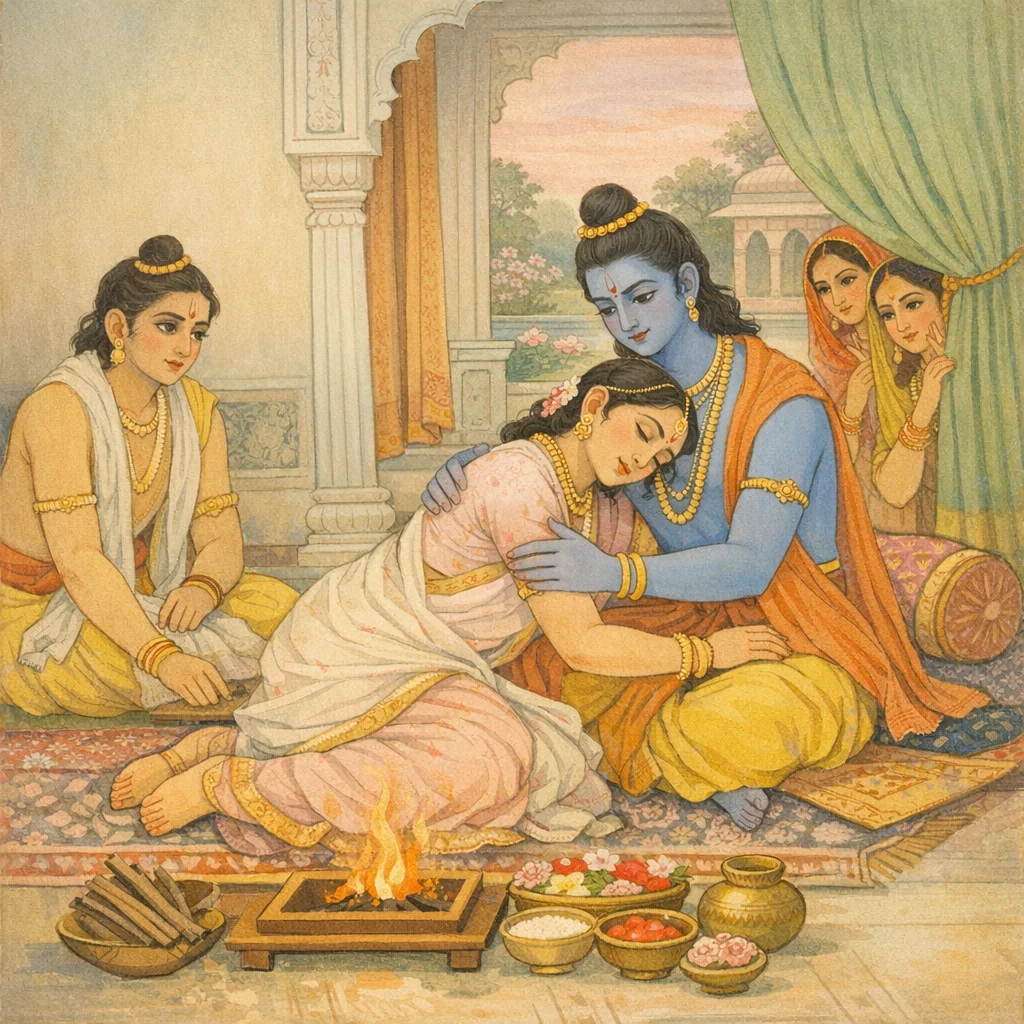
Sarga 20 stages a movement from public passage to private sanctuary. As Rāma departs with folded palms, distress rises in the antaḥpura and the queens cry out, blaming the king; Daśaratha, already consumed by grief, collapses inwardly upon hearing the wailing. Rāma, self-controlled yet burdened, proceeds with Lakṣmaṇa through successive courtyards: he is greeted with victory acclamations, observes learned aged Brahmins honored by the king, and passes vigilant door-guards (women, elders, and children). The women hurry to inform Kauśalyā of his arrival. Kauśalyā is portrayed in dawn ritual discipline—white silk, vows, fire-offerings, libations—seeking her son’s welfare; the scene inventories ritual materials (curd, akṣata, ghee, sweets, oblations, garlands, pāyasa, kṛsara, samidh, and full water-vessels), anchoring the domestic-sacral setting. Mother and son reunite with embrace and blessing, and Kauśalyā anticipates the imminent consecration. Rāma, with reverent modesty, announces the reversal: Bharata is to receive the yuvarājya, while Rāma is exiled to Daṇḍakāraṇya for fourteen years, living austerely on forest fare. The disclosure shatters Kauśalyā; she faints and laments at length—fearful of humiliation by co-wives, despairing of life without her son, and interpreting her austerities as futile—while Rāma lifts and comforts her, maintaining the sarga’s core tension between ritual hope and ethical catastrophe.
Shlokas
Verse 1
तस्मिंस्तु पुरुषव्याघ्रे निष्क्रामति कृताञ्जलौ।आर्तशब्दो महान् जज्ञे स्त्रीणामन्तःपुरे तदा।।।।
But as that tiger among men—Rāma—was leaving with palms joined in reverence, a great cry of distress arose among the women in the inner palace.
Verse 2
कृत्येष्वचोदितः पित्रा सर्वस्यान्तःपुरस्य च।गतिर्यश्शरणं चापि स रामोऽद्य प्रवत्स्यति।।।।
Though neither urged by his father nor bound by formal duty, Rāma had been the refuge and protection of the entire inner palace household—yet that very Rāma is now setting out into exile.
Verse 3
कौशल्यायां यथा युक्तो जनन्यां वर्तते सदा।तथैव वर्ततेऽस्मासु जन्मप्रभृति राघवः।।।।
“Just as Rāghava is ever devoted in his conduct toward his mother Kausalyā, so has he behaved toward all of us, from the very time of his birth.”
Verse 4
न क्रुध्यत्यभिशप्तोऽपि क्रोधनीयानि वर्जयन्।क्रुद्धान्प्रसादयन्सर्वान् स इतोऽद्य प्रवत्स्यति।।।।
“He who avoids deeds that provoke anger, who calms even the angry, and who does not grow wrathful even when cursed—he, Rāma, is departing from here into exile today.”
Verse 5
अबुद्धिर्बत नो राजा जीवलोकं चरत्ययम्।यो गतिं सर्वभूतानां परित्यजति राघवम्।।.।।
Alas—our king wanders on among the living, though bereft of judgment, for he is casting away Rāghava, the refuge of all beings.
Verse 6
इति सर्वा महिष्यस्ता विवत्सा इव धेनवः।पतिमाचुक्रुशुश्चैव सस्वरं चापि चुक्रुशुः।।।।
Thus all those chief queens—like cows bereft of their calves—cried out aloud, wailing and calling out against their husband.
Verse 7
स हि चान्तःपुरे घोरमार्तशब्दं महीपतिः।पुत्रशोकाभिसन्तप्तः श्रुत्वा व्यालीयताऽसने।।।।
For the king, scorched by grief for his son, heard the dreadful cries of distress from the inner chambers and sank down upon his seat.
Verse 8
रामस्तु भृशमायस्तो निश्श्वसन्निव कुञ्जरः।जगाम सहितो भ्रात्रा मातुरन्तःपुरं वशी।।।।
But Rama—deeply distressed, sighing like an elephant, yet self-mastered—went with his brother to his mother’s inner apartments.
Verse 9
सोऽपश्यत्पुरुषं तत्र वृद्धं परमपूजितम्।उपविष्टं गृहद्वारि तिष्ठतश्चापरान्बहून्।।।।
There he saw an aged man, greatly venerable, seated at the doorway of the residence, and many others standing nearby.
Verse 10
दृष्ट्वैव तु तदा रामं ते सर्वे सहसोत्थिताः।जयेन जयतां श्रेष्ठं वर्धयन्ति स्म राघवम्।।।।
Then, the moment they saw Rāma, all of them rose at once and acclaimed Rāghava—best among victors—with cries of ‘Victory!’
Verse 11
प्रविश्य प्रथमां कक्ष्यां द्वितीयायां ददर्श सः।ब्राह्मणान्वेदसम्पन्नान्वृद्धान्राज्ञाऽभिसत्कृतान्।।।।
After entering the first courtyard, he saw in the second aged brahmins, learned in the Vedas, whom the king had duly honored.
Verse 12
प्रणम्य रामस्तान्विप्रांस्तृतीयायां ददर्श सः।स्त्रियो वृद्धास्तथा बाला द्वाररक्षणतत्पराः।।।।
Having bowed to those brahmins, Rāma then saw, in the third courtyard, women—both elderly and young—intent on guarding the doorway.
Verse 13
वर्धयित्वा प्रहृष्टास्ताः प्रविश्य च गृहं स्त्रियः।न्यवेदयन्त त्वरिता राममातुः प्रियं तदा।।।।
Those women, delighted, offered blessings for his prosperity; then, hurrying into the chambers, they informed Rāma’s mother of the pleasing news.
Verse 14
कौशल्यापि तदा देवी रात्रिं स्थित्वा समाहिता।प्रभाते त्वकरोत्पूजां विष्णोः पुत्रहितैषिणी।।।।
Kauśalyā too, the queen, having spent the night composed in mind, performed worship of Viṣṇu at dawn, seeking her son’s welfare.
Verse 15
सा क्षौमवसना हृष्टा नित्यं व्रतपरायणा।अग्निं जुहोति स्म तदा मन्त्रवत्कृतमङ्गला।।।।
Clad in fine linen and joyful, ever devoted to vows, she then offered oblations into the fire according to mantra, having completed the auspicious rites.
Verse 16
प्रविश्य च तदा रामो मातुरन्त:पुरं शुभम्।ददर्श मातरं तत्र हावयन्तीं हुताशनम्।।।।
Then Rāma entered his mother’s auspicious inner apartments and saw her there, directing the offering of oblations into Hutāśana (Agni).
Verse 17
देवकार्यनिमित्तं च तत्रापश्यत्समुद्यतम्।दध्यक्षतं घृतं चैव मोदकान्हविषस्तथा।।।।लाजान्माल्यानि शुक्लानि पायसं कृसरं तथा।समिध: पूर्णकुम्भांश्च ददर्श रघुनन्दनः।।।।
There Rāma saw the preparations laid out for religious rites: curd and akṣata (auspicious grains), clarified butter, sweetmeats, oblations, parched grain, white garlands, rice-porridge and kṛsara (rice mixed with sesame), along with sacrificial kindling and water-filled vessels.
Verse 18
देवकार्यनिमित्तं च तत्रापश्यत्समुद्यतम्।दध्यक्षतं घृतं चैव मोदकान्हविषस्तथा।।2.20.17।।लाजान्माल्यानि शुक्लानि पायसं कृसरं तथा।समिध: पूर्णकुम्भांश्च ददर्श रघुनन्दनः।।2.20.18।।
This verse repeats the description of the ritual preparations: Rāma sees the full set of auspicious offerings and implements kept ready for divine rites—food-offerings, oblations, garlands, kindling, and water-filled jars.
Verse 19
तां शुक्लक्षौमसंवीतां व्रतयोगेन कर्शिताम्।तर्पयन्तीं ददर्शाद्भिर्देवतां देववर्णिनीम्।।।।
He saw her—Kauśalyā—clad in white silk, grown thin through the discipline of vows, radiant with a divine-like complexion, offering water-libations in propitiation to the deities.
Verse 20
सा चिरस्यात्मजं दृष्ट्वा मातृनन्दनमागतम्।अभिचक्राम संहृष्टा किशोरं बडबा यथा।।।।
After a long time, seeing her own son arrive—the joy of a mother—she hurried toward him in delight, like a mare rushing to her young foal.
Verse 21
स मातरमभिक्रान्तामुपसंगृह्य राघवः।परिष्वक्तश्च बाहुभ्यामुपाघ्रातश्च मूर्धनि।।।।
Rāghava respectfully received his mother as she came toward him; she embraced him with both arms and kissed him upon the head.
Verse 22
तमुवाच दुराधर्षं राघवं सुतमात्मनः।कौशल्या पुत्रवात्सल्यादिदं प्रियहितं वचः।।।।
Then Kauśalyā, out of deep motherly love, spoke to her own son Rāghava—invincible—words that were both pleasing and meant for his good.
Verse 23
वृद्धानां धर्मशीलानां राजर्षीणां महात्मनाम्।प्राप्नुह्यायुश्च कीर्तिं च धर्मं चोपहितं कुले।।।।
May you attain long life and fame like the aged, virtuous, great royal sages—and may you uphold the righteousness long established in your lineage.
Verse 24
सत्यप्रतिज्ञं पितरं राजानं पश्य राघव।अद्यैव हि त्वां धर्मात्मा यौवराज्येऽभिषेक्ष्यति।।।।
O Rāghava, look upon your father the king—true to his pledge; the righteous one will consecrate you today itself as prince-regent.
Verse 25
दत्तमासनमालभ्य भोजनेन निमन्त्रितः।मातरं राघवः किञ्चिद्व्रीडात्प्रसार्याञ्जलिमब्रवीत्।।।।
Invited by his mother to partake of food, Rāghava merely touched the seat that was offered; then, with a slight bashfulness, he stretched forth his folded hands and spoke to her.
Verse 26
स स्वभावविनीतश्च गौरवाच्च तदा नतः।प्रस्थितो दण्डकारण्यमाप्रष्टुमुपचक्रमे।।।।
Rama—modest by nature and bowing then out of reverence—began to ask (his mother) for leave, as he was about to depart for the Daṇḍaka forest.
Verse 27
देवि नूनं न जानीषे महद्भयमुपस्थितम्।इदं तव च दुःखाय वैदेह्या लक्ष्मणस्य च।।।।
“Mother, surely you do not yet know: a great calamity has come—one that will bring sorrow to you, to Vaidehī (Sītā), and to Lakṣmaṇa as well.”
Verse 28
गमिष्ये दण्डकारण्यं किमनेनासनेन मे।विष्टरासनयोग्यो हि कालोऽयं मामुपस्थितः।।।।
“I shall go to the Daṇḍaka forest. What use is this seat to me now? For a time has come upon me when I am fit only for a kuśa-grass mat.”
Verse 29
चतुर्दश हि वर्षाणि वत्स्यामि विजने वने।मधुमूलफलैर्जीवन्हित्वा मुनिवदामिषम्।।।।
“For fourteen years I shall dwell in the lonely forest, living on honey, roots, and fruits, and giving up meat—like a sage.”
Verse 30
भरताय महाराजो यौवराज्यं प्रयच्छति।मां पुनर्दण्डकारण्ये विवासयति तापसम्।।।।
“The great king is granting the office of heir-apparent to Bharata, and sending me away again to the Daṇḍaka forest—to live as an ascetic.”
Verse 31
स षट्चाष्टौ च वर्षाणि वत्स्यामि विजने वने।आसेवमानो वन्यानि फलमूलैश्च वर्तयन्।।।।
“Thus for fourteen years I shall dwell in the desolate forest, sustaining myself on forest fare—fruits and roots—partaking only of what the wilderness provides.”
Verse 32
सा निकृत्तेव सालस्य यष्टिः परशुना वने।पपात सहसा देवी देवतेव दिवश्च्युता।।।।
Then that noble lady (Kausalyā) suddenly fell—like a sāla-branch cut in the forest by an axe, like a goddess dropped from heaven.
Verse 33
तामदुःखोचितां दृष्ट्वा पतितां कदलीमिव।रामस्तूत्थापयामास मातरं गतचेतसम्।।।।
Seeing his mother—one who deserved no such sorrow—fallen like a plantain tree and bereft of consciousness, Rama lifted her up.
Verse 34
उपावृत्त्योत्थितां दीनां बडबामिव वाहिताम्।पांसुकुण्ठितसर्वाङ्गीं विममर्श च पाणिना।।।।
As she rose after rolling on the ground—wretched, like a mare strained by pulling a burden—her whole body dulled with dust, Rama gently wiped and soothed her with his hand.
Verse 35
सा राघवमुपासीनमसुखार्ता सुखोचिता।उवाच पुरुषव्याघ्रमुपशृण्वति लक्ष्मणे।।।।
Kausalyā—fit for happiness yet crushed by distress—spoke to Rāma, the best of men, as he sat near her, while Lakṣmaṇa listened.
Verse 36
यदि पुत्र न जायेथा मम शोकाय राघव।न स्म दुःखमतो भूयः पश्येयमहमप्रजाः।।।।
“O son, O Rāghava—if you had not been born to me for this sorrow, then even as a woman without children I would not have had to see grief greater than this.”
Verse 37
एक एव हि वन्ध्याया श्शोको भवति मानसः।अप्रजाऽस्मीति सन्तापो न ह्यन्यः पुत्र विद्यते।।।।
“For a barren woman, my son, there is only one sorrow in the mind—the burning pain of thinking, ‘I have no child’; beyond that, no other grief compares.”
Verse 38
न दृष्टपूर्वं कल्याणं सुखं वा पतिपौरुषे।अपि पुत्रे ऽपि पश्येयमिति रामाऽस्थितं मया।।।।
“O Rāma, I never earlier saw good fortune or happiness when my husband held power; I sustained myself only with the hope that I might see it when my son came to authority.”
Verse 39
सा बहून्यमनोज्ञानि वाक्यानि हृदयच्छिदाम्।अहं श्रोष्ये सपत्नीनामवराणां वरा सती।।।।
“Though I am the senior queen, I will have to hear many unpleasant, heart-cutting words from my co-wives who are younger than I.”
Verse 40
अतो दुःखतरं किं नु प्रमदानां भविष्यति।मम शोको विलापश्च यादृशोऽयमनन्तकः।।।।
“What greater suffering can there be for women than this—such unending grief and lamentation as mine?”
Verse 41
त्वयि सन्निहितेऽप्येवमहमासं निराकृता।किं पुनः प्रोषिते तात ध्रुवं मरणमेव मे।।।।
“Even when you are present, dear child, I have been treated as cast aside; what then when you are far away in exile? For me, death will surely follow.”
Verse 42
अत्यन्तनिगृहीतास्मि भर्तुर्नित्यमतन्त्रिता।परिवारेण कैकेय्या स्समा वाप्यथवाऽवरा।।।।
“I am utterly restrained and always without independence under my husband; I am treated as equal to—or even lower than—the attendants of Kaikeyī.”
Verse 43
योऽहि मां सेवते कश्चिदथवाप्यनुवर्तते।कैकेय्याः पुत्रमन्वीक्ष्य स्वश्चि जनो नाभिभाषते।।।।
“Whoever serves me or even follows my side—after seeing Kaikeyī’s son, even my own people do not speak to me.”
Verse 44
नित्यक्रोधतया तस्याः कथं नु खरवादितत्।कैकेय्या वदनं द्रष्टुं पुत्र शक्ष्यामि दुर्गता।।।।
Wretched as I am, my son—how shall I be able to look upon Kaikeyī’s face, she who is ever angry and harsh of speech?
Verse 45
दश सप्त च वर्षाणि जातस्य तव राघवअतितानि प्रकाङ्क्षन्त्या मया दुःखपरिक्षयम्।।।।
O Rāghava, seventeen years have passed since your ‘birth’ (your coming of age), and all that time I have lived longing for the end of my sorrow.
Verse 46
तदक्षयं महद्दुःखं नोत्सहे सहितुं चिरम्।विप्रकारं सपत्नीनामेवं जीर्णाऽपि राघव।।।।
Therefore, O Rāghava, aged as I am, I cannot endure for long this vast, unending grief—nor the humiliations inflicted by co-wives.
Verse 47
अपश्यन्ती तव मुखं परिपूर्णशशिप्रभम्।कृपणा वर्तयिष्यामि कथं कृपणजीविकाम्।।।।
Without beholding your face, radiant as the full moon, how shall I—wretched—go on living this miserable life?
Verse 48
उपवासैश्च योगैश्च बहुभिश्च परिश्रमैः।दुःखं संवर्धितो मोघं त्वं हि दुर्गतया मया।।।।
With fasts, with disciplines of yoga, and with many hardships, I raised you with difficulty—yet now, alas, it seems all has come to nothing, for I am utterly unfortunate.
Verse 49
स्थिरं तु हृदयं मन्ये ममेदं यन्न दीर्यते।प्रावृषीव महानद्या स्पृष्टं कूलं नवाम्भसा।।।।
I think my heart must be hard indeed, since it does not break—like the bank of a great river in the rainy season, struck by fresh floodwaters yet not crumbling.
Verse 50
ममैव नूनं मरणं न विद्यतेन चावकाऽशोस्ति यमक्षयेऽमम।यदन्तकोऽद्यैव न मां जिहीर्षति।प्रसह्य सिंहो रुदतीं मृगीमिव।।।।
Surely death does not come to me, nor is there any place for me in Yama’s realm—since Death does not seize me even now, forcibly, as a lion carries off a crying doe.
Verse 51
स्थिरं हि नूनं हृदयं ममायसंन भिद्यते यद्भुवि नावदीर्यते।अनेन दुःखेन च देहमर्पितंध्रुवं ह्यकाले मरणं न विद्यते।।।।
Surely my heart is firm—made of iron—for it neither shatters nor breaks upon the earth. And this body, surrendered to such grief, will not meet an untimely death; that is certain.
Verse 52
इदं हि दुःखं यदनर्थकानि मेव्रतानि दानानि च संयमाश्च हि।तपश्च तप्तं यदपत्यकारणात्सुनिष्फलं बीजमिवोप्तमूषरे।।।।
This is my grief: my vows, my gifts, and my self-restraint have become meaningless. Even the austerities I practised for the sake of gaining a child have proved fruitless—like seed sown in barren soil.
Verse 53
यदि ह्यकाले मरणं स्वयेच्छयालभेत कश्चिद्गुरुदुःखकर्शितः।गताहमद्यैव परेतसंसदंविना त्वया धेनुरिवात्मजेन वै।।।।
If someone, crushed by unbearable grief, could obtain an untimely death by sheer choice, then I would have gone this very day to the assembly of the departed (Yama’s court); for without you I am like a cow without her calf.
Verse 54
अथापि किं जीवितमद्य मे वृथात्वया विना चन्द्रनिभाननप्रभ।अनुव्रजिष्यामि वनं त्वयैव गौस्सुदुर्बला वत्समिवानुकाङ्क्षया।।।।
Even so, what use is my life today—empty without you, O one whose face shines like the full moon? I will follow you to the forest, like a weakened cow yearning for her calf with longing affection.
Verse 55
भृशमसुखममर्षिता तदाबहु विललाप समीक्ष्य राघवम्।व्यसनमुपनिशम्य सा महत्सुतमिव बद्धमवेक्ष्य किन्नरी।।।।
Then she—overwhelmed by intense misery and burning indignation—lamented at length on seeing Rāghava; having heard of the great calamity, she looked on him like a kinnarī gazing upon her grown son held captive.
Frequently Asked Questions
Rāma must disclose and accept an exile decree that overturns the expected coronation: Bharata receives the yuvarājya while Rāma goes to Daṇḍakāraṇya for fourteen years, choosing obedience and truth-alignment over personal entitlement and maternal comfort.
The sarga juxtaposes ritual aspiration with ethical shock to show that dharma is tested not in ceremony but in reversal; restraint, truthful speech, and compassionate care become the practical expression of righteousness when social order turns unstable.
Culturally, the antaḥpura and its three courtyards map palace space alongside Vedic ritual culture (homa, vrata, pūjā with prescribed materials). Geographically, Daṇḍakāraṇya is introduced as the ascetic forest destination that reorients the narrative from courtly Ayodhyā to wilderness discipline.