Sarga 16
सुमन्त्रदर्शनम् तथा रामस्य राजदर्शनाय प्रस्थानम् (Sumantra Meets Rama; Rama Departs to See the King)
अयोध्याकाण्ड
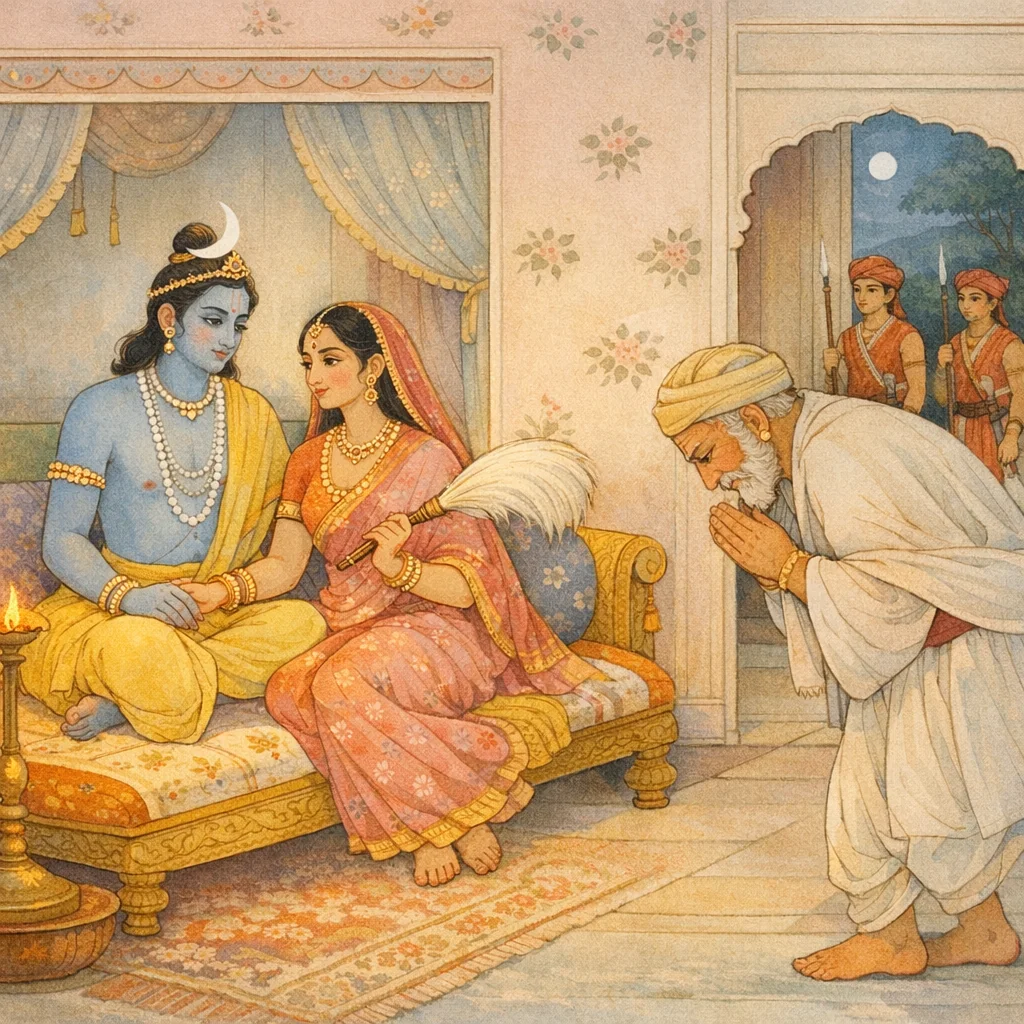
अस्मिन् सर्गे सुमन्त्रः जनाकुलम् अन्तःपुरद्वारं समतीत्य प्रविविक्तां कक्ष्याम् उपयाति, यत्र युवभिः शस्त्रधरैः (प्रास-कार्मुकैः) अप्रमादिभिः रक्षितः अन्तःपुर-परिसरः वर्णितः। द्वारि स्थितान् काषायिणो वृद्धान् स्त्र्यध्यक्षान् दृष्ट्वा सुमन्त्रः विनीततया स्वागमनं निवेदयति; ते रामं शीघ्रं सूचयन्ति। ततः सुमन्त्रः रामं पश्यति—सौवर्ण-पर्यङ्के उपविष्टं, परार्ध्य-चन्दनेन अनुलिप्तं, वैश्रवण-सङ्काशं, सीतया वाळव्यजनहस्तया पार्श्वे स्थितया शोभितं ‘चित्रया शशिनम्’ इव। सुमन्त्रः विनयेन वन्दनां कृत्वा दाशरथस्य संदेशं निवेदयति—कैकेय्या सह राजा रामं द्रष्टुमिच्छति, मा चिरम्। रामः प्रसन्नः अभिषेक-सम्बद्धं मन्त्रणं संभावयन् सीतां प्रति कथयति; सीता मङ्गलाशंसनैः दिशः देवताभिः रक्षणं प्रार्थयति तथा दीक्षाव्रत-लक्षणान् (अजिन, कुरङ्गशृङ्ग) सूचयति। अनन्तरं रामः सुमन्त्रेण सह निष्क्रामति, लक्ष्मणं द्वारि प्रह्वाञ्जलिपुटं दृष्ट्वा सह प्रस्थितः। रथ-प्रस्थानं नगर-उत्सववत् चित्रितम्—वादित्र-स्तुति-शब्दाः, जनौघ-हलहलाशब्दः, पुष्पवर्षणं, नागरिकानां प्रशंसावाक्यानि, अश्व-नाग-रथ-संकुलः महापथः, रथस्य मेघनाद-समो घोषः, मणि-हेम-विभूषा च। सर्गः राज्याभिषेक-आशा-उत्साहस्य सार्वजनिक-प्रतिध्वनिं तथा रामस्य शील-प्रभावं स्थापयति।
Shlokas
Verse 1
तदन्तःपुरद्वारं समतीत्य जनाकुलम्।प्रविविक्तां ततः कक्ष्यामाससाद पुराणवित्।।।।प्रासकार्मुकबिभ्रद्भिर्युवभिर्मृष्टकुण्डलैः।अप्रमादिभिरेकाग्रै स्स्वनुरक्तैरधिष्ठिताम्।।।।
Sumantra, skilled in ancient custom, passed beyond the people-crowded door of the inner apartments and reached a quieter courtyard. It was guarded by devoted young men—alert and focused—bearing spears and bows, their earrings gleaming brightly.
Verse 2
तदन्तःपुरद्वारं समतीत्य जनाकुलम्।प्रविविक्तां ततः कक्ष्यामाससाद पुराणवित्।।2.16.1।।प्रासकार्मुकबिभ्रद्भिर्युवभिर्मृष्टकुण्डलैः।अप्रमादिभिरेकाग्रै स्स्वनुरक्तैरधिष्ठिताम्।।2.16.2।।
It was guarded by young men wearing gleaming earrings—alert and single-minded, devoted to their own lord—bearing spears and bows.
Verse 3
तत्र काषायिणो वृद्धान् वेत्रपाणीन् स्वलङ्कृतान्।ददर्श विष्ठितान् द्वारि स्त्र्यध्यक्षान्सुसमाहितान्।।।।
There he saw elderly wardens of the women’s quarters stationed at the doorway—clad in ochre, well-adorned, staffs in hand, and standing with unwavering attentiveness.
Verse 4
ते समीक्ष्य समायान्तं रामप्रियचिकीर्षवः।सहसोत्पतितास्सर्वे स्वासनेभ्यस्ससम्भ्रमाः।।।।
Seeing Sumantra arrive, all those who wished Rama’s welfare sprang up at once from their seats in eager haste.
Verse 5
तानुवाच विनीतात्मा सूतपुत्रः प्रदक्षिणः।क्षिप्रमाख्यात रामाय सुमंन्त्रो द्वारि तिष्ठति।।।।
The humble, highly courteous charioteer’s son said to them, “Quickly inform Rama: Sumantra is waiting at the doorway.”
Verse 6
ते राममुपसङ्गम्य भर्तुः प्रियचिकीर्षवः।सहभार्याय रामाय क्षिप्रमेवाभिचक्षिरे।।।।
Wishing to do what would please their lord, they approached Rama—who was with his wife—and quickly informed him.
Verse 7
प्रतिवेदितमाज्ञाय सूतमभ्यन्तरं पितुः।तत्रैवानाययामास राघवप्रियकाम्यया।।।।
Learning from their report that the charioteer—his father’s trusted intimate—had come, Raghava (Rama), wishing to honor him, had him brought in to that very place.
Verse 8
तं वैश्रवणसङ्काशमुपविष्टं स्वलङ्कृतम्।ददर्श सूतः पर्य्यङ्के सौवर्णे सोत्तरच्छदे।।।।वराहरुधिराभेण शुचिना च सुगन्धिना।अनुलिप्तं परार्ध्येन चन्दनेन परन्तपम्।।।।स्थितया पार्श्वतश्चापि वालव्यजनहस्तया।उपेतं सीतयाभूयश्चित्रया शशिनं यथा।।।।
Sumantra saw Rama, radiant like Vaiśravaṇa (Kubera), seated and splendidly adorned upon a golden couch with a fine coverlet. The foe-subduer was anointed with exquisite, pure, fragrant sandalpaste of a deep reddish hue. And with Sita standing beside him, holding a yak-tail fan, he looked like the moon accompanied by the star Citrā.
Verse 9
तं वैश्रवणसङ्काशमुपविष्टं स्वलङ्कृतम्।ददर्श सूतः पर्य्यङ्के सौवर्णे सोत्तरच्छदे।।2.16.8।।वराहरुधिराभेण शुचिना च सुगन्धिना।अनुलिप्तं परार्ध्येन चन्दनेन परन्तपम्।।2.16.9।।स्थितया पार्श्वतश्चापि वालव्यजनहस्तया।उपेतं सीतयाभूयश्चित्रया शशिनं यथा।।2.16.10।।
Sumantra saw Rama, radiant like Vaiśravaṇa (Kubera), seated and splendidly adorned upon a golden couch with a fine coverlet. The foe-subduer was anointed with exquisite, pure, fragrant sandalpaste of a deep reddish hue. And with Sita standing beside him, holding a yak-tail fan, he looked like the moon accompanied by the star Citrā.
Verse 10
तं वैश्रवणसङ्काशमुपविष्टं स्वलङ्कृतम्।ददर्श सूतः पर्य्यङ्के सौवर्णे सोत्तरच्छदे।।2.16.8।।वराहरुधिराभेण शुचिना च सुगन्धिना।अनुलिप्तं परार्ध्येन चन्दनेन परन्तपम्।।2.16.9।।स्थितया पार्श्वतश्चापि वालव्यजनहस्तया।उपेतं सीतयाभूयश्चित्रया शशिनं यथा।।2.16.10।।
With Sītā standing at his side, holding a yak-tail fan in her hand, Rāma appeared once again like the Moon accompanied by the star Citrā.
Verse 11
तं तपन्तमिवादित्यमुपपन्नं स्वतेजसा।ववन्दे वरदं वन्दी विनयज्ञो विनीतवत्।।।।
Sumantra—the courtly herald, skilled in humility—bowed reverently to Rāma, the giver of boons, who shone like the Sun, established in his own innate splendour.
Verse 12
प्राञ्जलिस्सुमुखं दृष्ट्वा विहारशयनासने।राजपुत्रमुवाचेदं सुमन्त्रो राजसत्कृतः।।।।
Seeing the prince—charming of countenance—resting on a couch, Sumantra, honoured by the king, spoke these words with folded hands.
Verse 13
कौशल्यासुप्रजा राम पिता त्वां द्रष्टुमिच्छति।महिष्या सह कैकेय्या गम्यतां तत्र मा चिरम्।।।।
“Rāma, noble son of Kauśalyā—your father wishes to see you, together with queen Kaikeyī. Please go there at once; do not delay.”
Verse 14
एवमुक्तस्तु संहृष्टो नरसिंहो महाद्युतिः।ततस्सम्मानयामास सीतामिदमुवाच ह।।।।
Thus addressed, Rāma—the radiant lion among men—was delighted. Then, after duly honouring (Sumantra), he spoke these words to Sītā.
Verse 15
देवि देवश्च देवी च समागम्य मदन्तरे।मन्त्रयेते धृवं किञ्चिदभिषेचनसंहितम्।।।।
“Devi, the king and the queen have met together to consult—surely—about something connected with my consecration.”
Verse 16
लक्षयित्वा ह्यभिप्रायं प्रियकामा सुदक्षिणा।सञ्चोदयति राजानं मदर्थमसितेक्षणा।।।।
“Having understood his intention, the dark-eyed queen—well-disposed and seeking what is dear—urges the king on my behalf.”
Verse 17
सा प्रहृष्टा महाराजं हितकामानुवर्तिनी।जननी चार्थकामा मे केकयाधिपतेस्सुता।।।।
“That mother of mine—daughter of the Kekaya king—rejoicing, aligned with the great king’s beneficial intent, seeks my welfare.”
Verse 18
दिष्ट्या खलु महाराजो महिष्या प्रियया सह।सुमन्त्रं प्राहिणोद्दूतमर्थकामकरं मम।।।।
“Fortune favours us: the great king, together with his beloved queen, has sent Sumantra as messenger—one who furthers my welfare and rightful desires.”
Verse 19
यादृशी परिषत्तत्र तादृशो दूत आगतः।ध्रुवमद्यैव मां राजा यौवराज्येऽभिषेक्ष्यति।।।।
“As the council there is fitting, so too has a fitting messenger arrived. Surely, this very day the king will consecrate me as heir-apparent.”
Verse 20
हन्त शीघ्रमितो गत्वा द्रक्ष्यामि च महीपतिम्।सह त्वं परिवारेण सुखमास्व रमस्व च।।।।
“Ah, I shall go from here at once and see the king. You, together with your attendants, stay here comfortably and be at ease.”
Verse 21
पतिसम्मानिता सीता भर्तारमसितेक्षणा।आद्वारमनुवव्राज मङ्गलान्यभिदध्युषी।।।।
Sītā—dark-eyed and honored by her husband—followed him up to the doorway, reflecting on the auspicious turn of events.
Verse 22
राज्यं द्विजातिभिर्जुष्टं राजसूयाभिषेचनम्।कर्तुमर्हति ते राजा वासवस्येव लोककृत्।।।।
“The king is fit to confer upon you a kingdom upheld by brahmins, along with the consecration of a Rājasūya—just as the Creator bestowed sovereignty upon Vāsava (Indra).”
Verse 23
दीक्षितं व्रतसम्पन्नं वराजिनधरं शुचिम्।कुरङ्गशृङ्गपाणिं च पश्यन्ती त्वां भजाम्यहम्।।।।
“I shall rejoice to behold you consecrated—steadfast in vows, pure, clad in fine deer-skin, and holding the antelope’s horn in your hand.”
Verse 24
पूर्वां दिशं वज्रधरो दक्षिणां पातु ते यमः।वरुणः पश्चिमामाशां धनेशस्तूत्तरां दिशम्।।।।
“May Vajradhara (Indra) guard you in the east; Yama in the south; Varuṇa in the west; and Dhaneśa (Kubera) in the north.”
Verse 25
अथ सीतामनुज्ञाप्य कृतकौतुकमङ्गलः।निश्चक्राम सुमन्त्रेण सह रामो निवेशनात्।।।।
Then Rāma—having taken leave of Sītā and bearing auspicious adornments—set out from his residence together with Sumantra.
Verse 26
पर्वतादिव निष्क्रम्य सिंहो गिरिगुहाशयः।लक्ष्मणं द्वारिसोऽपश्यत्प्रह्वाञ्जलिपुटं स्थितम्।।।।
Like a lion emerging from a mountain cave, Rāma, as he came out, saw Lakṣmaṇa standing at the doorway with folded hands, bowed in reverence.
Verse 27
अथ मध्यमकक्ष्यायां समागच्छत्सुहृज्जनैः।स सर्वानर्थिनो दृष्ट्वा समेत्य प्रतिनन्द्य च।।।।ततः पावकसङ्काशमारुरोह रथोत्तमम्।वैयाघ्रं पुरुषव्याघ्रो राजतं राजनन्दनः।।।।
Then, in the middle courtyard, he met his friends. Seeing them all eager for him, he approached and greeted them; thereafter, the prince—tiger among men—mounted the finest silver chariot, clad in tiger-skin and blazing like fire.
Verse 28
अथ मध्यमकक्ष्यायां समागच्छत्सुहृज्जनैः।स सर्वानर्थिनो दृष्ट्वा समेत्य प्रतिनन्द्य च।।2.16.27।।ततः पावकसङ्काशमारुरोह रथोत्तमम्।वैयाघ्रं पुरुषव्याघ्रो राजतं राजनन्दनः।।2.16.28।।
Then, in the middle courtyard, he met his friends. Seeing them all eager for him, he approached and greeted them; thereafter, the prince—tiger among men—mounted the finest silver chariot, clad in tiger-skin and blazing like fire.
Verse 29
मेघनादमसम्बाधं मणिहेमविभूषितम्।मुष्णन्तमिव चक्षूंषि प्रभया सूर्यवर्चसम्।।।।करेणुशिशुकल्पैश्च युक्तं परमवाजिभिः।हरियुक्तं सहस्राक्षो रथमिन्द्र इवाशुगम्।।।।प्रययौ तूर्णमास्थाय राघवो ज्वलितश्श्रिया।
The chariot thundered like a cloud, broad and spacious, adorned with gold and jewels—its radiance seeming to steal the gaze, shining with the brilliance of the sun. Harnessed to superb horses, like young elephants in their vigor, it sped swiftly like Indra’s own thousand-eyed chariot drawn by his steeds.
Verse 30
मेघनादमसम्बाधं मणिहेमविभूषितम्।मुष्णन्तमिव चक्षूंषि प्रभया सूर्यवर्चसम्।।2.16.29।।करेणुशिशुकल्पैश्च युक्तं परमवाजिभिः।हरियुक्तं सहस्राक्षो रथमिन्द्र इवाशुगम्।।2.16.30।।प्रययौ तूर्णमास्थाय राघवो ज्वलितश्श्रिया।
The chariot thundered like a cloud, broad and spacious, adorned with gold and jewels—its radiance seeming to steal the gaze, shining with the brilliance of the sun. Harnessed to superb horses, like young elephants in their vigor, it sped swiftly like Indra’s own thousand-eyed chariot drawn by his steeds.
Verse 31
स पर्जन्य इवाकाशे स्वनवानभिनादयन्।।।।निकेतान्निर्ययौ श्रीमान्महाभ्रादिव चन्द्रमाः।
Resounding like a storm-cloud in the sky, that magnificent chariot rolled out from the residence—like the moon emerging from behind a great mass of cloud.
Verse 32
छत्रचामरपाणिस्तु लक्ष्मणो राघवानुजः।।।।जुगोप भ्रातरं भ्राता रथमास्थाय पृष्ठतः।
Lakṣmaṇa, Rāma’s younger brother, holding the parasol and yak-tail fan, mounted the chariot behind and, as a true brother, kept guard over his brother.
Verse 33
ततो हलहलाशब्दस्तुमुलस्समजायत।।।।तस्य निष्क्रममाणस्य जनौघस्य समन्ततः।
Then, as he moved out, a great clamorous cry—“hā hā!”—rose from the surging crowds all around.
Verse 34
ततो हयवरा मुख्या नागाश्च गिरिसन्निभाः।।।।अनुजग्मुस्तदा रामं शतशोऽथ सहस्रशः।
Then the foremost leaders—mounted on excellent horses and on elephants huge as hills—followed Rāma, in hundreds and in thousands.
Verse 35
अग्रतश्चास्य सन्नद्धाश्चन्दनागरुभूषिताः।।।।खड्गचापधराश्शूरा जग्मुराशंसवो जनाः।
In front of him went brave men, armored and bearing swords and bows, their bodies anointed with sandal and agaru—moving as heralds announcing his approach.
Verse 36
ततो वादित्रशब्दाश्च स्तुतिशब्दाश्च वन्दिनाम्।।।।सिंहनादाश्च शूराणां तदा शुश्रुविरे पथि।
Then, on the road, the sounds of instruments were heard, along with the hymns of praise sung by bards, and the lion-like roars of warriors.
Verse 37
हर्म्यवातायनस्थाभिर्भूषिताभिस्समन्ततः।।।।कीर्यमाण स्सुपुष्पौघैर्ययौ स्त्रीभिररिन्दमः।
Rāma, the subduer of enemies, went on while women—adorned and standing at the windows of their mansions—showered him from every side with heaps of lovely flowers.
Verse 38
रामं सर्वानवद्याङ्ग्यो रामपिप्रीषया ततः।।।।वचोभिरग्य्रैर्हर्म्यस्था क्षितिस्थाश्च ववन्दिरे।
Then women of flawless beauty—some standing on rooftop terraces and others on the ground—paid homage to Rama with choice, pleasing words, seeking to honor and gladden him.
Verse 39
नूनं नन्दति ते माता कौशल्यामातृनन्दन।।।।पश्यन्ती सिद्धयात्रं त्वां पित्र्यं राज्यमवस्थितम्।
Surely your mother Kausalyā will rejoice, O delight of your mother, seeing you—your life’s course made fruitful—secure in your father’s kingdom.
Verse 40
सर्वसीमन्तिनीभ्यश्च सीतां सीमन्तिनी वराम्।।।।अमन्यन्त हि ता नार्यो रामस्य हृदयप्रियाम्।
Those women indeed regarded Sītā—dear to Rama’s heart—as the finest of all noble ladies.
Verse 41
तया सुचरितं देव्या पुरा नूनं महत्तपः।।।।रोहिणीव शशाङ्केन रामसंयोगमाप या।
Surely, in the past that noble lady performed great austerities; therefore she attained union with Rama—like Rohiṇī with the Moon.
Verse 42
इति प्रासादशृङ्गेषु प्रमदाभिर्नरोत्तमः।।।।शुश्राव राजमार्गस्थः प्रिया वाच उदाहृताः।आत्मसंपूजनै शृण्वन् ययौ रामौ महापथम्।।।।
Thus, while on the royal road, Rama—the best of men—heard the pleasing words spoken by women from the tops of lofty buildings; listening to such praise of himself, he went on along the great highway.
Verse 43
इति प्रासादशृङ्गेषु प्रमदाभिर्नरोत्तमः।।2.16.42।।शुश्राव राजमार्गस्थः प्रिया वाच उदाहृताः।आत्मसंपूजनै शृण्वन् ययौ रामौ महापथम्।।2.16.43।।
There Rama heard the many streams of talk from the assembled people—varied words about himself—while the citizens before him were radiant with joy.
Verse 44
स राघवस्तत्र कथाप्रपञ्चान्शुश्राव लोकस्य समागतस्य।आत्माधिकारा विविधाश्च वाचःप्रहृष्टरूपस्य पुरो जनस्य।।।।
There Rama heard the many streams of talk from the assembled people—varied words about himself—while the citizens before him were radiant with joy.
Verse 45
एष श्रियं गच्छति राघवोऽद्यराजप्रसादाद्विपुलां गमिष्यन्।एते वयं सर्व समृद्धकामायेषामयं नो भविता प्रशास्ता।।।।
Today this Rāghava goes toward prosperity, set to attain vast dominion by the king’s favor; with him as our ruler, all of us will have our hopes fulfilled.
Verse 46
लाभो जनस्यास्य यदेष सर्वंप्रपत्स्यते राष्ट्रमिदं चिराय।न ह्यप्रियं किञ्चन जातु कश्चित्पश्येन्न दुःखं मनुजाधिपेऽस्मिन्।।।।
It will be a true gain for these people if he governs this whole realm for a long time; under this lord of men, no one would ever see anything unpleasant—nor any sorrow.
Verse 47
स घोषवद्भिश्च मतङ्गाजैर्ययैःपुरस्सरै स्स्वस्तिकसूतमागधैः।महीयमानः प्रवरैश्च वादकैरभिष्टुतो वैश्रवणो यथा ययौ।।।।
With trumpeting elephants and horses resounding, and with bards and panegyrists going before him chanting auspicious blessings—while the finest musicians praised him—Rama proceeded like Vaiśravaṇa (Kubera) in state.
Verse 48
करेणुमातंङ्गरथाश्वसंकुलंमहाजनौघ परिपूर्णचत्वरम्।प्रभूतरत्नं बहुपण्यसञ्चयंददर्श रामो रुचिरं महापथम्।।।।
Rama beheld the splendid main road—thronged with she-elephants, elephants, chariots, and horses; its crossroads packed with great crowds; rich with gems and abundant with stores of merchandise.
Frequently Asked Questions
The pivotal action is Rama’s immediate, respectful compliance with the king’s summons (delivered by Sumantra), framed through vinaya and readiness for duty; the episode models how royal protocol and personal humility operate before any political reversal is revealed.
The chapter teaches that auspicious expectation must be held with discipline: Rama interprets events as coronation-related yet proceeds through right conduct—honouring elders, attending to messages promptly, and receiving public praise without losing composure.
Cultural landmarks include the inner apartments (antaḥpura), guarded courtyards, the royal highway (rājamārga/mahāpatha), rooftop/window viewing (prāsāda-śṛṅga, vātāyana), and consecration motifs (rājasūya, dīkṣā, maṅgala, directional deity invocations).