Sarga 13
अयोध्याकाण्डे त्रयोदशः सर्गः | Kaikeyi Presses the Boons; Dasaratha’s Lament and Collapse
अयोध्याकाण्ड
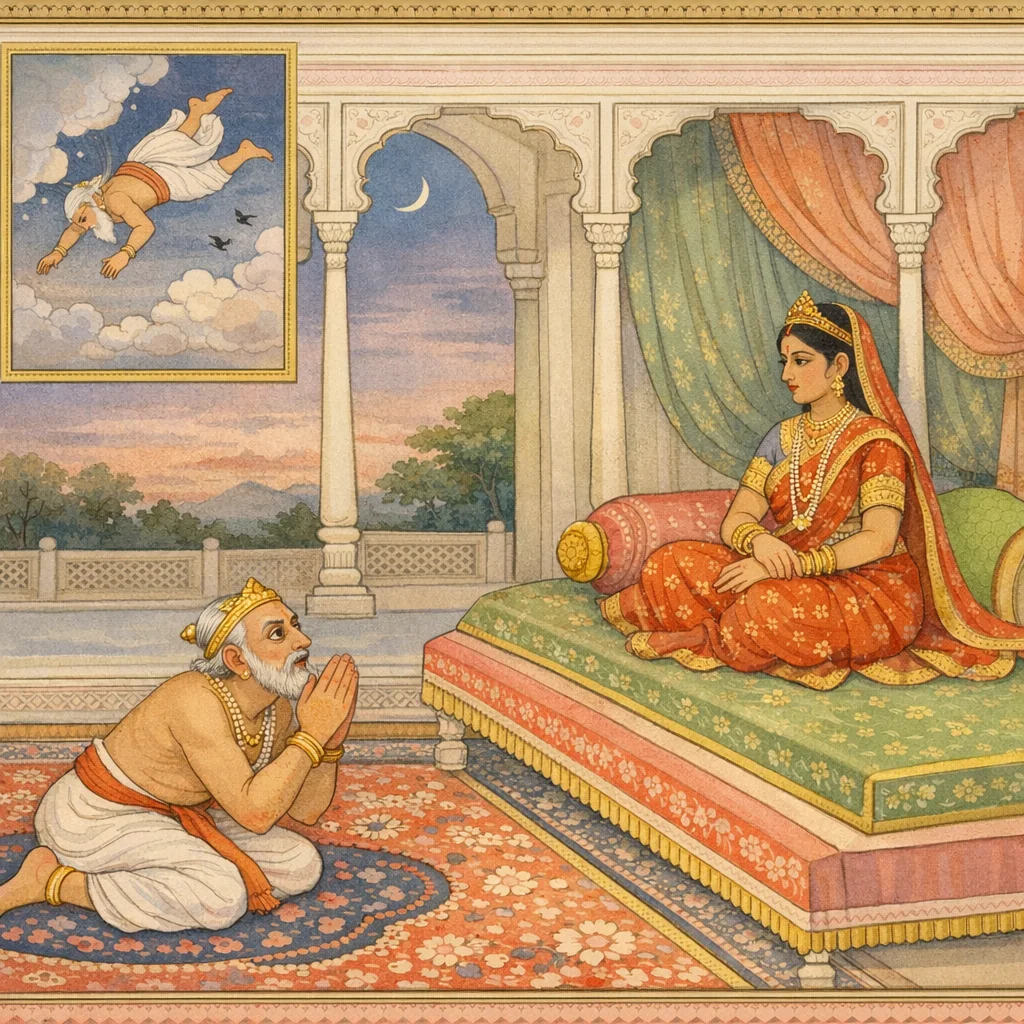
Sarga 13 intensifies the courtroom-turned-private crisis: Daśaratha is depicted as prostrate and unaccustomed to humiliation, likened to King Yayāti fallen from heaven after exhausting merit—an image that frames the king’s moral and psychological descent. Kaikeyī, having achieved her immediate aim, repeatedly urges the promised boons with calculated affect (fear displayed, yet internally resolute). Daśaratha replies in anguish and indignation, defending Rāma’s virtues—beauty, strength, learning, self-control, forgiveness—and questions how exile to Daṇḍaka can be inflicted on one fit for happiness. He condemns Kaikeyī’s intent as cruel and foresees infamy and disgrace. Time itself becomes a narrative device: the sun sets, night arrives yet feels dark to the grieving king, who pleads with Night not to bring dawn, or to pass quickly so he need not see Kaikeyī. He then attempts appeasement with folded hands, urging Kaikeyī to grant favor and allow Rāma to receive the kingdom “through her,” promising her fame; she remains unmoved. Overcome by grief and repeated shock, Daśaratha faints and falls unconscious; the dreadful night passes amid his heaving sighs, and he even restrains the customary awakening by panegyrists, signaling a collapse of royal routine and order.
Shlokas
Verse 1
अतदर्हं महाराजं शयानमतथोचितम्।ययातिमिव पुण्यान्ते देवलोकात्परिच्युतम्।।।।अनर्थरूपा सिद्धार्था ह्यभीता भयदर्शिनी।पुनराकारयामास तमेव वरमङ्गना।।।।
The great king lay prostrate, unworthy of such treatment and unused to it—like Yayāti fallen from heaven when his merit was spent. That woman, misfortune embodied, her aim achieved, fearless yet putting on a show of fear, pressed him again about those very boons.
Verse 2
अतदर्हं महाराजं शयानमतथोचितम्।ययातिमिव पुण्यान्ते देवलोकात्परिच्युतम्।।2.13.1।।अनर्थरूपा सिद्धार्था ह्यभीता भयदर्शिनी।पुनराकारयामास तमेव वरमङ्गना।।2.13.2।।
The great king, lying there, unworthy of such treatment and unaccustomed to it, looked like Yayāti fallen from heaven when his merit was spent. That woman—misfortune embodied—her aim achieved, fearless yet putting on a show of fear, again pressed him about those very boons.
Verse 3
त्वं कत्थसे महाराज सत्यवादी दृढव्रतः।मम चेमं वरं कस्माद्विधारयितुमिच्छसि।।।।
You boast, O great king, that you are a speaker of truth and steadfast in vow; why then do you now wish to evade granting me this boon?
Verse 4
एवमुक्तस्तु कैकेय्या राजा दशरथस्तदा।प्रत्युवाच ततः क्रुद्धो मुहूर्तं विह्वलन्निव।।।।
Thus addressed by Kaikeyī, King Daśaratha then replied—angered, and for a moment as though bewildered and unsteady.
Verse 5
मृते मयि गते रामे वनं मनुजपुङ्गवे।हन्तानार्ये ममामित्रे सकामा सुखिनी भव।।।।
When I am dead and Rāma—the best of men—has gone to the forest, alas, O ignoble one, my enemy: with your desire fulfilled, be happy then.
Verse 6
स्वर्गेऽपि खलु रामस्य कुशलं दैवतैरहम्।प्रत्यादेशादभिहितं धारयिष्ये कथं बत।।।।
Even in heaven, when the gods ask me of Rāma’s welfare, how indeed shall I maintain what I have declared in denial and repudiation? Alas—what a calamity.
Verse 7
कैकेय्याः प्रियकामेन रामः प्रव्राजितो मया।यदि सत्यं ब्रवीम्येतत्तदसत्यं भविष्यति।।।।
If I speak the plain truth—‘To satisfy Kaikeyī’s desire, I have sent Rāma into exile’—that very truth will be taken as false.
Verse 8
अपुत्रेण मया पुत्रश्श्रमेण महता महान्।रामो लब्धो महाबाहु स्सकथं त्यज्यते मया।।।।
When I had no son, with great effort I obtained the mighty, strong-armed Rāma as my son. How could he ever be abandoned by me?
Verse 9
शूरश्च कृतविद्यश्च जितक्रोधो क्षमापरः।कथं कमलपत्राक्षो मया रामो विवास्यते।।।।
How could I send Rāma into exile—Rāma who is brave and learned, who has conquered anger, who is devoted to forgiveness, whose eyes are like lotus petals?
Verse 10
कथमिन्दीवरश्यामं दीर्घबाहुं महाबलम्।अभिराममहं रामं प्रेषयिष्यामि दण्डकान्।।।।
How can I send Rāma to the Daṇḍaka forest—Rāma whose hue is like the blue lotus, whose arms are long, whose strength is great, and whose very presence is charming?
Verse 11
सुखानामुचितस्यैव दुःखैरनुचितस्य च।दुखं नामानुपश्येयं कथं रामस्य धीमतः।।।।
Rāma is fit for happiness, not fit for suffering—how could I ever bear to see that wise Rāma in distress?
Verse 12
यदि दुःखमकृत्वाऽद्य मम संक्रमणं भवेत्।अदुःखार्हस्य रामस्य तत स्सुखमवाप्नुयाम्।।।।
If death were to come to me today without my having caused sorrow to Rāma—who deserves no sorrow—then from that I would attain peace.
Verse 13
नृशंसे पापसङ्कल्पे रामं सत्यपराक्रमम्।किं विप्रियेण कैकेयि प्रियं योजयसे मम।।।।अकीर्तिरतुला लोके ध्रुवं परिभवश्च मे।
O cruel Kaikeyī, of evil intent—why do you seek to bring about what is hateful to Rāma, whose very valor is founded on truth, and who is dear to me? In this world, for me there will surely arise incomparable infamy and humiliation.
Verse 14
तथा विलपतस्तस्य परिभ्रमितचेतसः।।।।अस्तमभ्यगमत्सूर्यो रजनी चाभ्यवर्तत।
As he lamented thus, his mind reeling, the sun went down—and night came on.
Verse 15
सा त्रियामा तथार्त्तस्य चन्द्रमण्डलमण्डिता।।।।राज्ञो विलपमानस्य न व्यभासत शर्वरी।
Though the three-yāma night was adorned with the circle of the moon, it did not seem bright to the king who wept in such anguish.
Verse 16
तथैवोष्णं विनिश्वस्य वृद्धो दशरथो नृपः।।।।विललापार्तवद्युखं गगनासक्तलोचनः।
In the same way, the aged king Daśaratha, breathing hot sighs, lamented his misery like a sick man, his eyes fixed upon the sky.
Verse 17
न प्रभातं त्वयेच्छामि निशे नक्षत्रभूषणे।।।।क्रियतां मे दया भद्रे मयाऽयं रचितोऽञ्जलिः।
O Night, adorned with stars, I do not wish for dawn to come through you. O gentle one, show me compassion—see, I offer this prayer with folded hands.
Verse 18
अथवा गम्यतां शीघ्रं नाहमिच्छामि निर्घृणाम्।।।।नृशंसां कैकयीं द्रष्टुं यत्कृते व्यसनं महत्।
Or else, let it pass quickly—I do not wish to look upon that merciless, malicious Kaikeyī for whose sake this great calamity has arisen.
Verse 19
एवमुक्त्वा ततो राजा कैकेयीं संयताञ्जलिः।।।।प्रसादयामास पुनः कैकेयीं चेदमब्रवीत्।
Having spoken thus, the king, with hands joined in restraint, sought again to appease Kaikeyī and said these words to her.
Verse 20
साधु वृत्तस्य दीनस्य त्वद्गतस्य गतायुषः।।2.1.20।।प्रसादः क्रियतां देवि भद्रे राज्ञो विशेषतः।
O queen, gentle lady—show favor to me: to this wretched man of good conduct, devoted to you, whose life is nearly spent—especially since I am your king.
Verse 21
शून्ये न खलु सुश्रोणि मयेदं समुदाहृतम्।।।।कुरु साधु प्रसादं मे बाले सहृदया ह्यसि।
O fair-hipped one, surely my words have not been spoken into emptiness. O young lady, grant me this favor—indeed, you are kind at heart.
Verse 22
प्रसीद देवि रामोमेत्वद्दत्तं राज्यमव्यम्।।।।लभतामसितापाङ्गे यशः परमवाप्नु हि।
Be gracious, O queen. Let Rāma receive from you this enduring kingship that is mine; and you, O dark-lashed one, will surely attain the highest fame.
Verse 23
मम रामस्य लोकस्य गुरूणां भरतस्य च।।।।प्रियमेतद्गुरुश्रोणि कुरु चारुमुखेक्षणे
O woman of stately hips, O fair-faced, bright-eyed queen—do this pleasing act: for me, for Rāma, for the people, for the elders and teachers, and for Bharata as well.
Verse 24
विशुद्धभावस्य सुदुष्टभावाताम्रेक्षणस्याश्रुकलस्य राज्ञः।श्रुत्वा विचित्रं करुणं विलापंभर्तुर्नृशंसा न चकार वाक्यम्।।।।
Hearing her husband—the pure-hearted king—lament in many piteous ways, his eyes reddened and filled with tears, that hard-hearted woman of wicked intent did not comply with his words.
Verse 25
ततस्स राजा पुनरेव मूर्छितःप्रियामतुष्टां प्रतिकूलभाषिणीम्।समीक्ष्य पुत्रस्य विवासनं प्रतिक्षितौ विसंज्ञो निपपात दुखितः।।।।
Then the king fainted again; seeing his beloved queen unsatisfied and speaking against him—pressing for his son’s banishment—he fell to the ground, senseless with grief.
Verse 26
इतीव राज्ञो व्यथितस्य सा निशाजगाम घोरं श्वसतो मनस्विनःविबोध्यमानः प्रतिबोधनं तदानिवारयामास स राजसत्तमः।।।।
Thus passed that night for the afflicted, high-minded king, dreadful with heavy sighing. Then, when the bards sought to wake him, that best of kings stopped their awakening.
Frequently Asked Questions
The dharma-sankat is Daśaratha’s binding promise of boons versus his duty to protect and enthrone Rāma; Kaikeyī’s insistence forces the king to confront whether oath-keeping can demand an act he deems morally destructive.
The chapter foregrounds the public cost of private desire: vows and reputational dharma sustain political order, yet coerced outcomes can fracture the moral self; the Yayāti comparison warns that merit and status can collapse when ethical foundations are exhausted.
Daṇḍaka forest is the key destination-marker for exile; Devaloka functions as a cosmological reference via the Yayāti simile, while the courtly practice of panegyrists awakening the king marks a cultural routine disrupted by grief.