Sarga 114
अयोध्याप्रवेशः — Bharata Enters Ayodhya and Perceives the City’s Desolation
अयोध्याकाण्ड
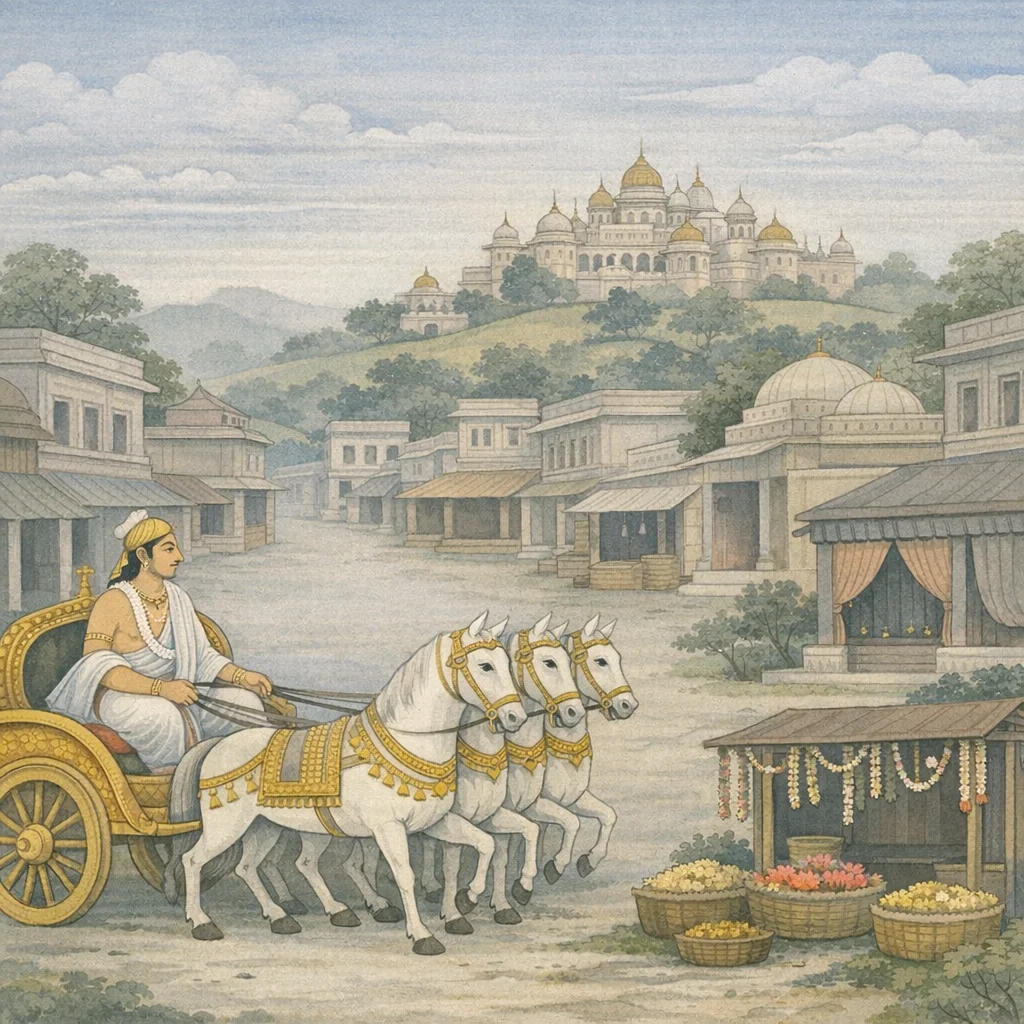
Sarga 114 depicts Bharata’s swift entry into Ayodhyā in a chariot whose deep, soothing resonance contrasts with the city’s silence (2.114.1). The chapter constructs a sustained civic elegy through a sequence of tightly crafted similes: Ayodhyā appears like a lightless night roamed by cats and owls (2.114.2), like Rohiṇī bereft of the Moon’s companionship (2.114.3), and like a dried mountain stream, extinguished sacrificial flame, or a defeated army—each image translating political absence into sensory depletion (2.114.4–6). Further comparisons evoke ritual cessation and social paralysis: an ocean-wave fallen silent, a deserted altar after soma-pressing, and a forlorn herd without its bull (2.114.7–9). The city is also likened to a new pearl necklace with gems detached, a fallen star, a creeper scorched by wildfire, a cloud-covered sky, and a defiled drinking-place—emphasizing broken ornamentation, dimmed radiance, and disrupted festivity (2.114.10–15). Bharata then voices diagnostic questions to his charioteer: why songs, instruments, and the fragrance of garlands, liquor, sandalwood, and agaru no longer pervade the air; why traffic sounds and festive movement have ceased after Rama’s exile (2.114.21–27). He concludes that Ayodhyā’s splendour departed with Rama, longing for Rama’s return to restore collective joy (2.114.28–30). Mourning, Bharata enters Daśaratha’s palace—now lionless—then, seeing the secluded inner apartments shorn of splendour like a day without the Sun, he weeps (2.114.31–32).
Shlokas
Verse 1
स्निग्धगम्भीरघोषेण स्यन्दनेनोपयान्प्रभुः। अयोध्यां भरतः क्षिप्रं प्रविवेश महायशाः।।2.114.1।।
Travelling in a chariot whose sound was deep and soothing, Bharata—the renowned lord—quickly entered Ayodhyā.
Verse 2
बिडालोलूकचरितामालीननरवारणाम्। तिमिराभ्याहतां कालीमप्रकाशां निशामिव।।2.114.2।।
It looked like night itself—black and lightless, smothered in darkness—where cats and owls now roamed, and where people and even elephants were nowhere to be seen.
Verse 3
राहुशत्रोः प्रियां पत्नीं श्रिया प्रज्वलितप्रभाम्। ग्रहेणाभ्युत्थितेनैकां रोहिणीमिव पीडिताम्।।2.114.3।।
It appeared like Rohiṇī, beloved consort of the Moon—once blazing with splendour—now left alone and tormented, as if seized by a hostile planet risen in power.
Verse 4
अल्पोष्णक्षुब्धसलिलां घर्मोत्तप्तविहङ्गमाम्।लीनमीनझषग्राहां कृशां गिरिनदीमिव।।2.114.4।।
It seemed like a thin mountain stream—its water scant, hot, and churned; its water-birds scorched by heat; its fish and crocodiles gone, leaving it dried and impoverished.
Verse 5
विधूमामिव हेमाभामध्वराग्ने स्समुत्थिताम्। हविरभ्युक्षितां पश्चाच्छिखां विप्रलयं गताम्।।2.114.5।।
Ayodhyā looked like a sacrificial flame—smokeless and golden as it rises from the ritual fire—yet later, after being sprinkled with oblations, it falls away into extinction.
Verse 6
विध्वस्तकवचां रुग्णगजवाजिरथध्वजाम्। हतप्रवीरामापन्नां चमूमिव महाहवे।।2.114.6।।
It seemed like an army in a great battle—armour shattered, elephants and horses wounded, chariots and banners broken, its heroic champions slain, and the whole host fallen into distress.
Verse 7
सफेनां सस्वनां भूत्वा सागरस्य समुत्थिताम्। प्रशान्तमारुतोद्धूतां जलोर्मिमिव निस्स्वनाम्।।2.114.7।।
It was like a wave of the ocean: first rising with foam and roar, then—swept along by a gentle wind—becoming stilled and soundless.
Verse 8
त्यक्तां यज्ञायुधैः सर्वैरभिरूपैश्च याजकैः। सुत्याकाले सुनिर्वृत्ते वेदिं गतरवामिव।।2.114.8।।
It was like an altar abandoned—when the soma-pressing time is fully finished—left behind with all its ritual implements and learned priests, and with its sounds gone silent.
Verse 9
गोष्ठमध्ये स्थितामार्तामचरन्तीं तृणं नवम्। गोवृषेण परित्यक्तां गवां पक्तिमिवोत्सुकाम्।।2.114.9।।
It was like a row of cows in the middle of the herd—anguished, no longer grazing the fresh grass—forsaken by the bull and yearning restlessly.
Verse 10
प्रभाकराद्यै स्सुस्निग्धैः प्रज्वलद्भिरिवोत्तमैः। वियुक्तां मणिभिर्जात्यैर्नवां मुक्तावलीमिव।।2.114.10।।
Ayodhyā appeared like a new pearl-necklace stripped of its finest gems—radiant rubies and other excellent stones—once glossy and blazing in splendour.
Verse 11
सहसा चलितां स्थानान्महीं पुण्यक्षयाद्गताम्।संवृतद्युतिविस्तारां तारामिव दिवश्च्युताम्।।2.114.11।।
Ayodhyā looked like a star fallen from the heavens—suddenly displaced from its station, its wide radiance veiled, as though through the exhaustion of merit.
Verse 12
पुष्पनद्धां वसन्तान्ते मत्तभ्रमरनादिताम्। द्रुतदावाग्नि विप्लुष्टां क्लान्तां वनलतामिव।।2.114.12।।
Ayodhyā seemed like a forest-creeper: once garlanded with blossoms at spring’s end and resonant with the hum of intoxicated bees, now suddenly scorched by a swiftly spreading wildfire—withered and exhausted.
Verse 13
सम्मूढनिगमांस्तब्धां संक्षिप्तविपणापणाम्। प्रच्छन्नशशिनक्षत्रां द्यामिवाम्बुधरैर्वृताम्।।2.114.13।।
With merchants bewildered, the city stilled, and its markets and shops shut, Ayodhyā looked like the sky covered with clouds, where moon and stars are hidden.
Verse 14
क्षीणपानोत्तमैर्भग्नैः शरावैरभिसंवृताम्। हतशौण्डामिव ध्वस्तांं पानभूमिमसंस्कृताम्।।2.114.14।।
Ayodhyā appeared like an unclean drinking-place after the revels—its fine wine exhausted, broken pitchers strewn about, and the boisterous drinkers as if struck down, leaving the place in ruin.
Verse 15
वृक्णभूमितलां निम्नां वृक्णपात्रैस्समावृताम्। उपयुक्तोदकां भग्नां प्रपां निपतितामिव।।2.114.15।।
Ayodhyā looked like a watering-station (prapā) that had collapsed and sunk: its ground torn and uneven like a hollow, broken vessels scattered about, and its water already used up.
Verse 16
विपुलां विततां चैव युक्तपाशां तरस्विनाम्। भूमौ बाणैर्विनिष्कृत्तां पतितां ज्यामिवायुधात्।।2.114.16।।
It lay on the ground like a bowstring cut loose from a weapon—broad and stretched, fitted with its fastening-loops, yet severed by arrows and fallen down.
Verse 17
सहसा युद्धशौण्डेन हयारोहेण वाहिताम्। निहतां प्रतिसैन्येन वडवामिव पातिताम्।।2.114.17।।
Like a mare suddenly brought down—though driven hard by a war-skilled horseman—slain by the opposing army and cast to the ground.
Verse 18
शुष्कतोयां महामत्स्यैः कूर्मैश्च बहुभिर्वृताम्। प्रभिन्नतटविस्तीर्णां वापीमिव हृतोत्पलाम्।।2.114.18।।
Like a reservoir whose water has dried up—crowded with many great fish and tortoises—its banks broken and spread out, its lotuses gone.
Verse 19
पुरुषस्याप्रहृष्टस्य प्रतिषिद्धानुलेपनाम्। सन्तप्तामिव शोकेन गात्रयष्टिमभूषणाम्।।2.114.19।।
Like the body of a man sunk in dejection—denied unguents, without ornaments—wasted into a mere frame of limbs, as though scorched by grief.
Verse 20
प्रावृषि प्रविगाढायां प्रविष्टस्याभ्रमण्डलम्। प्रच्छन्नां नीलजीमूतैर्भास्करस्य प्रभामिव।।2.114.20।।
Like the sun’s radiance hidden by dark rain-clouds when the monsoon has deepened and the whole vault of clouds has rolled in—so it appeared, obscured.
Verse 21
भरतस्तु रथस्थ स्सन् श्रीमान्दशरथात्मजः। वाहयन्तं रथश्रेष्ठं सारथिं वाक्यमब्रवीत्।।2.114.21।।
Illustrious Bharata, son of Daśaratha, seated in the chariot, spoke these words to the charioteer who was driving that finest of chariots.
Verse 22
किं नु खल्वद्य गम्भीरो मूर्छितो न निशम्यते। यथापुरमयोध्यायां गीतवादित्रनिस्वनः।।2.114.22।।
Why is it that today, in Ayodhya, the deep, swelling sound of songs and musical instruments—such as used to fill the city before—is not heard?
Verse 23
वारुणीमदगन्धश्च माल्यगन्धश्च मूर्छितः। धूपितागुरुगन्धश्च न प्रवाति समन्ततः।।2.114.23।।
No breeze now wafts everywhere the rich scents that once spread through the city—the heady fragrance of vāruṇī liquor, the perfume of garlands, or the incense-sweet smell of agaru.
Verse 24
यानप्रवरघोषश्च स्निग्धश्च हयनिस्वनः। प्रमत्तगजनादश्च महांश्च रथनिस्वनः।।2.114.24।। नेदानीं श्रूयते पुर्यामस्यां रामे विवासिते।
The clatter of fine carriages, the pleasant neighing of horses, the trumpeting of rutting elephants, and the great rumble of chariots—none of this is heard now in this city, since Rama has been sent into exile.
Verse 25
चन्दनागरुगन्धांश्च महार्हाश्च नवस्रजः। गते हि रामे तरुणा स्संतप्ता नोपभुञ्जते।।2.114.25।।
For Rama has departed; and so the young men, distressed at heart, take no delight in costly sandal and agaru fragrances, nor in fresh flower garlands.
Verse 26
चन्दनागरुगन्धांश्च महार्हाश्च नवस्रजः। गते हि रामे तरुणा स्संतप्ता नोपभुञ्जते।।2.114.25।।
Since Rama has gone, the young men—burning with grief—do not take pleasure in precious sandal-and-agaru scents or in new garlands of flowers.
Verse 27
बहिर्यात्रां न गच्छन्ति चित्रमाल्यधरा नराः। नोत्सवा स्सम्प्रवर्तन्ते रामशोकार्दिते पुरे।।2.114.27।।
In the city, stricken by grief for Rama, men no longer go out on pleasure excursions wearing bright garlands; festivities do not commence at all.
Verse 28
सह नूनं मम भ्रात्रा पुरस्यास्य द्युतिर्गता। न हि राजत्ययोध्येयं सासारेवार्जुनी क्षपा।।2.114.28।।
Surely, along with my brother, the splendour of this city has departed. Ayodhya does not shine—like a rain-laden night in the dark waning of the moon.
Verse 29
कदा नु खलु मे भ्राता महोत्सव इवाऽगतः। जनयिष्यत्ययोध्यायां हर्षं ग्रीष्म इवाम्बुदः।।2.114.29।।
When, indeed, will my brother return—like a great festival—and bring joy to Ayodhya, as clouds bring relief in the summer heat?
Verse 30
तरुणैश्चारुवेषैश्च नरैरुन्नतगामिभिः। सम्पतद्भिरयोध्यायां नाभिभान्ति महापथाः।।2.114.30।।
Ayodhya’s great roads no longer shine with groups moving about—young men and others in fine attire, walking with proud, confident gait.
Verse 31
एवं बहुविधं जल्पन्विवेश वसतिं पितुः। तेन हीनां नरेन्द्रेण सिंहहीनां गुहामिव।।2.114.31।।
Thus speaking in many ways, Bharata entered his father’s residence—now bereft of that king—like a cave bereft of its lion.
Verse 32
Then Bharata, self-controlled, looked upon the entire inner palace—secluded and stripped of splendour, like a day abandoned by the gods and bereft of the sun—and, in deep sorrow, let fall his tears.
Frequently Asked Questions
The pivotal action is Bharata’s moral recognition of legitimacy: he reads Ayodhya’s silence as a civic symptom of dharmic rupture caused by Rama’s exile, implicitly rejecting celebratory kingship in a city whose rightful moral center is absent.
The chapter teaches that political splendour and social festivity are ethically contingent: when dharmic leadership is displaced, the city’s sensory life (sound, scent, movement) collapses into grief, revealing governance as a moral ecology rather than mere administration.
Ayodhya’s public sphere—highways, markets/shops, and festive processions—along with the royal palace and inner apartments are foregrounded, while cultural markers include music-making, garlands, incense (agaru), sandalwood paste, and civic celebrations that cease after Rama’s departure.