Sarga 108
जाबाल्युपदेशः — Jabali’s Pragmatic Counsel to Rama
अयोध्याकाण्ड
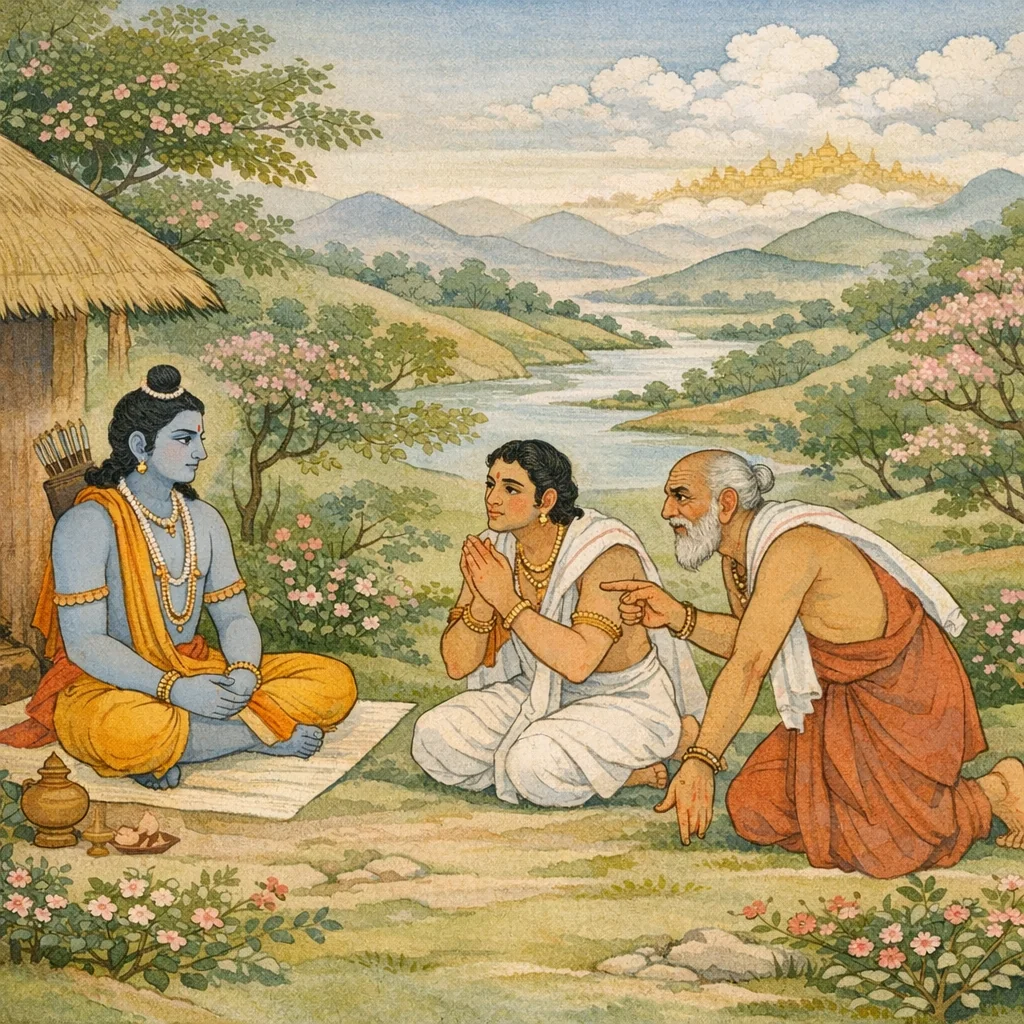
In this sarga, Jābāli—presented as an eminent brāhmaṇa—addresses Rāma while Rāma is consoling Bharata. Jābāli’s discourse employs a starkly pragmatic, this-worldly register: he questions durable kin-relations (“born alone, die alone”), reframes attachment to parents and household as temporary lodging, and urges Rāma not to persist in a painful, thorny course by abandoning the paternal kingdom. He recommends immediate political action—return to prosperous Ayodhyā, accept consecration, and enjoy royal prerogatives—portraying the city as awaiting its rightful lord. The argument intensifies into ritual skepticism: he challenges ancestral offerings (aṣṭakā, śrāddha) as ineffective and depicts certain dharma-textual injunctions as social instruments that induce charity and compliance. He concludes with an explicit prioritization of the perceivable (pratyakṣa) over the imperceptible (parokṣa), and presses Rāma to accept the kingdom offered by Bharata, framing it as aligned with wise public judgment and exemplary for society.
Shlokas
Verse 1
आश्वासयन्तं भरतं जाबालिर्ब्राह्मणोत्तमः।उवाच रामं धर्मज्ञं धर्मापेतमिदं वचः।।।।
As Rāma—knower of dharma—was consoling Bharata, Jābāli, the foremost of brahmins, addressed him with words that diverged from righteousness.
Verse 2
साधु राघव माऽभूत्ते बुध्दिरेवं निरर्थिका।प्राकृतस्य नरस्येव ह्यार्यबुद्धेर्मनस्विनः।।।।
O Rāghava, let no such pointless thought arise in you—one so high-minded and noble in judgment should not think like an ordinary man.
Verse 3
कः कस्य पुरुषो बन्धुः किमाप्यं कस्य केनचित्।यदेको जायते जन्तुरेक एव विनश्यति।।।।
Who truly belongs to whom as a ‘kinsman’? What can anyone really obtain from anyone? For a creature is born alone, and alone indeed it perishes.
Verse 4
तस्मान्माता पिता चेति राम सज्जेत यो नरः।उन्मत्त इव स ज्ञेयो नास्ति कश्चिद्धि कस्यचित्।।।।
Therefore, O Rāma, the man who clings to notions like ‘mother’ and ‘father’ should be regarded as if mad; for in truth no one belongs to anyone.
Verse 5
यथा ग्रामान्तरं गच्छन्नरः कश्चित्क्वचिद्वसेत्।उत्सृज्य च तमावासं प्रतिष्ठेतापरेऽहनि।।।।एवमेव मनुष्याणां पिता माता गृहं वसु।अवासमात्रं काकुत्स्थ सज्जन्ते नात्र सज्जनाः।।।।
As a traveler going from one village to another may rest somewhere, then leave that lodging the next day and continue onward—so too for human beings, father, mother, home, and wealth are only temporary lodgings. The wise do not cling to them, O Kākutstha.
Verse 6
यथा ग्रामान्तरं गच्छन्नरः कश्चित्क्वचिद्वसेत्।उत्सृज्य च तमावासं प्रतिष्ठेतापरेऽहनि।।2.108.5।।एवमेव मनुष्याणां पिता माता गृहं वसु।अवासमात्रं काकुत्स्थ सज्जन्ते नात्र सज्जनाः।।2.108.6।।
Honoring the judgment of the wise—an example set for all the world—accept the kingdom, being pleased by Bharata’s offer.
Verse 7
पित्र्यं राज्यं परित्यज्य स नार्हसि नरोत्तम।आस्थातुं कापथं दुःखं विषमं बहुकण्टकम्।।।।
O best of men, you should not abandon the ancestral kingdom and take to a wrong path—painful, uneven, and thorny with dangers.
Verse 8
समृद्धायामयोध्यायामात्मानमभिषेचय।एकवेणीधरा हि त्वां नगरी सम्प्रतीक्षते।।।।
Return to prosperous Ayodhyā and have yourself consecrated as king. The city, like a chaste wife wearing a single braid, waits for you—her lord.
Verse 9
राजभोगाननुभवन्महार्हान्पार्थिवात्मज।विहर त्वमयोध्यायां यथा शक्रस्त्रिविष्टपे।।।।
O prince, enjoy the priceless royal pleasures in Ayodhyā, like Śakra (Indra) sporting in heaven.
Verse 10
न ते कश्चिद्धशरथ स्त्वं च तस्य न कश्चन।अन्यो राजा त्वमन्य स्तस्मात्कुरु यदुच्यते।।।।
Daśaratha is no one to you, and you are no one to him; the king is one person and you another—therefore do as I say.
Verse 11
बीजमात्रं पिता जन्तो श्शुक्लं रुधिरमेव च।संयुक्तमृतुमन्मात्रा पुरुषस्येह जन्म तत्।।।।
For a living being, the father is merely a seed; when semen and blood unite in the mother at the fertile time, from that union a person’s birth occurs in this world.
Verse 12
गत स्स नृपतिस्तत्र गन्तव्यं यत्र तेन वै।प्रवृततिरेषा मर्त्यानां त्वं तु मिथ्या विहन्यसे।।।।
That king has gone where he was destined to go; such is the course of mortals—yet you are wearing yourself out in vain.
Verse 13
अर्थधर्मपरा ये ये तांस्तांछोचामि नेतरान्।ते हि दुःखमिह प्राप्य विनाशं प्रेत्य भेजिरे।।।।
I pity those who devote themselves to artha and dharma (as binding ideals), not others; for having met suffering here, they go on after death to dissolution all the same.
Verse 14
अष्टका पितृदैवत्यमित्ययं प्रसृतो जनः।अन्नस्योपद्रवं पश्य मृतो हि किमशिष्यति।।।।
People are engrossed in the Aṣṭakā rite, believing the ancestors are the deities to be fed; see the waste of food—what can the dead possibly eat?
Verse 15
यदि भुक्तमिहान्येन देहमन्यस्य गच्छति।दद्यात्प्रवसत श्श्राद्धं न तत्पथ्यशनं भवेत्।।।।
If food eaten here by one person can reach and become part of another’s body, then one could also offer śrāddha for someone merely traveling far away—would that offering become his meal on the road?
Verse 16
दानसंवनना ह्येते ग्रन्था मेधाविभिः कृताः।यजस्व देहि दीक्षस्व तपस्तप्यस्व सन्त्यज।।।।
Indeed, these treatises were composed by the intelligent as inducements toward giving: ‘sacrifice,’ ‘donate,’ ‘take initiation,’ ‘practice austerity,’ ‘renounce,’ and the like.
Verse 17
स नास्ति परमित्येव कुरु बुद्धिं महामते।प्रत्यक्षं यत्तदातिष्ठ परोक्षं पृष्ठतः कुरु।।।।
O great-minded one, form the conviction that there is no ‘beyond’; hold fast to what is directly evident, and turn your back on what lies beyond perception.
Verse 18
सतां बुद्धिं पुरस्कृत्य सर्वलोकनिदर्शिनीम्।राज्यं त्वं प्रतिगृह्णीष्व भरतेन प्रसादितः।।।।
Honoring the judgment of the wise—an example set for all the world—accept the kingdom, being pleased by Bharata’s offer.
Frequently Asked Questions
The dilemma is whether Rāma should continue exile-oriented renunciation or accept Bharata’s offer and assume the kingdom; Jābāli argues that abandoning the patrimonial throne is an unwise, painful path and urges immediate coronation in Ayodhyā.
Jābāli advances a perception-centered ethic—privileging pratyakṣa (the evident) and dismissing parokṣa (the unseen), including skepticism toward post-mortem ritual efficacy—thereby staging a sharp contrast with dharma-grounded kingship ideals that the broader epic upholds.
Ayodhyā is foregrounded as the awaiting capital and symbol of legitimate sovereignty; culturally, the sarga references aṣṭakā and śrāddha rites for ancestors, using them as focal points in a debate on ritual meaning and social practice.