Adhyaya 33
Yama-mārga (Adhvan) and the Courts of Yama: Vaivasvatī and Chitragupta
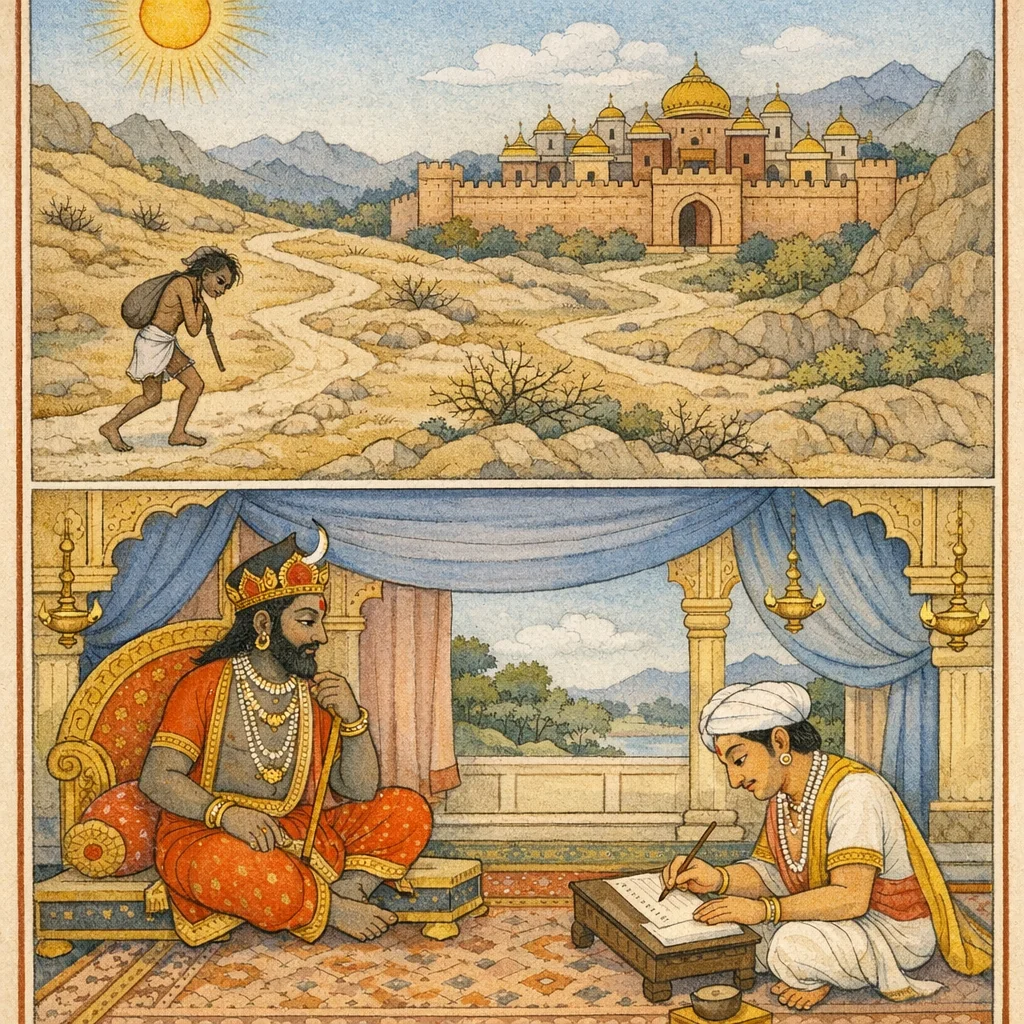
Continuing the discussion on the origin and nature of beings, Garuḍa asks Viṣṇu to measure Yama’s realm and the length of the post-mortem route. Viṣṇu defines the adhvan as 86,000 yojanas, a scorching, thorn-strewn, shade-less road without food or water, where hunger, thirst, heat, and cold torment travelers—especially the sin-burdened—while the desireless pass with relative ease. The chapter ties after-death support to earthly conduct: gifts (dāna) done in life “stand before” the traveler, whereas funeral water-offerings may not reach those of petty evil behavior. The narrative then enters Yama’s seat of judgment: the indestructible, jewel-bright city of Vaivasvata, with walls, gates, and a vast sabhā where Dharmarāja rewards the righteous and terrifies the sinful. At its center stands Chitragupta’s fortified house, where deeds are recorded impartially amid personified afflictions. The chapter culminates in vivid punishments carried out by Yama’s messengers and turns toward the next theme: the protective power of charity and service for well-being in the hereafter.
Shlokas
Verse 1
जन्तूत्पत्तितद्गधात्वादिविभागभुवनादिविभागवर्णनं नाम द्वात्रिंशो ऽध्यायः गरुड उवाच / उत्पत्तिलक्षणं जन्तोः कथितं मयि पुत्त्रके / यमलोकः कियन्मात्रस्त्रैलोक्ये सचराचरे / विस्तरं तस्य मे ब्रूहि अध्वा चैव कियान् स्मृतः
Garuḍa said: “O son, you have explained to me the marks of the origin of beings. Now tell me—within the three worlds, moving and unmoving, how vast is Yama’s realm (Yamaloka)? Describe its extent to me in detail; and how long is the ‘adhvan’, the path, said to be?”
Verse 2
कैश्च पापैः कृतैर्देव केन वा शुभकर्मणा / गच्छन्ति मानवास्तत्र कथयस्व विशेषतः
O Lord, by committing which sins—and by performing what auspicious deeds—do human beings go to that realm? Please explain it to me with particular clarity and detail.
Verse 3
श्रीभगवानुवाच / षटशीतिसहस्राणि योजनानां प्रमाणतः / यमलोकस्य चाध्वानमन्तरा मानुषस्य च
The Blessed Lord said: The intervening route between the human realm and Yama’s world extends, by measure, to eighty-six thousand yojanas.
Verse 4
ध्मातताम्रमिवातप्तो ज्वलद्दुर्गो महापथः / तत्र गच्छन्ति पापिष्ठा मानवा मूढचेतसः
The great road is heated like molten copper and is a blazing, perilous passage; along that way go the most sinful human beings, whose minds are deluded.
Verse 5
कण्टकाश्च सुतीक्ष्णा वै विविधा घोरदर्शनाः / तैस्तुवालुक्षितिर्व्याप्ता हुताशश्च तथोल्बणः
There are thorns—exceedingly sharp, of many kinds, and terrifying to behold. With them the sandy ground is spread everywhere, and a fierce, blazing fire is present as well.
Verse 6
वृक्षच्छाया न तत्रास्ति यत्र विश्रमते नरः / गृहीतः कालपाशैश्च कृतैः कर्मभिरुल्बणैः
No shade of a tree is found there where the man seeks to rest, for he is seized by the nooses of Time, bound fast by the grievous deeds he has performed.
Verse 7
तस्मिन् मार्गे न चान्नाद्यं येन प्राणान् प्रपोषयेत् / न जलं दृश्यते तत्र तृषा येन विलीयते
On that route there is no food by which one could sustain one’s vital energies; nor is water seen there by which thirst might be quenched.
Verse 8
क्षुधया पीडितो याति तृष्णया च महापथे / शीतेन कम्पते क्वापि यममार्गे ऽतिदुर्गमे
Afflicted by hunger, and by thirst as well, he goes along the great road; and somewhere he trembles from cold—upon Yama’s path, exceedingly hard to traverse.
Verse 9
यद्यस्य यादृशं पापं स पन्थास्तस्य तादृशः / सुदीनाः कृपणा मूढा दुः खैर्व्याप्तास्तरन्ति तम्
Whatever kind of sin a person has committed, a path of that very kind becomes his. Overwhelmed by suffering, wretched, helpless, and deluded, they pass along that terrible path.
Verse 10
रुदन्ति दारुणं केचित् केचिद्द्रोहं वदन्ति च / आत्मकर्मकृतैर्देषैः पच्यमाना मुहुर्मुहुः
Some wail bitterly; some cry out of betrayal and treachery. Again and again they are scorched and tormented in the regions fashioned by their own deeds.
Verse 11
ईदृग्विधः स वै पन्था विज्ञेयो दारुणः खग / वितृष्णा ये नरा लोके सुखं तस्मिन् व्रजन्ति ते
Such indeed is that path—know it to be harsh, O Bird, Garuda. Yet those people in the world who are free from craving travel on that very path with ease.
Verse 12
यानियानि च दानानि दत्तानि भुवि मानवैः / तानितान्युपतिष्ठन्ति यमलोके पुरः पथि
Whatever gifts people have given while living on earth—those very acts of charity stand before them on the road leading into Yama’s realm.
Verse 13
पापिनो नोपतिष्ठन्ति दाहश्राद्धजलाञ्जलि / भ्रमन्ति वायुभूतास्ते ये क्षुद्राः पापकर्मिणः
For sinners, the water-offering (jalāñjali) joined to the funeral rites and śrāddha does not reach them. Those petty doers of evil wander about, become like the wind—restless and without ground.
Verse 14
ईदृशं वर्त्म तद्रौद्रं कथितं तव सुव्रत / पुनश्च कथयिष्यामि यममार्गस्य या स्थितिः
Thus, O you of noble vows (suvrata), I have told you of that fierce and dreadful path. Now again I shall describe the condition and course of the road that leads to Yama.
Verse 15
याम्यनैरृतयोर्मध्ये पुरं वैवस्वतस्य तु / सर्वं वज्रमयं दिव्यमभेद्यं तत् सुरासुरैः
Between the southern quarter (Yāmya) and the south‑western quarter (Nairṛta) lies the city of Vaivasvata, Yama. It is wholly of divine vajra-like substance, unbreakable even by the gods and the asuras.
Verse 16
चतुरश्रं चतुर्द्वारं सप्तप्राकारतोरणम् / स्वयं तिष्ठति वै यस्यां यमो दूतैः समन्वितः
It is a four-sided place with four gates, furnished with seven enclosing walls and their archways; there Yama himself stands, attended by his messengers.
Verse 17
योजनानां सहस्रं वै प्रमाणेन तदुच्यते / सर्वरत्नमयं दिव्यं विद्युज्ज्वालार्कतैजसम्
Its measure is said to be a thousand yojanas. It is divine, made of every kind of jewel, and radiant with the brilliance of lightning, flame, and the sun.
Verse 18
तद्गुहं धर्मराजस्य विस्तीर्णं काञ्चनप्रभम् / योजनानां पञ्चशतप्रमाणेन समुच्छ्रितम्
That cavern-hall of Dharmarāja (Yama) was vast and radiant like gold, rising to a height measured as five hundred yojanas.
Verse 19
वृतं स्तम्भसहस्रैस्तु वैदूर्यमणिमण्डितम् / मुक्ताजालगवाक्षं च पताकाशतभूषितम्
It was encircled by thousands of pillars, adorned with vaidūrya (cat’s-eye) gems; it had lattice-like windows strung with pearls, and it was beautified with hundreds of banners.
Verse 20
घण्टाशतनिनादाढ्यं तोरणानां शतैर्वृतम् / एवमादिभिरन्यैश्च भूषणैर्भूषितं सदा
Resounding with the clangor of hundreds of bells and encircled by hundreds of ornamental gateways, it is ever adorned with these and many other such decorations.
Verse 21
तत्रस्थो भगवान् धर्म आसने तु समे शुभे / दशयो जनविस्तीर्णे नीलजीमूतसन्निभे
There, the revered Lord Dharma sat upon an even and auspicious throne—spanning ten yojanas in breadth—dark-hued like a mass of blue rain-clouds.
Verse 22
धर्मज्ञो धर्मशीलश्च धर्मयुक्तो हितो यमः / भयदः पापयुक्तानां धार्मिकाणां सुखप्रदः
Yama knows dharma, is established in righteous conduct, and is aligned with dharma—truly a benefactor. To those bound to sin he gives fear, but to the righteous he bestows happiness.
Verse 23
मन्दमारु तसंयोगैरुत्सवैर्विविधैस्तथा / व्याख्यानैर्विविधैर्युक्तः शङ्खवादित्रनिः स्वनैः
It is attended by gentle, cooling breezes, by many kinds of festive celebrations and diverse sacred discourses; it resounds with the sounds of conches and musical instruments.
Verse 24
पुरमध्यप्रवेशे तु चित्रगुप्तस्य वै गृहम् / पञ्चविंशतिसंख्यानां योजनानां सुविस्तरम्
At the entry to the very center of that city stands, indeed, the house of Chitragupta, spreading vast to the measure of twenty-five yojanas.
Verse 25
दशोच्छ्रितं महादिव्यं लोहप्राकारवोष्टितम् / प्रतोलीशतसंचारं पतताकाशतशोभितम्
Lofty to a height of ten yojanas, supremely wondrous and celestial, it is encircled by iron ramparts; it has passage through hundreds of gateways and is beautified by hundreds of fluttering banners.
Verse 26
दीपिकाशतसङ्कीर्णं गीतध्वनिसमाकुलम् / विचित्रचित्रकुशलैश्चित्रगुप्तस्य वै गृहम्
The house of Chitragupta is filled with hundreds of lamps, resounding with the sound of songs, and adorned with wondrous pictures crafted by skilled artists.
Verse 27
मणिमुक्तामये दिव्ये आसने परमाद्भुते / तत्रस्थो गणयत्यायुर्मानुषेष्वितरेषु च
Seated there upon a divine, supremely wondrous throne made of gems and pearls, he reckons the span of life—both among human beings and among other classes of creatures.
Verse 28
न मुह्यति कदाचित् स सुकृते दुष्कृते ऽपि वा / यद्येनोपार्जितं यावत् तावद्वै वेत्ति तस्य तत्
He is never deluded—whether by merit or by sin. Whatever karma he has accumulated, to that very extent he truly knows it as his own.
Verse 29
दशाष्टदोषरहितं कृत कर्म लिखत्यसौ / चित्रगुप्तालयात् आच्यां ज्वरस्यास्ति महागृहम्
Free from the eighteen faults, he (Chitragupta) records the deeds that have been done. Near the abode of Chitragupta there stands the great house, the domain of Fever (Jvara).
Verse 30
दक्षिणे चापि शूलस्य लताविस्फोटकस्य च / पश्चिमे काल पाशस्य अजीर्णस्यारुचेस्तथा
To the south are the torments of colic (śūla) and the creeping blistering affliction (latā-visphoṭaka); and to the west are the pains of Death’s noose (kāla-pāśa), indigestion, and likewise loss of appetite.
Verse 31
मध्यपीठोत्तरे ज्ञेयो तथा चान्या विषचिका / ऐशन्यां वै शिरो ऽर्तिश्च आग्नेय्याञ्चैव मृकता
If pain is felt in the upper part of the middle back, it is known as the ailment called viṣacikā, a poisonous, cholera-like disorder. Likewise, pain in the north-east signifies affliction of the head, and in the south-east it indicates wasting/consumption (mṛkatā).
Verse 32
अतिसारश्च नैरृत्यां वायव्यां दाहसंज्ञकः / एभिः परिवृतो नित्यं चित्रगुप्तः स तिष्ठति
In the south-west stands Atisāra (violent diarrhoea), and in the north-west is the one known as Dāha (burning torment). Ever surrounded by these, Chitragupta remains stationed there in Yama’s realm, keeping watch over the record of deeds.
Verse 33
यत् कर्म कुरुते कश्चित्तत् सर्वं विलखत्यसौ / धर्मराजगृहद्वारि दूतास्तार्क्ष्य तथा निशि / तिष्ठन्ति पापकर्माणः पच्यमाना नराधमाः
Whatever deed a person performs, the recorder writes it all down. At the gate of Dharmarāja’s abode, O Tārkṣya, the messengers stand watch even at night; there the vilest men, doers of sinful karma, remain—scorched by suffering.
Verse 34
यमदूतैर्महापाशैर्हन्यमानाश्च मुद्गरैः / वध्यन्ते विविधैः पापैः पूर्वकर्मकृतैर्नराः
Struck by Yama’s messengers with mighty nooses and beaten with mallets, people are punished in many ways—according to the sins they committed through their former deeds.
Verse 35
नानाप्रहारणाग्रैश्च नानायन्त्रैस्तथा परे / छिद्यन्ते पापकर्माणः क्रकचैः काष्ठवद्द्विधा
There, by the sharp points of many weapons and by various instruments of torture, the doers of sinful deeds are cut apart—sawn in two like pieces of wood.
Verse 36
अन्ये ज्वलद्भिरङ्गारैर्वेष्टिताः परितो भृशम् / पूर्वकर्मविपाकेन ध्मायन्ते लोहपिण्डवत्
Others, tightly hemmed in on every side by blazing coals, by the ripening of former karma are made to burn and be fanned—like lumps of iron in a forge.
Verse 37
क्षिप्त्वान्ये च धरापृष्ठे कुठारेणावकर्तिताः / क्रन्दमानाश्च दृश्यन्ते पूर्वकर्मविपाकतः
Others are hurled onto the earth’s surface and hewn with axes; they are seen wailing—this is the ripening of their former deeds.
Verse 38
केचिद्गुडमयैः पाकैस्तैलपाकैस्तथा परे / पीड्यन्ते यमदूतैश्च पापिष्ठाः सुभृशं नराः
Some men of exceedingly grievous sin are cooked in cauldrons of molten jaggery, while others are boiled in oil; thus are the most wicked tormented fiercely by the messengers of Yama.
Verse 39
क्षणाह्नि प्रार्थयन्त्यन्ये देहिदेहीति कोटिशः / यमलोके मया दृष्टा ममस्वं भक्षितं त्वया
In Yama’s realm I beheld countless beings, moment after moment and day after day, begging again and again, “Give! Give!”—and I also saw that what was mine had been consumed by you.
Verse 40
इत्येवं बहुशस्तार्क्ष्य नरकाः पापिनां स्मृताः / कर्मभिर्बहुभिः प्रोक्तैः सर्वशास्त्रेषु भाषितैः / दानोपकारं वक्ष्यामि यथा तत्र सुखं भवेत्
Thus, O Tārkṣya (Garuda), the hells of sinners have been described again and again in many ways, according to the many kinds of deeds, as proclaimed and discussed in all the scriptures. Now I shall explain the beneficent power of charity and service, by which there may be happiness there (in the hereafter).
Frequently Asked Questions
The chapter states that whatever kind of sin a person commits, a path of that very kind ‘becomes his’: suffering is not random but a karmic correspondence, where experiences on the route reflect the moral texture of prior actions (karma-vipāka).
Acts of giving performed while alive are said to ‘stand before’ the traveler on the road to Yama’s realm—functioning as supportive merit that mitigates hardship—foreshadowing the next section’s explicit teaching on dāna and service as beneficial power.
The text claims that for sinners the jalāñjali connected with funeral rites and śrāddha does not reach; it frames this as a karmic obstruction tied to petty evil conduct, resulting in restless wandering rather than stable reception of offerings.
By portraying gates, walls, radiance, and a formal throne-hall, the chapter emphasizes cosmic moral administration: Yama is not arbitrary but a dharma-aligned adjudicator who gives fear to the sinful and happiness to the righteous.
Chitragupta records all actions and reckons the span of life across beings; ‘never deluded’ signals impartial accounting unaffected by merit or sin as bribes—karma is known and recorded exactly, forming the basis for just consequence.
Read Garuda Purana in the Vedapath app
Scan the QR code to open this directly in the app, with audio, word-by-word meanings, and more.