
Bhagavad Gita — Arjuna Vishada Yoga, Shloka 28
Arjuna Vishada Yoga
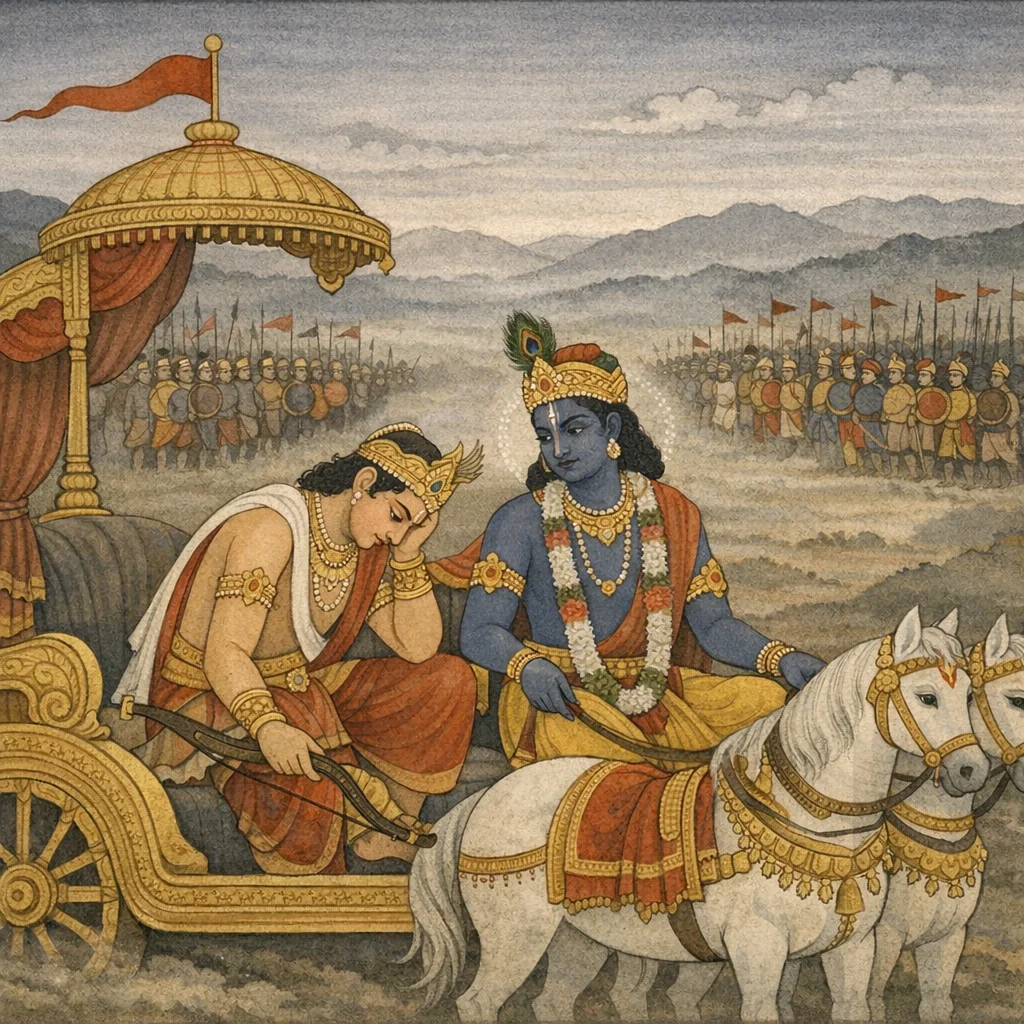
कृपया परयाविष्टो विषीदन्निदमब्रवीत् । अर्जुन उवाच । दृष्ट्वेमं स्वजनं कृष्ण युयुत्सुं समुपस्थितम् ॥ १.२८ ॥
kṛpayā parayāviṣṭo viṣīdann idam abravīt | arjuna uvāca | dṛṣṭvemaṁ svajanaṁ kṛṣṇa yuyutsuṁ samupasthitam || 1.28 ||

Overwhelmed by supreme compassion, grieving, he spoke thus. Arjuna said: O Kṛṣṇa, seeing this my own people assembled, eager to fight…
Overcome by great compassion, grieving, he spoke: Arjuna said: O Kṛṣṇa, seeing these my own people assembled, desiring to contend...
Pervaded by profound compassion and sinking into dejection, he said: Arjuna said: “Seeing this own kin, O Kṛṣṇa, standing ready, wishing to engage...”
‘Kṛpā’ is compassion/pity; ‘viṣīdan’ indicates dejection rather than fear. Many devotional translations emphasize tenderness; academic translation highlights the psychological state as the chapter’s theme (viṣāda).
FAQs
Arjuna’s compassion becomes overwhelming and turns into dejection; the verse exemplifies how empathy, without a stabilizing framework, can impair agency.
The episode raises a central Gītā problem: how to act with clarity when emotions and relational identities dominate awareness.
This is the formal onset of Arjuna’s ‘viṣāda’ (despondency), which motivates Kṛṣṇa’s subsequent philosophical instruction.
Compassion is valuable, but ethical action may require combining empathy with principled discernment and emotional regulation.