
Bhagavad Gita — Arjuna Vishada Yoga, Shloka 22
Arjuna Vishada Yoga
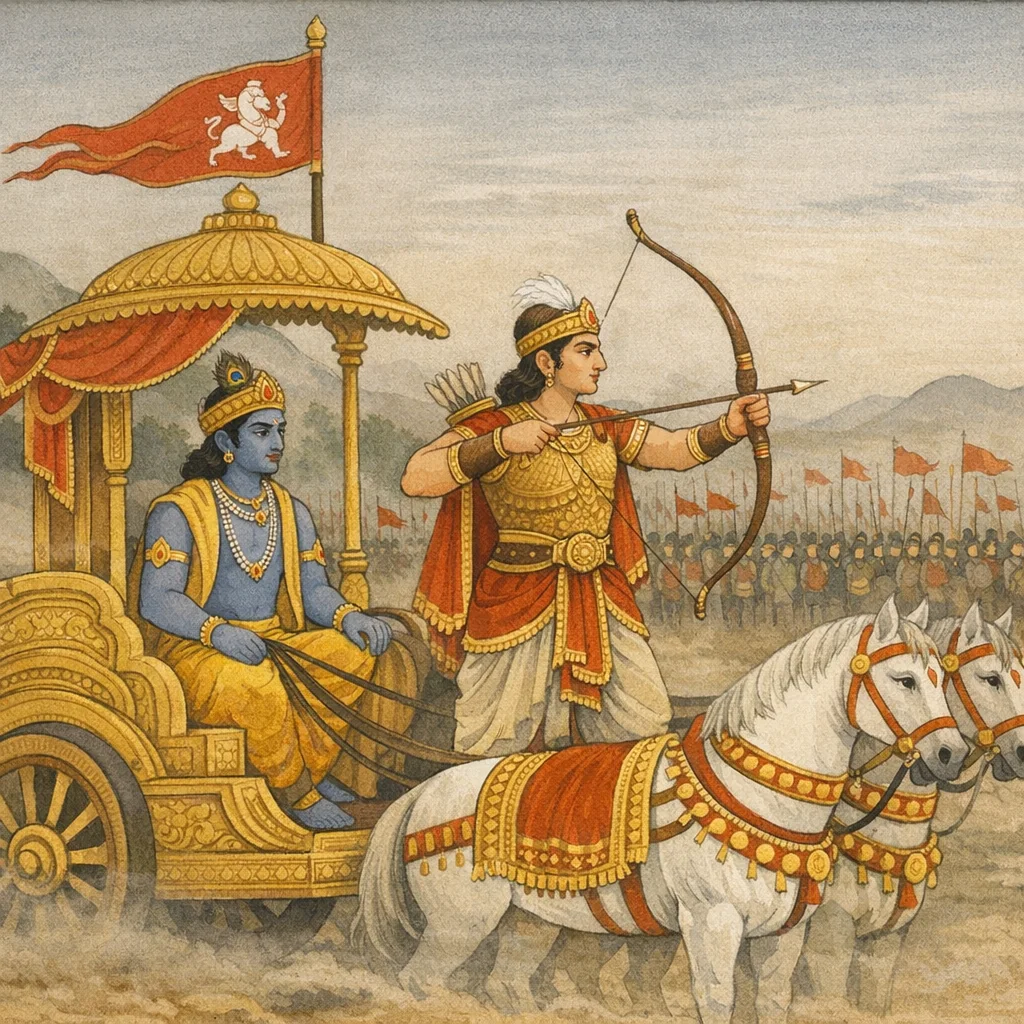
यावदेतान्निरीक्षेऽहं योद्धुकामानवस्थितान् । कैर्मया सह योद्धव्यमस्मिन् रणसमुद्यमे ॥ १.२२ ॥
yāvad etān nirīkṣe 'haṁ yoddhu-kāmān avasthitān | kair mayā saha yoddhavyam asmin raṇa-samudyame || 1.22 ||

So that I may observe those standing here, eager to fight, and know with whom I must contend in this enterprise of war.
So that I may observe those standing here eager to contend, and know with whom I must strive in this undertaking.
“Let me examine these who stand here, desirous to fight—those with whom I am to contend in this martial enterprise.”
Interpretive translations may soften raṇa (“battle”) into a general ‘struggle’; academically it denotes a formal war-setting in the narrative, while still allowing later philosophical re-reading as inner conflict.
FAQs
Arjuna’s wish to ‘see’ signals cognitive appraisal: he needs to name and understand the situation before he can act, a common precursor to moral distress.
Observation (nirīkṣaṇa) can symbolize the witnessing stance—turning attention toward the forces (desires, duties) that shape action.
This verse motivates the chariot’s repositioning and leads directly to Arjuna recognizing relatives and teachers among those assembled.
When facing conflict (external or internal), first identify stakeholders and motivations; clarity reduces reactive decision-making.