
Bhagavad Gita — Arjuna Vishada Yoga, Shloka 15
Arjuna Vishada Yoga
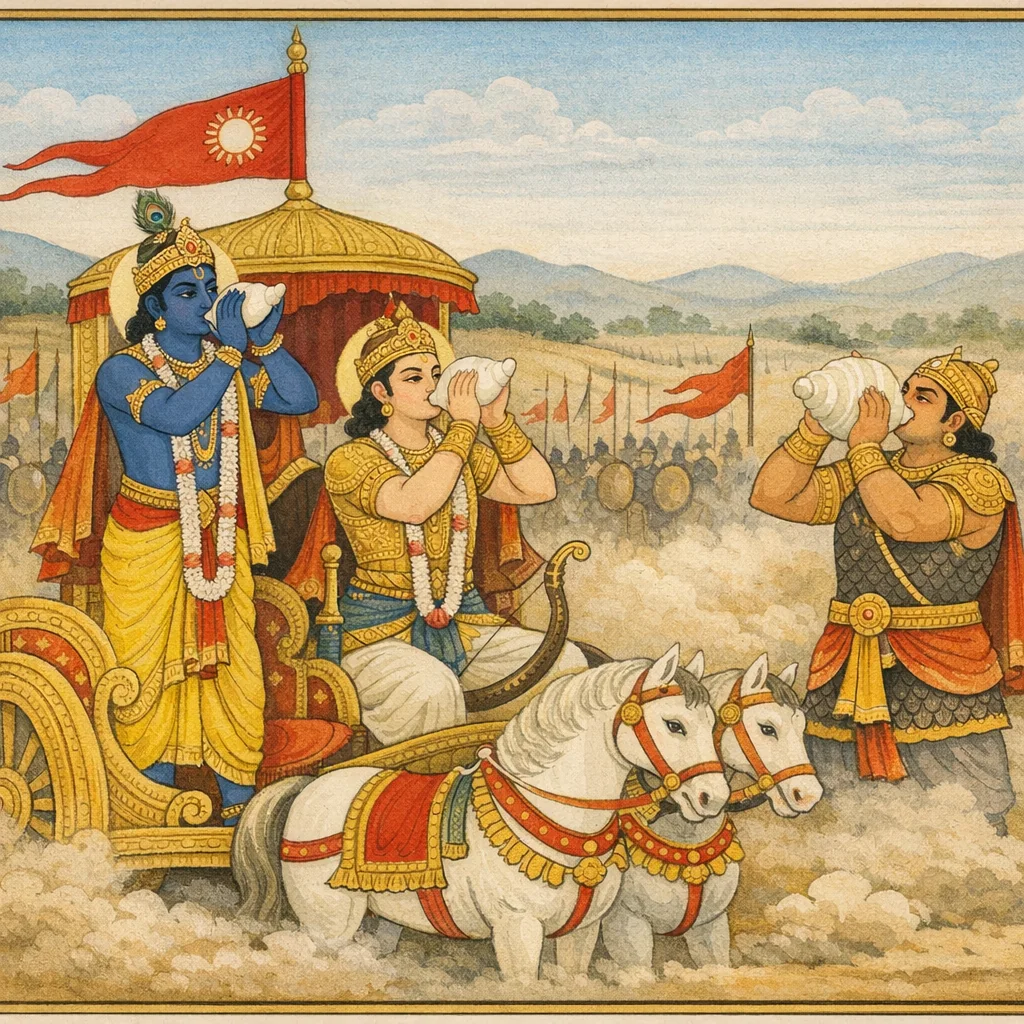
पाञ्चजन्यं हृषीकेशो देवदत्तं धनञ्जयः । पौण्ड्रं दध्मौ महाशङ्खं भीमकर्मा वृकोदरः ॥ १.१५ ॥
pāñcajanyaṁ hṛṣīkeśo devadattaṁ dhanañjayaḥ | pauṇḍraṁ dadhmau mahā-śaṅkhaṁ bhīma-karmā vṛkodaraḥ || 1.15 ||

Hṛṣīkeśa blew the Pāñcajanya; Dhanañjaya blew the Devadatta; and Vṛkodara, of mighty deeds, blew the great conch named Pauṇḍra.
“हृषीकेश (कृष्ण) ने पाञ्चजन्य, धनञ्जय (अर्जुन) ने देवदत्त और भीमकर्मा वृकोदर (भीम) ने पौण्ड्र नामक महाशंख बजाया।”
“Hṛṣīkeśa blew the Pāñcajanya; Dhanañjaya blew the Devadatta; and Vṛkodara, of formidable deeds, blew the great conch Pauṇḍra.”
यहाँ मुख्यतः नाम-परंपरा (शंखों के नाम) का वर्णन है। ‘भीमकर्मा’ को ‘powerful in action’/‘of mighty deeds’ के रूप में साधारणतः अनूदित किया जाता है।
FAQs
Naming the conches individualizes participants and reinforces confidence through personal emblems—supporting a sense of role and belonging.
The verse is chiefly descriptive; metaphysical readings may treat the “conch” as the voice of resolve or dharmic intention, but the text itself here emphasizes identification and ceremony.
The narrator catalogs distinctive signals from key figures on the Pāṇḍava side, building the scene’s formal escalation.
Comparable to professional insignia or team identifiers that strengthen accountability and coordinated action without implying hostility.