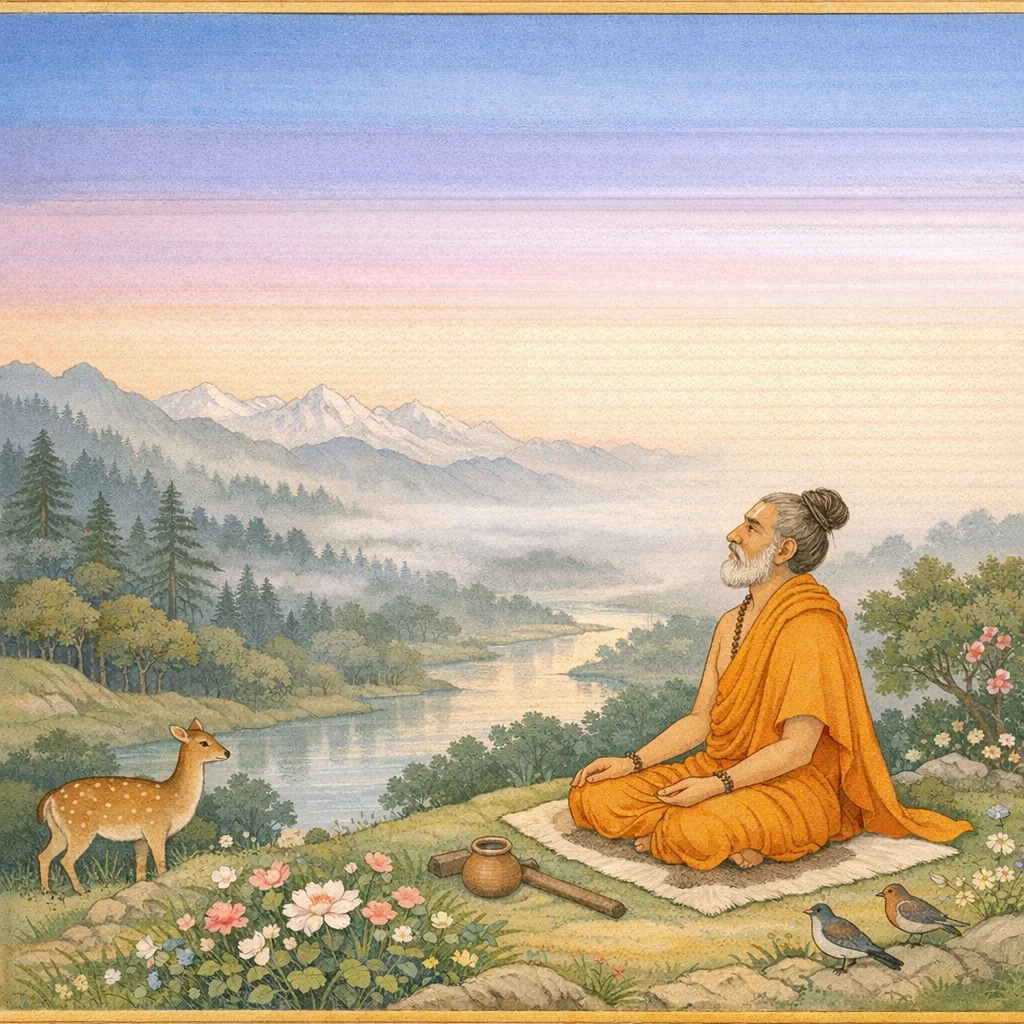
Turiyateeta
《图利耶超越奥义书》(Turīyātīta Upaniṣad)属阿闼婆吠陀系统的出家(sannyāsa)奥义书。文本虽极为简短,却将《曼杜迦奥义书》所指的“图利耶”(turīya)进一步推进为“图利耶超越”(turīyātīta)——意谓“连图利耶这一指称也要超越”。其核心在于强调:究竟实在并非与醒、梦、深睡并列的“第四种状态”,而是三者之见证(sākṣin)与自明之觉知,不能被把握为经验对象。 从历史语境看,此类出家奥义书多被理解为后古典时期的产物,当时僧团制度与不二论(Advaita Vedānta)学术传统趋于成熟,“在世解脱”(jīvanmukti)的理想被更清晰地表达。其“一偈/一语”式的凝练形态,体现了将最高教义转化为可供反复观照(nididhyāsana)的箴言。 哲学主题包括:以“非此非彼”(neti neti)的否定法防止对微细概念的再物化;消融“作者/受用者”之我执;超越对待二元;并以直观智证悟我(Ātman)与梵(Brahman)无二。出家在此首先是内在的离执与不染(asaṅga),而非仅外在身份的更替。
Start ReadingKey Teachings
- Turīyātīta: the Absolute is “beyond even turīya
” i.e.
beyond any conceptualized ‘fourth state’
- Ātman/Brahman as sākṣin: the ever-present witness of waking
dream
and deep sleep
- Non-objectifiability (aviṣayatva): reality cannot be grasped as an experience or mental content
- Neti neti and apophatic pedagogy: negation as a method to dissolve subtle reification
- Asaṅga (non-attachment): freedom as disidentification from body–mind and social roles
- Jīvanmukti ideal: liberation as present knowledge
not a post-mortem attainment
- Transcendence of dualities: beyond doer/enjoyer
merit/demerit
praise/blame
pleasure/pain
- Saṃnyāsa as inner renunciation: external abandonment is secondary to abidance in non-dual awareness
Verses of the Turiyateeta
1 verses with Sanskrit text, transliteration, and translation.