Dashati 16
Āvāhana and rapid approach of Indra to the Kaṇva-stotra, culminating in the boon of svarga (heaven) for the duly directing worshipper
Indra
Summoning and energizing (āhvāna) with martial swiftness and forward drive
Kaṇva
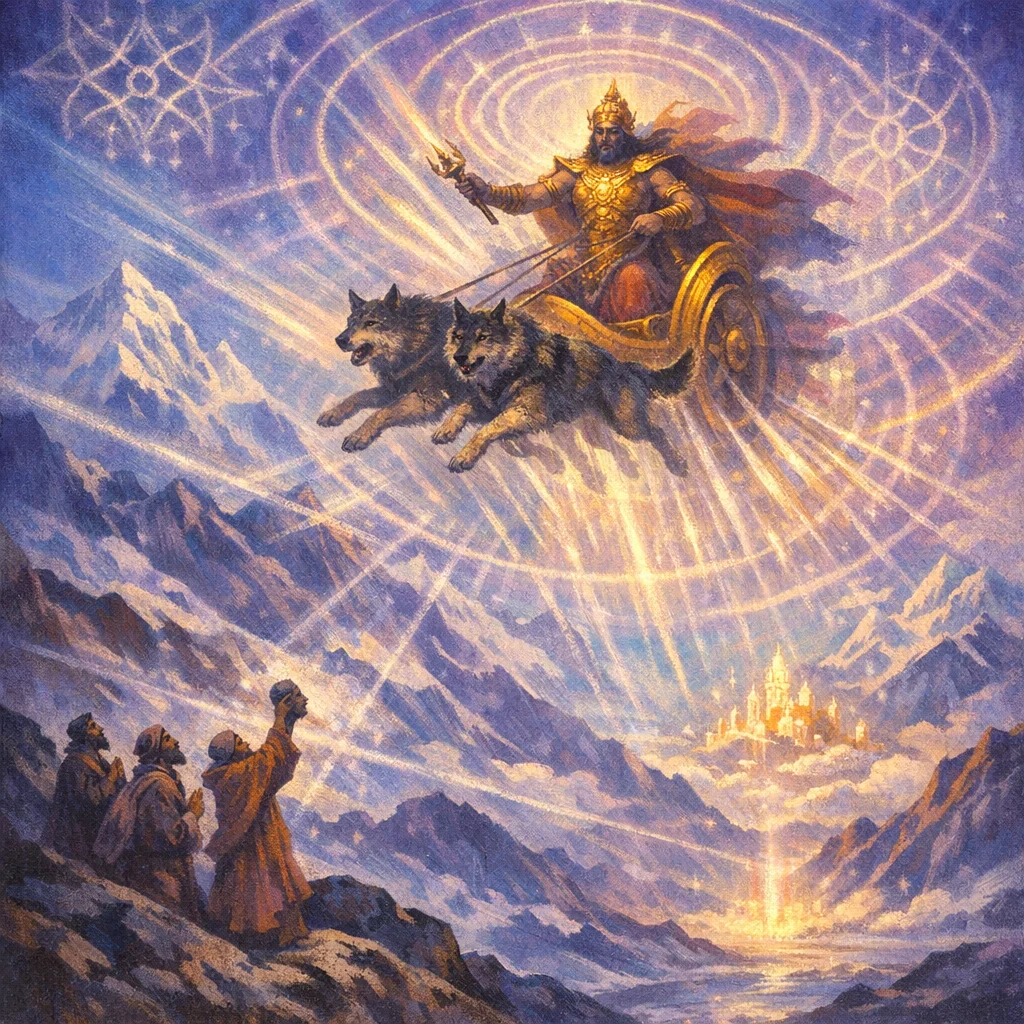
主题:召请因陀罗迅疾前来赴迦ṇ婆之赞歌与苏摩榨取之祭场;以骏马与战车之势奔赴,受纳供献、振奋并成就祭仪。榨石(grāvā)之声与榨取/吟诵的回响作为召唤的声场;依正法(śāsataḥ)而行者,终蒙因陀罗赐予“天界”(divam/svarga)之果。
Mantras
Mantra 1
एन्द्र याहि हरिभिरुप कण्वस्य सुष्टुतिम् दिवो अमुष्य शासतो दिवं यय दिवावसो
因陀罗啊,驾驭栗色骏马(harí)前来,临至迦ṇ婆(Kaṇva)之至美赞颂;为那如法奉行的祭主,赐天界之福者(divāvasu)啊,愿你趋向天界。
Mantra 2
अत्रा वि नेमिरेषामुरां न धूनुते वृकः दिवो अमुष्य शासतो दिवं यय दिवावसो
此处,你车之轮缘显现;如狼般摇撼广阔之境。为那依法行祭之敬拜者——赐天福者啊,愿你前行,授与天界。
Mantra 3
आ त्वा ग्रावा वदनीह सोमी घोषेण वक्षतु दिवो अमुष्य शासतो दिवं यय दिवावसो
愿此处发声的压榨石(grāvā),伴随索摩(Soma)之声响,将你迎来;为那依法行祭之敬拜者——赐天福者啊,愿你前行,授与天界。
Frequently Asked Questions
It repeatedly summons Indra to the Kaṇva praise and Soma-pressing, asking him to validate the rite by granting ‘divam’ (heaven) to the properly conducting worshipper.
Its sounding during Soma-pressing is treated as a ritual summons: the audible act of pressing, together with chant, ‘brings’ Indra to the sacrifice.
It links correct, rule-directed performance (śāsataḥ) with the sacrificial fruit: Indra, ‘giver of celestial good’ (divāvasu), is asked to lead/grant the performer to heaven (divam).