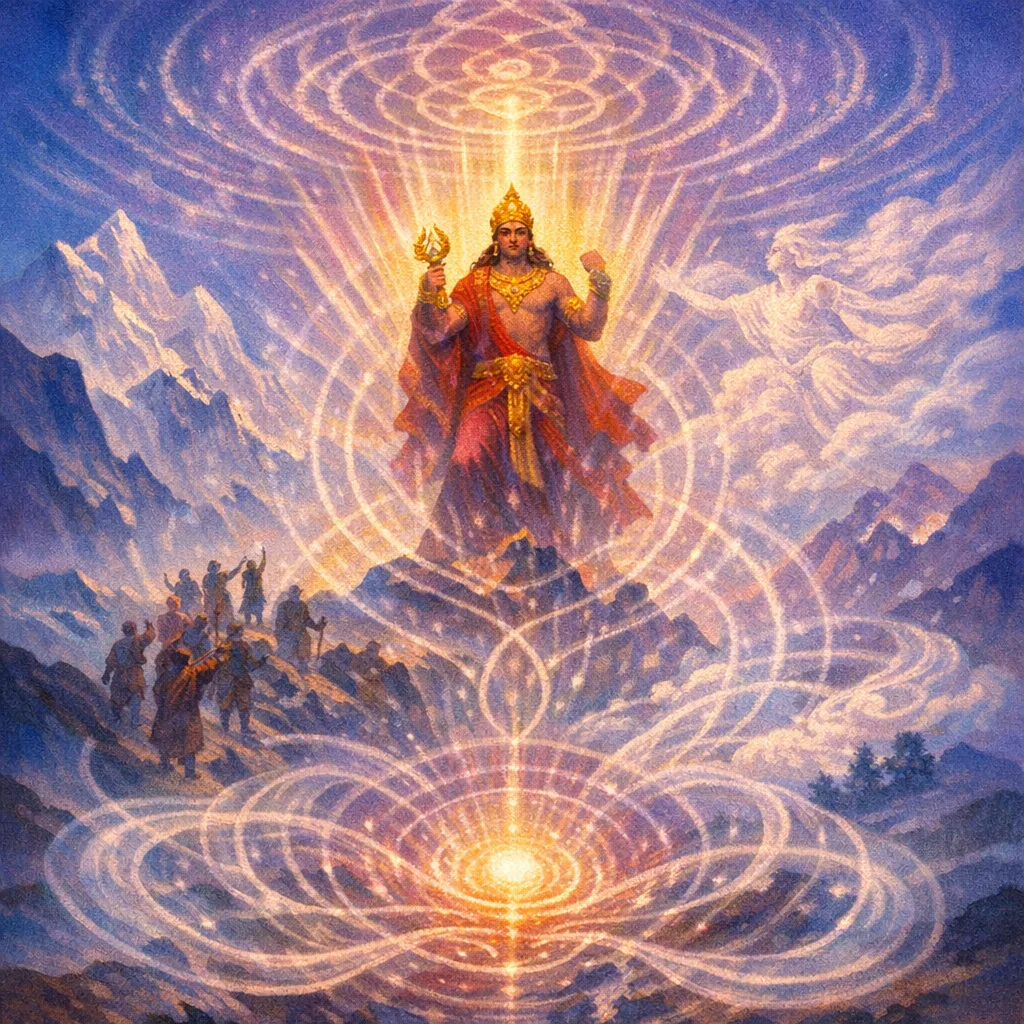
Dashati 11
Aindra praise seeking Indra’s favor and communal advance, with allied Vāta petitions for healing and life-breath
Indra
Uplifting and expansive—heroic Aindra praise tempered by a soothing restorative breath-motif in the Vāta verses
R̥ṣi attributions are not specified in the input; identification requires Ṛgveda concordance and the arcikā cross-index for this prapāṭhaka/daśati unit.
本组颂辞以因陀罗为主:以祭献与赞歌召请这位伟大的增益者与守护者,愿其悦纳供品,赐予善意(sumati)、力量与社群的兴盛,使诸部族/会众(viśaḥ)同得推进与安稳。继而转向风神伐多(Vāta):祈其以疗愈、维系生命之气(prāṇa)的力量护持身心,助人越过危厄、延年益寿,并赐下隐秘的“甘露”(amṛta)——维生的内在精华,使生命得以持续。
Mantras
Mantra 1
वात आ वातु बेषजं शम्भु मयोभु नो हृदे प्र न अयूंषि तारिषत्
愿伐多(Vāta,风神)吹拂而来,如良药;吉祥、赐乐之源;愿他在我心中,圆满延长我们的寿命。
Mantra 2
उत वात पितासि न उत भ्रातोत नः सखा स नो जीवातवे कृधि
又啊,伐多(Vāta)!你是我们的父,又是我们的兄弟,又是我们的朋友;因此,请赐我们得以生存。
Mantra 3
यददो वात ते गृहे3 ऽमृतं निहितं गुहा तस्यो नो देहि जीवसे
若啊,伐多(Vāta),在你的居所中,有不死的甘露宝藏,秘藏于幽深之处;愿你从那宝藏中赐与我们,使生命得以滋养。
Frequently Asked Questions
It links ritual praise and offering with divine help: Indra is asked to grant favorable support and strength for the communities, while Vāta is asked to heal, protect the life-breath, and prolong life.
Even in Indra-centered groupings, allied petitions occur for practical welfare. Vāta represents prāṇa and healing; invoking him complements Indra’s protective power by securing health and longevity for the sacrificer.
It points to a concealed life-sustaining essence—often understood as sacrificial potency/ojas (and by extension Soma-like vitality). The singer asks Vāta to bestow that sustaining power ‘for living’ (jīvase).