Dashati 7
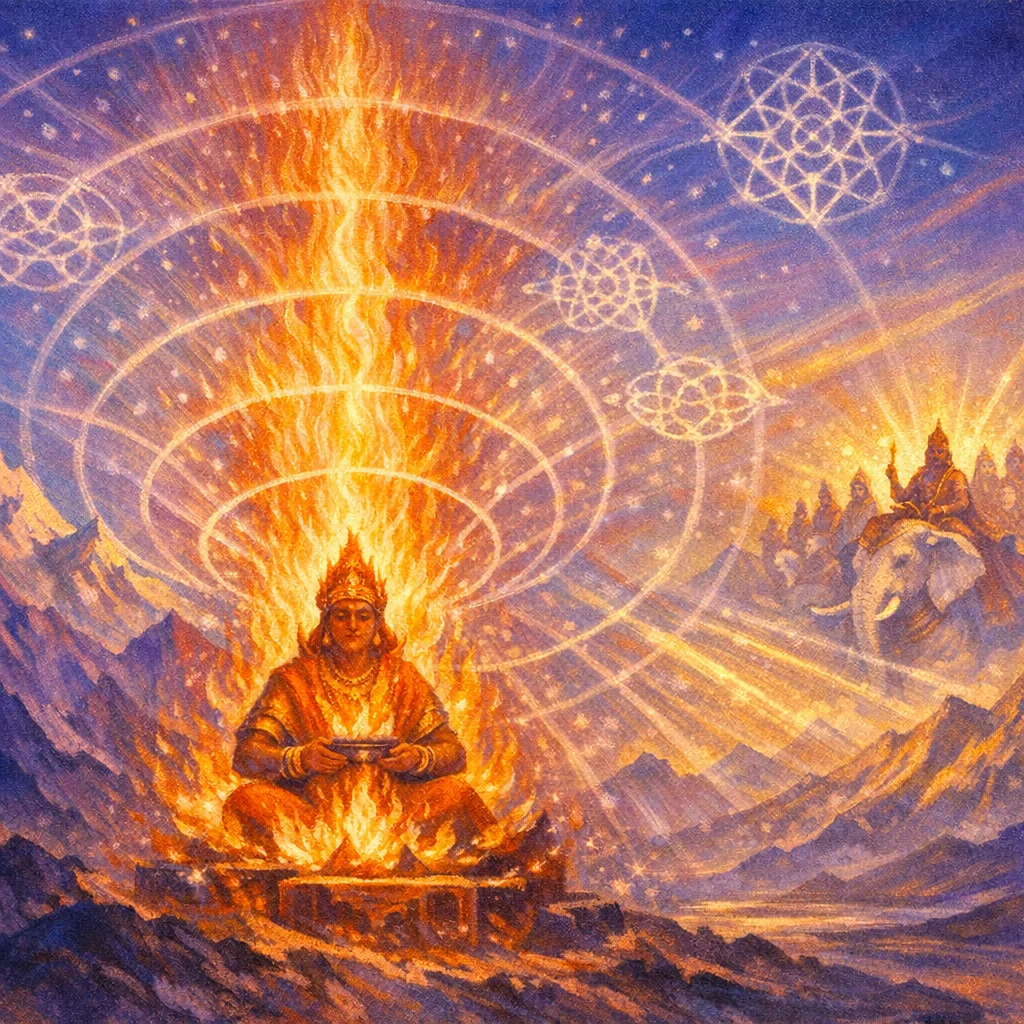
Agni as the manifest, wise carrier of oblations, leading the rite toward Indra’s universal sovereignty
Agni
Bright forward-driving and declarative—moving from kindling/manifestation to royal affirmation
R̥ṣi attribution is not provided in the input; identification requires concordance with the underlying Ṛgvedic sources for these mantras and the Sāmavedic anukramaṇī tradition.
以阿耆尼为首:令火神显现于祭仪,作为睿智的献供承载者与“善车”般的媒介,安稳输送哈维斯至诸神;继而点名因陀罗与诸神众为决定性的受享者,使赞颂与供献各得其所;终以简劲宣告因陀罗普遍的王权与统御,赐予祭祀以主权、胜利与丰盈。
Mantras
Mantra 1
अचेत्यग्निश्चिकितिर्हव्यवाड्न सुमद्रथः
阿耆尼(Agni)——不昧而明、具慧之火——已显现;他为我等负载供献(havyavāḍ),善谋善驾,善备以运送祭品。
Mantra 2
अग्ने त्वं नो अन्तम उत त्राता शिवो भुवो वरूथ्यः
阿耆尼啊,你是我等最近的(友伴),亦是护佑者;吉祥的你,在众生之世为遮护的归依与堡垒。
Mantra 3
भगो न चित्रो अग्निर्महोनां दधाति रत्नम्
阿耆尼(Agni),如薄伽(Bhaga)般光辉灿然,赐下宝藏——亦赐那伟大者之财富——与献祭歌咏之人。
Mantra 4
विश्वस्य प्र स्तोभ पुरो वा सन्यदि वेह नूनम्
今在此处,愿斯托跋(stobha)为一切祭仪先行而出,合一歌唱与行仪,作为前奏。
Mantra 5
उषा अप स्वसुष्टमः सं वर्त्तयति वर्त्तनिं सुजातता
乌莎(Uṣā,黎明)——自体端美中最为卓绝,吉祥而生——令行程之道发动,今且驱策其向前(为祭仪)而行。
Mantra 6
इमा नु कं भुवना सीषधेमेन्द्रश्च विश्वे च देवाः
如今,在诸世界中,我们当恭敬安置这些供献与赞歌于谁?——于因陀罗(Indra),并于一切诸天神。
Mantra 7
वि स्रुतयो यथा पथ इन्द्र त्वद्यन्तु रातयः
如同道路分流而奔行,噢因陀罗(Indra),愿赐予从你而出,流向我们。
Mantra 8
अया वाजं देवहितं सनेम मदेम शतहिमाः सुवीराः
凭此(我们的歌咏),愿我们得获天所安置的力量之奖;愿我们欢喜,历百冬而长寿,子嗣俊美而众。
Mantra 9
ऊर्जा मित्रो वरुणः पिन्वतेडाः पीवरीमिषं कृणुही न इन्द्र
以滋养之力,密多罗与伐楼那使伊ḍā(供献之食)丰盈膨满;因陀罗啊,愿你为我们成就丰厚的食粮与养分。
Mantra 10
इन्द्रो विश्वस्य राजति
因陀罗统御一切,普遍为王而光辉照临。
Frequently Asked Questions
It links the rite’s success to Agni, who becomes manifest and carries the offering, and then confirms Indra (with the All-Gods) as the chief recipient and ruler over all.
The question frames correct ritual orientation—offerings and praise must be ‘placed’ with the proper divine recipients, resolved here as Indra and the Viśve Devāḥ.
It serves as a compact climax: a strong, memorable affirmation that Indra reigns over all, sealing the preceding invocations with a statement of universal lordship.